Table of Contents
- The Quick Answer
- Why No One Ever Watched One Eat
- How You Reconstruct a Diet From Old Bones
- What Was Actually on the Menu
- The Habitat Explains the Diet
- How It Compares to Bandicoots Alive Today
- FAQ
The Quick Answer
The desert bandicoot (Perameles eremiana) ate ants, termites, and beetle larvae, dug up with its long snout and clawed front feet, rounded out with seeds, roots, and underground fungi when insects were scarce. Nobody ever confirmed this by watching one feed. The species was gone before that kind of fieldwork happened, so everything above comes from tooth wear, gut contents preserved in a handful of museum specimens, and comparison with its closest living relative, the western barred bandicoot.
That gap between what we know and what we can responsibly infer is the actual story here, not a footnote to it.
Why No One Ever Watched One Eat
The last confirmed desert bandicoot was collected in 1943 near Well 35 on the Canning Stock Route in Western Australia. Reports from Aboriginal communities suggest the species held on in pockets of the central deserts into the 1950s or possibly the 1960s, but nothing since 1943 has been verified by a specimen or a photograph. Compare that to when Australian ecologists started running the systematic trapping and scat-analysis studies that tell you what a small mammal actually eats, and the timing doesn’t line up. The methodology arrived roughly a generation too late for this animal.
The Australian government’s species profile points to two likely drivers of the decline: the disruption of traditional Aboriginal burning patterns, which had kept the bandicoot’s spinifex habitat in the patchy, fire-mosaic state it needed, and the arrival of the red fox. Neither is a settled, single cause. That matters here because a few competing write-ups on this species cite oddly precise figures — a specific arthropod percentage, an extinction date decades later than the record supports — that don’t trace back to any actual study. Treat numbers like that as invented until someone shows the source.
How You Reconstruct a Diet From Old Bones
Bandicoot skulls carry a lot of information for something so small. Perameles eremiana had the narrow, elongated snout and the sharp, low-crowned molars typical of an animal built to grab insects rather than grind tough plant fiber all day. That’s a different tooth profile from a wombat or a bilby leaning harder into bulbs and tubers. Researchers have also examined stomach contents preserved in the small number of skins and skeletons that survive in Australian museum collections, finding insect remains consistent with what its living relatives eat today.
None of that tells you seasonal variation, or how much fungi versus root mattered in a drought year versus a wet one. It gives you a genus-level pattern, applied carefully to one species within it.
What Was Actually on the Menu
Based on the dental evidence, gut remains, and the foraging habits of related bandicoots, the desert bandicoot’s diet most likely included:
- Ants and termites — abundant year-round in arid Australia and an easy target for an animal built to dig
- Beetle larvae and other soil invertebrates — the classic bandicoot dig-and-sniff target, located by scent and excavated with the front claws
- Seeds and underground plant storage organs — roots, corms, and bulbs, especially valuable when insect activity dropped during cold or dry spells
- Fungi — a food source several desert-dwelling marsupials lean on more than people expect, since it stays available underground when the surface bakes dry
That’s a generalist’s menu, which tracks with the animal’s build. A specialist eats one thing well. A 200-gram marsupial trying to survive in a landscape where rain might not show up for two years needs to eat whatever’s actually there.
The Habitat Explains the Diet
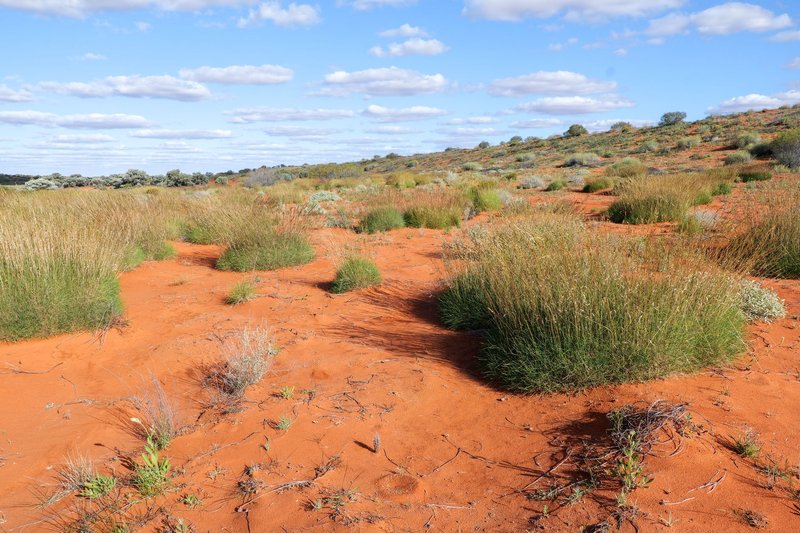
The desert bandicoot lived across the sandy deserts of central Australia — the Gibson, Great Sandy, and Great Victoria Deserts, spanning parts of Western Australia, South Australia, and the Northern Territory. It favored spinifex-covered dunes and sandplains, the same tussocky Triodia grasslands that still define that part of the continent. That habitat works as a food factory for a digging insectivore: spinifex clumps host termite colonies at their base, hold soil moisture longer than bare sand, and support the seed-bearing understory plants a bandicoot would raid on the way past.
Like other bandicoots, it foraged at night and left a signature behind: small conical pits punched into the sand where it had dug for prey, visible the next morning if you knew what to look for.
How It Compares to Bandicoots Alive Today
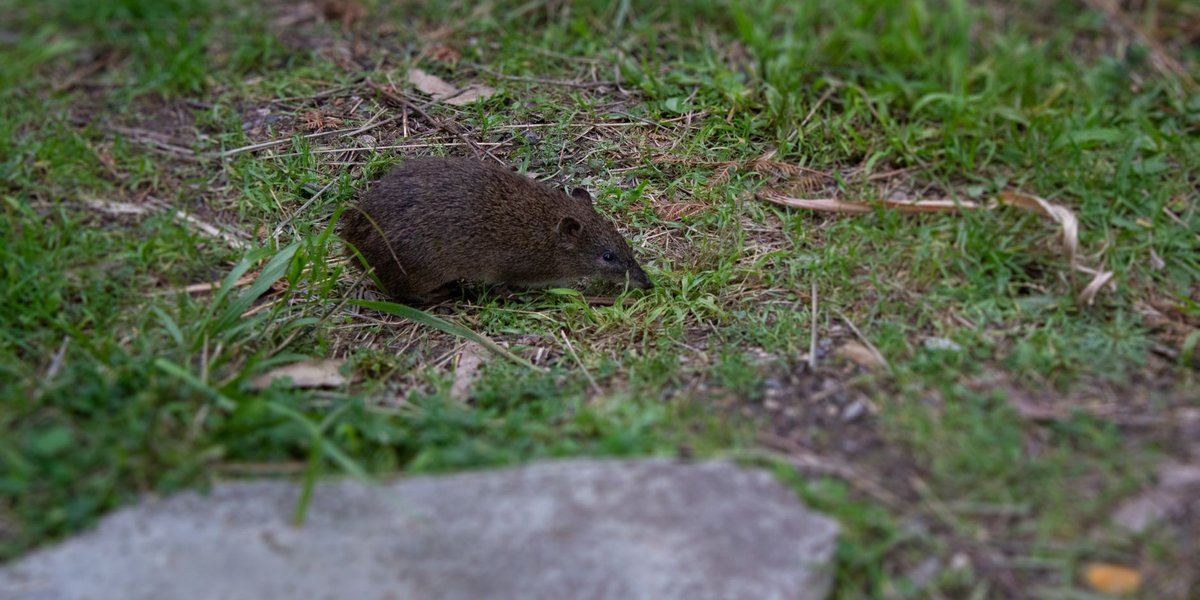
The desert bandicoot’s closest living analog is the western barred bandicoot, now restricted to a couple of predator-free islands and reintroduction sites after nearly disappearing from the mainland itself. Western barred bandicoots eat arthropods, roots, seeds, and occasional small vertebrates, foraging alone at night and digging for most of what they find. That overlap is exactly why researchers lean on the living species to fill gaps the fossil record can’t: same genus, similar build, similar arid-country pressures.
More broadly, bandicoots as a group are opportunistic diggers rather than dietary specialists, which is part of why several species have managed to hang on in fragmented habitat while more selective feeders haven’t.
FAQ
Where did the desert bandicoot live? Central Australia’s sandy deserts — the Gibson, Great Sandy, and Great Victoria Deserts — across parts of Western Australia, South Australia, and the Northern Territory, favoring spinifex dunes and sandplains.
Why did the desert bandicoot go extinct? No single confirmed cause. The leading explanations are the loss of traditional Aboriginal fire management, which had maintained the patchy vegetation the species needed, combined with predation pressure from introduced red foxes and feral cats.
Is there any chance the desert bandicoot still survives somewhere? Unconfirmed Aboriginal accounts describe possible sightings into the 1950s or 1960s, but no specimen, photograph, or trace evidence has surfaced since 1943. The IUCN lists the species as extinct.
How is the desert bandicoot different from bandicoots alive today? Mostly in geography and luck, not diet. It ate the same categories of food — insects, seeds, roots, fungi — as the western barred bandicoot and other surviving species. What it didn’t have was an island refuge or a conservation program that arrived in time.