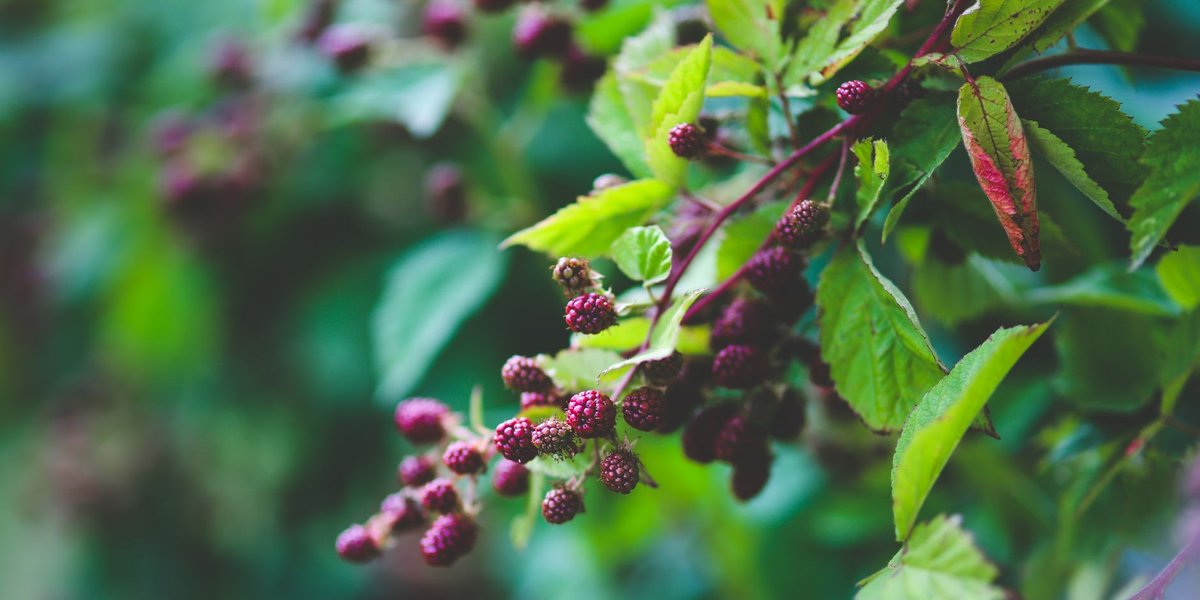
Black berries are blackberries: the dark, glossy fruit of bramble bushes in the rose family. “Black berries” is just the two-word spelling, and it means the same fruit. Botanically they aren’t true berries at all. Each one is an aggregate of tiny individual fruits, called drupelets, packed around a central core.
TLDR
- Blackberries are low in calories (about 62 per cup) and high in fiber (about 8 g per cup).
- They supply vitamin C, vitamin K and manganese, plus anthocyanin pigments that give them their color.
- A blackberry keeps its core when picked. A black raspberry comes off hollow.
- Eat them within a few days of buying, or freeze them on a tray for months.
Table of Contents
- What blackberries actually are
- Nutrition facts per cup
- Health benefits of black berries
- Black raspberry vs blackberry
- Types of blackberry plants
- How to pick ripe blackberries
- Storing, washing and freezing
- Simple ways to use them
- FAQ
What blackberries actually are
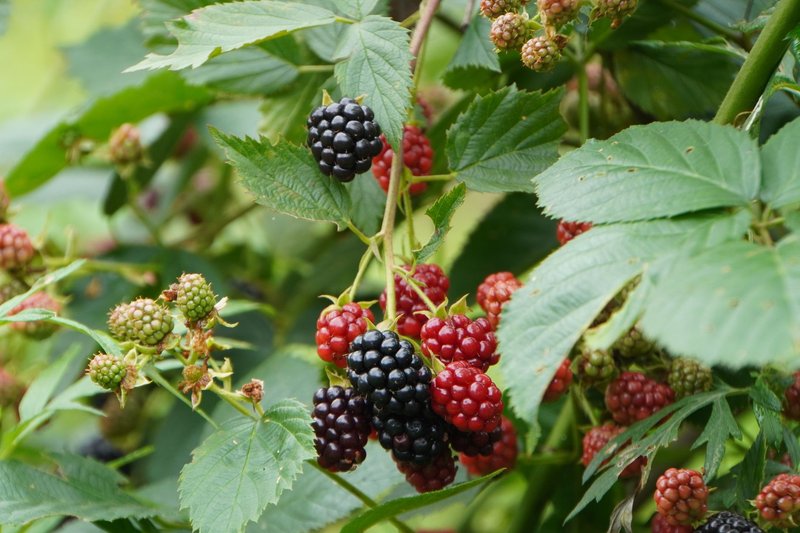
Blackberries belong to the genus Rubus, the same group that includes raspberries, dewberries and boysenberries. Hundreds of bramble species and hybrids grow wild across Europe, Asia and the Americas, usually on forest edges, hedgerows and abandoned lots.
The “not a true berry” part trips people up. A botanical berry, like a grape or a banana, develops from a single ovary. A blackberry develops from one flower with many ovaries, and each ovary becomes a separate drupelet with its own tiny seed. Count the little beads on one fruit and you’ll often reach 50 or more.
The plant itself is a cane. Canes grow for one year, then flower and fruit in their second year (floricanes) before dying back. That two-year cycle is why a bush can look healthy and still produce nothing: new growth hasn’t had its second summer yet.
Nutrition facts per cup
One cup of raw blackberries (about 144 g) lands roughly here, based on USDA FoodData Central values:
| Nutrient | Per cup (approx.) |
|---|---|
| Calories | 62 |
| Carbohydrates | 14 g |
| Fiber | 8 g |
| Sugars | 7 g |
| Protein | 2 g |
| Fat | 0.7 g |
| Vitamin C | 30 mg (about a third of the daily value) |
| Vitamin K | 28 mcg (about a quarter of the daily value) |
| Manganese | 0.9 mg (around 40% of the daily value) |
The standout number is fiber. Eight grams in a 62-calorie serving is unusual for fruit, and it means the net sugar load is lower than the carb count suggests. Seven grams of sugar per cup is about half what a cup of grapes carries.
Health benefits of black berries
Blackberries have no miracle properties, but the nutrient profile backs up a few real advantages.
Fiber for digestion and fullness. Most adults eat well under the recommended daily fiber intake. One cup covers roughly a quarter to a third of it, mostly from the seeds and cell walls.
Vitamin C. The NIH Office of Dietary Supplements lists vitamin C as essential for collagen formation, iron absorption and immune function. A cup of blackberries gets you a third of the way to the daily target.
Vitamin K. Blackberries are a decent source of the vitamin involved in blood clotting and bone metabolism. If you take warfarin or another blood thinner, keep your intake steady and talk to your doctor, since the NIH’s vitamin K fact sheet notes that sudden changes can interfere with the drug.
Manganese. A trace mineral that supports bone formation and the enzymes that process carbohydrates and amino acids. Blackberries are one of the better fruit sources.
Anthocyanins. These are the pigments that turn the fruit from red to near-black as it ripens. They act as antioxidants in lab studies, and diets rich in them are associated with better heart health in observational research. That association is not proof that eating blackberries prevents disease, so treat the pigment story as a bonus, not a prescription.
The only real caution is portion size. The fruit is healthy, but a bowl of it with sweetened cream is a different meal.
Black raspberry vs blackberry
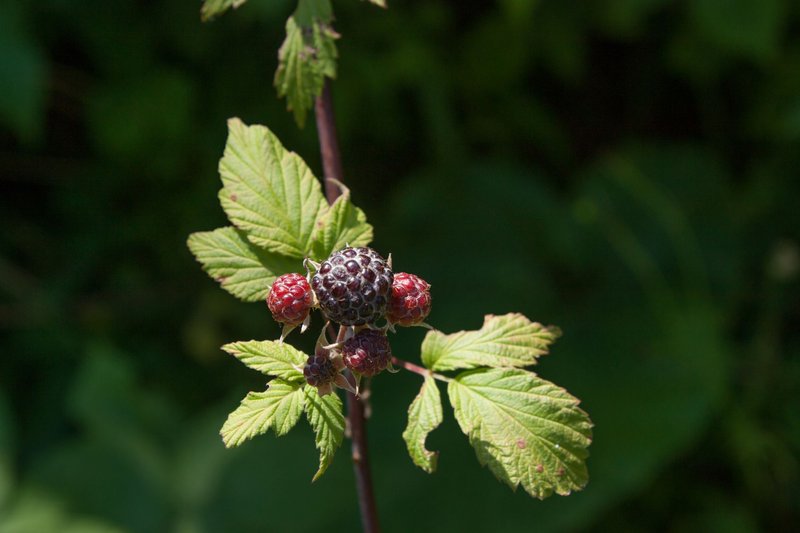
The two get confused constantly, in the store and on the trail. They’re closely related, but they’re different species, and the test takes two seconds.
Check the core. When you pick a raspberry, black or red, the fruit slips off the plant and leaves its white core behind, so the berry is hollow like a thimble. A blackberry comes off with the core attached. Pop one in your mouth and you’ll feel the firm center.
Other differences:
| Blackberry | Black raspberry | |
|---|---|---|
| Core | Stays in the fruit | Stays on the plant, fruit is hollow |
| Shape | Longer, more oblong | Smaller, rounder, more like a cap |
| Surface | Shiny, large drupelets | Dusty, finer drupelets with a slight bloom |
| Flavor | Tart to sweet, juicy | Sweeter, more intense, seedier |
| Season | Mid to late summer | Early summer |
Black raspberries are also much harder to find in shops. That makes them a farmers market and foraging fruit, so if a label says “black raspberry” and the fruit is hollow, believe it.
Types of blackberry plants
Gardeners sort blackberries into three growth habits, and the habit decides how much work they are.
| Type | Growth | Notes |
|---|---|---|
| Erect | Stiff, upright canes | Usually thorny. Needs minimal support. |
| Semi-erect | Arching canes | Often thornless. Heavy yields and good disease tolerance. |
| Trailing | Long canes that need a trellis | Often considered best in flavor. Less cold hardy. |
Thornless varieties exist in all three groups and are worth the small premium if you have kids or a narrow path. Wild blackberries are nearly always thorny, and the thorns are sharp enough to hook sleeves and skin.
How to pick ripe blackberries
Color alone is a poor guide, because red berries on the same cane are unripe, and some berries turn black before they’re sweet. Use three checks:
- Dull, not shiny. Fully ripe berries lose some of their gloss and look slightly matte.
- They release. A ripe berry detaches with a gentle tug. If you have to pull, wait a day or two.
- Plump drupelets. Shriveled or dry-looking beads mean the fruit is overripe.
In the shop, turn the container over. Stains on the bottom of a plastic clamshell mean crushed or leaking berries, and mold usually starts there. Skip any container with a fuzzy gray spot, because it spreads quickly.
If you forage, only pick fruit you can positively identify. Brambles are easy to recognize, but wild fruit near roadsides can carry exhaust residue and may have been sprayed. Pick from clean spots, well away from traffic and treated lawns.
Storing, washing and freezing
Blackberries are fragile and have little shelf life. Plan on two to three days in the fridge.
- Don’t wash until you’re ready to eat. Moisture speeds up mold. Rinse gently in a colander under cool water right before serving.
- Store dry, in a single layer if possible. A paper-towel-lined container helps absorb condensation.
- Remove any moldy berries immediately. One bad berry can spoil its neighbors within a day.
To freeze, wash and dry them thoroughly, spread them on a baking sheet so they don’t touch, and freeze until solid. Then move them to a bag. Frozen this way they stay loose and last around six months. Frozen blackberries work best in smoothies, baking and sauces, because they get soft when thawed.
Simple ways to use them
You don’t need a recipe for most of this.
- Over yogurt or oatmeal with a little honey.
- Blended into a smoothie with banana and milk.
- Cooked down with sugar and a squeeze of lemon into a quick compote for pancakes or ice cream.
- Baked into a cobbler or crumble, where the tartness balances sweet toppings.
- Muddled in a drink, or dropped into sparkling water.
A small pinch of salt or a bit of lemon zest brings out the flavor of a bland supermarket batch.
FAQ
Are black berries the same as blackberries?
Yes. “Black berries” is the two-word spelling of the same fruit. A “black berry” might also mean any dark berry in casual speech, but the term almost always refers to the blackberry.
Are blackberries good for you?
Yes. They’re low in calories, high in fiber, and a good source of vitamin C, vitamin K and manganese, with anthocyanin antioxidants on top.
How many blackberries should I eat a day?
One cup is a common serving. There’s no official limit, but a large daily amount can cause digestive discomfort from the fiber if you’re not used to it.
How can I tell a blackberry from a black raspberry?
Check the core. A blackberry has a solid center when picked, while a black raspberry is hollow.
Can dogs eat blackberries?
In small amounts, yes. Blackberries aren’t toxic to dogs, but they contain natural sugar and a tiny amount of xylitol in some processed products, so only give plain fruit and keep the serving small.
Are blackberries actually berries?
Not in the botanical sense. They’re aggregate fruits made of many small drupelets. In the kitchen they’re still a berry.