Contents
- The scale of the problem
- Prosopis: the tree that drinks the riverbed
- Invasive cacti: from garden plant to pasture pest
- Eucalyptus and pepper trees
- Kariba weed and other aquatic invaders
- Invasive animals: the overlooked half
- Species compared
- How Namibia fights back
- What residents and visitors can do
- Summary
The scale of the problem
Namibia is the driest country in sub-Saharan Africa, and that is exactly why invasive species hurt it so much. When water is the limit on everything, a plant that drinks more than the native vegetation does not just crowd it out. It changes who gets water at all.
Almost every invasive species in Namibia arrived on purpose. Someone wanted shade, fodder, a hedge, a windbreak, a tidy cactus for a rock garden or a pretty weed for a pond. The escape came later, usually along a river.
Counts of the problem vary by source, and it is worth saying so up front. The Atlas of Namibia and the Namibian Invasive Alien Species Working Group material describe roughly 38 invasive trees and shrubs, 62 forbs and 24 grasses, with about 15 species classed as serious threats. Other summaries use different cut-offs and different species lists. Treat every figure in this post as “according to” whichever source is named, not as a settled national census. The Atlas of Namibia chapter on invasive alien plants is the best starting point if you want to check the plant numbers yourself.
The plants dominate the literature. The animals get far less attention, and we cover them below.
Prosopis: the tree that drinks the riverbed
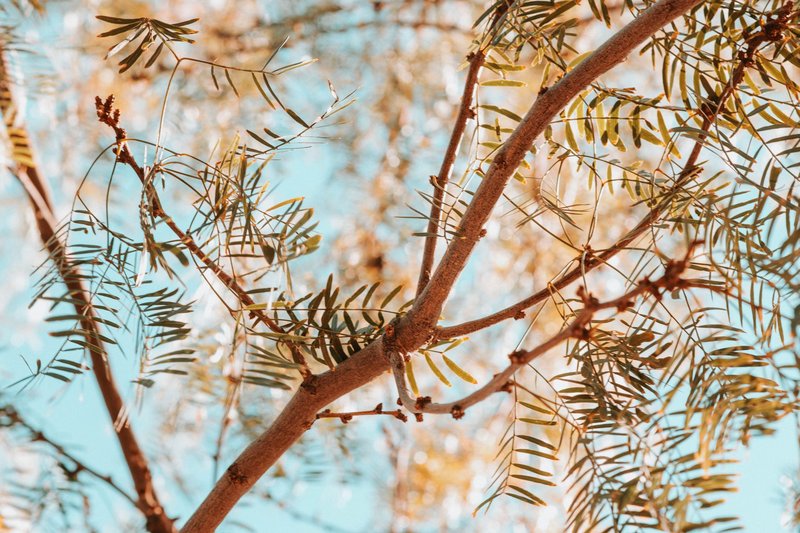
Prosopis, called mesquite in North America, is the invader most Namibians would name first. Species and hybrids of the genus were brought in during the twentieth century for shade, livestock fodder, firewood and to stabilize soil, including on mine dumps. They came from the Americas, where they are adapted to hot, dry ground. Namibia’s ephemeral riverbeds suited them perfectly.
Here is why it works so well as an invader:
- Deep roots. Prosopis taps groundwater far below the reach of native grasses. Roots in dry-country stands are widely reported to go tens of meters down.
- Seed spread by livestock. The sweet pods are eaten by cattle, goats and game. The seeds pass through the animal intact, often with a ready-made dose of fertilizer, and land wherever the herd walks, especially along watercourses.
- Floods as a delivery system. Seeds travel down ephemeral rivers when they flow, so a few trees upstream seed a whole river system downstream.
- Thickets. Dense stands shade out grass, which removes grazing and then removes the ground cover that holds soil in place.
The worst-affected areas follow the rivers. The Fish, Nossob and Orange river systems are repeatedly named in Namibian sources, along with pans in the south and east. In places the tree has turned open riverbed into a thorny wall that livestock and wildlife cannot easily cross, and the thorns puncture tires and hooves.
The groundwater point matters most for farmers and for towns that depend on boreholes. A dense Prosopis stand uses more water than the grass it replaced. The IUCN’s Global Invasive Species Database lists Prosopis species among the world’s invasive trees for this reason, and Namibia is one of several dry countries where the problem is documented.
There is a complication that the keyword fights online usually skip. Prosopis is not only a villain to the people who live with it. The pods feed livestock in a drought, the wood burns hot and makes good charcoal, and some communities treat it as income. That is why control programs here talk about using the wood as well as removing the trees. If you remove it and leave the stump, it resprouts.
Invasive cacti: from garden plant to pasture pest
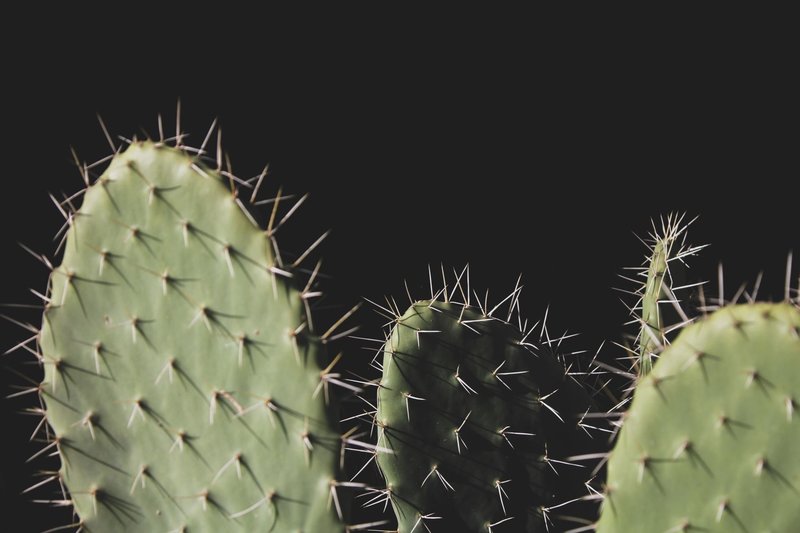
Namibia’s Working Group material counts roughly 22 invasive cactus species, which is a surprising number for a country with its own native succulents. The usual suspects are the prickly pears (Opuntia), the cholla group (Cylindropuntia) and a few columnar and creeping cacti that were sold as “water-wise” garden plants.
Why they spread:
- They break and root. A fragment of pad or stem that falls off, or gets caught on an animal, can start a new plant. Cholla in particular hooks onto passing fur and clothing.
- They have no local enemies. The insects, fungi and animals that keep these plants in check in the Americas are absent.
- They tolerate almost anything. Heat, drought, poor soil and neglect do not stop them.
The damage is practical. Dense patches reduce grazing, injure livestock, and make walking through veld miserable. Spines in the mouth and hooves lead to infections. Some cacti also fruit heavily, and baboons, birds and other animals spread the seeds.
The lesson from the Working Group’s messaging is blunt: do not plant “water-wise” cacti, and do not dump garden clippings in the veld. Most of the cactus problem began in somebody’s garden.
Eucalyptus and pepper trees
Eucalyptus (especially river red gum, Eucalyptus camaldulensis) and the Peruvian pepper tree (Schinus molle) are less dramatic than Prosopis, but they follow the same pattern: planted for shade or timber, then escaped.
Eucalyptus has a reputation for heavy water use, and along a river that reputation is earned. Stands planted beside watercourses draw down water that would otherwise feed pools and downstream users. Leaf litter also suppresses what grows beneath.
The pepper tree is the classic farmstead tree: drooping, fragrant and hardy. Birds eat the small pink berries and distribute the seeds. It rarely forms the thick monocultures Prosopis does, but it keeps turning up on riverbanks and around settlements far from where it was planted.
Both trees are a reminder that “invasive” is not a judgment on how a plant looks or whether people love it. A shady eucalyptus beside a homestead can be a problem at the scale of a catchment.
Kariba weed and other aquatic invaders
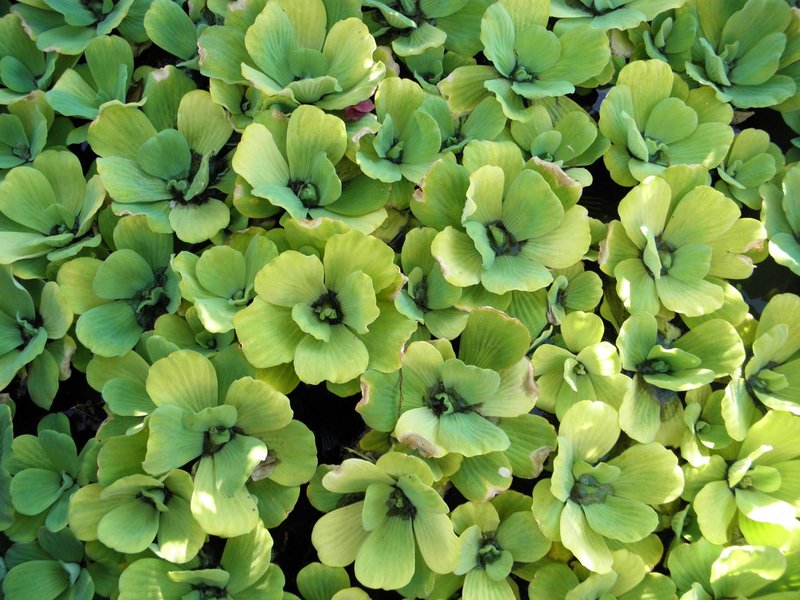
Kariba weed (Salvinia molesta) is a free-floating fern from Brazil. It does not need soil, and it does not need much of anything except still or slow water and sun. Under good conditions its mats double in size in a matter of days to weeks, according to general invasive species literature, and a dense mat blocks light and cuts oxygen exchange. Fish, invertebrates and submerged plants beneath it suffer.
In Namibia the concern is the perennial rivers in the north and the Orange River in the south, where there is permanent water for it to colonize. A mat can block channels, tangle boat propellers, shut down irrigation intakes and create standing water that suits mosquitoes.
Kariba weed is also one of the best-known success stories in invasive species control worldwide. The salvinia weevil (Cyrtobagous salviniae), a small beetle that feeds only on this fern, has been used against it in many countries, including in southern Africa. It works because the weevil is specific to the plant and breeds fast where the plant is abundant. For a country that cannot afford to spray its rivers, a biological control agent that spreads on its own is a good deal.
Invasive animals: the overlooked half
Animals are the weakest part of the public conversation. The top search results are plant-heavy, and in some sources the animal entries are a short paragraph at the end. The Working Group materials do identify several animal species as serious threats (one summary puts the figure at 11), but the figures conflict across sources and the public information is thin. For a wider look at the animals, Invasive Species in Africa: The Complete List covers 40 prominent species and where they came from.
What is reasonably well documented in southern Africa as a whole:
- Feral pigeons and house sparrows live beside people and compete with native birds for nest sites in towns and farm buildings.
- Alien fish in dams. Common carp and largemouth bass have been stocked in impoundments across the region for angling. Both change the food web, and fish that escape or are flushed downstream can enter river systems.
- Domestic and feral animals. Stray cats and dogs kill small native birds and reptiles around settlements and farms.
Treat this list as a general regional picture, not as the Working Group’s official ranking. If you are citing numbers for a report or an assignment, go to the Working Group’s species pages at the Namibia Nature Foundation and read exactly which species each source counts.
The gap is real, though. Invasive animals are harder to survey, easier to overlook and less likely to be regulated, so they are where a good deal of future work will be needed.
Species compared
| Species | Type | Origin | Why it came | Where it spreads | Main impact |
|---|---|---|---|---|---|
| Prosopis (mesquite) | Tree/shrub | Americas | Shade, fodder, soil stabilization | Ephemeral rivers (Fish, Nossob, Orange), pans | Groundwater loss, lost grazing, thorn injuries |
| Prickly pear (Opuntia) | Cactus | Americas | Ornamental, fruit, hedge | Rangeland, farms, rocky ground | Reduced grazing, injured stock |
| Cholla (Cylindropuntia) | Cactus | Americas | Ornamental | Rangeland, roadsides | Hooks on animals, dense spiny patches |
| River red gum (Eucalyptus) | Tree | Australia | Timber, shade | Riverbanks, watercourses | Water use, litter suppresses understory |
| Pepper tree (Schinus molle) | Tree | Peru | Shade, ornamental | Riverbanks, settlements | Displaces native riverine plants |
| Kariba weed (Salvinia molesta) | Aquatic fern | Brazil | Ornamental pond plant | Perennial rivers, dams | Blocks water, kills aquatic life |
| Common carp, largemouth bass | Fish | Europe/Asia, North America | Angling, food | Dams and connected rivers | Change food webs, harm native fish |
How Namibia fights back
The Namibian Invasive Alien Species Working Group brings together government, research and conservation bodies to track the problem and coordinate action. Its approach follows the standard invasion playbook:
- Prevention. Stop new species from arriving or being sold. This is the cheapest option by far.
- Early detection and rapid response. Remove small populations before they spread. A few plants cost a few hours. A thicket costs a program.
- Mechanical removal. Chop, uproot or burn, then follow up. Prosopis needs the stump treated or it resprouts, which is why cut-and-leave fails.
- Chemical control. Targeted herbicide on stumps or foliage. It works, but it costs money and has to be done carefully near rivers.
- Biological control. Insects or fungi that attack only the invader. The salvinia weevil is the model case. Cochineal insects have been used against some prickly pears in other countries.
- Use and restoration. Turning cleared wood into charcoal, fuel and fencing gives people a reason to keep the work going, and replanting natives keeps the invader from coming back.
None of this works if clearing stops. Invasive control is a maintenance job, not a project that finishes.
Poison, pasture and the bush encroachment debate
Two connections rarely appear in the top results.
First, livestock poisoning. Namibian sources list nearly 20 poisonous invasive species. A few of those are plants animals avoid, but when drought strips the pasture, hungry stock eat what is there. For farmers this is a direct loss, not an abstract ecological one.
Second, bush encroachment. Namibia has a separate and large problem with native thorn bush, such as Senegalia mellifera and Dichrostachys cinerea, thickening across rangeland. It is not invasive in the legal or biological sense, because it is native. The two problems get mixed up in public discussion, but they need different tools and different arguments. Prosopis sits awkwardly between them: it is an alien, and it also makes thickets. The Conservation Namibia article on invasive alien species is a useful starting read on how conservationists frame the issue.
What residents and visitors can do
You do not need a permit or a degree to help.
- Do not plant cacti or succulents sold as drought-proof unless you know the exact species is native. Ask the nursery.
- Dispose of garden waste properly. Do not tip clippings or cactus pads in the veld.
- Clean your gear. Boots, tires, tents and fishing tackle carry seeds and fragments. Brush them off before moving between regions.
- Clean, drain and dry boats and equipment before moving from one river or dam to another. Kariba weed travels on propellers and trailers.
- Do not release pets, aquarium fish or pond plants into rivers or dams.
- Report new infestations to the local conservancy, farm manager or the relevant ministry. Small patches are cheap to fix.
- Choose native plants for gardens. Camel thorn, shepherd’s tree and mopane-region natives need less water than imported ornamentals anyway. A List of Savanna Plants profiles 34 savanna species with their typical ranges and heights, which helps when you are checking a name at the nursery.
Tourism and farming both depend on open, healthy land and flowing water. Visitors who clean their gear and avoid moving plants and animals help protect both.
Summary
Invasive species in Namibia are mostly plants, and nearly all of them were introduced on purpose. Prosopis does the most damage to water and pasture, spreading down the Fish, Nossob and Orange systems. Cacti, eucalyptus and pepper trees add to the pressure, Kariba weed threatens the perennial rivers, and invasive animals remain the least understood group. Published numbers differ by source, so check which list a figure comes from before you quote it.
The fixes are known: prevent, detect early, remove properly, use what you remove and keep going. The cheapest step is the one at the start, which is not planting the thing in the first place.