TLDR
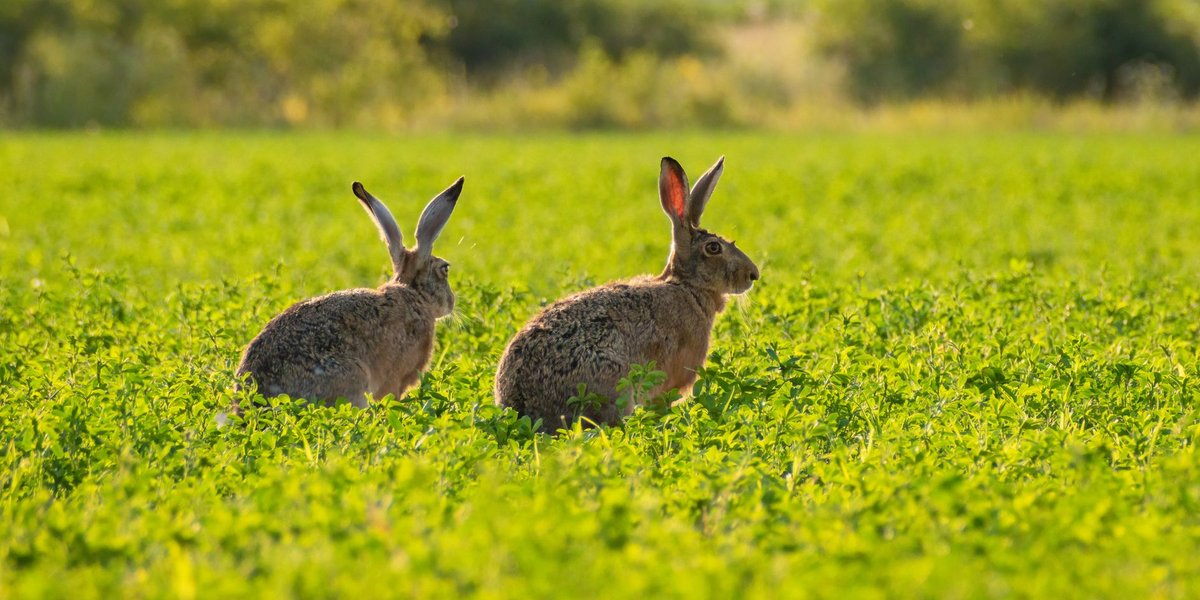
Hares and rabbits are separate animals in the same family. Hares are bigger, with longer ears and legs, and they live above ground in shallow scrapes. Their babies are born furred and active. Rabbits are smaller, often live in burrows, and their babies are born naked and blind.
Contents
- Hares vs rabbits side by side
- Babies: leverets vs kits
- How they run and hide
- How to identify each one in the wild
- Jackrabbits, cottontails and other confusing names
- Are hares and rabbits related?
- Hares, rabbits and the Easter Bunny
- Quick answers
Hares vs rabbits side by side
A hare is not a big rabbit. The two belong to different genera, and the split goes back millions of years. True hares sit in the genus Lepus. The pet and wild rabbits most people picture belong to other genera, such as Oryctolagus (the European rabbit, ancestor of every domestic breed) and Sylvilagus (North American cottontails).
Here is the full comparison, using the typical European brown hare and European rabbit as the baseline.
| Feature | Hare | Rabbit |
|---|---|---|
| Size | Larger, roughly 3 to 5 kg (7 to 11 lb) for a brown hare | Smaller, roughly 1 to 2.5 kg (2 to 5 lb) |
| Ears | Long, often with black tips | Shorter, usually without black tips |
| Hind legs | Very long and powerful | Shorter |
| Fur | Coarse, brown to gray; some species turn white in winter | Softer; color stays the same all year |
| Eye color | Amber or yellow | Mostly brown |
| Home | A shallow ground hollow called a form | A burrow or a warren of burrows (cottontails use a shallow nest) |
| Social life | Mostly solitary | Often social; colonies in warrens |
| Diet | Grasses, herbs, bark and twigs in winter | Grasses, herbs, vegetables, bark |
| Babies | Leverets: furred, eyes open, mobile within hours | Kits: hairless, blind, helpless |
| Gestation | About 42 days | About 28 to 31 days |
| Domestication | Never domesticated | Domesticated for centuries |
| When threatened | Outruns the threat in the open | Bolts for cover or a burrow |
Treat the numbers as ranges. A big rabbit can outweigh a small hare, and the arctic hare is far heavier than a brown hare. Size alone won’t settle it. The babies and the home will.
Babies: leverets vs kits
This is the difference that gives the game away. Baby hares, called leverets, are born in the open with fur and open eyes, and they can move within hours. Rabbit kits arrive hairless, blind and dependent on their mother for weeks. National Geographic covers the contrast in its look at how the two animals mate and raise young.
The strategies explain the gestation gap. A hare mother carries her young about 42 days, roughly two weeks longer than a rabbit, so the babies come out far more developed. Hares usually have small litters of one to four. A rabbit doe packs her kits into a fur-lined nest chamber and can have six or more at once.
Leveret care looks neglectful but works. The mother visits only briefly, often once a day, so she doesn’t lead predators to the spot. Each leveret hides alone in the grass. If you find one apparently abandoned, leave it where it is. It almost certainly isn’t.
How they run and hide
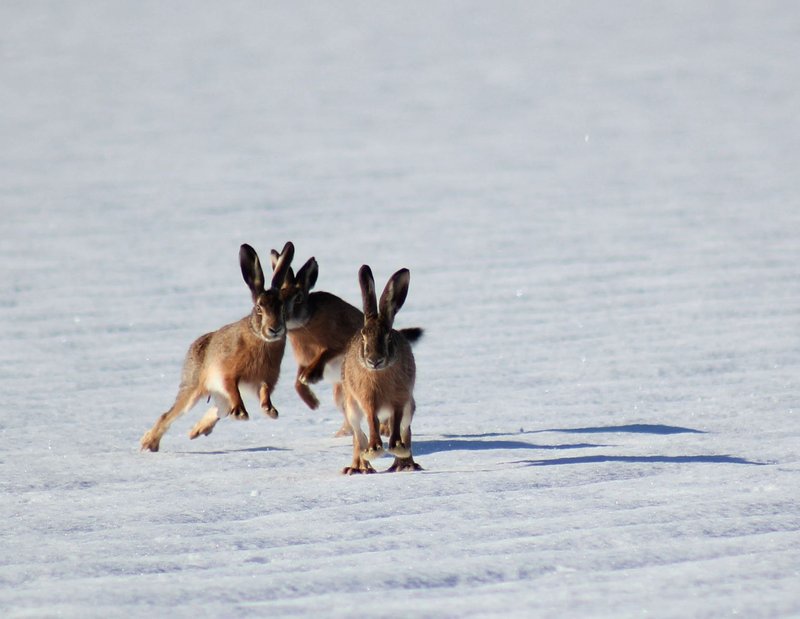
Hares bet on speed. They sit tight in a form, freeze, and flush at the last second, then run flat out. A brown hare can reach about 70 km/h (45 mph) and change direction without slowing. Long hind legs and large hind feet drive this.
Rabbits bet on cover. They feed close to a burrow, bright white tail flagging as they dart for it. They’re fast over a short distance, but they’re sprinters with a hole to run to, not runners.
The famous “boxing” of the March hare adds one more behavior to the list. Most of it is a female fending off a male who isn’t ready to be taken seriously. Rabbits don’t do this.
How to identify each one in the wild
You’ll rarely get a leveret to confirm the species, so use the adult clues, in this order:
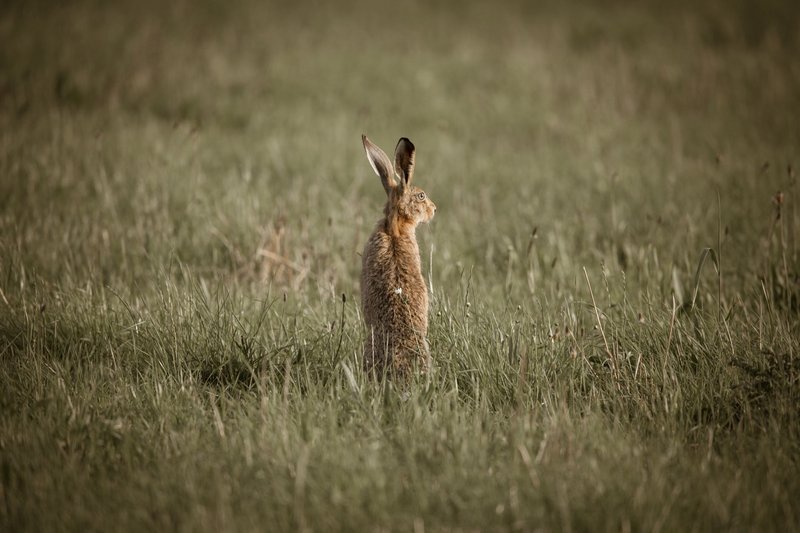
- Look at the ears. Long ears with dark tips point to a hare. Shorter, plain ears point to a rabbit.
- Look at the legs and posture. A hare looks lanky, with a long body and tall hindquarters. A rabbit is rounder and more compact.
- Look at where it flees. If it bolts into a hole, hedge base or burrow, it’s a rabbit. If it runs across open ground, zigzagging, it’s a hare.
- Look at the group. Several animals feeding together near a bank usually means rabbits. A lone animal in a field is more likely a hare.
- Look at the season. A white winter coat means a snowshoe hare, arctic hare or mountain hare. No rabbit does that. For the wider cast of animals that handle winter this way, see 23 Arctic animals and how they survive the cold.
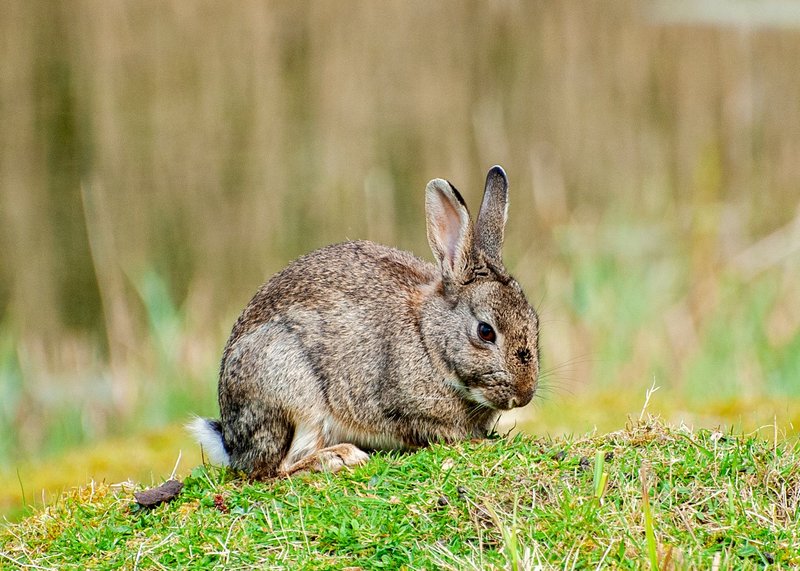
Tracks help too. Hare prints are larger and more elongated, with long hind feet that leave a bigger imprint, while rabbit tracks are smaller and tighter.
The seasonal coat change is worth seeing on a real animal. The Alaska Department of Fish and Game describes the snowshoe hare turning from yellowish-gray brown in summer to white in winter, with big, well-furred hind feet that work as snowshoes.
Jackrabbits, cottontails and other confusing names
Names make this harder than it needs to be.
- Jackrabbits are hares. The black-tailed jackrabbit and the antelope jackrabbit are in the genus Lepus. They have the long ears, long legs and furred, open-eyed young of any hare.
- Cottontails are rabbits. Eastern cottontails belong to Sylvilagus. Their babies are born naked and blind, though the nest is a shallow, grass-lined hollow rather than a deep burrow.
- The snowshoe hare is a hare. Its numbers swing in a roughly ten-year cycle tied to its predators, the Canada lynx above all.
- Bunny is a casual word for a rabbit (and sometimes for a hare). It has no scientific meaning.
- Buck and doe are the male and female of both animals. A baby hare is a leveret, and a baby rabbit is a kit.
The odd one out is the Belgian hare. Despite the name, it is a domestic rabbit breed.
Are hares and rabbits related?
Yes, but at the family level. Both belong to the family Leporidae in the order Lagomorpha, a group that also includes pikas. That makes them cousins, not the same animal. The relationship is similar to sheep and goats.
They aren’t rodents. This error shows up on pages that otherwise rank well. Lagomorphs have two pairs of upper incisors, one small peg tooth behind the large front pair. Rodents have one. Both groups have continually growing teeth, which is why the confusion lasted so long.
Because their chromosome numbers differ, hares and rabbits can’t produce offspring. Stories of “leporids” crossing in the wild have never been confirmed.
Hares, rabbits and the Easter Bunny
The Easter Bunny is a hare by origin. The German Osterhase (“Easter hare”) is recorded in print in the 1600s, and the animal was said to lay and hide colored eggs for well-behaved children. Hares have long stood for fertility in European folklore, since a female can conceive again before giving birth. English-language storytellers later turned the hare into a bunny.
Bugs Bunny works the same way. His debut was A Wild Hare in 1940, yet he lives in a burrow, which is rabbit behavior. The cartoon got the title right and the housing wrong.
Quick answers
Can you keep a hare as a pet? Not in the way you can a rabbit. Hares are wild animals that have never been domesticated. They panic in captivity, need very large spaces, and often die from the stress. Rabbits have been bred for tameness over centuries.
Can a hare and a rabbit breed? No. Their chromosome counts differ, and no confirmed hybrid exists.
Are hares faster than rabbits? Yes. A hare can outrun a fox in open ground. A rabbit typically reaches around 30 to 40 km/h (about 20 to 25 mph) and relies on a bolt hole.
Is a hare a rodent? No. Hares and rabbits are lagomorphs, with a second pair of small upper incisors that rodents lack.
Do hares dig burrows? No. They rest in a form, a shallow hollow in the grass, and use their speed instead of a hole to escape danger.