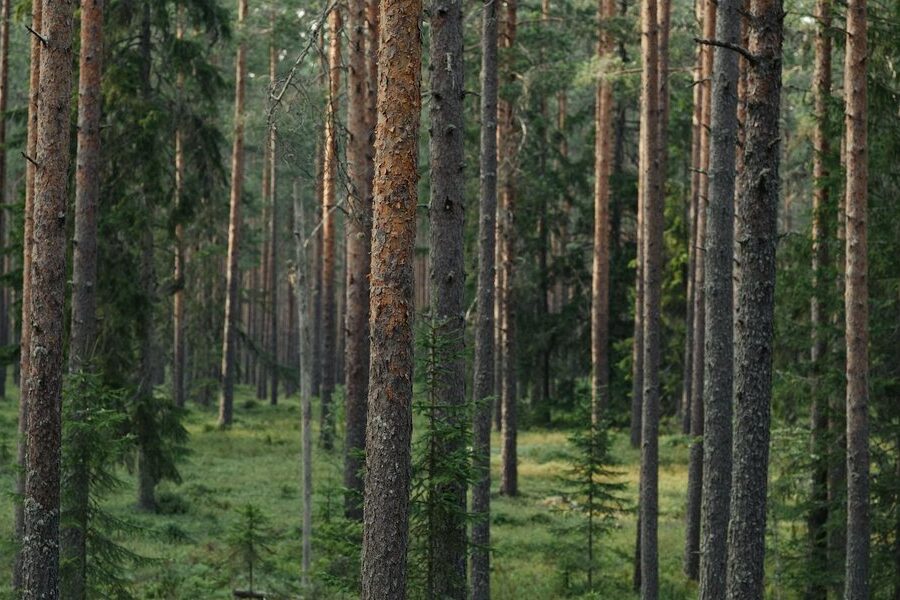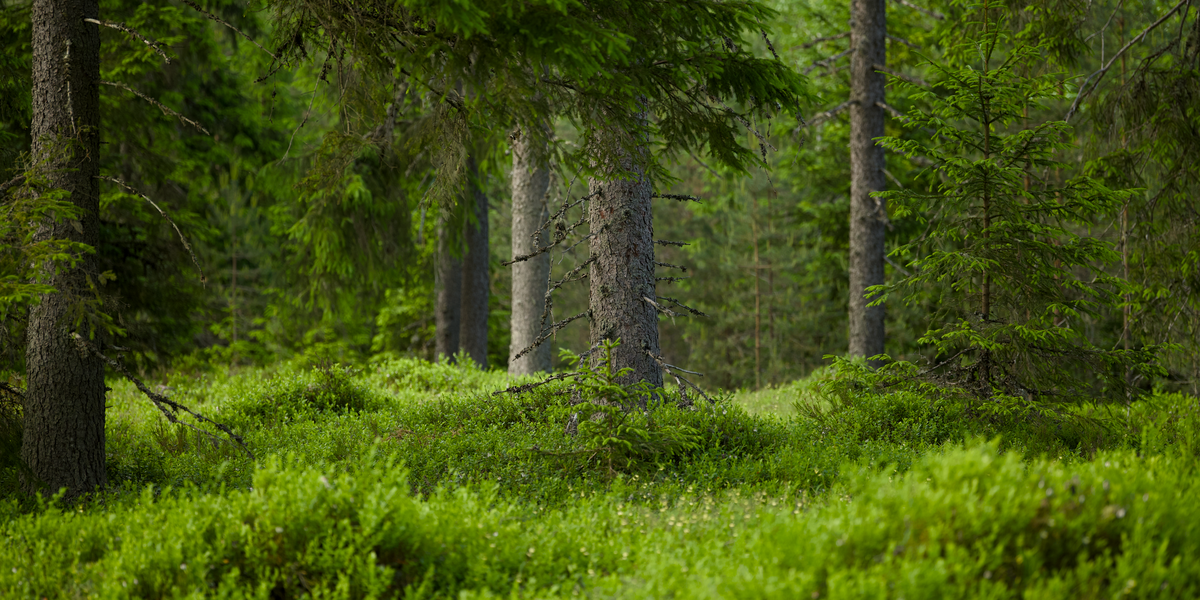
Taiga vegetation is dominated by conifers: spruce, fir, pine and larch. Underneath them sits a thin ground layer of mosses, lichens and low berry shrubs, with birch, aspen and alder scattered through the gaps. That’s the short answer. The longer one explains why a belt of forest covering roughly a third of the world’s forest area has so few plant species, and why a Siberian larch forest looks nothing like a Canadian spruce bog.
Contents
- How the taiga is built: four layers
- Canopy trees: the conifers
- Broadleaf trees: birch, aspen and alder
- Shrubs and the ground layer
- Why taiga plants look the way they do
- Key taiga plants at a glance
- North America vs Scandinavia vs Siberia
- Taiga vs tundra vegetation
- FAQ
How the taiga is built: four layers
The taiga (also called boreal forest) is a simple ecosystem by rainforest standards. Four layers cover almost everything you’ll see:
- Canopy: evergreen and deciduous conifers, usually only a handful of species in any one stand.
- Broadleaf trees: birch, aspen and alder, which fill in after fires and along rivers.
- Shrubs: blueberry, lingonberry, Labrador tea, dwarf birch and willow.
- Ground cover: mosses, lichens and, in wet spots, sphagnum bogs.
A rainforest can pack hundreds of tree species into a single hectare. A typical taiga hectare holds one to five. That low count is the defining feature of the biome, and most of what follows is an explanation for it.
Canopy trees: the conifers
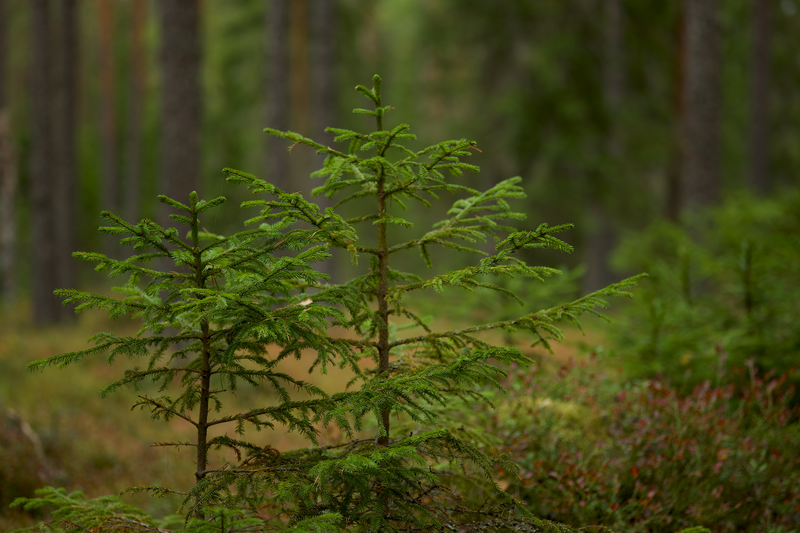
Four genera do the heavy lifting.
Spruce is the signature tree. White spruce and black spruce dominate across Canada and Alaska, Norway spruce in Scandinavia, Siberian spruce further east. Black spruce is the tough one: it grows in cold, waterlogged peat where almost nothing else survives, and the trees are often stunted to a few metres after a century of growth.
Fir (balsam fir in eastern Canada, Siberian fir in Russia) prefers slightly milder, wetter ground. Its needles are flat and soft, and the cones sit upright on the branch, which is a quick way to tell it from spruce.
Pine takes the dry, sandy, poor soils. Scots pine runs from Scotland across Scandinavia into Siberia, jack pine owns the sandy plains of Canada, and Siberian pine produces the pine nuts that nutcrackers, squirrels and bears rely on.
Larch is the odd one out, because it’s a conifer that drops its needles every autumn. Tamarack grows in North American bogs, and Siberian and Dahurian larch cover enormous areas of Russia. More on that below.
Broadleaf trees: birch, aspen and alder
Broadleaf trees make up the taiga’s second tier. They’re pioneers: they move in fast after a fire, logging or flood, grow quickly in full sun, and get shaded out as spruce and fir grow back underneath.
- Birch (paper birch in North America, silver and downy birch in Europe) is the most widespread. Its seeds are tiny and blow for kilometres across open ground.
- Quaking aspen spreads mostly by root suckers, so a whole grove can be one genetic individual. It resprouts within a season of a fire.
- Alder grows along streams and lake edges. Its roots host nitrogen-fixing bacteria, which matters in soil this poor.
Willows crowd river banks too, and they’re a major winter food for moose and other boreal forest herbivores.
Shrubs and the ground layer
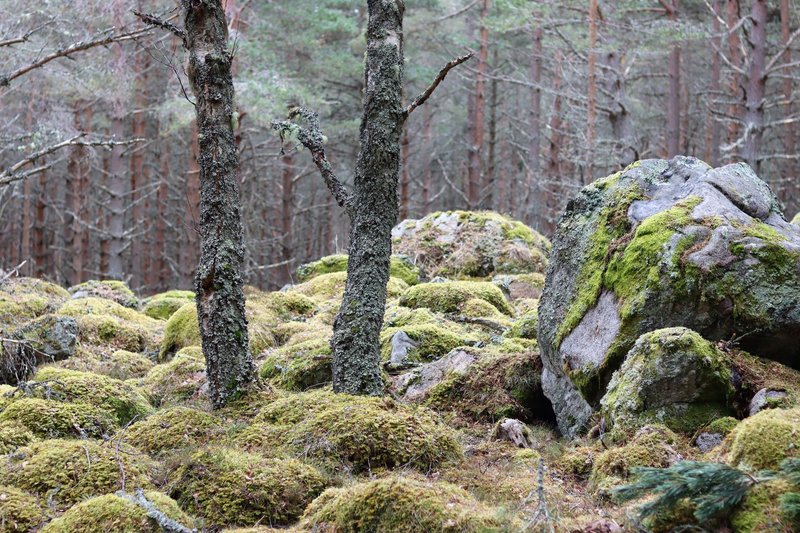
Look down in a taiga forest and you’ll usually see a green or grey carpet rather than a tangle of undergrowth.
Mosses form the floor. Feather mosses such as red-stemmed feather moss and stair-step moss grow in thick mats under spruce, holding moisture and insulating the soil. In wet hollows, sphagnum takes over and builds peat bogs, which store huge amounts of carbon.
Lichens are not plants at all, but a partnership between a fungus and an alga. Reindeer lichen (a pale, branching grey-green crust) is the one that matters most, since caribou and reindeer eat it through winter.
Shrubs are low and berry-heavy: blueberry (bilberry in Europe), lingonberry, crowberry, bearberry, cloudberry in wet ground, and Labrador tea with its leathery, rust-backed leaves. Dwarf birch and willows add height along edges.
Why is there so little undergrowth?
Three reasons stack up:
- Shade. A dense evergreen canopy blocks most light all year, including winter and early spring.
- Acidic litter. Needles break down slowly and turn the soil acidic, which suits mosses and heath shrubs and little else.
- Slow decomposition. Cold weather and a short growing season mean nutrients stay locked in the litter instead of cycling back to plants.
Why taiga plants look the way they do
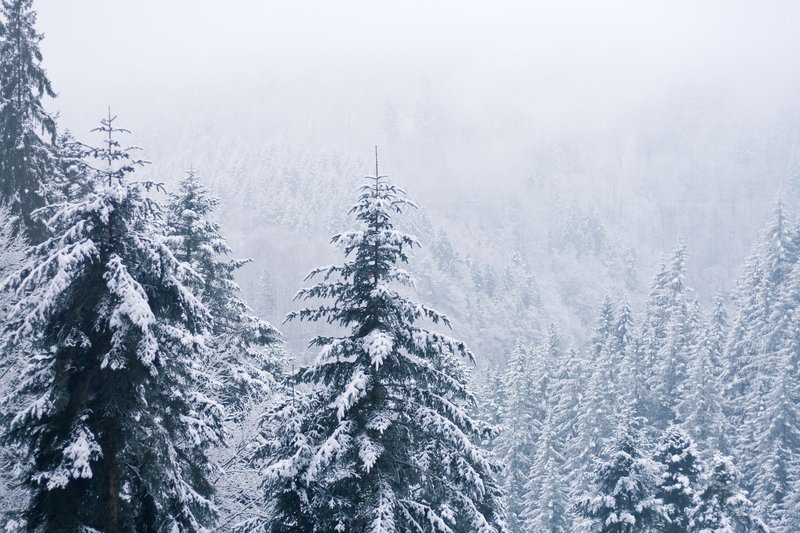
Each trait has a job.
- Conical crowns and drooping branches. Snow slides off instead of piling up until limbs snap.
- Narrow needles with a waxy coat. They lose little water, and in winter frozen ground makes water hard to get anyway. Keeping needles for several years also saves the tree from rebuilding foliage every spring.
- Dark green colour. Dark needles absorb more of the weak sunlight, so the tree can photosynthesise on warm days in early spring without waiting for new leaves.
- Shallow, wide roots. The soil is thin, acidic and often sitting on frozen ground, so deep taproots have nowhere to go.
- Fire-opened cones. Jack pine and black spruce carry sealed, resin-bonded (serotinous) cones that open after heat. The US Forest Service fire database notes that jack pine often relies on fire to release its seeds. A burn clears the ground and the seeds drop onto fresh ash.
- Deciduous needles in larch. Dropping needles lets larch survive in the harshest, driest, coldest parts of Siberia, where keeping foliage through a winter of -40°C isn’t worth the cost.
Fire isn’t a disaster for the taiga. It’s the reset button. Most stands burn every 50 to 200 years, and the forest regrows in a predictable order: mosses and fireweed, then aspen and birch, then spruce and fir.
Key taiga plants at a glance
| Plant | Where it grows | Leaf type | Role in the forest |
|---|---|---|---|
| White spruce | Canada, Alaska | Evergreen | Main canopy tree on well-drained ground |
| Black spruce | Canada, Alaska | Evergreen | Dominates cold, wet peat; fire-adapted cones |
| Norway spruce | Scandinavia, Russia | Evergreen | Canopy tree and the region’s main timber species |
| Balsam fir | Eastern Canada | Evergreen | Shade-tolerant canopy tree, moose winter food |
| Jack pine | Canada | Evergreen | Colonises sandy soils after fire |
| Scots pine | Scandinavia, Siberia | Evergreen | Dry-ground canopy tree |
| Siberian pine | Siberia | Evergreen | Pine-nut crop for wildlife |
| Dahurian larch | Eastern Siberia | Deciduous | Grows on permafrost where little else does |
| Tamarack | North American bogs | Deciduous | Wetland conifer |
| Paper birch | North America | Deciduous | Pioneer after fire and clearing |
| Quaking aspen | North America, Eurasia | Deciduous | Fast-resprouting pioneer |
| Reindeer lichen | Across the taiga | Not a plant | Winter food for caribou and reindeer |
North America vs Scandinavia vs Siberia
The same four genera show up everywhere, but the mix changes sharply by region.
North America. Spruce, balsam fir, jack pine and tamarack, with huge areas of peatland. The northernmost fringe near the treeline is open lichen woodland: widely spaced black spruce over a pale carpet of lichen, with a closed, shaded forest to the south.
Scandinavia and Finland. Norway spruce and Scots pine run most of the forest, with silver and downy birch filling gaps. The ground is a blanket of bilberry and lingonberry, which is why Finnish and Swedish forests are berry-picking country. The US Forest Service database listing for black spruce shows how closely the North American spruce is tied to wet, cold soils, which is a useful contrast with Europe’s Norway spruce on drained ground.
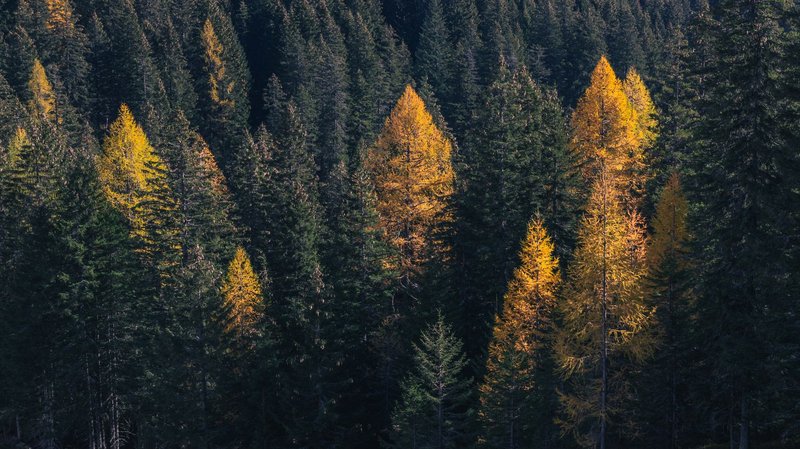
Siberia. Russia holds the largest share of the world’s boreal forest, and here the tree most people don’t expect takes over: larch. In eastern Siberia, Dahurian larch forms vast stands on permafrost, with shallow roots that sit in the thin layer of soil that thaws each summer. It’s deciduous, it tolerates winter lows below -50°C, and it grows at the northern limit of tree growth on Earth. Siberian pine and Siberian fir mix in further west, and the ground layer is dominated by lingonberry and dwarf shrubs.
If you picture taiga as “dark green evergreen forest,” you’re picturing the western half of the biome. The eastern half turns gold in autumn and bare in winter.
Taiga vs tundra vegetation
The simplest difference: taiga has trees and tundra doesn’t. The transition zone between them is the forest-tundra, where trees get shorter and sparser until they stop. The National Geographic taiga overview describes the biome as the largest land biome on Earth, which makes the treeline one of the longest ecological boundaries on the planet.
| Taiga | Tundra | |
|---|---|---|
| Dominant plants | Conifer trees | Mosses, lichens, sedges, dwarf shrubs |
| Tree cover | Dense to open forest | None, or isolated stunted trees |
| Growing season | Short but long enough for trees | Very short, with permafrost near the surface |
| Soil | Thin, acidic, often partly thawed | Permanently frozen below a shallow active layer |
Both biomes share lichens, mosses and berry shrubs. The difference is that the taiga has a growing season long enough, and soil warm enough, to support a trunk.
FAQ
What is the most common tree in the taiga? Spruce, by area, in North America and Europe. In eastern Siberia, larch covers more ground than any other tree.
Are there flowering plants in the taiga? Yes. Fireweed, bunchberry, twinflower, Labrador tea and the berry shrubs all flower in the short summer. Birch, aspen and willow are flowering trees. Conifers produce cones rather than flowers.
Do deciduous trees grow in the taiga? Yes. Birch, aspen, alder, willow and larch all lose their leaves or needles in autumn. They’re a minority, but they dominate young stands after a fire.
Why do taiga trees have needles? Needles have a small surface area and a waxy coat, so they lose less water when the ground is frozen and roots can’t take any up. They also stay on the tree for years, so the tree photosynthesises as soon as it warms up.
Why is the taiga soil so poor? Cold slows decay, so nutrients stay in the litter layer. Needle litter is acidic, which leaches minerals out of the soil. The result is a pale, acidic soil called podzol.
Are lichens and mosses plants? Mosses are plants, though simple ones without roots or flowers. Lichens are a fungus living with an alga or cyanobacterium, so they’re not plants.
Which taiga plants do animals depend on most? Reindeer lichen for caribou, willow and balsam fir for moose, Siberian pine nuts for squirrels and bears, and berries for bears and birds.