A winterberry in January is a bare gray shrub hung with thousands of red beads, and it’s the best argument for planting colorful berries. Most gardens go flat after the leaves drop. Berries are what keep a yard worth looking at from October through February, and they feed the birds that make it worth watching.
This list sorts 16 berry plants by color, because color is how most people shop for them. Each entry gives the season the berries show, hardiness zone, mature size, sun needs and who eats them. Near the end you’ll find a comparison table, a guide to choosing for small gardens, shade and cold climates, and a section on which showy berries are poisonous. That last part gets skipped by most lists, and it matters if you have kids or pets.
Table of Contents
- Red Berries
- Orange Berries
- Purple Berries
- Blue Berries
- White Berries
- Yellow Berries
- Colorful Berries at a Glance
- Which Berry Plant Should You Choose?
- Why Berries Come in Different Colors
- Which Colorful Berries Are Toxic?
Red Berries
Red is the color birds spot first and the color that reads best against snow. These four cover deciduous and evergreen options, wet soil and dry, and every zone from 2 to 9.
1. Winterberry (Ilex verticillata)
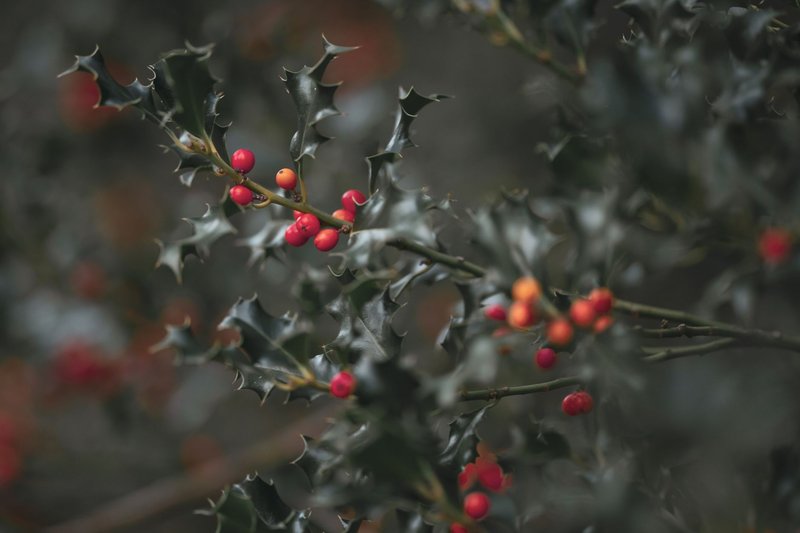
Berries show: September to late winter. Zones: 3-9. Size: 3-12 ft, depending on variety. Sun: full sun to part shade.
Winterberry is a deciduous holly, so the leaves drop in autumn and leave the berries bare along the branches. That’s the whole appeal. It tolerates wet soil that kills most shrubs, and robins, bluebirds and cedar waxwings strip it in late winter once other food runs out.
It has one catch: male and female flowers grow on separate plants. Only females fruit, and a male has to bloom at the same time within roughly 50 feet. The compact ‘Red Sprite’ is commonly paired with the early-blooming male ‘Jim Dandy’. One male can pollinate several females.
2. American Holly (Ilex opaca)
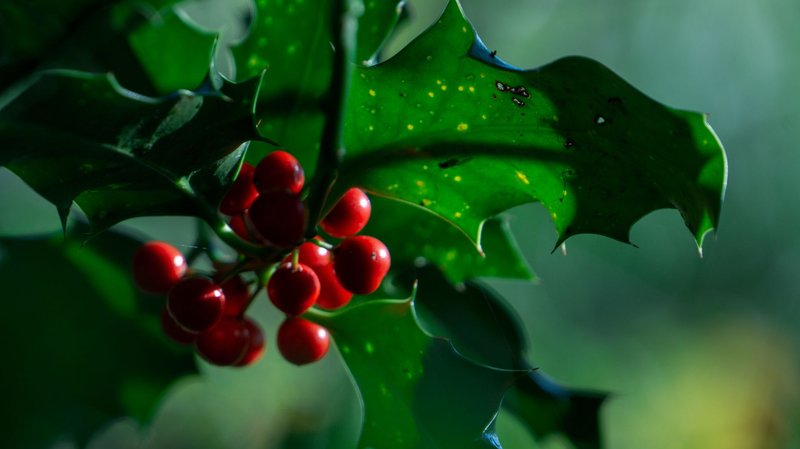
Berries show: October through winter. Zones: 5-9. Size: 15-30 ft, taller in the wild. Sun: full sun to part shade.
This is the evergreen holly of Christmas cards, with spiny leaves and dull red berries that hold until birds finish them in late winter. It grows slowly and eventually becomes a real tree, so it suits a back corner or a screen, not a foundation bed.
The same rule applies as with winterberry: you need a female for berries and a male nearby for pollen. Buy plants labeled by sex, because seedling hollies are a coin flip.
3. Red Chokeberry (Aronia arbutifolia)
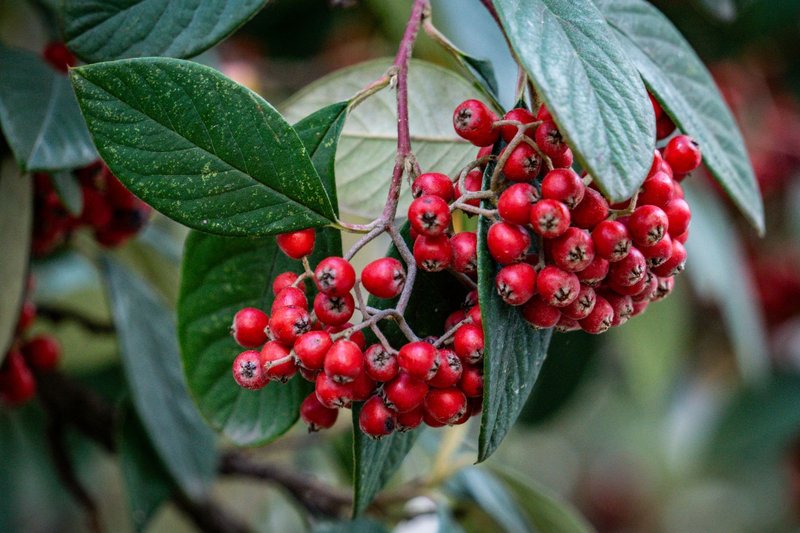
Berries show: September to midwinter. Zones: 4-9. Size: 6-10 ft. Sun: full sun to part shade.
Red chokeberry gives you two seasons in one shrub: berries in clusters that last into winter, and leaves that turn deep red in fall. It handles both wet and average soil and spreads slowly by suckers into a loose thicket.
The berries are astringent, which is the origin of the name. Birds leave them alone until freezing weather softens them, so they hang on longer than most. Plant it in a mass if you want the display to read from the street.
4. American Cranberrybush Viburnum (Viburnum trilobum)
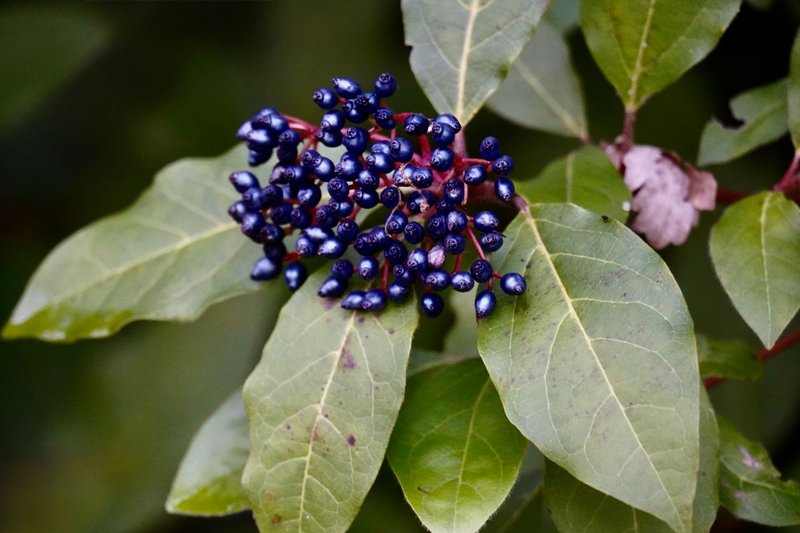
Berries show: September to late winter. Zones: 2-7. Size: 8-12 ft. Sun: full sun to part shade.
Few shrubs are this hardy and this showy. White flower clusters in late spring give way to translucent red berries that look like cranberries and are edible, though very tart. A University of Georgia field report on showy berries lists viburnums among the dependable choices for fall color.
The fruit stays on for months because birds eat it last, usually after repeated freezing mellows it. Don’t confuse it with the European guelder rose, a close relative that is more bitter and sometimes invasive.
Orange Berries
Orange berries are the warm accent in a winter garden. They look best against evergreen foliage or a gray fence.
5. Pyracantha (Pyracantha coccinea)
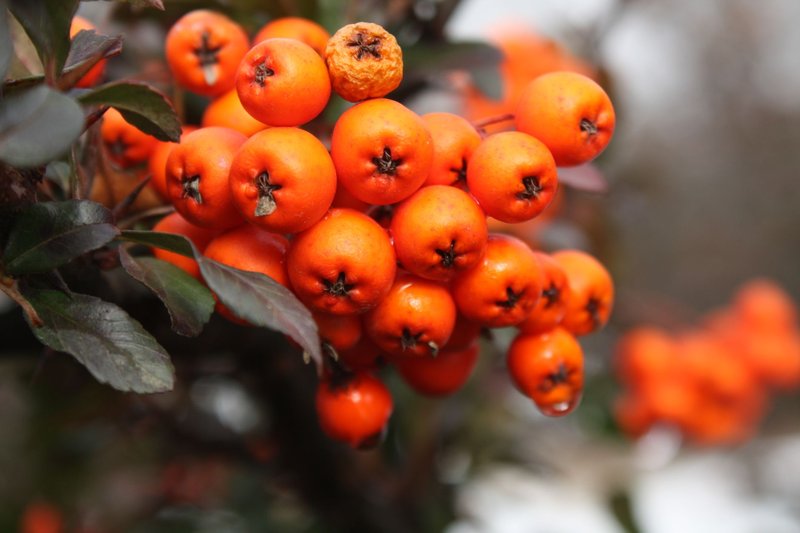
Berries show: September through winter. Zones: 6-9. Size: 6-12 ft. Sun: full sun.
Firethorn earns its name twice: the berries glow orange to red, and the thorns draw blood. Spring flowers are white and heavy, and the fruit that follows can weigh down whole branches. It’s evergreen or semi-evergreen, so it keeps its leaves behind the berries.
Train it against a wall, or use it as a security hedge. The thorns are the real hazard near children. The berries are not a food, and raw ones can upset the stomach. Look for scab- and fire blight-resistant cultivars, because both diseases are common.
6. Rowan (Sorbus aucuparia)
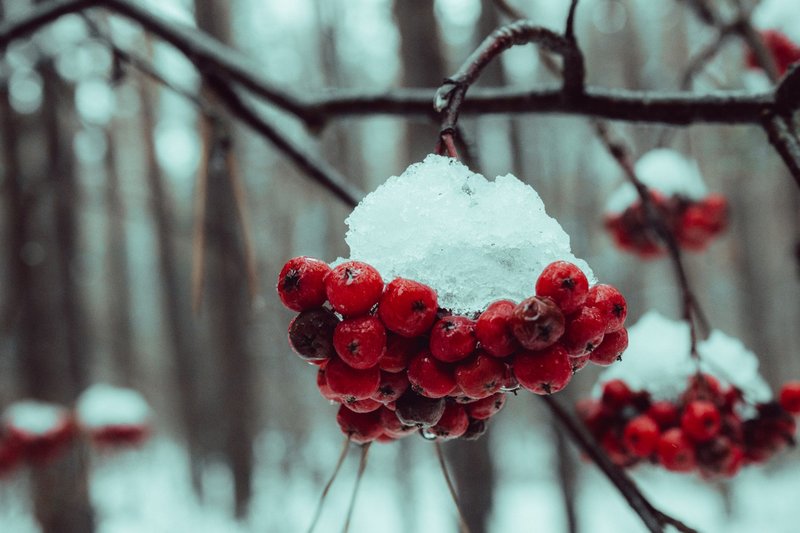
Berries show: August to November. Zones: 3-7. Size: 20-40 ft. Sun: full sun.
Also called European mountain ash, rowan carries heavy bunches of orange-red berries from late summer, and a flock of waxwings or thrushes can empty a tree in days. It’s a small tree with fern-like leaves and white flowers in May.
Raw berries contain parasorbic acid, which upsets the stomach. Cooking neutralizes it, and rowan jelly is an old European accompaniment to game. It struggles in hot, humid summers, so it’s a northern pick.
7. Sea Buckthorn (Hippophae rhamnoides)
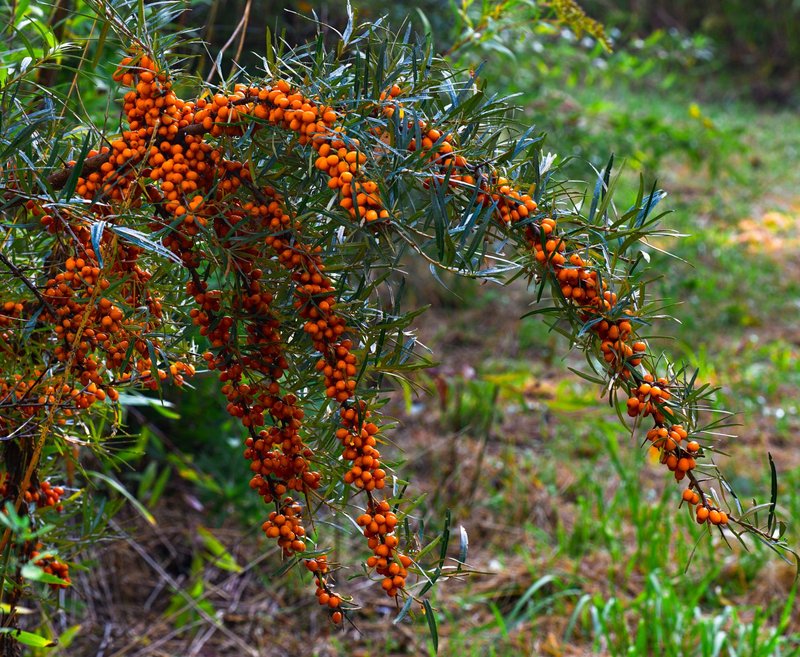
Berries show: September through winter. Zones: 3-7. Size: 6-20 ft. Sun: full sun.
Sea buckthorn berries pack tight along the stems like orange beads on a string, with silver-green leaves behind them. The plant tolerates poor soil, salt spray and hard cold. The berries are edible and extremely sour, and they’re rich in vitamin C.
Plants are either male or female, and you need roughly one male for every six to eight females. Be aware that it suckers aggressively and is thorny, and it’s treated as invasive in parts of North America. Give it room, or skip it in a small yard.
Purple Berries
Purple berries are rare in the garden, which is why the first sight of beautyberry stops people on the sidewalk.
8. American Beautyberry (Callicarpa americana)
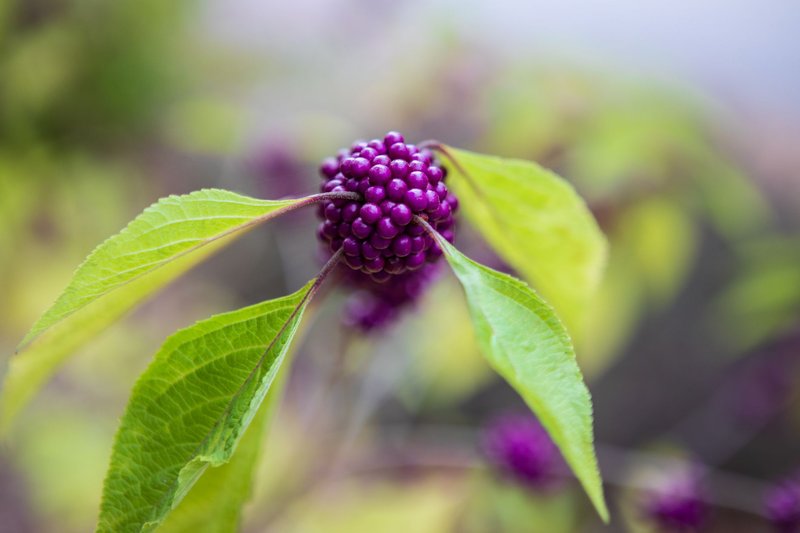
Berries show: late August to November. Zones: 6-10. Size: 3-6 ft. Sun: full sun to part shade.
The berries are a metallic magenta-purple, packed in tight rings around the stem at each leaf joint. Nothing else in a Southeastern yard looks like it. Mockingbirds, robins and brown thrashers eat them, though usually late in the season.
It flowers and fruits on new wood, so cut it back hard in late winter and it will respond with a fuller plant. USDA research on the leaves found compounds that repel mosquitoes, which is why rural gardeners crush the foliage and rub it on their skin.
9. Early Amethyst Beautyberry (Callicarpa dichotoma)
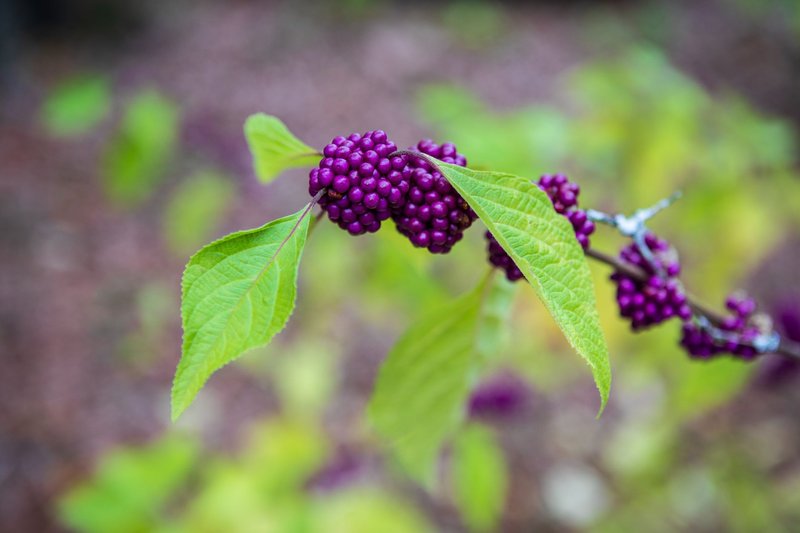
Berries show: September to November. Zones: 5-8. Size: 3-4 ft. Sun: full sun to part shade.
This Asian species is the beautyberry for colder and smaller gardens. Its arching stems carry clusters of small, glossy violet berries, and it stays shorter and tidier than the American species.
Like its relative, it dies back in a hard winter and regrows from the base, so treat it as a perennial shrub and prune in early spring. Plant it where the arching stems can lean over a path or bed edge.
10. American Elderberry (Sambucus canadensis)
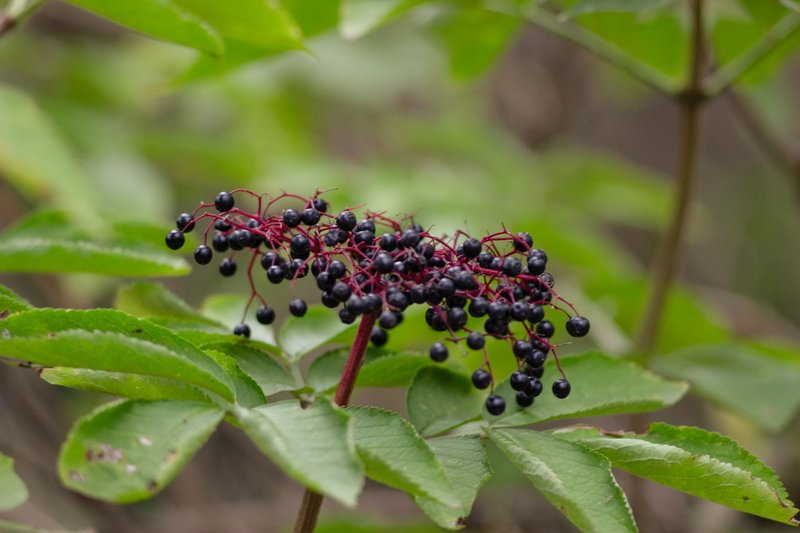
Berries show: August to September. Zones: 3-9. Size: 5-12 ft. Sun: full sun to part shade.
Elderberry gives you plate-sized white flower heads in June and flat clusters of purple-black berries by late summer. It grows fast, tolerates damp soil and spreads by suckers. Songbirds strip the clusters within a couple of weeks of ripening, so net some if you plan to harvest.
Do not eat them raw. The berries, leaves and stems contain cyanide-producing compounds, and only cooked berries are safe to eat. It’s the only entry here that gives you jam, syrup and cordial as well as color.
Blue Berries
True blue is rare in plants. Most blue berries are dark purple with a waxy coating that scatters light, and that wax is what makes them look blue.
11. Oregon Grape (Mahonia aquifolium)
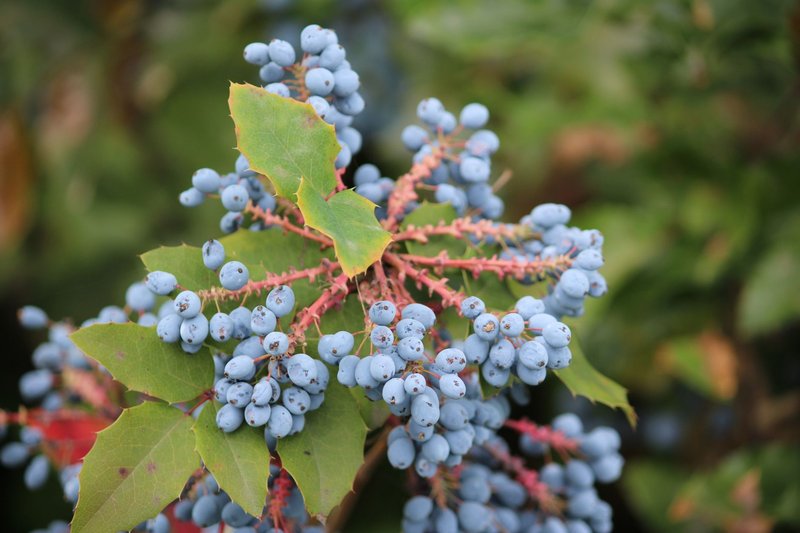
Berries show: June to August. Zones: 5-9. Size: 3-6 ft. Sun: part to full shade.
Despite the name, this is not a grape. It’s an evergreen shrub with spiny, holly-like leaves that turn bronze in cold weather, yellow flowers in early spring, and clusters of dusty blue-purple berries in summer. It’s native to the Pacific Northwest and one of the few showy-berried plants that handle dry shade.
The berries are edible but very tart, and are usually mixed with sugar for jelly. Birds eat them as well.
12. Highbush Blueberry (Vaccinium corymbosum)
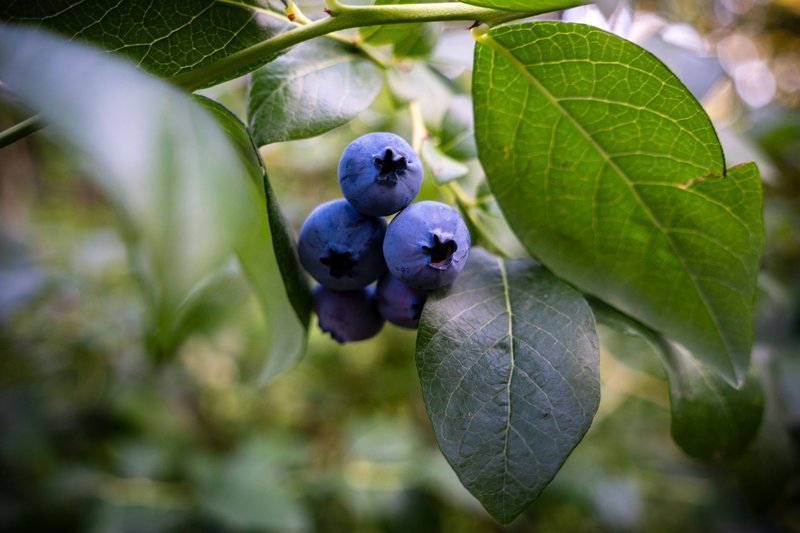
Berries show: June to August. Zones: 4-7. Size: 4-8 ft. Sun: full sun.
A blueberry bush has four seasons of interest: white bell flowers in spring, edible blue fruit in summer, scarlet foliage in fall and red twigs in winter. It needs acidic soil, with a pH around 4.5 to 5.5, and will sulk in ordinary garden soil.
Plant two different varieties for better fruit set. If birds are a problem, cover the bush with netting just as the berries start to color.
13. Arrowwood Viburnum (Viburnum dentatum)
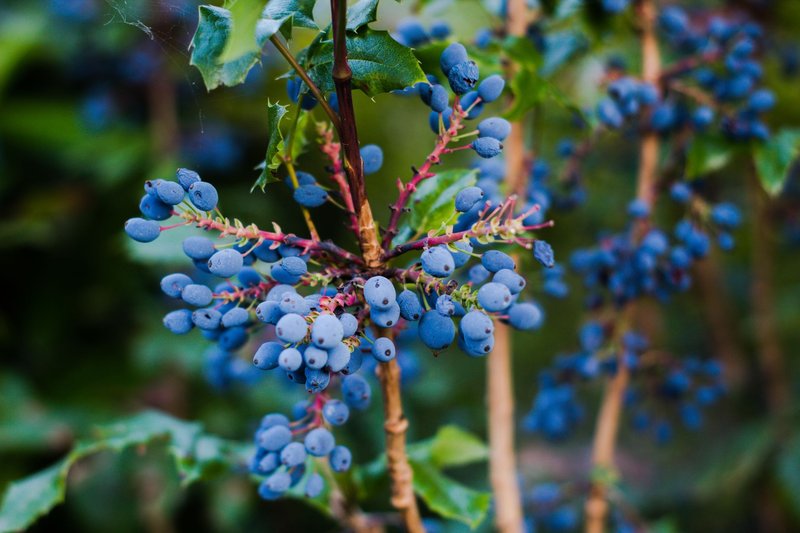
Berries show: September to November. Zones: 2-8. Size: 6-10 ft. Sun: full sun to part shade.
Arrowwood is a tough native shrub that tolerates clay, drought and poor soil. White flowers in early summer become glossy blue-black berries in clusters, and the leaves turn red and purple in fall. It’s a workhorse for hedges and informal screens.
You need at least two plants for good fruiting. Birds take the berries quickly, which makes this one of the better choices for wildlife.
White Berries
White berries stand out in shady corners where red and purple get lost. Both of these thrive in shade, and both are poisonous. Read the notes before you plant.
14. Snowberry (Symphoricarpos albus)
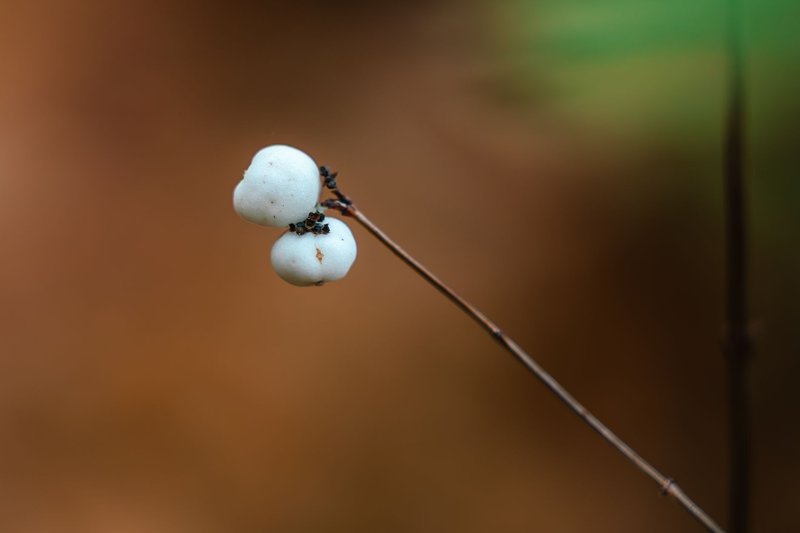
Berries show: September to winter. Zones: 3-7. Size: 3-6 ft. Sun: full sun to full shade.
Snowberry produces round white berries in clusters along arching stems, and it’s one of the few berried shrubs that tolerate dry shade under trees. Children pop the berries for fun, which is the reason to know they’re mildly toxic and can cause vomiting if eaten.
Many birds ignore the berries until late winter, so they persist long after the red berries elsewhere have disappeared. It spreads by suckers and works as a ground-holding hedge on a slope.
15. Doll’s Eyes (Actaea pachypoda)
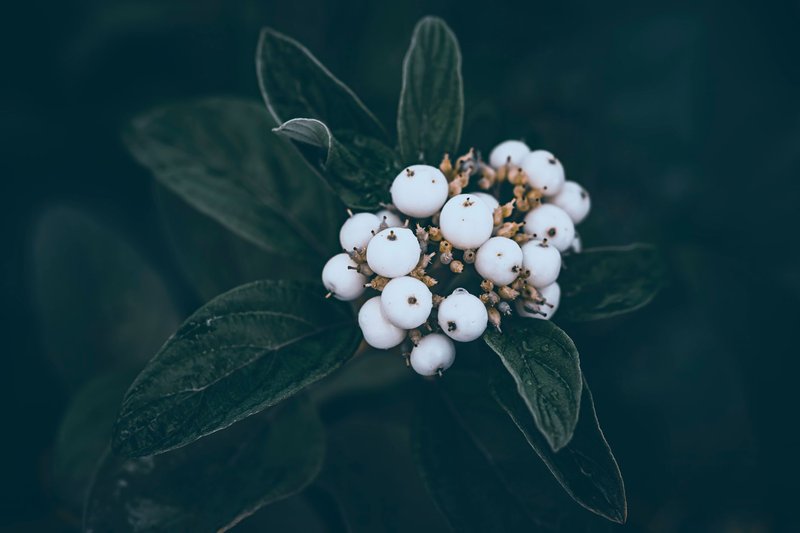
Berries show: August to October. Zones: 3-8. Size: 1-3 ft. Sun: part to full shade.
Also called white baneberry, this woodland perennial produces white berries, each with a black dot, on thick red stalks. They look like porcelain doll eyes, and nothing else in the garden looks like them.
All parts of the plant are poisonous, and the berries can cause serious illness if eaten. Plant it only where children and dogs can’t reach it, in moist, rich woodland soil. Native plant nurseries carry it.
Yellow Berries
Yellow fruit is the least common and the most overlooked. It lights up when the sun is low.
16. Golden Raindrops Crabapple (Malus ‘Golden Raindrops’)
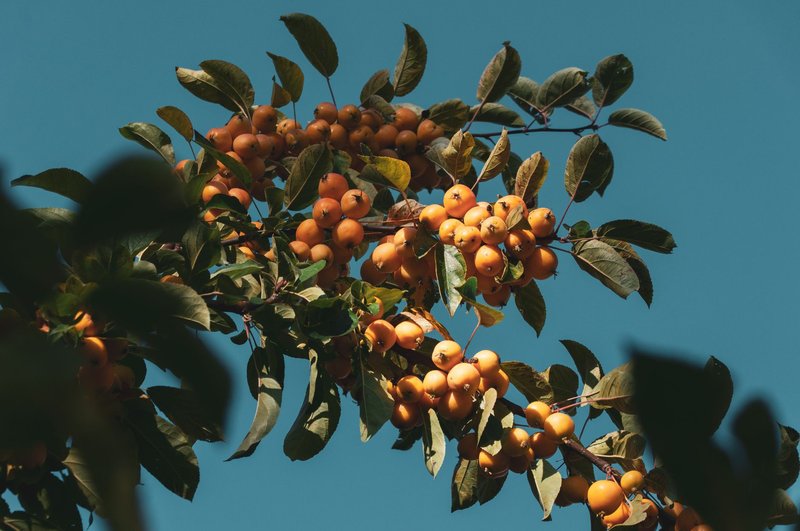
Berries show: September through winter. Zones: 4-8. Size: about 15-20 ft. Sun: full sun.
Crabapples are technically pomes, not berries, but gardeners treat them as berry plants. This cultivar has white spring flowers, cut leaves and small golden-yellow fruit that hangs on long into winter. Flocks of cedar waxwings and robins strip the fruit after repeated freezes soften it.
Check scab resistance when buying. Susceptible crabapples drop their leaves in midsummer.
Colorful Berries at a Glance
| Plant | Berry color | Berries show | Zones | Mature size | Sun |
|---|---|---|---|---|---|
| Winterberry | Red | Sept-late winter | 3-9 | 3-12 ft | Sun to part shade |
| American holly | Red | Oct-winter | 5-9 | 15-30 ft | Sun to part shade |
| Red chokeberry | Red | Sept-midwinter | 4-9 | 6-10 ft | Sun to part shade |
| American cranberrybush | Red | Sept-late winter | 2-7 | 8-12 ft | Sun to part shade |
| Pyracantha | Orange-red | Sept-winter | 6-9 | 6-12 ft | Full sun |
| Rowan | Orange-red | Aug-Nov | 3-7 | 20-40 ft | Full sun |
| Sea buckthorn | Orange | Sept-winter | 3-7 | 6-20 ft | Full sun |
| American beautyberry | Magenta-purple | Aug-Nov | 6-10 | 3-6 ft | Sun to part shade |
| Early Amethyst beautyberry | Violet | Sept-Nov | 5-8 | 3-4 ft | Sun to part shade |
| American elderberry | Purple-black | Aug-Sept | 3-9 | 5-12 ft | Sun to part shade |
| Oregon grape | Blue-purple | June-Aug | 5-9 | 3-6 ft | Part to full shade |
| Highbush blueberry | Blue | June-Aug | 4-7 | 4-8 ft | Full sun |
| Arrowwood viburnum | Blue-black | Sept-Nov | 2-8 | 6-10 ft | Sun to part shade |
| Snowberry | White | Sept-winter | 3-7 | 3-6 ft | Sun to full shade |
| Doll’s eyes | White | Aug-Oct | 3-8 | 1-3 ft | Part to full shade |
| Golden Raindrops crabapple | Yellow | Sept-winter | 4-8 | 15-20 ft | Full sun |
Zones and sizes vary by cultivar, so check the plant tag before you buy.
Which Berry Plant Should You Choose?
Small gardens: Early Amethyst beautyberry stays at 3-4 feet. ‘Red Sprite’ winterberry is compact too, if you have room for a male nearby. Oregon grape fits where the soil is too dry for anything else.
Shade: Oregon grape, snowberry and doll’s eyes all fruit in shade. Arrowwood viburnum and cranberrybush produce berries in part shade, though fewer than in full sun.
Cold zones (2-4): American cranberrybush (zone 2), arrowwood (zone 2), winterberry, rowan, sea buckthorn, elderberry and snowberry all survive zone 3 winters.
Wet soil: Winterberry and red chokeberry are among the few berried shrubs that don’t mind soggy ground.
Hot, humid climates: American beautyberry, American holly and pyracantha handle southern summers better than rowan or the viburnums.
Berries that last into winter: Hollies, winterberry, pyracantha, cranberrybush, snowberry and crabapple all hold fruit past January, at least until birds find them.
Why Berries Come in Different Colors
Berry color is a signal aimed at birds. A plant makes fruit so an animal will eat it, carry the seeds away and drop them somewhere else, and bright color tells the animal when the fruit is ready. Many birds see color well, including some ultraviolet, so they pick out red, black and blue fruit from a distance.
The pigments come from two main groups. Anthocyanins produce the reds, purples and blues, and their exact shade shifts with the acidity of the fruit’s tissue. Carotenoids produce yellows, oranges and some reds. NDSU Extension notes that anthocyanins are also the compounds behind the antioxidant reputation of dark berries like blueberries.
White berries are mostly unpigmented, which is why snowberry and doll’s eyes look pale against green foliage. A blueberry’s blue is partly structural: its dark skin is covered in wax that scatters blue light, and rubbing the wax off reveals the darker purple underneath.
Which Colorful Berries Are Toxic?
A showy berry is not a safe berry. Several plants in this list are edible only when cooked, and a few should never be eaten.
- Poisonous: Doll’s eyes (all parts, berries especially). Snowberry is mildly toxic and causes vomiting.
- Edible only when cooked: Elderberry and rowan.
- Edible but sour: Cranberrybush, sea buckthorn, Oregon grape, red chokeberry (astringent) and blueberry (not sour at all).
- Not food: Pyracantha. The berries are low in toxicity, but the thorns are the main danger.
Three plants you’ll see on other lists are missing here on purpose. Nandina (heavenly bamboo) has red berries that are toxic to pets, and cedar waxwings have died after eating them. It’s also invasive across the Southeast. Bittersweet nightshade (Solanum dulcamara) produces red berries that are poisonous to people and animals. Oriental bittersweet and porcelain berry are showy but choke out native trees across the eastern US.
Before planting near pets, check the plant against the ASPCA toxic and non-toxic plants list. If a child eats an unknown berry in the US, call Poison Control at 1-800-222-1222.