
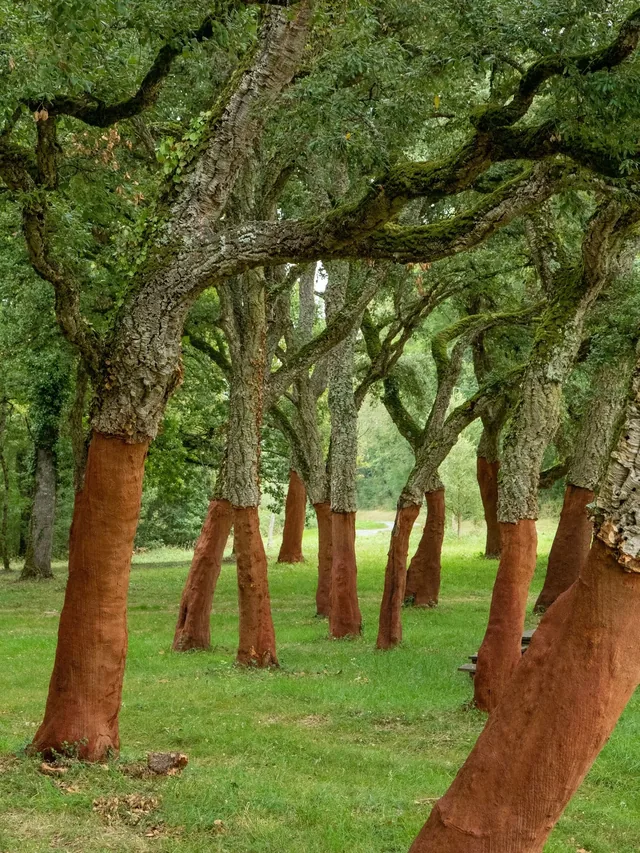
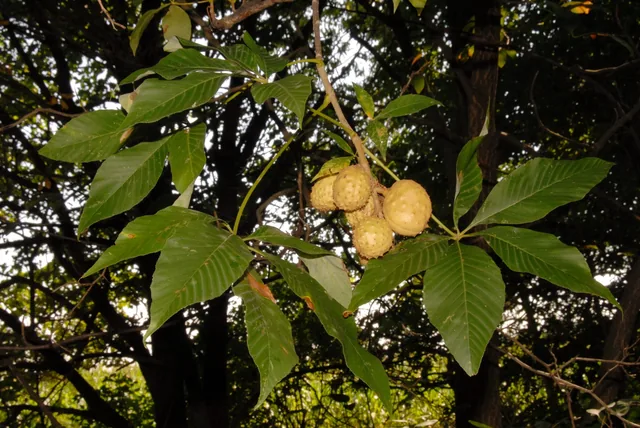
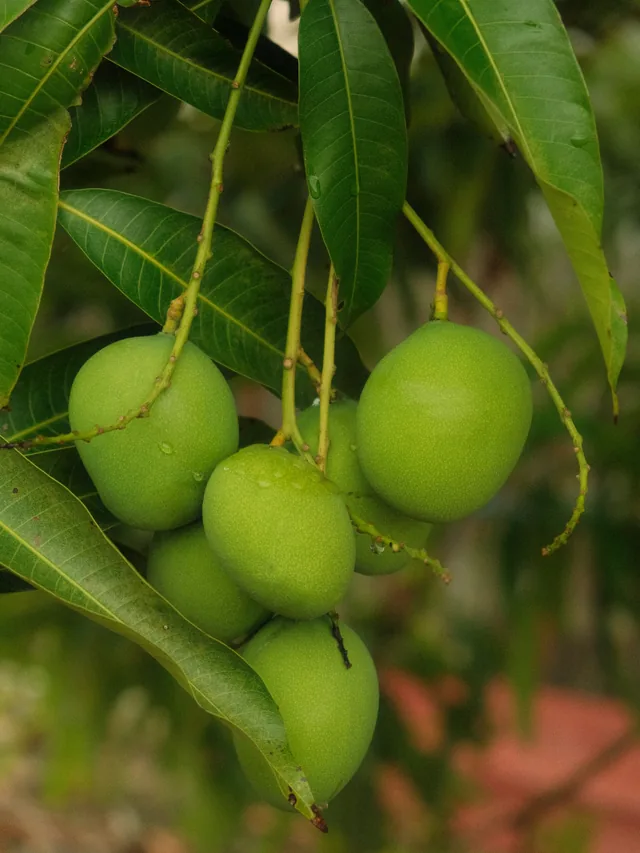
Can you name the tree?
Ten tree photos, four choices each, no timer. Pick a level.
Your photos
Keep reading about trees
More quizzes
This tree identification quiz shows you 10 tree photos and asks you to name each one from four choices. It works as a tree ID quiz for hikers, students and anyone who has stood under a tree and asked what it is. After every answer you see the leaf, bark or fruit that identifies the tree, so each round trains your eye for the next.
How the tree ID quiz works
The quiz holds 120 trees, 40 per level. Every round draws 10 at random, so a second round is different from the first.
- Easy covers trees known around the world: Baobab, Weeping Willow, Giant Sequoia, Japanese Maple, Ginkgo and Joshua Tree.
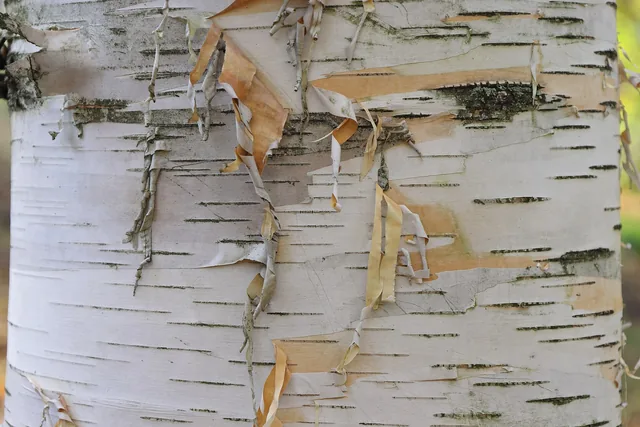
- Medium is the park and the backyard: Red Maple, Sweetgum, Shagbark Hickory, Eastern Redbud, Douglas Fir and Paper Birch. Many photos show a leaf, a cone or a patch of bark, the way you meet a tree on a walk.
- Hard is the look-alikes: Pin Oak against Scarlet Oak, Red Pine against Scots Pine, Fraser Fir against Balsam Fir. The wrong answers are the trees people mistake for the one in the photo.
Score 10 out of 10 to earn the top rank, Master forester, then share your score.
How to identify a tree by its leaves
Foresters check the same features in the same order. Each answer cuts the list of possible trees roughly in half.
- Needles, scales or broad leaves. Pines, spruces and firs carry needles. Cedars, junipers and arborvitae carry flat scales. Everything else is a broadleaf tree.
- Opposite or alternate. Look at where leaves meet the twig. Maples, ashes, dogwoods and buckeyes grow leaves in pairs across from each other. Most other trees stagger them.
- Simple or compound. A simple leaf is one blade. A compound leaf splits into leaflets, as on walnut, ash, locust and horse chestnut.
- Lobes and edges. Rounded lobes mark the white oaks. Bristle-tipped lobes mark the red oaks. A toothed edge, a smooth edge or a heart shape narrows the field further.
- Count the needles. On a pine, needles grow in bundles. Eastern White Pine has five per bundle, Loblolly three and Red Pine two. Spruce needles are square and roll between your fingers. Fir needles are flat and will not roll.
In winter, use bark, buds and fruit instead. Paper Birch peels in white sheets, Shagbark Hickory in long gray strips and American Sycamore in camouflage patches.
How to tell look-alike trees apart
These are the marks that decide the hardest pairs in the quiz.
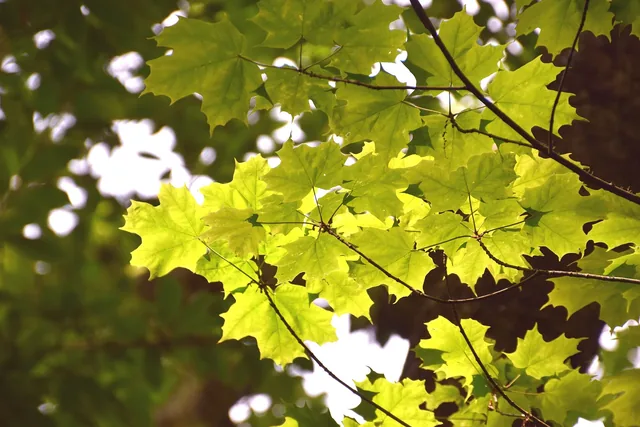
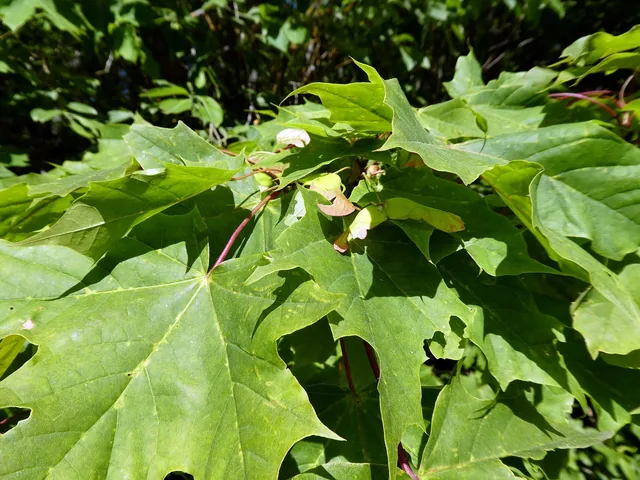
- Sugar Maple or Norway Maple: snap a leaf stalk. Norway Maple bleeds white milky sap. Sugar Maple sap is clear.
- Giant Sequoia or Coast Redwood: Giant Sequoia grows in the Sierra Nevada and has short awl-shaped scales. Coast Redwood grows in the coastal fog belt and has flat needles in two rows, like a yew.
- Pin Oak or Scarlet Oak: Pin Oak acorns are small with a shallow saucer cap, and its lower limbs droop. Scarlet Oak acorns sit in a deep bowl cap that covers up to half the nut, and its leaves are glossier.
- Balsam Fir or Fraser Fir: the bracts on a Fraser Fir cone stick out and fold down over the scales. On a Balsam Fir they stay hidden.
- Honey Locust or Black Locust: Honey Locust has branched thorns on the trunk and tiny leaflets. Black Locust has short paired spines at the base of each leaf and oval leaflets about twice as large.
- American Sycamore or London Plane: sycamore seed balls hang one per stalk and the bark peels to bright white. London Plane balls hang in pairs and the bark flakes olive and cream.
- Tamarack or European Larch: both drop their gold needles in fall. Tamarack cones are under an inch long. European Larch cones are about twice that.
Identify the trees you find
For a tree outside the quiz, photograph a leaf, the bark and any fruit, then upload the photos to iNaturalist, where other observers confirm the species. The Arbor Day Foundation’s What Tree Is That? key walks you through the leaf questions above for North American trees. The USDA PLANTS Database confirms range and scientific names. In the UK, use the Woodland Trust’s British trees guide.
The birds and squirrels in those trees are a different job: WunderWild names animals from a photo you take on your iPhone.
Frequently asked questions
How do I figure out what tree this is?
Start with the leaf. Decide whether it is a needle, a scale or a broad leaf, whether leaves grow in pairs, and whether each leaf is one blade or split into leaflets. Those three answers narrow most trees to a few candidates. Bark, fruit and location settle the rest.
What is the easiest way to identify a tree by its leaf?
Check the leaf arrangement on the twig first. Opposite leaves point to a short list in North America: maple, ash, dogwood, buckeye and catalpa. Alternate leaves cover almost everything else, and lobes and edges sort those.
How can I tell the difference between pine, spruce and fir?
Pine needles grow in bundles of two to five. Spruce needles grow one at a time, are square and roll between your fingers. Fir needles also grow singly but are flat and soft. Fir cones stand upright on the branch, and spruce cones hang down.
How many kinds of trees are there?
Scientists count about 73,000 tree species worldwide, and around 9,000 of them have not been described yet. The United States and Canada have close to 1,000 native species. The quiz covers 120 of the trees people meet most often.
Are these real tree photos?
Yes. Every photo shows a real, living tree and comes from Wikimedia Commons, iNaturalist, Unsplash or Openverse. The photographer and license appear after you answer.
Can I use this tree quiz in class?
Yes. It runs on a projector, computer or tablet with nothing to install. To add it to your own site, click “Embed this quiz” under the game and copy the code.
More trees to learn
Practice between rounds with our list of trees from A to Z, tree examples by category, evergreen trees, coniferous trees, the biggest trees on Earth and the differences between elm and ash. To find out how old a tree is, use the tree age calculator. Then try the other photo quizzes.