TLDR
- Polynesia has roughly 175 bird species in French Polynesia alone, about 40 of them found nowhere else. Counts differ between sources because they draw the map, and treat vagrants and introduced birds, differently.
- The birds worth traveling for are the endemic monarchs, lorikeets, kingfishers, ground-doves and one non-migratory sandpiper. Most are rare, and several are Critically Endangered.
- Seabirds and shorebirds are the easy sightings. Most of the common landbirds you’ll see around towns are introduced.
- Best islands by target: Tahiti (Tahiti Monarch), Ua Huka in the Marquesas (Ultramarine Lorikeet), Rarotonga in the Cook Islands (Rarotonga Monarch), remote Tuamotu atolls (sandpiper and ground-dove).
Contents
- What counts as Polynesia, and how many birds live there
- The extinction story behind the species list
- Monarchs: the flycatchers that nearly vanished
- Kingfishers
- Lorikeets
- Fruit-doves, pigeons and ground-doves
- Seabirds
- Shorebirds
- Introduced birds: why the easy ones aren’t native
- Where to see Polynesian birds, island by island
- Quick reference table
What counts as Polynesia, and how many birds live there
Polynesia is a triangle of ocean with Hawaii, New Zealand and Easter Island at its corners. Inside it sit thousands of islands, and the birds change as you move across the map. Hawaii and New Zealand have their own large, well-documented avifaunas, so most “birds of Polynesia” references mean the tropical heart of the region: French Polynesia (the Society Islands, Marquesas, Tuamotus, Gambier and Australs), the Cook Islands, and the western end of Polynesia around Samoa and Tonga.
The headline number is about 175 species recorded in French Polynesia, roughly 40 of them endemic. A broader count for all of Eastern Polynesia runs well past 200, while some birder pages list closer to 100. The gap isn’t an error. It comes from three choices: which islands you include, whether you count vagrants and introduced birds, and which taxonomy you follow (lump two island forms together and the total drops). When you see a count, check the boundaries before you trust it.
The number that matters for a visitor is smaller. A few dozen resident landbirds are native to any given island group, and many are confined to one island or one valley.
The extinction story behind the species list
The birds you can see today are what’s left. When Polynesian voyagers settled the Pacific, they brought rats, pigs and dogs, cleared lowland forest, and hunted flightless and ground-nesting birds that had never met a predator. Paleontologist David Steadman’s analysis of prehistoric extinctions on Pacific islands estimated that human arrival wiped out around 2,000 bird species across the region, many of them flightless rails.
That history explains the shape of the modern list. It’s short, it’s skewed toward small birds that can survive where rats can, and it’s concentrated on islands and atolls that happened to escape the worst. It also explains why so many of the survivors are now holding on in single valleys or on a handful of rat-free atolls.
Monarchs: the flycatchers that nearly vanished
Monarch flycatchers of the genus Pomarea are the signature landbirds of central Polynesia. Each island group evolved its own. Rats and introduced birds have pushed most to the edge.
Tahiti Monarch (Pomarea nigra). Adults are glossy black with a pale bill; juveniles are rusty brown, which confuses first-timers. It lives only on Tahiti, and only a few dozen birds remain. Critically Endangered. The local bird society, SOP Manu, runs the monitoring and is the best way to find one.
Rarotonga Monarch (Pomarea dimidiata, locally the kakerori). Found only on Rarotonga. Adults are cream and orange-tinged, with a pale bill. The population fell below 40 birds in the late 1980s, then recovered to several hundred after community-led rat control in the Takitumu area. It’s one of the Pacific’s better recovery stories, and one of the few endemics you can see on a normal holiday.
Fatuhiva Monarch (Pomarea whitneyi). Confined to the Marquesan island of Fatu Hiva, with a tiny population. Critically Endangered, and not a casual sighting.
Kingfishers
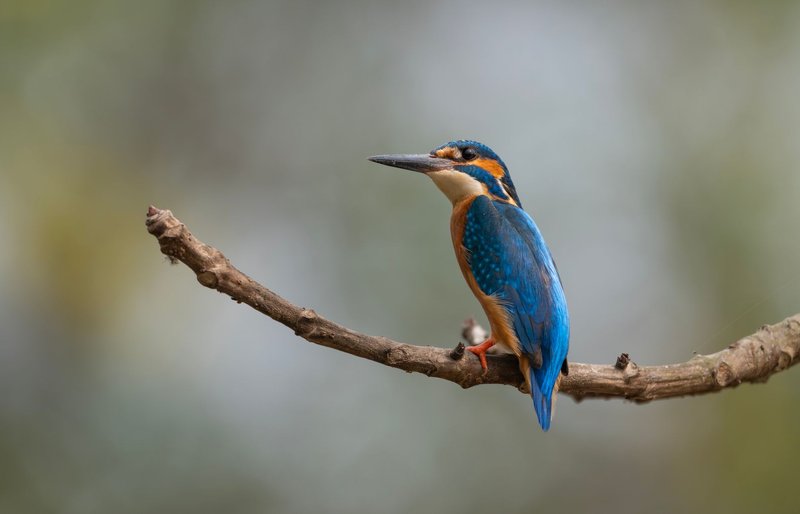
Polynesian kingfishers are small, mostly blue-green, and often found well away from water.
Chattering Kingfisher (Todiramphus tutus). The easy one. It’s widespread in the Society Islands and the Cooks, perches on wires and palm fronds, and gives the loud rattling call that earns the name.
Marquesan Kingfisher (Todiramphus godeffroyi). Found on Hiva Oa and Tahuata, where it hunts insects and lizards in forest and plantation edges. Threatened.
Niau Kingfisher (Todiramphus gertrudae). Known from a single Tuamotu atoll, Niau, with a population of only about a hundred or so birds. It’s among the rarest kingfishers in the world.
Mangaia Kingfisher (Todiramphus ruficollaris). An endemic of Mangaia in the southern Cook Islands, with a russet collar.
Lorikeets
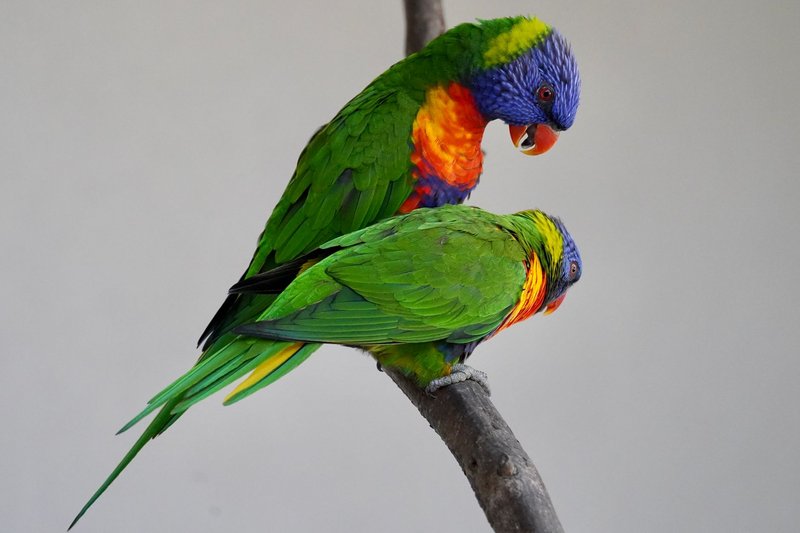
Polynesia’s small lorikeets, genus Vini, feed on nectar and flowers, and they’re the splashiest birds in the region.
Ultramarine Lorikeet (Vini ultramarina). Deep blue above with a white, blue-mottled chest. It once lived across the Marquesas but is now mostly confined to Ua Huka, where rats are absent. Endangered. If you can only plan one dedicated bird stop in French Polynesia, make it this one.
Blue Lorikeet (Vini peruviana). Once on Tahiti, it now survives on Aitutaki in the Cooks and on a few Tuamotu atolls such as Rangiroa. Bird-lovers have noted it flitting between coconut palms in the early morning.
Kuhl’s Lorikeet (Vini kuhlii). Native to Rimatara in the Austral Islands and, thanks to a historical introduction, also found in the Line Islands. Green with red markings.
Fruit-doves, pigeons and ground-doves
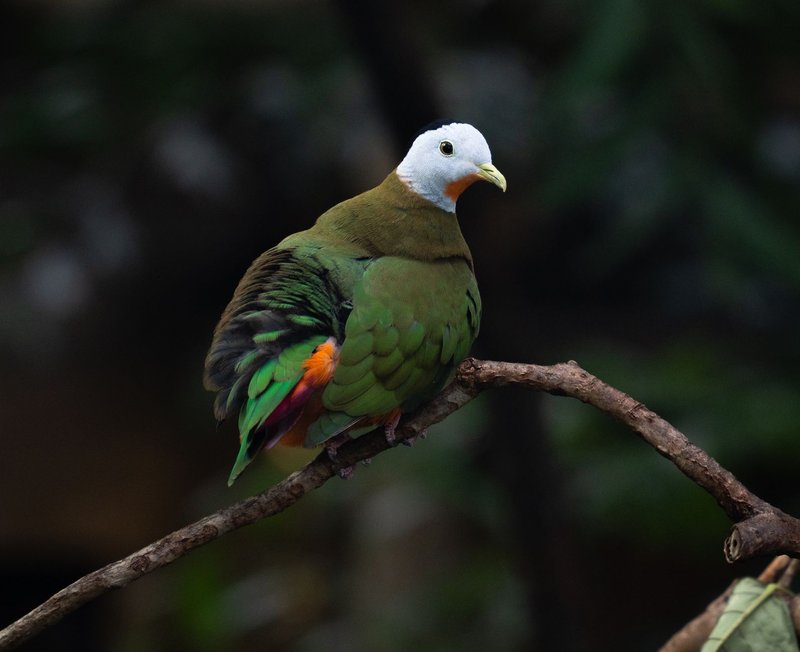
Pigeons are the quiet success story of the region. They disperse fruit seeds across forests that have lost most of their other large frugivores.
Grey-green Fruit-Dove (Ptilinopus purpuratus). Common in the Society Islands, including Tahiti. Green with a purple cap and yellow undersides, but it sits motionless in canopy, so you’ll hear its descending coo long before you see it.
Atoll Fruit-Dove (Ptilinopus coralensis). A Tuamotu specialist adapted to coral atolls.
Pacific Imperial-Pigeon (Ducula pacifica). A large grey-and-white pigeon found widely across the western and central Pacific.
Marquesan Imperial-Pigeon (Ducula galeata). Larger still, confined to the Marquesas, and Endangered.
Polynesian Ground-Dove (Alopecoenas erythropterus). A small, secretive dove that forages on the ground of Tuamotu atolls and survives mainly where rats don’t. Seeing one requires a remote boat trip.
Seabirds
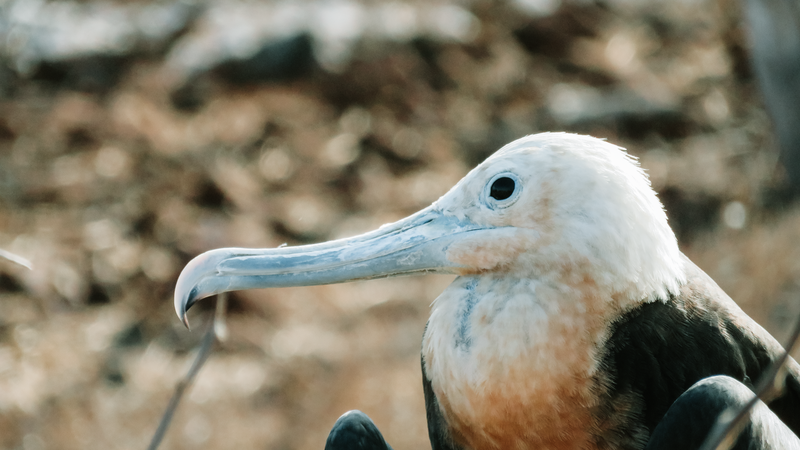
If you want birds without a specialist guide, look up. Polynesian atolls host some of the Pacific’s largest seabird colonies.
White Tern (Gygis alba). The most photogenic. It lays its single egg on a bare branch with no nest, and hovers inches from your face. You’ll see it over Tahiti’s coast and in Papeete.
Red-tailed Tropicbird (Phaethon rubricauda). White with two long red tail streamers.
Red-footed Booby (Sula sula). Roosts in trees on Tuamotu atolls. Also known as the red-footed booby, it has coral-red feet, and some individuals are brown.
Sooty Tern (Onychoprion fuscatus) and Brown Noddy (Anous stolidus). Both nest in huge numbers on motu (islets) and rat-free atolls.
Tahiti Petrel (Pseudobulweria rostrata). A dark petrel that breeds in the mountains of Tahiti and the Marquesas. Near Threatened and nocturnal, so seeing one takes luck.
Shorebirds
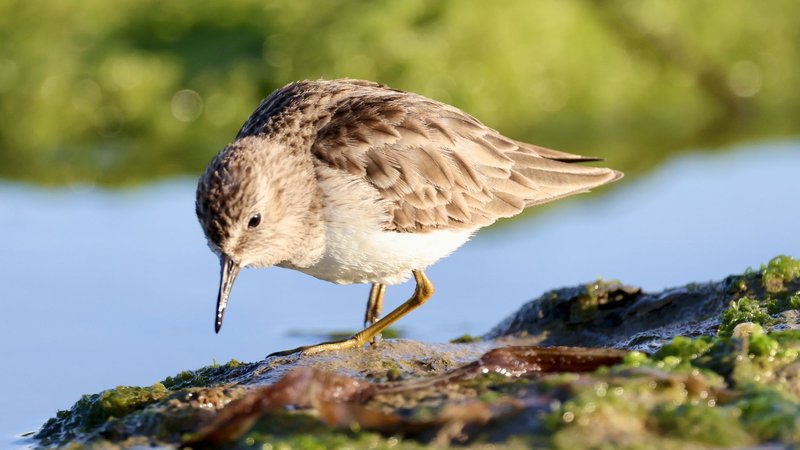
The migratory shorebirds are the second easiest group after seabirds. They arrive from Alaska and Siberia, then spread across reef flats and lagoon shores between August and April.
Pacific Golden-Plover. Probably the most frequent shorebird in the region, found on lawns, airstrips and beaches. The wintering birds are in plain plumage, but you may catch some in breeding black and gold in April.
Bristle-thighed Curlew. According to Cornell’s Lab of Ornithology, this curlew breeds in western Alaska and winters on Pacific islands, making a nonstop flight of thousands of kilometers over open ocean.
Wandering Tattler and Ruddy Turnstone. Both are regular on reef edges.
Tuamotu Sandpiper (Prosobonia parvirostris). The one non-migratory shorebird in the group. It’s a small, rufous-brown sandpiper that stays on the atolls year-round, and it survives mainly on a few rat-free islands in the southeast Tuamotus. Endangered. A related species, the Tahitian Sandpiper, is known only from specimens collected on Captain Cook’s voyages. Nobody has seen it since.
Introduced birds: why the easy ones aren’t native
On Tahiti and Moorea, the bird you’re most likely to see is not a Polynesian bird at all.
The Red-vented Bulbul, a dark Asian songbird with a crest and a red patch under the tail, spread across Tahiti after being introduced in the 1970s. It eats fruit, spreads weed seeds, and competes with native birds, and it’s one reason the Tahiti Monarch remains scarce. Introduced species are a leading threat to island wildlife generally; Invasive Species in Hawaii: 10 Worst Offenders makes the case for Hawaii, where invasive species are the single biggest threat to endangered plants and animals. The Common Myna, another introduced bird, struts around towns and roadsides. Both thrive near people, which is why a first-day stroll through Papeete tells you almost nothing about the island’s native avifauna.
The practical rule: if a bird is loud, confident and next to a car park, it’s probably introduced. The natives are in the valleys, on the ridges, and on the distant atolls.
Where to see Polynesian birds, island by island
Society Islands (Tahiti, Moorea, Raiatea). Tahiti is the Tahiti Monarch island, but sightings need local guidance. You can also find Grey-green Fruit-Doves, Chattering Kingfishers and White Terns without effort, and the interior valleys are the best place to look for native forest birds.
Marquesas. The strongest region for endemics. Ua Huka is the target island for Ultramarine Lorikeets, with a local guide. Nuku Hiva holds the Marquesan Imperial-Pigeon, and Hiva Oa and Tahuata have the Marquesan Kingfisher. Flights are limited and weather-dependent, so build slack into your schedule.
Tuamotus. Rangiroa and the more accessible atolls offer seabirds, reef-flat shorebirds and the Blue Lorikeet. For a comparable atoll avifauna further west, see Birds of Tuvalu: A Field Guide to a Tiny Atoll Avifauna, which covers roughly 37 recorded species. The real prizes, the Tuamotu Sandpiper and the Polynesian Ground-Dove, live on remote atolls reachable only by private charter, with permission from local authorities. Niau’s kingfisher is a separate, specialist trip.
Cook Islands. Rarotonga is the most beginner-friendly. The Rarotonga Monarch is visible in the Takitumu area, the Rarotonga Starling is endemic to the island, and Aitutaki is the place for the Blue Lorikeet. On Atiu, the Atiu Swiftlet nests in caves and uses echolocation.
Samoa and Tonga. The Manumea, or Tooth-billed Pigeon, is Samoa’s national bird and a Critically Endangered ground-foraging pigeon; sightings are extremely rare. The forests of Savai’i and Upolu also hold Samoan honeyeaters such as the Mao. For the wider wildlife of Tonga, island by island and season by season, see Animals of Tonga: A Wildlife Guide by Island & Season.
A few practical notes. Dry season (roughly May to October) is the easiest time to travel. Bring a spotting scope for atoll seabirds. And contact local conservation groups before you go, because several of the rarest birds survive only because access is controlled. The IUCN Red List is the quickest way to check any species’ current status before you plan around it.
Quick reference table
| Bird | Group | Where | Status |
|---|---|---|---|
| Tahiti Monarch | Monarch | Tahiti | Critically Endangered |
| Rarotonga Monarch | Monarch | Rarotonga | Recovering, threatened |
| Fatuhiva Monarch | Monarch | Fatu Hiva | Critically Endangered |
| Chattering Kingfisher | Kingfisher | Society Islands, Cooks | Widespread |
| Marquesan Kingfisher | Kingfisher | Hiva Oa, Tahuata | Threatened |
| Niau Kingfisher | Kingfisher | Niau (Tuamotus) | Threatened |
| Ultramarine Lorikeet | Lorikeet | Ua Huka (Marquesas) | Endangered |
| Blue Lorikeet | Lorikeet | Aitutaki, Tuamotus | Threatened |
| Grey-green Fruit-Dove | Fruit-dove | Society Islands | Common |
| Marquesan Imperial-Pigeon | Pigeon | Marquesas | Endangered |
| Polynesian Ground-Dove | Ground-dove | Tuamotus | Threatened |
| White Tern | Seabird | Widespread | Common |
| Tahiti Petrel | Seabird | Tahiti, Marquesas | Near Threatened |
| Tuamotu Sandpiper | Shorebird | Southeast Tuamotus | Endangered |
| Pacific Golden-Plover | Shorebird | Widespread (migrant) | Common |
| Red-vented Bulbul | Songbird | Tahiti, Moorea | Introduced |