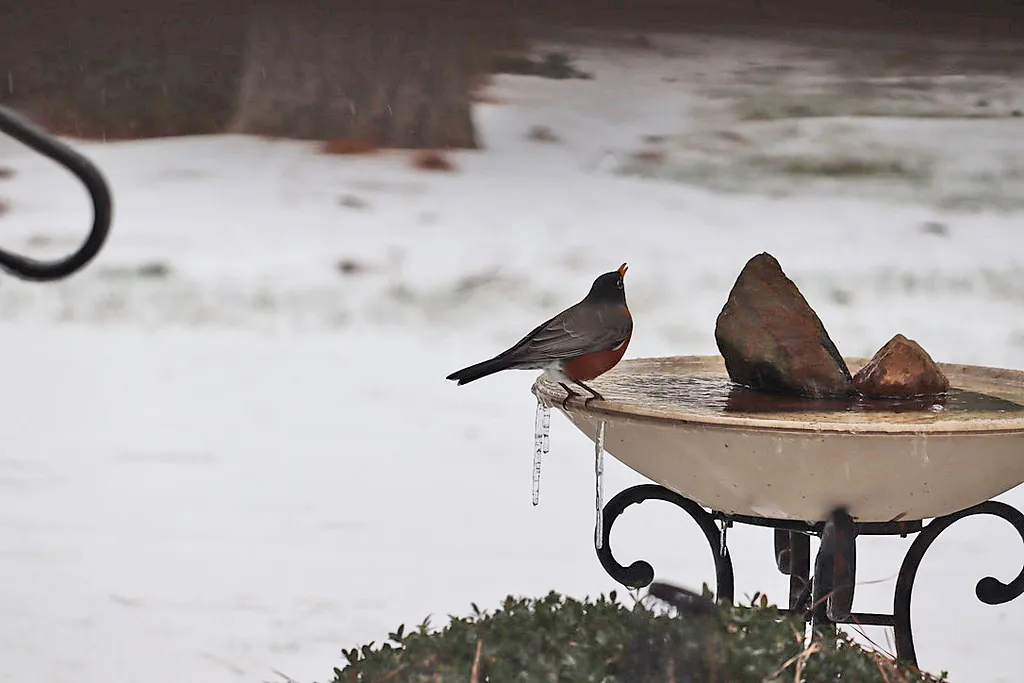
Short answer: The only method that keeps a bird bath open through a hard freeze is a thermostatic heater: either a heated bird bath or a de-icer that sits in your existing basin, plugged into a GFCI-protected outdoor outlet. Without power, set a plastic basin in full sun, swap the ice for warm water every morning and expect it to refreeze by night. Never add antifreeze, salt or glycerin.
A frozen bath is the common problem, and the common mistake is trying to fix it with something poured into the water. Anything that lowers the freezing point enough to matter is bad for birds to drink or bathe in. This guide covers what works at each temperature, how to set up a heater safely, the no-electricity options and their real limits, and how to keep birds from soaking their feathers on a frigid day.
This article contains Amazon affiliate links. Florafaunafun earns a commission on qualifying purchases. See our affiliate disclosure.
What to do at each temperature
How much effort a winter bath takes depends on how long the cold lasts. A bath that skins over at dawn and thaws by lunch needs nothing but a morning refill. A week below freezing needs heat.
| Conditions | What freezes | What to do |
|---|---|---|
| Light frost, days above freezing | A thin skin of ice overnight | Tap out the ice and top up in the morning |
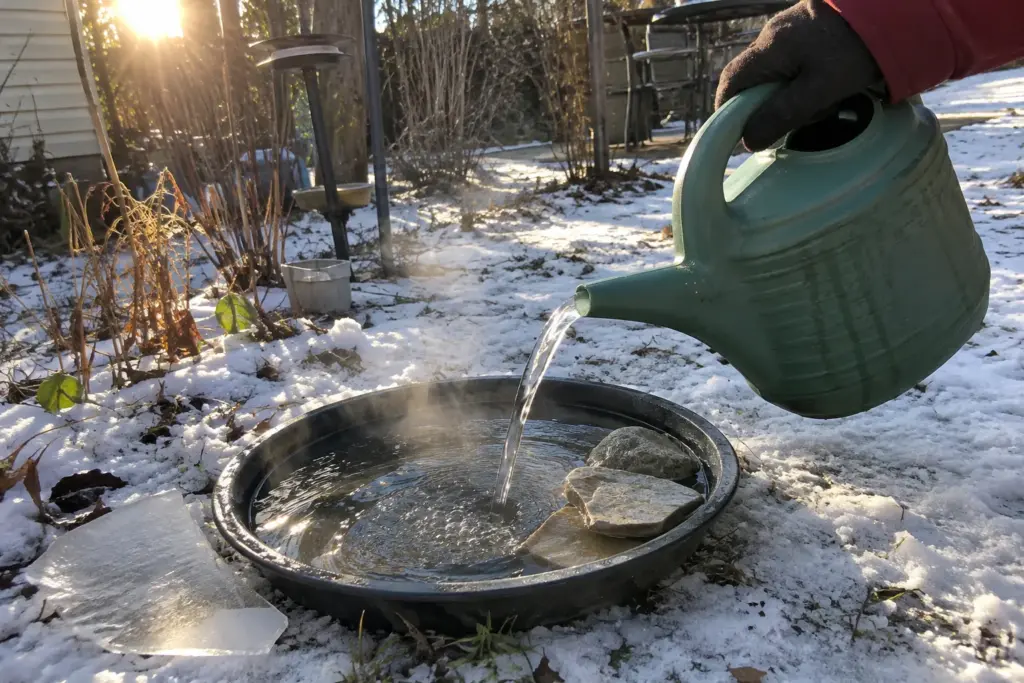
| Nights in the 20s°F, days near freezing | Solid by morning, partly thaws in sun | Sunny spot, dark plastic basin, warm-water refill each morning |
| Several days below freezing | Solid all day | Heated bath or de-icer; no-power methods last only a few hours |
| Single digits and below | Heater keeps a pool open | Keep the heater running and add stones or a grate so birds drink but do not bathe |
There is no official temperature at which bathing becomes dangerous. The Cornell Lab of Ornithology calls a way to drink without getting wet “particularly important during freezing weather”, and many experienced feeder watchers block bathing once the air falls below about 20°F.
How to keep a bird bath from freezing with a heater
A heater is the reliable fix, and our best heated bird bath guide compares the models. You have two choices: a heated bird bath with the element built into the bowl, or a bird bath de-icer, a flat heating disk that sits in the bath you already own. Both use a thermostat that switches on when the water nears freezing, around 35 to 40°F, and off again a few degrees higher. They keep water liquid; they do not make it warm, and they draw power only while heating.
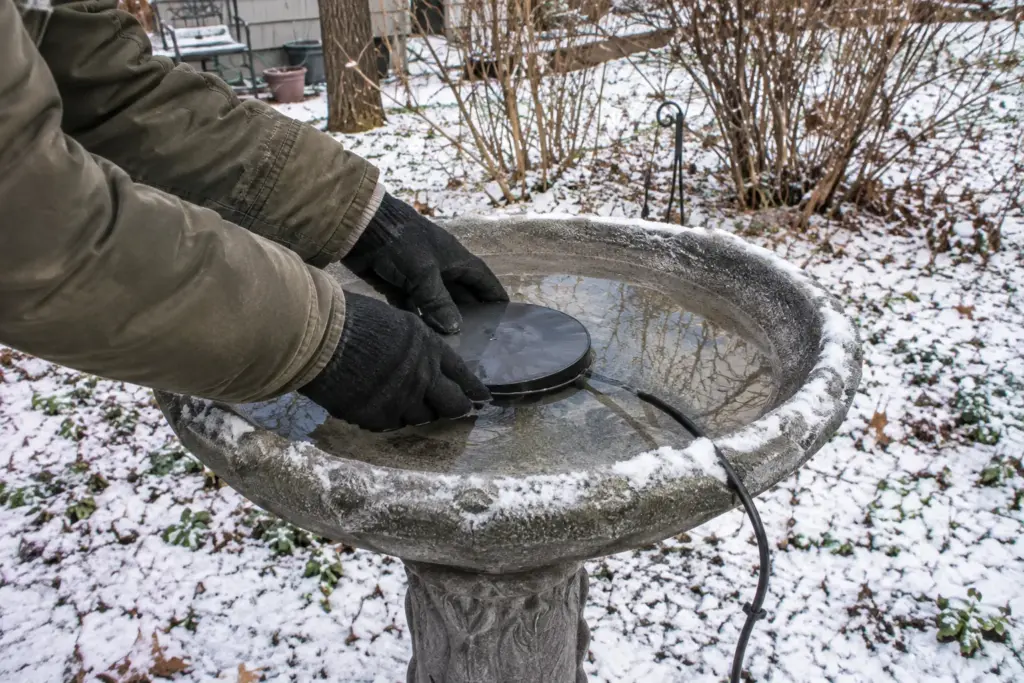
Most bird bath de-icers draw between about 40 and 150 watts. A small backyard bath needs only the low end; higher-wattage units are made for large basins and ponds. Pick one with an automatic shutoff that cuts power if the bath runs dry, which the Cornell Lab and the National Wildlife Federation both recommend.
An outdoor-rated extension cord with a lighted end makes it easy to see from the window that the heater still has power.
How to keep a bird bath from freezing without electricity
Without power you can slow freezing but not stop it. These methods keep water open for a few extra hours on a cold day and work best together. On nights well below freezing, plan on a fresh refill every morning.
Floating a ping-pong ball or tennis ball in the bath is a popular tip, but no bird or wildlife organization backs it, and the breeze-driven movement does nothing once the air is well below freezing. Solar heaters and solar fountains have the same problem: they stop on cloudy days and short winter afternoons, and fountain pumps can freeze and crack. The National Wildlife Federation suggests putting delicate solar and fountain baths away for the winter.
What not to put in a bird bath to stop freezing
Nothing you can add to the water is safe for birds and also strong enough to stop ice. Project FeederWatch calls antifreeze poisonous to all animals, birds included.
Glycerin gets recommended often because it is sold as nontoxic. The Cornell Lab advises against it: birds drinking it take in a large dose of sugar, and birds bathing in it end up with matted feathers that hold less heat. In a hard freeze it does not even work.
Is it safe for birds to bathe in freezing weather?
Brief bathing in mildly cold weather is normal, since clean feathers insulate better. The risk comes in severe cold, when a bird soaks its feathers in a heated bath and the water freezes on them before they dry. A Minnesota bird watcher reported six cardinals that could not fly after bathing at a heated bath during a deep freeze.
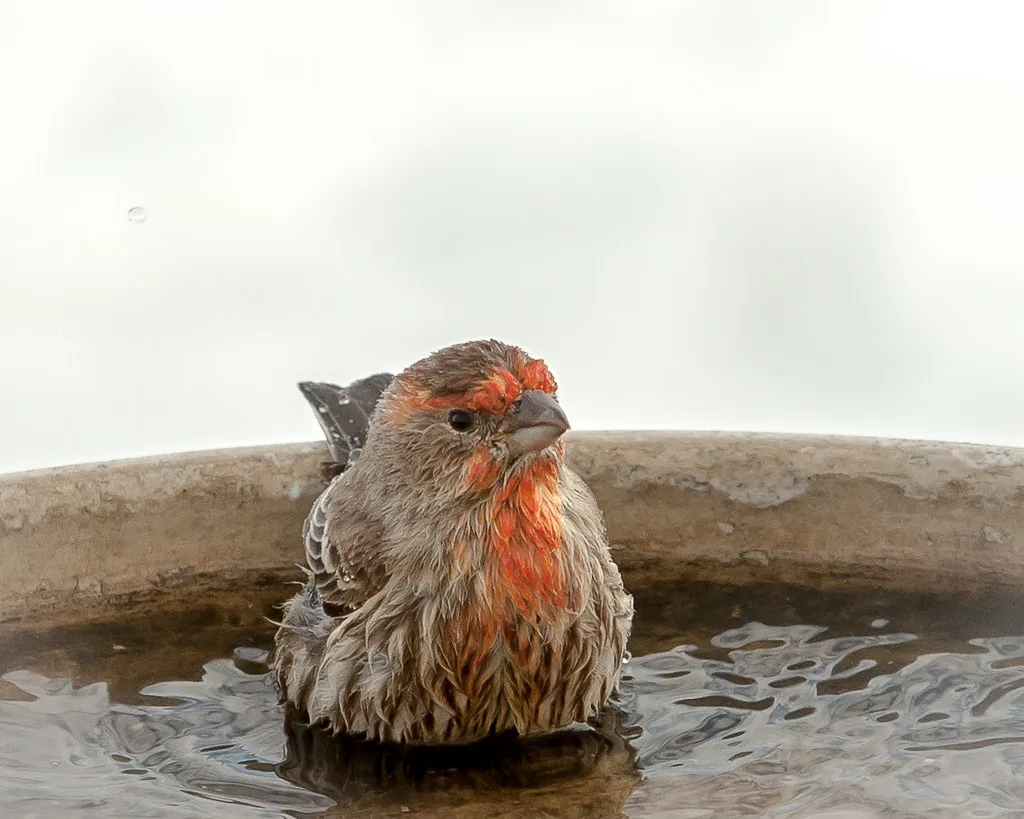
The fix is simple. Lay flat stones, a few short branches or a nonmetal grate across most of the water so birds can reach it with their beaks but cannot wade in. Remove them when the weather warms up again.
Will a concrete or ceramic bird bath crack in winter?
Yes, often. Water expands as it freezes, and a basin full of ice can split concrete, ceramic and glazed bowls. Thick plastic and resin survive freezing. The Cornell Lab, Audubon and the National Wildlife Federation all recommend emptying concrete and ceramic baths, then storing them indoors or covering them, and putting out a plastic basin for winter.
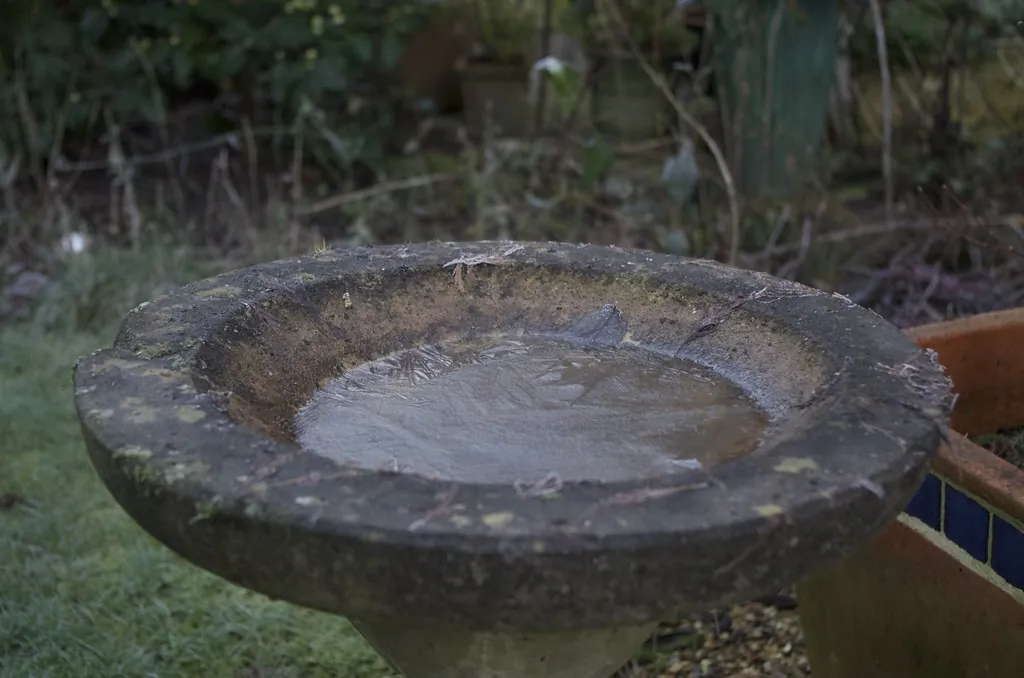
A heater changes the picture: if the water never freezes, the bowl does not crack. If you leave a concrete bath out with a de-icer, make sure the heater is rated for it and that power stays on. One night with a tripped outlet can do the damage.
Winter depth, placement and cleaning
A winter bath follows the same basic rules as a summer one, with a sunny spot added. If you are starting from scratch, see how to make a bird bath from a pot and saucer or a trash can lid.
Winter flocks crowd a single open water source, which makes cleaning more important, not less. Scrub the basin when you refill it. Every couple of weeks, soak or scrub it with a solution of 1 part bleach to 9 parts water, rinse it thoroughly and refill. Unplug a heater before you empty and clean the bath.
Do birds need water in winter?
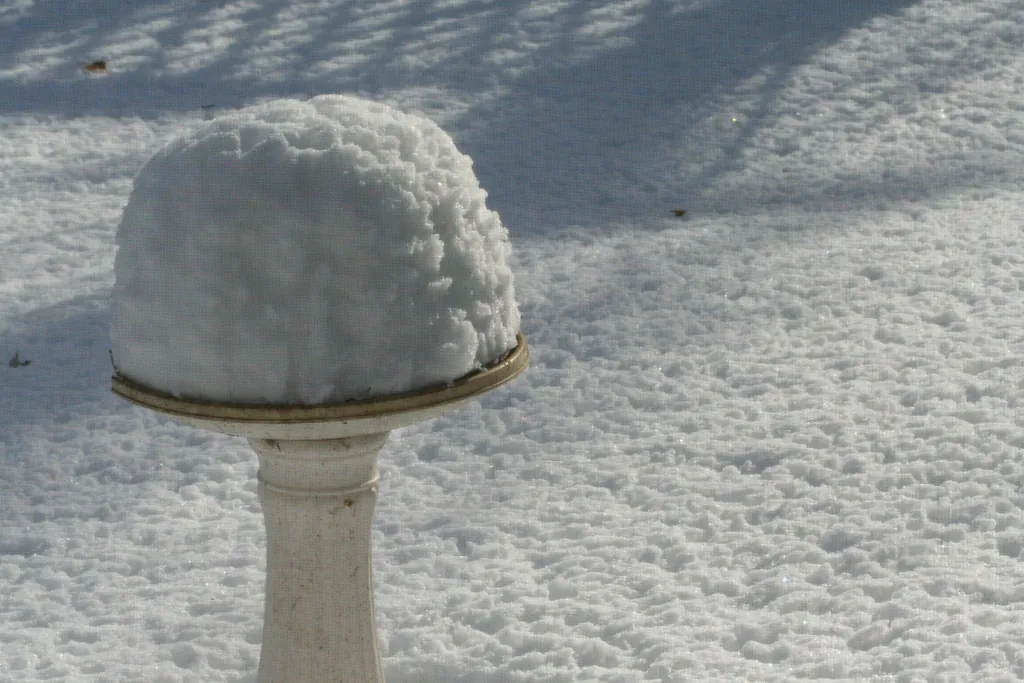
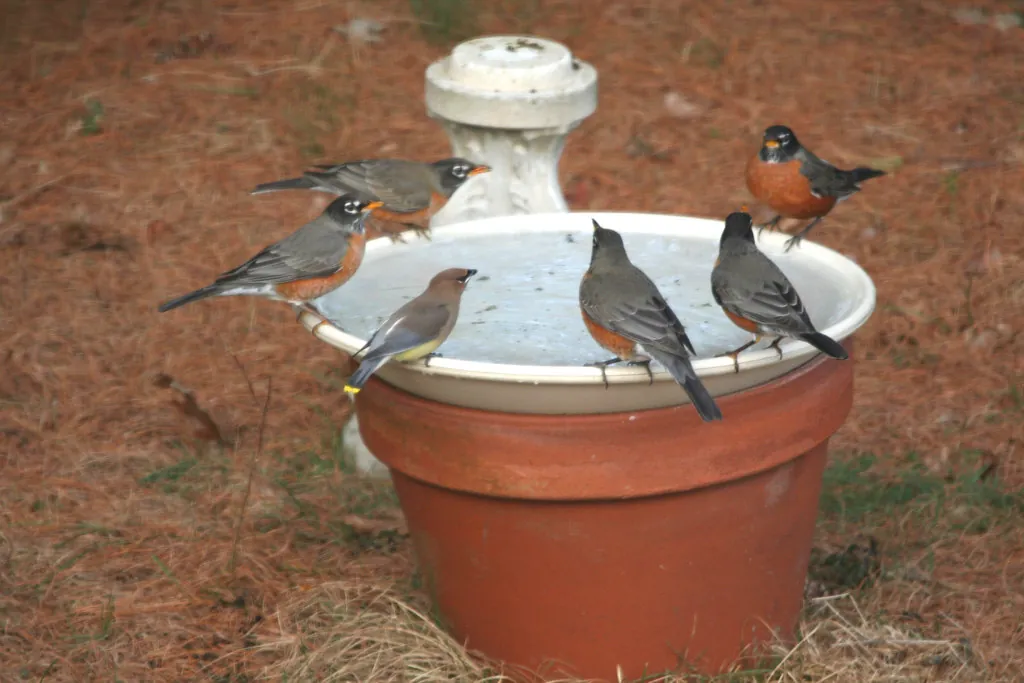
Yes. Birds drink and preen in winter just as in summer, and once ponds, puddles and streams freeze, open water can be harder to find than food. Birds can eat snow, but melting it inside the body burns energy they need to stay warm, and in a dry cold snap there may be no snow at all. A heated bath draws birds that rarely visit seed feeders, such as bluebirds, robins and cedar waxwings.
Frequently asked questions
Put a heater in it, not an additive. A thermostatic bird bath de-icer keeps the water open, while antifreeze, salt and glycerin are harmful to birds.
Use a dark plastic basin in full sun, out of the wind, and replace the ice with warm water every morning. Without a heater the water will still refreeze on cold nights.
Use warm water rather than boiling. Very hot water can crack a cold concrete or ceramic bowl, and it cools to freezing just as fast.
Not in real cold. A floating ball may delay a thin skin of ice on a breezy day near freezing, but it does nothing once temperatures drop well below 32 degrees.
No. Most draw well under 150 watts and the thermostat runs them only when the water is near freezing, so they are off much of the time.
No. The Cornell Lab advises against it because it mats feathers and gives birds a large dose of sugar, and it barely lowers the freezing point at concentrations birds could tolerate.
Bring in or cover concrete, ceramic and glass baths, which can crack when water freezes in them. Plastic and resin baths can stay out, especially with a heater.
Yes, and they rely on it. In severe cold, cover most of the water with stones or a grate so birds can drink without soaking their feathers.
Sources
- Cornell Lab of Ornithology. BirdNotes: Providing water for birds
- Project FeederWatch. Food types and water
- Cornell Lab, All About Birds. Attract birds with birdbaths
- National Wildlife Federation. Don’t forget water for birds in winter
- National Wildlife Federation. Provide water for wildlife in winter
- National Audubon Society. Winterize your yard for birds
- The Nature Conservancy. Should you provide birds water in winter?
- Oklahoma Department of Wildlife Conservation. Birdbath tips
- Electrical Safety Foundation International. Extension cord safety
Featured photo: American robin drinking at a winter bird bath by 611catbirds, too, CC BY 2.0.