Last updated: November 2026. Species lists and rules change, so check the DNR before acting on anything legal.
Minnesota’s invasive species problem comes down to a short cast of repeat offenders: a mussel the size of a fingernail, a shrub that stays green into November, a roadside weed that burns skin, and a beetle that has been killing ash trees since 2009. Most of them spread because people move them, on boat trailers, boots, firewood and mowers.
Under Minnesota Statutes Chapter 84D, an invasive species is a nonnative species that causes, or is likely to cause, economic or environmental harm or harm to human health. A plant that’s merely foreign doesn’t count. It has to do damage. That definition drives everything below: which species are banned, which are only restricted, and what you’re allowed to do with them.
This guide covers 11 of the species Minnesotans run into most, split into water and land, with how to recognize each, what it does and what to do about it.
Table of contents
- Quick comparison table
- Aquatic invasive species in Minnesota
- Invasive plants and insects on land
- Prohibited vs. restricted: what the lists mean
- Clean, Drain, Dispose: the boat checklist
- How to report a sighting
- Penalties
- FAQ
- What to do this week
Quick comparison table
| Species | Type | Where it’s found | Prohibited? |
|---|---|---|---|
| Zebra mussel | Aquatic mollusk | Lake Superior, many inland lakes and rivers | Yes |
| Starry stonewort | Aquatic alga | A growing number of inland lakes | Yes |
| Spiny water flea | Aquatic zooplankton | Lake Superior, Mille Lacs, many northern lakes | Yes |
| Invasive carp (bighead, silver, grass) | Fish | Mississippi, St. Croix and Minnesota River systems | Yes |
| Round goby | Fish | St. Louis River estuary near Duluth | Yes |
| Emerald ash borer | Insect | Spreading across the state wherever ash grows | Yes |
| Purple loosestrife | Wetland plant | Wetlands, ditches and shorelines statewide | Yes |
| Common buckthorn | Shrub | Woodlands, fence lines, yards | Restricted |
| Wild parsnip | Roadside plant | Roadsides, prairies, trail edges | Restricted |
| Japanese knotweed | Perennial plant | Streambanks, roadsides, old homesites | Restricted |
| Garlic mustard | Woodland herb | Forest floors, especially in the metro and southeast | Restricted |
“Prohibited” means you can’t possess, import, buy, transport or release the species without a permit. “Restricted” species are too widespread to eliminate, so the rules focus on stopping people from selling, planting or moving them. Details are in the section on the lists below.
Aquatic invasive species in Minnesota
Water is where the rules get strictest, because lakes connect to each other through one thing: boats.
1. Zebra mussel
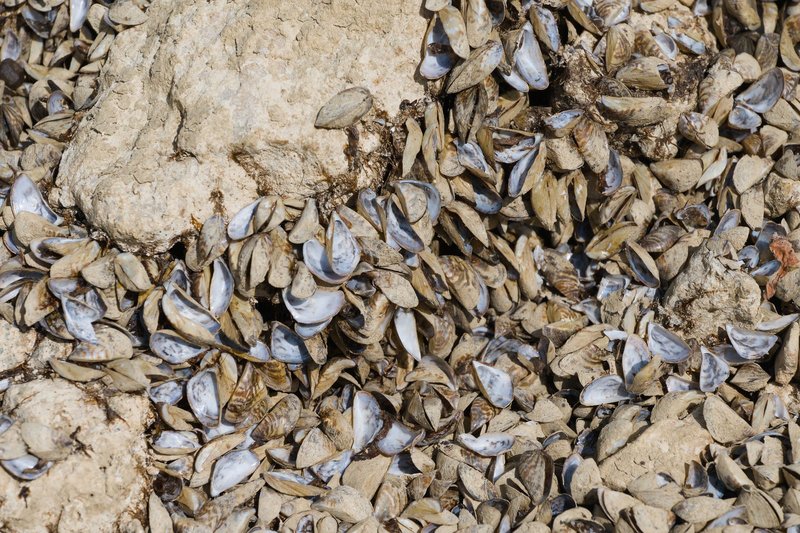
How to recognize it: A D-shaped shell about the size of a fingernail, usually with dark and light stripes. They grow in clumps on docks, boat hulls, anchors and rocks. If you cut your foot on a beach, it was probably a dead one.
The harm: Each mussel filters about a liter of water a day, stripping out the plankton that young fish eat. They clog water intake pipes and encrust boat motors. They first showed up in Minnesota in the Duluth harbor in 1989 and have spread to lakes and rivers across the state.
What to do: Check anchors, docks, lifts and the hull before you leave a lake. A docked boat that’s been in infested water for a season is a delivery vehicle.
2. Starry stonewort
How to recognize it: It looks like a plant but is a large alga. Look for whorls of branchlets that grow like spokes around a stem, and tiny white star-shaped bulbils on the base of the plant. It forms thick mats near the surface.
The harm: It blankets lake bottoms, crowds out native plants and tangles propellers. Minnesota’s first detection was in Lake Koronis in 2015, and the species has turned up in more lakes since.
What to do: Pull every strand off your boat, trailer and gear before leaving the access. Fragments alone can start a new population.
3. Spiny water flea
How to recognize it: A small crustacean about half an inch long with a long tail spine bearing barbs. Anglers notice it first: it clumps on fishing lines and downrigger cables as a gelatinous glob that looks like wet cotton.
The harm: It eats the same zooplankton that young fish rely on, and its spine makes it hard for small fish to swallow. It arrived in Lake Superior in the 1980s and is now in Mille Lacs and many northern lakes.
What to do: Drain livewells and bilges, and wipe down lines and gear. A rinse with hot or high-pressure water helps, but drying is more reliable.
4. Invasive carp: bighead, silver and grass
How to recognize them: Silver carp are the ones that launch several feet out of the water when a boat motor runs nearby. Bighead carp have an oversized head with eyes set low on the face. Grass carp are long and torpedo-shaped, with large scales. None of them is the common carp you probably grew up fishing for.
The harm: Bighead and silver carp compete with native fish and mussels for plankton. Grass carp eat aquatic vegetation that other species depend on. Most Minnesota records come from the Mississippi, St. Croix and Minnesota River systems.
What to do: Don’t release it. Photograph it, note the location, keep it on ice if you can, and contact the DNR.
5. Round goby
How to recognize it: A bottom-dwelling fish under 10 inches with bulging eyes, a fused pelvic fin that forms a suction disc, and a black spot on the first dorsal fin.
The harm: It eats the eggs of native fish and outcompetes sculpins and darters for habitat. In Minnesota it lives in the St. Louis River estuary around Duluth.
What to do: Never use a goby as bait, and never move one. Anglers who catch one should kill it and report it to the DNR rather than releasing it.
Also on the radar
Eurasian watermilfoil and curlyleaf pondweed are both established in Minnesota lakes and form dense mats that shut down swimming beaches. The milfoil showed up in the late 1980s. Both spread by fragments, and both have lookalike native plants, so get a positive ID from the DNR or a lake association before you start pulling anything.
Invasive plants and insects on land
On land, the vectors are firewood, mowers, muddy boots and nursery stock.
6. Emerald ash borer
How to recognize it: The adult is a metallic green beetle about the size of a grain of rice, but you’ll rarely see it. You’ll see the damage: a thinning crown, D-shaped exit holes about an eighth of an inch wide, S-shaped tunnels under peeling bark, and woodpeckers stripping the bark off the trunk.
The harm: The larvae feed under the bark and cut off the tree’s water and nutrient flow. Minnesota’s first detection was in St. Paul in 2009. Ash is a major tree in Minnesota’s urban canopy and its swamp forests, and untreated trees generally die within a few years of infestation.
What to do: Buy firewood where you burn it. If you have a healthy ash worth keeping, a certified arborist can treat it with insecticide. A dying ash near a house or road needs removal before it gets brittle.
7. Common buckthorn
How to recognize it: A shrub or small tree with oval leaves that have curved veins and leaf out early in spring. The giveaway comes in fall: buckthorn stays green long after native shrubs have dropped their leaves. Small thorns sit at the branch tips, and if you scrape the bark of a branch, the inner layer is orange. Female plants produce clusters of black berries.
The harm: It forms dense thickets that shade out native wildflowers and tree seedlings, leaving bare soil under the canopy. Birds eat the berries and spread the seeds. Buckthorn also hosts the soybean aphid and the fungus that causes crown rust in oats, which makes it a farm problem too.
What to do: Pull seedlings by hand. Cut larger plants and treat the stump with herbicide right away, or they’ll resprout. Fall and winter work well, when the green leaves make it easy to find. Don’t plant it, and don’t accept “free” cuttings.
8. Wild parsnip
How to recognize it: Two to five feet tall in flower, with flat clusters of small yellow flowers in June and July. The stems are grooved and the leaves are made up of saw-toothed leaflets. It looks like a mutant dill plant, and it grows along roadsides and trail edges.
The harm: The sap contains chemicals that react with sunlight and cause a burn within about a day. The skin blisters, then leaves dark patches that can last months. It also crowds out prairie plants.
What to do: Wear long sleeves, long pants and gloves. Cut or mow it before seed set, ideally just as it flowers, and repeat for several years to exhaust the seed bank. Wash exposed skin right away and stay out of the sun if you get sap on you.
9. Japanese knotweed
How to recognize it: Hollow, bamboo-like stems with reddish speckles that grow in a zigzag pattern, topped with shield-shaped leaves and clusters of creamy white flowers in late summer. It can top 10 feet in a season.
The harm: It spreads through thick underground rhizomes and forms dense stands that choke out everything else, and it can undermine streambanks. A piece of stem or rhizome the size of a fingertip can start a new patch.
What to do: Don’t mow it, because mowing spreads fragments. Bag cut material and put it in the trash. Control usually takes repeated herbicide treatments over several years, so contact your county or the DNR before starting.
10. Garlic mustard
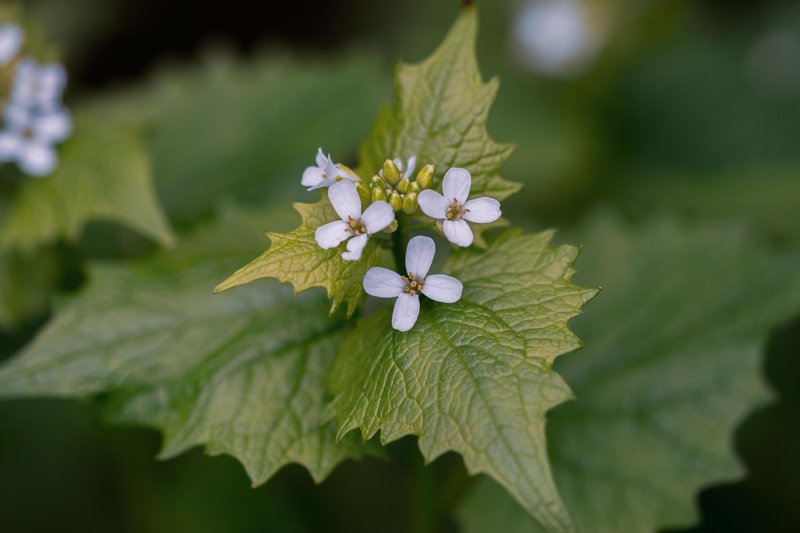
How to recognize it: First-year plants are low rosettes of rounded, scalloped leaves. Second-year plants send up a stalk two to three feet tall with clusters of small white four-petaled flowers in May. Crush a leaf and it smells like garlic.
The harm: It carpets the forest floor and releases chemicals that disrupt the soil fungi that native woodland plants depend on. Seeds stay viable for five years or more.
What to do: Pull it in May or early June before the seeds set, making sure to get the root. Bag the plants and put them in the trash, because they can still set seed on a compost pile.
11. Purple loosestrife
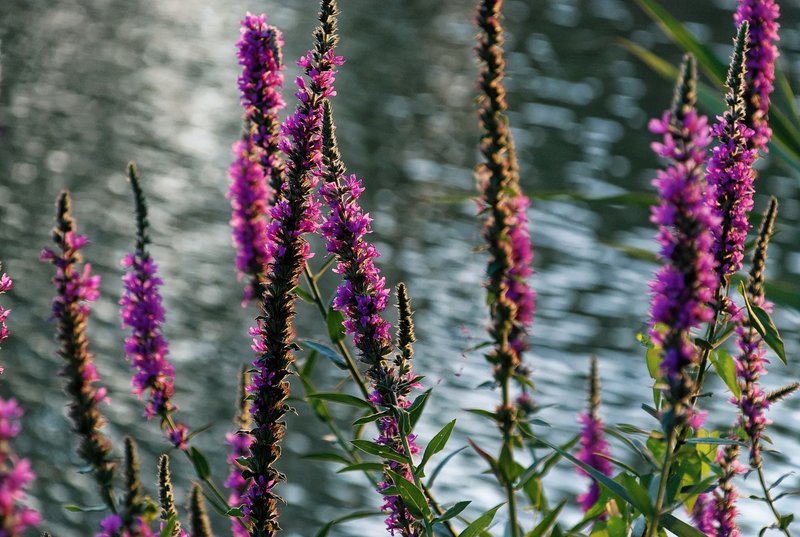
How to recognize it: Tall spikes of magenta flowers in July through September, rising from square stems up to seven feet tall. It grows in wetlands, ditches and shorelines.
The harm: One mature plant can produce more than two million seeds a year. Stands replace cattails and native wetland plants, which hurts the waterfowl, insects and amphibians that depend on them.
What to do: Small patches can be dug out, with every root bagged. For large stands, the DNR has released Galerucella beetles that eat the plant and slow its spread. Contact the DNR before treating a big infestation.
Prohibited vs. restricted: what the lists mean
Two agencies keep the lists. The DNR classifies invasive species under Chapter 84D, and the Minnesota Department of Agriculture maintains the state noxious weed list for plants. The species above fall into a few categories:
- Prohibited: The species can’t be possessed, imported, bought, sold, transported or released without a permit. Eradication or control is the goal. Zebra mussels, starry stonewort and invasive carp are examples.
- Restricted: Common buckthorn, wild parsnip and garlic mustard are too widespread to eliminate. The rules aim to stop new spread: no selling, planting or intentionally moving them.
- Regulated and unlisted: Some established species, such as Eurasian watermilfoil, have their own rules, and many nonnative species aren’t listed at all.
The DNR revises these lists periodically and adds species when they show up in the state. A species that isn’t prohibited today can be next year, so check the DNR invasive species page for the current lists before you transport, sell or dispose of anything. The USDA’s National Invasive Species Information Center also keeps a state hub of links and resources.
Clean, Drain, Dispose: the boat checklist
Every boat launch in Minnesota has a sign with this. The checklist is the law, not a suggestion:
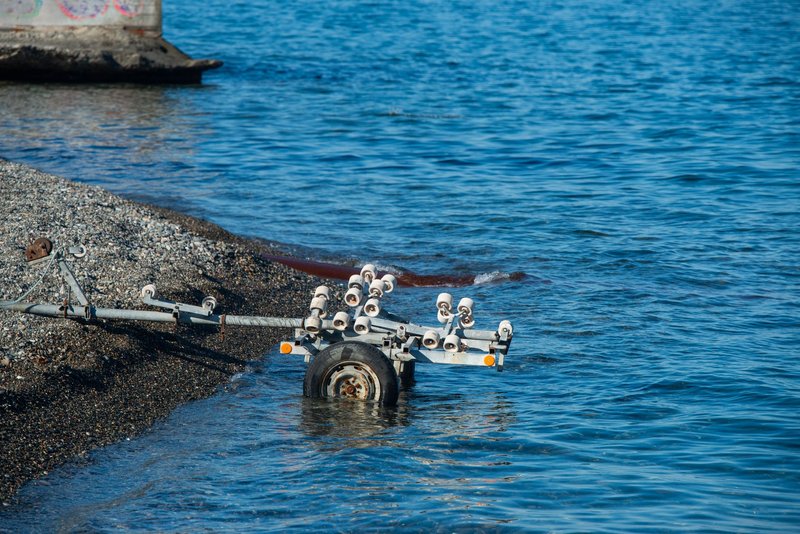
- Clean all visible aquatic plants, zebra mussels and other animals off your boat, trailer and equipment before leaving the water access. Throw them in the trash.
- Drain all water-holding devices: livewells, bilge, ballast tanks and bait containers. Leave the drain plug out during transport.
- Dispose of unwanted bait in the trash, never in the water or on the ground.
- Dry it if you can. Zebra mussel larvae can survive in a damp boat, so let the boat, trailer and gear dry for five days or more before launching in a different lake.
If you’ve been on an infested lake, a hot-water or high-pressure wash is the next step. Docks, boat lifts and water-related equipment pulled from infested water must sit and dry for 21 days before being placed in another water body.
How to report a sighting
If you spot something you think is new to a lake, county or property, a report is more useful than a guess.
- Take a clear photo. Include a coin or your hand for scale, and shoot the leaves, flowers or underside, not just the whole plant.
- Note the exact location. A GPS pin or the nearest boat launch beats “the north end of the lake.”
- Keep a sample if it’s an aquatic species, in a sealed bag in the freezer or on ice. Don’t carry it to another waterbody.
- Report it through the DNR invasive species page, which directs you to the right regional specialist, or through a citizen reporting platform such as the Midwest Invasive Species Information Network.
Don’t try to dig up or treat an aquatic plant yourself before getting an ID. Many native plants look similar to invasive ones, and permits are required for some removal in public waters.
Penalties
Violations of Minnesota’s invasive species laws generally start as misdemeanors, and conservation officers can also issue civil citations. Typical first-offense examples are leaving a drain plug in or transporting aquatic plants. Penalties escalate for transporting prohibited species, for repeat offenses and for commercial violations. Fine amounts are set by statute and change, so the DNR’s invasive species pages are the place to confirm current figures.
The practical point: officers inspect boats at accesses, and a watercraft inspector can order you to clean or decontaminate before launching.
FAQ
Is it illegal to have invasive species on my property? That depends on the species. Having buckthorn in your woods isn’t illegal, but selling, planting or moving it is. For prohibited species, the rules can require control or eradication, so ask the DNR or your county ag inspector.
What’s the worst invasive species in Minnesota? It depends on where you live. For lakes, zebra mussels and starry stonewort. For forests, the emerald ash borer. For woods and yards, common buckthorn. For anglers on the Mississippi, invasive carp.
Can I eat invasive carp? Carp are edible, but the legal issue is possession and release. Don’t take live prohibited fish home or move them between waters. Check DNR rules before keeping any.
When should I pull invasive plants? Before they set seed. Garlic mustard in May, wild parsnip as it flowers in early summer, buckthorn in fall or winter when it’s easiest to spot.
Do I need to clean my kayak or canoe? Yes. Clean, Drain, Dispose applies to every watercraft, including paddle craft, and a kayak that’s been in an infested lake can carry mussels and plant fragments.
What to do this week
Invasive species in Minnesota are mostly a transport problem, which makes them a problem you can reduce. Learn the five or six species that live near you, pull the cheap ones before they seed, check your gear when you leave a lake, and burn firewood where you buy it. When you find something unfamiliar, take a photo and report it. Early reports are how the DNR gets a chance to stop a species before it becomes the next buckthorn.