Short answer: a newborn piglet needs colostrum in its first 24 hours, then pig (sow) milk replacer mixed by the label. Warm a cold piglet before you feed it, to 90 to 95°F (32 to 35°C). Offer small meals every 2 hours at first, from a shallow pan or drop by drop from a syringe. Add water from the start and a pinch of creep feed from about 1 week. Never feed meat or kitchen scraps. Wean no earlier than 28 days, and at 6 to 8 weeks for a hand-reared or mini pig.
This guide covers orphaned, rejected and runt farm piglets and young mini pigs. The chart below sorts foods into safe staples, small amounts only and never feed, and you can search it for a food you have on hand. Under it are the first 24 hours, milk amounts, a schedule by age and a printable cheat sheet. Ask a vet about any piglet that is weak, cold, scouring or refusing feeds.
First hours with a piglet
Can a baby pig eat it?
Safe staples (9)
- Safe to feed. The sow's first milk, fresh or frozen. Aim for 100 mL or more per kg of birth weight by 16 hours. Antibodies only pass for about a day.Ages 0–24 hours#
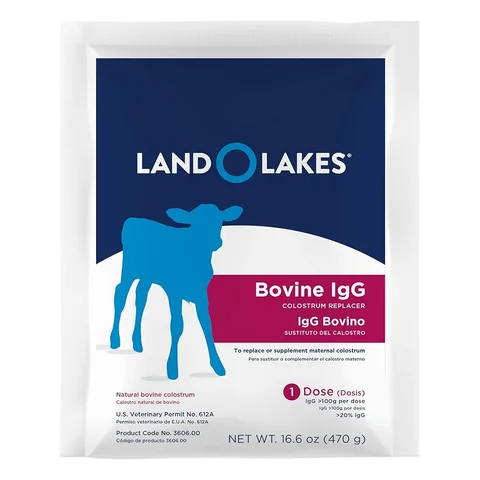
- Safe to feed. For when there is no sow colostrum. Pick a colostrum replacer, not a supplement. Thaw frozen colostrum gently, never in a microwave.Ages 0–2 days#
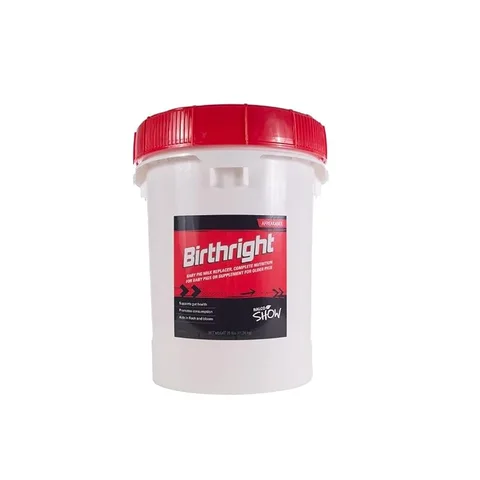
- Safe to feed. The main food after colostrum. Brands differ, so follow the label for mixing and temperature. Throw out soiled or spoiled milk.Ages 1 day–8 weeks#
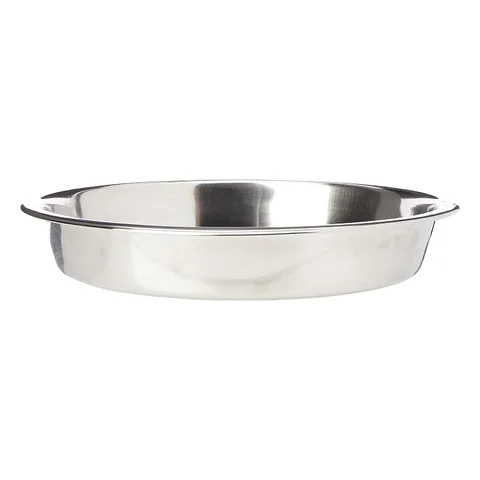
- Safe to feed. Offer from the start in a shallow, tip-proof dish where a small piglet can't get soaked or drown. Pigs short of water can be salt poisoned.All ages#
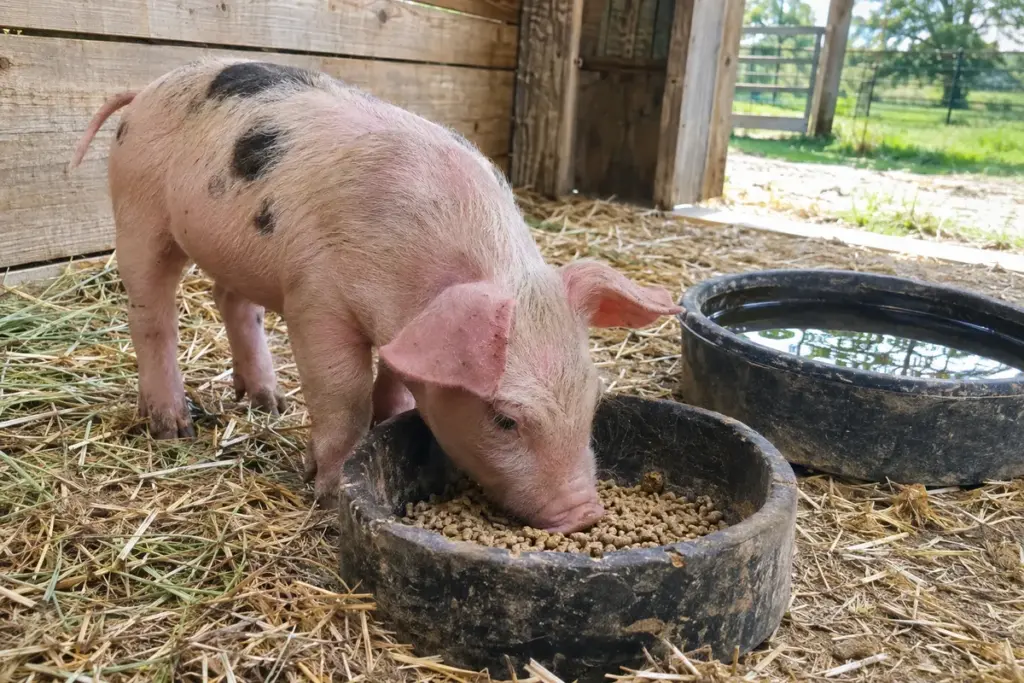
- Safe to feed. A starter made for suckling pigs. Sprinkle a little from about 1 week, keep it fresh and remove leftovers.From 1 week#
- Safe to feed. A complete pellet made for mini pigs is the base diet after weaning. Choose the life stage on the bag, not commercial hog finisher.From 4 weeks#
- Safe to feed. Good for grazing and rooting once the piglet is strong enough to be outside. Use ground free of sprays and toxic plants.From 4 weeks#
- Safe to feed. Timothy, orchard or brome hay adds fiber for a mini pig. A young piglet may ignore it at first. Mouldy hay goes in the bin.From 4 weeks#
- Safe to feed. Romaine and other greens are fine extras once pellets are eaten well. Pellets still come first.From 6 weeks#
Small amounts only (10)
- Small amounts only. Mini pig keepers often use pasteurized goat's milk after colostrum. It is a stand-in: several vet sources put pig milk replacer first.Ages 1 day–8 weeks#
- Small amounts only. Backup if pig replacer isn't available, and usually richer than calf replacer. Mix by the label and watch urine and droppings.Ages 1 day–8 weeks#
- Small amounts only. Emergency use only: hard for newborns to digest. A vet clinic's stopgap is 1 part condensed milk to 2 parts water until replacer arrives.From a few days old#
- Small amounts only. For dehydration or scours, on a vet's advice, mixed exactly as labelled. It is not food, and a wrong mix can cause salt poisoning.All ages#
- Small amounts only. Small pieces or plain canned pumpkin, not pie filling, once the pig eats pellets well.From 8 weeks#
- Small amounts only. A little chopped fresh vegetable on top of pellets. Skip canned vegetables because of the salt.From 8 weeks#
- Small amounts only. A sugary treat: a few small pieces after weaning. Fruit can cause diarrhea in young piglets.From 8 weeks#
- Small amounts only. Small slices as a training treat after weaning, with the core and seeds removed.From 8 weeks#
- Small amounts only. A training treat after weaning, cut up to prevent choking. Too much sugary fruit leads to diarrhea and weight gain.From 8 weeks#
- Small amounts only. A few shelled, unsalted ones after weaning. Nut shells can pierce the mouth or throat, and salt is dangerous for pigs.From 8 weeks#
Never feed (12)
- Never feed. Can spread African swine fever and other disease. Banned in the UK and Australia. US law restricts it and many states ban food waste.
- Never feed. UK law bans any kitchen waste, even vegetarian. Australia bans food that touched meat. US rules differ by state. Feed pig food instead.
- Never feed. Rules differ: Queensland bans them and the UK bans home-kitchen food. Some places allow eggs, but a piglet doesn't need them.
- Never feed. Not for a piglet: rich, often salty and no substitute for milk replacer. One exotic pet vet allows tiny bits for older pet pigs.
- Never feed. Starchy filler a growing pig doesn't need. Meat-free bakery food is legal in Australia, but bread from a UK home kitchen is not.
- Never feed. Green or sprouted potatoes and potato leaves can poison pigs. Plain cooked ones are mostly starch, so skip them for a young pig.
- Never feed. Caffeine and theobromine can be toxic to pigs. This includes cocoa, cola and chocolate baked goods.
- Never feed. Skin and pit are listed as toxic. Pigs may be less sensitive than some animals, but the pit can lodge and the flesh is fatty.
- Never feed. Pigs are very prone to salt poisoning, above all when short of water. Skip chips, pretzels, salted nuts and canned vegetables.
- Never feed. Not made for pigs: the protein, fat and salt levels are wrong. Keep pet bowls out of reach.
- Never feed. Moulds make toxins that can sicken or kill pigs. Throw out damp creep, sour milk and mouldy hay.
- Never feed. Acorns and young oak shoots can cause severe poisoning. Clear them from the piglet's run.
Sources
- Baby Pig Management: Birth to Weaning (PIH-18, archived copy) — Pork Information Gateway (Nebraska, Maryland, NC State extension authors)
- Helping Low Birthweight Piglets Survive and Thrive — Penn State Extension
- Decreasing Preweaning Death Loss in Pigs (APSC-195) — Virginia Cooperative Extension
- Helping high-risk piglets in the farrowing room — Ontario Ministry of Agriculture, Food and Rural Affairs
- Feeding and Nutrition of Miniature Pet Pigs — Merck Veterinary Manual
- Management of Miniature Pet Pigs — MSD (Merck) Veterinary Manual
- Feeding Levels and Practices in Pigs — Merck Veterinary Manual
- Basic Pig Husbandry: The Litter — NSW Department of Primary Industries (reprinted by The Pig Site)
- Hypoglycaemia (low blood sugar) — The Pig Site
- Tips for Managing Newborn Piglets — The Pig Site
- Baby Pig Management (G2500) — University of Missouri Extension
- Care Recommendations for Piglets — The Open Sanctuary Project
- How to Care for an Orphaned Piglet — American Mini Pig Association
- Managing At-Risk Piglets, part 2 (Colleen Lewis DVM) — Heritage Animal Health (retailer)
- Piglet Rearing — North Canterbury Veterinary Clinics (New Zealand)
- Feeding Your Mini Pig — VCA Animal Hospitals
- Human Food Waste and Swine (APHIS-24-022) — USDA Animal and Plant Health Inspection Service
- 7 U.S. Code 3802, definition of garbage — Cornell Legal Information Institute
- Keeping a pet pig or micropig — GOV.UK (Defra and APHA)
- Swill feeding pigs — NSW Government
- Laws against feeding prohibited feed to pigs (swill) — Queensland Government
- Code of Practice for the Welfare of Pigs — UK Department for Environment, Food and Rural Affairs
- Pig Diet and Feeding: Mixed Diet — Alaska Potbelly Pig Rescue
- Treats Your Mini Pot-Bellied Pig Will Love — Star Milling (feed manufacturer)
- Pot Belly Pigs care sheet — Chicago Exotics Animal Hospital
- Things That Are Toxic to Pigs — The Open Sanctuary Project
- Salt Toxicosis in Animals — Merck Veterinary Manual
- Iron Toxicosis in Newborn Pigs — Merck Veterinary Manual
- Enteric Colibacillosis in Pigs — Merck Veterinary Manual
- Birthright Acidified Baby Pig Milk Replacer (label) — Kalmbach Feeds (manufacturer)
- Hand Rearing Piglets (archived copy) — Oxford Sandy and Black Pigs (breeder)
- Moulds, weed seeds, poisons and other pig health risks — Queensland Government
- Care of newborn pigs (Charles Estill VMD, 2012) — Oregon State University
A baby pig’s first 24 hours
Newborn piglets carry about a day’s worth of energy in their fat and control their body temperature poorly for the first few days. Work in this order: warmth, colostrum, then milk.
1. Warm the piglet first
Dry it and put it in a draught-free box at 90 to 95°F (32 to 35°C), with room to move away from the heat. Penn State Extension puts it simply: a cold piglet will not nurse. Check the temperature with a thermometer at piglet level and watch the piglet. Piglets that pile up or shiver are cold. A piglet that pants or lies far from the heat is too hot.
Heat lamps start fires. Hang one securely, well above the piglet, and keep bedding and cords out of reach. The Open Sanctuary Project prefers ceramic bulbs or covered heat discs. Skip human heating pads, which can pass 120°F (49°C).
2. Get colostrum into it
Colostrum is the sow’s first milk. Piglets receive no antibodies before birth, so it is their only early protection, and the gut stops absorbing those antibodies at about 24 hours. Absorption has already dropped by about half 6 hours after the first suckle.
- Best: the mother’s colostrum, or frozen colostrum from another sow.
- Next: cow or goat colostrum, or a colostrum replacer. A “replacer” supplies more than a “supplement”.
- How much: at least 100 mL per kilogram of birth weight by 16 hours. A 1 kg (2.2 lb) piglet needs 100 mL or more, in feeds of about 15 mL every 1 to 2 hours.
- Thawing: use water no hotter than 140°F (60°C). A microwave destroys what you are trying to give.
Offer it only to a piglet that is warm and can swallow. One that is limp or fitting needs a vet before it needs a meal.
3. Ask a vet about iron
Piglets are born with little iron and sow milk supplies little more. Farm piglets get an iron injection before they are 3 days old. Ask a vet for the dose, especially for a runt or mini pig, because too much iron can kill.
4. Weigh it and write it down
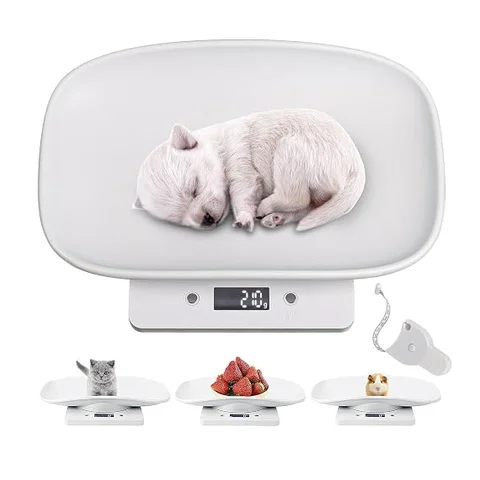
Weigh the piglet on a scale that reads small steps, then weigh it again every day at the same time. The birth weight sets the colostrum target and the daily weights show whether the feeding plan is working.
What milk to feed a baby pig
Use pig milk replacer, also sold as sow or baby pig milk replacer. Farm stores carry it. Mix it exactly as the label says, because brands differ. A mix that is too thin starves the piglet and one that is too strong can leave it dehydrated and constipated.
- Temperature: about body warm, near 100°F (38°C), unless your product is an acidified replacer meant to be fed cold.
- Batch size: mix no more than 8 to 12 hours’ worth, refrigerate it and warm only what you need.
- Hygiene: wash pans and syringes after each use and throw out soiled or sour milk.
If you can’t get pig milk replacer today
Mini pig keepers often use pasteurized goat’s milk after colostrum. A New Zealand vet clinic names goat kid replacer as its alternative, and kid or lamb replacer usually has more fat and protein than calf replacer. Avoid all-species replacers.
Cow’s milk is hard for a newborn to digest. The same clinic, North Canterbury Veterinary Clinics, gives one stopgap when neither pig nor goat replacer is readily available: 1 part condensed milk to 2 parts water, to start with. Use it only until you can buy replacer. In the UK, rules limit what milk may be fed to pigs, including pets, so check with the Animal and Plant Health Agency first.
Foods that harm baby pigs
- Meat, fish and anything that touched them. These can carry African swine fever, classical swine fever and foot-and-mouth disease.
- Kitchen scraps and swill. England bans all kitchen waste for pigs, even from vegetarian kitchens, and swill feeding is illegal throughout Australia. In the US, food waste that contains or touched meat may only be fed by licensed operations after cooking, and many states ban it outright. Federal law leaves out household scraps fed on the same property, but state law can be stricter and the disease risk remains.
- Salty food. Pigs are very prone to salt poisoning, above all when they are short of water.
- Chocolate, coffee and tea. Caffeine and theobromine can poison pigs.
- Avocado, green or sprouted potatoes and acorns. Each can poison a pig.
- Dog and cat food. The protein, fat and salt levels are wrong for pigs.
- Mouldy feed and spoiled milk. Mould toxins can sicken or kill.
- Eggs, cheese and bread. A piglet doesn’t need them, and some places ban eggs or any food from a home kitchen.
How to feed a baby pig
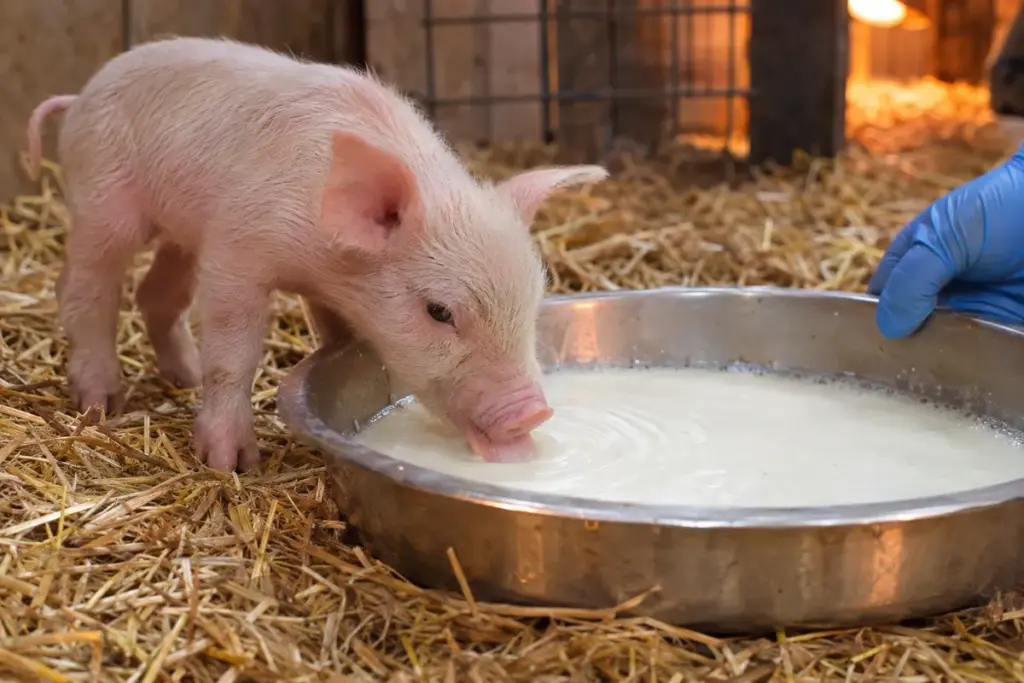
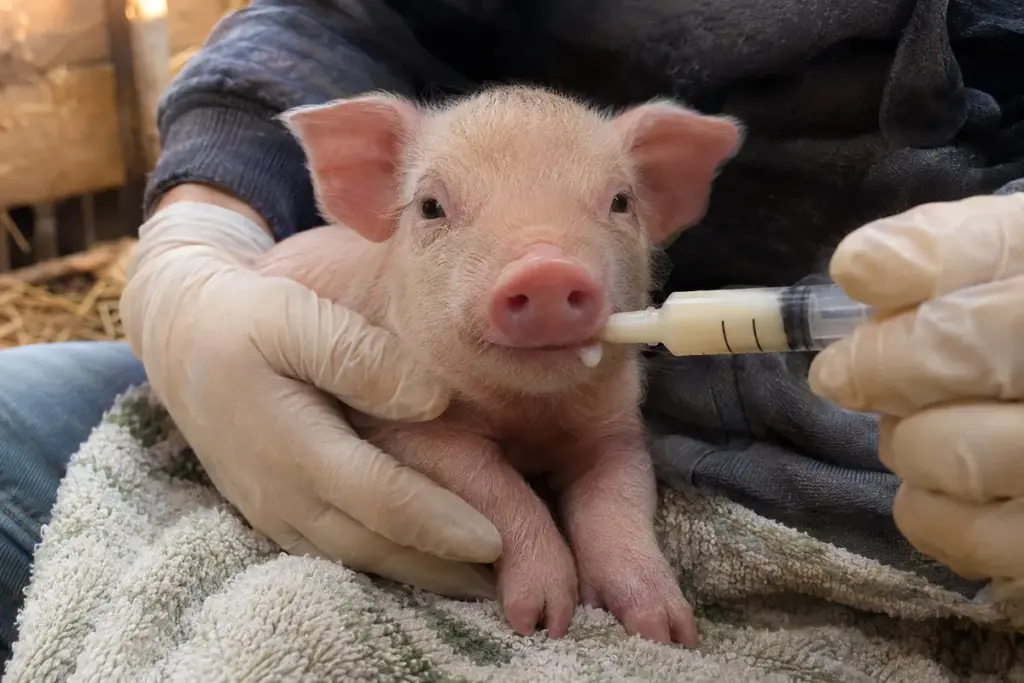
The main danger in hand feeding is milk going into the lungs, which can cause pneumonia. A shallow pan lets the piglet control how fast it drinks.
- Warm the piglet and the milk. Check that it can stand or rest on its belly and swallow.
- Set out a wide, shallow pan. Pick a heavy one or anchor it so it can’t tip.
- Show it the milk. Let the piglet lap from your finger, then lead its snout down to the pan. You may need to dip the snout gently 2 or 3 times.
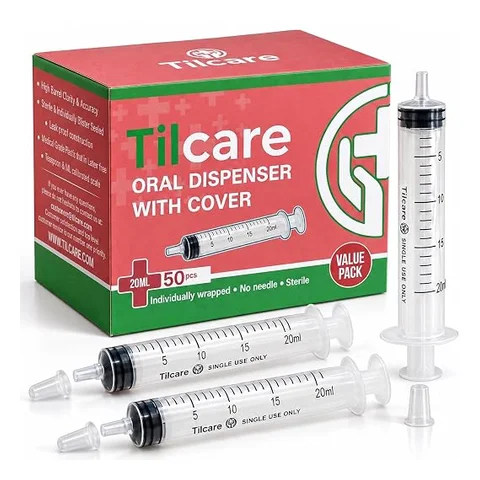
- Use a syringe if it can’t manage a pan yet. Keep the piglet upright on its belly with its head level. Give a few drops, wait for the swallow and give a few more. Never squirt or force.
- Stop while it is comfortable. Small frequent meals beat big ones. A tight, swollen belly means too much.
- Clean up. Wipe the piglet’s face and chin, dry any spills, wash the equipment and record the amount.
Bottle feeding a piglet
Advice differs. The American Mini Pig Association says bottles are never recommended and the Open Sanctuary Project advises against them, while the Merck Veterinary Manual starts young mini pigs on a bottle and moves them to a pan, usually within a day. If you use one, choose a nipple with a very small hole, hold the bottle level, take it away when sucking slows and never bottle feed a weak piglet.
Tube feeding is for people a vet or experienced keeper has trained. A misplaced tube puts milk straight into the lungs.
Baby pig feeding schedule by age
Amounts depend on size. A newborn’s stomach holds roughly 50 mL per kilogram of body weight, and a mini pig takes much less than a large farm breed. Use the table as a starting point, follow your replacer label and cut back if droppings turn loose.
| Age | What it looks like | Food | Amount | How often | Notes |
|---|---|---|---|---|---|
| 0–24 hours | Newborn; under about 1 kg (2.2 lb) is a high-risk runt | Colostrum: sow, cow, goat or replacer | About 15 mL a feed; at least 100 mL per kg of birth weight by 16 hours | Every 1–2 hours | Antibodies pass for about 24 hours only. Warm it first. Never force a feed. Mini piglets take less. |
| 1–3 days | Dry, able to stand and swallow | Pig milk replacer after colostrum | Start 10–20 mL a feed. Mini pig: Merck gives about 30 mL (1 oz) every 4–6 hours | Every 2 hours, nights too | Mini pig groups give colostrum up to 48 hours. Iron shot before day 3: ask a vet for the dose. |
| 4–14 days | Tight, shiny skin; active between feeds | Pig milk replacer, pan fed; first creep | About 40–50 mL a feed, building to 80–100 mL for a big piglet; less if it scours | Every 2–4 hours | Don't overfill: it can bloat. Offer a pinch of creep from about day 7–10. Keep the piglet dry. |
| 2–4 weeks | Rooting and starting to nibble dry feed | Milk replacer, creep feed, water | Milk by the label. Hand-reared intake varies: about 10–30% of body weight a day | 4–6 milk feeds a day | Creep little and often. Pale, weak or heavy breathing can mean anemia from a missed iron shot. |
| 4–6 weeks | Eating some dry feed every day | Milk plus creep or starter pellets | Milk by the label; fresh dry feed always out for farm piglets | 3–4 milk feeds a day | Don't wean before 28 days. Farms often wean at 3–4 weeks with special starter diets. |
| 6–8 weeks | Eating pellets well | Starter pellets; milk tapering off | Cut milk back a little at a time over 1–2 weeks | Drop one milk feed at a time | Wean only when it eats dry feed steadily. Pellets soaked in milk help the switch. |
| 8 weeks and up | Weaned and growing fast | Starter or grower pellets, water, small extras | Farm pig: free choice. Mini pig: by the label, about 2–3% of body weight a day | Mini pig: 2–3 meals a day | Don't underfeed or overfeed a mini pig: watch body condition. Change feeds slowly. |
Night feeds matter in the first two weeks. A thriving piglet gains weight every day, stays active between meals and has a rounded but soft belly. Weight that stalls or drops is a reason to call the vet.
Water, creep feed and weaning
- Water: offer fresh water from the start in a shallow dish a small piglet can’t fall into or tip.
- Creep feed: sprinkle a pinch of piglet starter from about day 7 to 10. Replace it often so it stays fresh.
- Gruel: mixing creep feed with warm replacer or water helps a piglet that ignores dry feed.
- Weaning: not before 28 days. Commercial farms often wean at 3 to 4 weeks on specialist starter diets. Hand-reared and mini piglets do well on milk until 6 to 8 weeks.
- How to wean: once the piglet eats dry feed every day, cut back the milk over 1 to 2 weeks, one feed at a time.
Feeding a young mini pig
VCA Animal Hospitals advises a mini pig starter to about 7 weeks and a grower from about 8 to 16 weeks, not commercial hog feed. Young mini pigs get about 2 to 3% of their body weight a day, split into two or more meals, with grass, hay and leafy greens as they grow. Obesity is common, and some pigs sold as “mini” grow past 200 lb, so weigh yours and have a vet check its body condition.
Can baby pigs eat bananas, apples or grapes?
Yes, as small treats after weaning. This guide holds fruit until about 8 weeks, because fruit can cause diarrhea in young piglets. Then offer a few small pieces of banana, apple without the core or seeds or cut-up grapes. Pellets stay the main food.
Signs something is wrong with a piglet
- Shivering, limp, lying flat, paddling or fitting: low blood sugar or chilling. Warm the piglet and call a vet now. Do not pour milk into a piglet that can’t swallow.
- Watery or yellow droppings (scours): piglets dehydrate fast. Keep it warm, clean and dry and call a vet, who may prescribe antibiotics and fluids. Overfeeding is one cause. Some replacer labels advise doubling the powder; ask a vet instead.
- Dull loose skin, sunken eyes or belly: dehydration. See a vet immediately.
- Swollen belly after feeding: stop pushing volume. Call a vet if it stays swollen or the piglet seems distressed.
- Coughing, wet or open-mouth breathing, fast heaving sides or fever: possible pneumonia, including from inhaled milk.
- Pale, weak and breathing hard: possible anemia from lack of iron.
- Straining, small hard droppings or dark, strong urine: the milk may be mixed too strong. Check the label and call a vet.
If you have found a wild or feral piglet, don’t take it home. Some states, including Montana and Minnesota, restrict keeping or moving feral swine, so call your state wildlife or agriculture agency.
Printable baby pig feeding chart
The cheat sheet fits on one page with the food lists, the schedule by age and the first-hours steps. Print it in color or black and white and keep it next to the brooder.
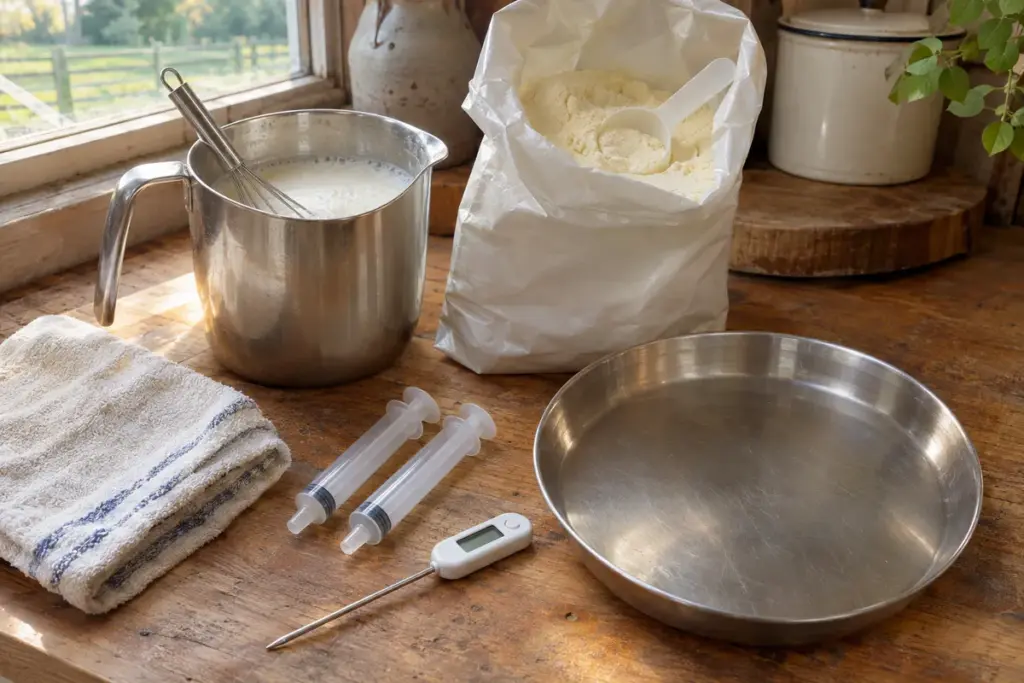
Supplies for feeding a baby pig
These are the items extension, vet and sanctuary guides call for. A farm store is the fastest source when a piglet is already waiting.

More about pigs
Once your piglet is growing, the pig feed calculator estimates daily feed for feeder pigs, sows and mini pigs. Learn the body from snout to tail with the parts of a pig diagram, compare wild relatives in what Eurasian wild boars eat and what common warthogs eat, or meet some famous pigs and their names. For other young animals, see what to feed a baby deer and what to feed a baby rabbit.
Frequently asked questions
What do newborn piglets drink?
Newborn piglets need colostrum, the sow's first milk, then milk. Without the mother, use frozen sow colostrum, cow or goat colostrum or a colostrum replacer in the first 24 hours, then pig milk replacer mixed by the label.
Can baby pigs drink cow's milk?
Only as a stopgap. Cow's milk is hard for a newborn to digest, so switch to pig milk replacer as soon as you can. In the UK, check the rules before feeding any shop milk to a pig.
How much milk does a baby pig need?
Start at about 10 to 20 mL a feed on days 1 to 3 and build to 40 to 50 mL by days 4 to 14, with up to 80 to 100 mL for a large piglet. Mini pigs take less than big farm breeds. Follow the replacer label and reduce the amount if the piglet scours.
How often should you feed an orphaned piglet?
Feed every 1 to 2 hours in the first day and about every 2 hours, including overnight, for the next few days. Stretch to every 2 to 4 hours in the second week and 4 to 6 feeds a day by 2 to 4 weeks.
Can you bottle feed a baby pig?
A shallow pan or slow syringe is safer. Mini pig and sanctuary groups advise against bottles because piglets can inhale milk. If you use one, pick a very small nipple hole, hold the bottle level and never bottle feed a weak piglet.
What can I feed a piglet if I have no milk replacer?
Under a day old it needs colostrum, so call a vet or local pig, goat or dairy keeper. For an older piglet, pasteurized goat's milk or kid replacer can stand in. One vet clinic's emergency mix is 1 part condensed milk to 2 parts water until replacer is available.
When can baby pigs eat solid food?
Offer a pinch of creep feed from about 7 to 10 days old. Most piglets start eating meaningful amounts at 2 to 3 weeks. Keep water available and keep the feed fresh.
When can a piglet be weaned?
Not before 28 days. Farms often wean at 3 to 4 weeks on special starter diets, while hand-reared and mini piglets are usually weaned at 6 to 8 weeks, cutting milk back over 1 to 2 weeks.
Can baby pigs eat bananas?
A few small pieces are fine as a treat after weaning, from about 8 weeks. Fruit can cause diarrhea in young piglets and should not replace milk or pellets.
Why is my piglet shivering and not eating?
It is probably chilled, short of blood sugar or sick, and any of these can kill quickly. Dry it, warm it to 90 to 95°F (32 to 35°C) and call a vet right away. Don't pour milk into a piglet that can't swallow.
Do baby pigs need water if they drink milk?
Yes. Offer fresh water from the start in a shallow dish that can't tip or trap the piglet. Pigs that run short of water are at risk of salt poisoning.
Can you feed a piglet table scraps?
No. Kitchen scraps can spread deadly pig diseases. England bans them for all pigs, Australia bans swill feeding, and US law restricts food waste containing meat, with many states banning it outright.
Sources
- Helping Low Birthweight Piglets Survive and Thrive, Penn State Extension
- Decreasing Preweaning Death Loss in Pigs, Virginia Cooperative Extension
- Helping high-risk piglets in the farrowing room, Ontario Ministry of Agriculture
- Feeding and Nutrition of Miniature Pet Pigs, Merck Veterinary Manual
- Feeding Your Mini Pig, VCA Animal Hospitals
- Piglet Rearing, North Canterbury Veterinary Clinics
- Care Recommendations for Piglets, The Open Sanctuary Project
- How to Care for an Orphaned Piglet, American Mini Pig Association
- Human Food Waste and Swine, USDA APHIS
- Keeping a pet pig or micropig, GOV.UK