Contents
- TLDR
- Why most fastest reptile lists disagree
- Water: the fastest swimmers
- Land: the fastest runners
- Snakes: the fastest in the world
- Myths: green sea turtles and bearded dragons
- Why reptile speeds are bursts, not sustained rates
- How reptiles compare with mammals and birds
TLDR
- Fastest reptile overall: the leatherback sea turtle, at 35.28 km/h (21.9 mph) in water, according to Guinness World Records.
- Fastest on land: the Costa Rican spiny-tailed iguana, at 34.9 km/h (21.7 mph), timed on a lizard racetrack with light beams (Huey, 2017).
- Fastest snake: the black mamba, at roughly 20 to 23 km/h (12 to 14 mph). That figure is an estimate, not a timed run.
Every number below is marked “measured record” or “estimate.” Treat the two differently.
Why most fastest reptile lists disagree
Search for the fastest reptiles and you’ll find lists that contradict themselves on a single page. One site gives the black mamba 12 mph in one paragraph and 14 mph in another. Another puts the green sea turtle at 24 mph, then 35 mph. Several tables mix swimming speeds with sprinting speeds and rank the result as if the animals had raced each other.
Two habits cause most of the mess. Land, water and snakes get lumped into one ranking, and unmeasured estimates get printed beside timed records with no label. This post splits the categories and tags every figure.
The ranked top 10 across all three:
| Overall rank | Reptile | km/h | mph | Medium | Status |
|---|---|---|---|---|---|
| 1 | Leatherback sea turtle | 35.28 | 21.9 | Water | Measured record |
| 2 | Costa Rican spiny-tailed iguana | 34.9 | 21.7 | Land | Measured record |
| 3 | Saltwater crocodile | ~29 | ~18 | Water | Estimate |
| 4 | Six-lined racerunner | ~29 | ~18 | Land | Estimate |
| 5 | Black mamba | 20–23 | 12–14 | Land (snake) | Estimate |
| 6 | Komodo dragon | ~20 | ~12 | Land | Estimate |
| 7 | American alligator | ~17 | ~11 | Land | Estimate |
| 8 | Freshwater crocodile (gallop) | ~17 | ~11 | Land | Estimate |
| 9 | Eastern coachwhip | ~6 | ~4 | Land (snake) | Estimate |
| 10 | Common basilisk | ~5 | ~3 | Water surface | Measured in lab studies |
Only the first two rows come from a timed, documented measurement. Everything from rank 3 down is a commonly cited figure with no single trial behind it, so read those gaps as rough.
Water: the fastest swimmers
| Reptile | km/h | mph | Status | Source |
|---|---|---|---|---|
| Leatherback sea turtle | 35.28 | 21.9 | Measured record | Guinness World Records |
| Saltwater crocodile | ~29 | ~18 | Estimate | Commonly cited burst figure |
| Common basilisk (on the surface) | ~5 | ~3 | Measured | Laboratory studies of juveniles |
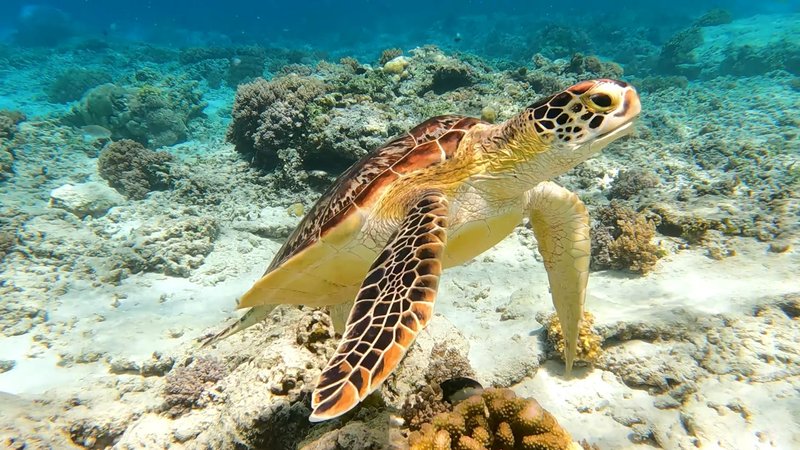
The leatherback is the fastest sea turtle and the fastest reptile on record. It’s also the largest living turtle, according to NOAA Fisheries, and it has no hard shell, just a leathery, ridged back. That makes the speed odder: the heaviest turtle is also the quickest swimmer.
Other sea turtles are slower. Green sea turtles cruise at a few kilometers per hour, and the high figures attached to them online don’t trace back to a measurement (more in the myths section).
The saltwater crocodile is the heaviest living reptile and an ambush predator, so it doesn’t need endurance. It needs one fast lunge and a tail that works as a paddle. Burst figures around 29 km/h (18 mph) are common, but there’s no timed trial behind them, so this one stays an estimate.
The basilisk’s water-running trick
The common basilisk, nicknamed the Jesus Christ lizard, runs across the surface of ponds at roughly 1.5 meters per second, about 5 km/h (3 mph). That’s slow next to the others here. What makes it notable is that it runs on water at all.
Each step does two things. The foot slaps the surface and pushes down, which forms an air pocket, and the lizard pulls the foot out before the pocket collapses. Juveniles can keep this up for several meters. Adults are heavier, sink sooner and swim the rest.
Land: the fastest runners
| Reptile | km/h | mph | Status | Source |
|---|---|---|---|---|
| Costa Rican spiny-tailed iguana | 34.9 | 21.7 | Measured record | Huey, 2017; Guinness World Records |
| Six-lined racerunner | ~29 | ~18 | Estimate | Commonly cited figure |
| Komodo dragon | ~20 | ~12 | Estimate | Commonly cited short-sprint figure |
| American alligator | ~17 | ~11 | Estimate | Commonly cited burst figure |
| Freshwater crocodile (gallop) | ~17 | ~11 | Estimate | Field reports of galloping |
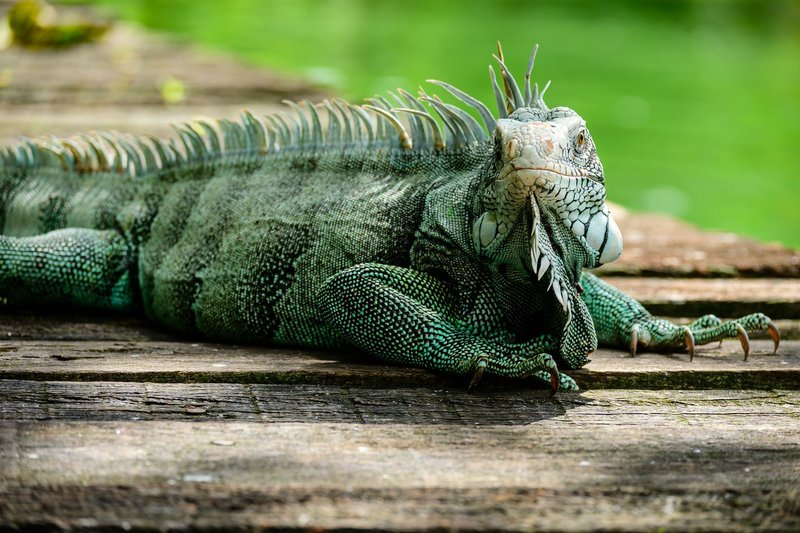
The Costa Rican spiny-tailed iguana holds the fastest land reptile title because someone built a track and timed it. The run used a lizard racetrack with light-beam timing, which removes the human reaction time that spoils stopwatch numbers. The result, 34.9 km/h (21.7 mph), is the cleanest speed figure for any reptile on this page.
The six-lined racerunner is the name most often attached to “fastest lizard” in field guides. It’s small, slim and quick off the line, but the often-quoted 18 mph is an estimate.
Crocodilians are the gap in most rankings. Alligators and crocodiles have a reputation as slow, heavy sunbathers, yet some species switch to a high walk or a full gallop when threatened. A short charge near 17 km/h (11 mph) is the usual estimate. That won’t win a long race against a person, but over two or three body lengths it’s plenty.
Snakes: the fastest in the world
| Reptile | km/h | mph | Status | Source |
|---|---|---|---|---|
| Black mamba | 20–23 | 12–14 | Estimate | Widely cited, no timed trial |
| Eastern coachwhip | ~6 | ~4 | Estimate | Commonly cited figure |
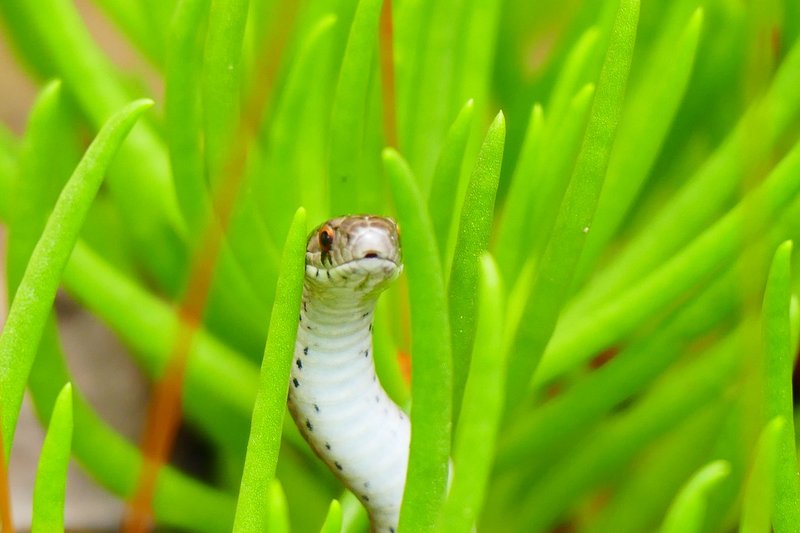
The fastest snake in the world is the black mamba, at about 20 to 23 km/h (12 to 14 mph) over short distances. It’s the figure most often repeated, and it comes from field accounts of the snake crossing open ground, not from a controlled measurement.
A snake has no limbs to push with, so it can’t match a lizard over a sprint. Mambas are reported to use their speed to get away and to strike mainly when cornered, which fits a snake whose best pace is a short escape run, not a chase.
The eastern coachwhip, a slim North American racer, is far slower at about 6 km/h (4 mph). It looks quick mostly because it’s long and thin and moves in a smooth line.
Myths: green sea turtles and bearded dragons
Myth 1: Green sea turtles swim 35 mph. No measurement supports it. The leatherback’s record is 35.28 km/h, which is 21.9 mph. The “35” looks like a unit mix-up that kept getting copied. Green sea turtles are strong, efficient swimmers, but they aren’t close to either number.
Myth 2: Bearded dragons run 25 mph. No measurement supports this either. If it were true, a bearded dragon would beat the timed lizard record (21.7 mph) by more than 3 mph, and the result would have come from a racetrack and been published. It wasn’t.
Both myths follow the same pattern. A figure appears on one site, gets repeated, and ends up cited as fact. When a list gives a number with no method, treat it as a guess.
Why reptile speeds are bursts, not sustained rates
Every figure in this post is a burst: a short effort at maximum output, not a pace the animal could hold. Three things shape it.
Temperature. Reptiles get most of their body heat from the environment. A lizard warmed on a rock can sprint far faster than the same lizard at dawn, and speed rises with body temperature up to an optimum. A record set on a warm track shows the animal at its best, not what you’ll see on a cool morning.
Body size. Big reptiles take long strides but have a lot of mass to move. Small ones cycle their legs quickly but cover little ground per step. Neither extreme is built for top speed, which is one reason the land record belongs to a mid-sized iguana and not a Komodo dragon.
How it’s measured. A stopwatch and a person’s reaction time can swing a short sprint by a large percentage. Light beams across a track cut that error. Swimming speeds are harder to pin down than running speeds, since there’s no fixed lane to time. That’s why a “measured record” and an “estimate” shouldn’t share a table row without a label.
How reptiles compare with mammals and birds
Reptiles aren’t fast by the standards of other vertebrates. The cheetah reaches roughly 100 km/h (about 62 mph) over a short run, nearly three times the leatherback’s record. Usain Bolt’s peak sprint speed of 44.7 km/h (27.8 mph) is higher than the timed land record for any reptile, so a world-class sprinter beats every lizard on this list. A peregrine falcon in a dive tops 300 km/h, more than eight times the best a reptile has managed.
The more interesting detail is how close the two reptile records are: 35.28 km/h in water and 34.9 km/h on land, less than half a kilometer per hour apart.