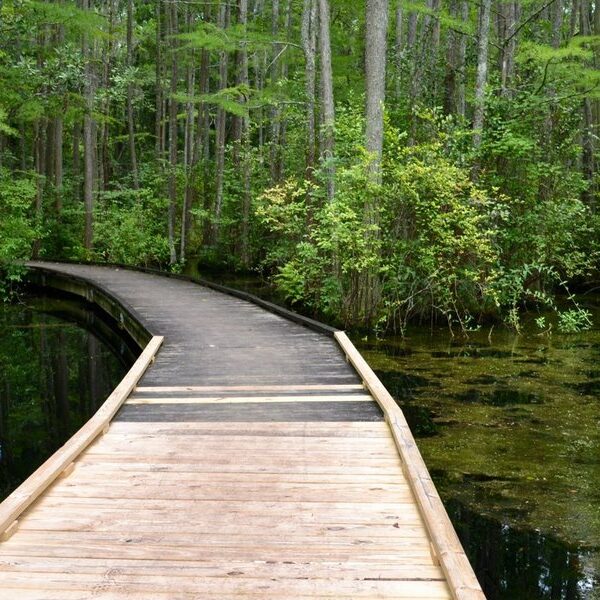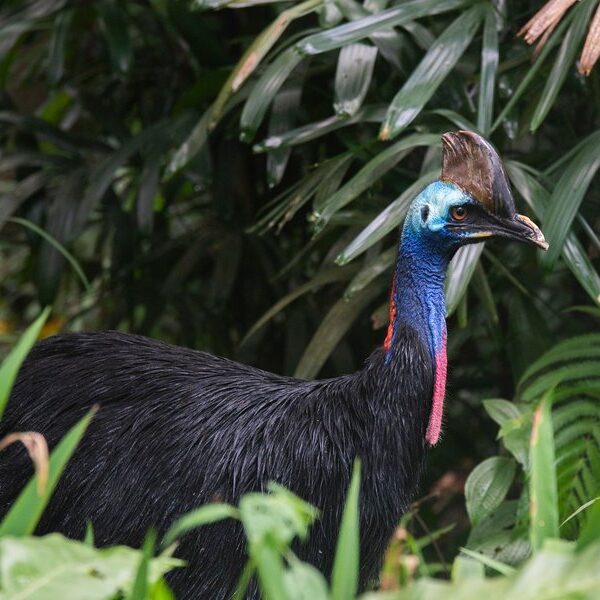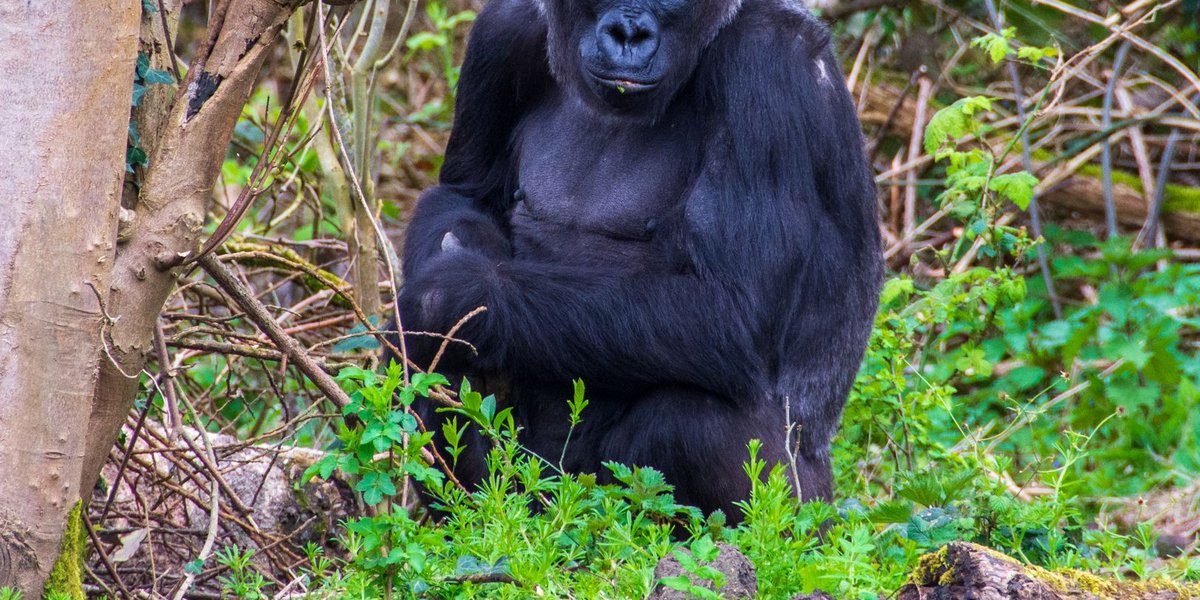
Gabon’s native animals are mostly big, shy, and hard to find, and that’s the point of the country. About 88% of Gabon is still covered in forest, which makes it one of the most intact stretches of the Congo Basin. The wildlife list reads like a greatest-hits album of Central Africa, with a few coastal acts you won’t find anywhere else.
This guide profiles 14 species that live in Gabon year-round or return every year to breed. For each one you get the scientific name, the conservation status, one fact worth repeating, and the park where you have the best odds of seeing it.
Contents
- What “native” means here
- Great apes and primates
- Forest giants
- Predators
- Reptiles
- Coast and sea
- Birds
- Quick-reference table
- Protecting Gabon’s native animals
What “native” means here
Native means a species belongs to the ecosystem and breeds or lives there naturally. A wandering visitor doesn’t count. Endemic is a narrower word: found nowhere else on Earth.
Almost none of Gabon’s famous animals are endemic. The gorillas, elephants and mandrills also live in neighbouring Cameroon, Equatorial Guinea and the Republic of Congo. What makes Gabon special is how many of them survive here in numbers. Some species are native but gone: Gabon has no lions, and the last one is reported to have been killed in 1996.
Great apes and primates
1. Western lowland gorilla
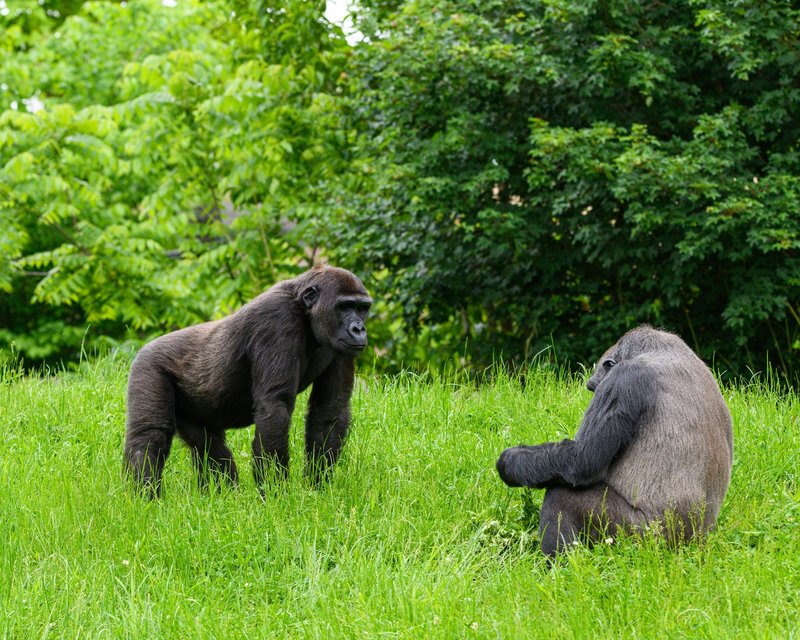
Gorilla gorilla gorilla | Critically Endangered
Gabon holds more western lowland gorillas than almost anywhere. A 2018 survey in Science Advances estimated the range-wide population at roughly 360,000, and Gabon is usually credited with around 100,000 of them. Disease and hunting are the main threats, and Ebola has wiped out whole groups elsewhere in the region.
Where to see them: Loango National Park has gorillas that wander out of the forest onto the beach. Moukalaba-Doudou in the south also offers gorilla tracking. Sightings aren’t guaranteed, since most Gabonese gorillas have never been habituated to people.
2. Central chimpanzee
Pan troglodytes troglodytes | Endangered
Gabon’s chimpanzees are the central subspecies, and they’re stubborn tool users. Researchers in Loango have documented them building toolkits of several different sticks to raid wild honey from hives.
Where to see them: Loango, Lopé and Moukalaba-Doudou all hold chimpanzees. You’ll usually hear them (pant-hoots carry for kilometres) before you see anything.
3. Mandrill
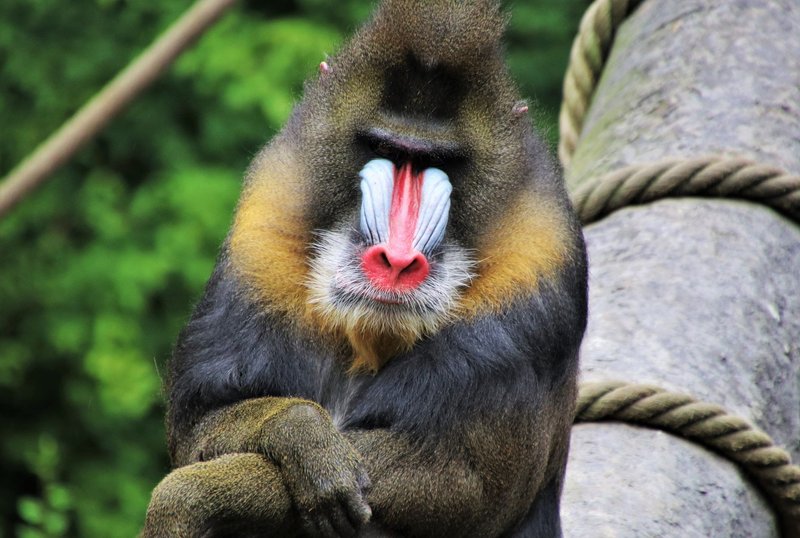
Mandrillus sphinx | Vulnerable
The largest monkey in the world, and the one with the blue-and-red face. Adult males can weigh around 30 kg. Mandrills live in hordes that can number in the hundreds, and Lopé has hosted one of the biggest groups ever recorded, with more than 1,300 animals.
Where to see them: Lopé National Park, where the forest meets open savanna. Walking at dawn gives you your best shot at a horde crossing the open ground.
Forest giants
4. African forest elephant
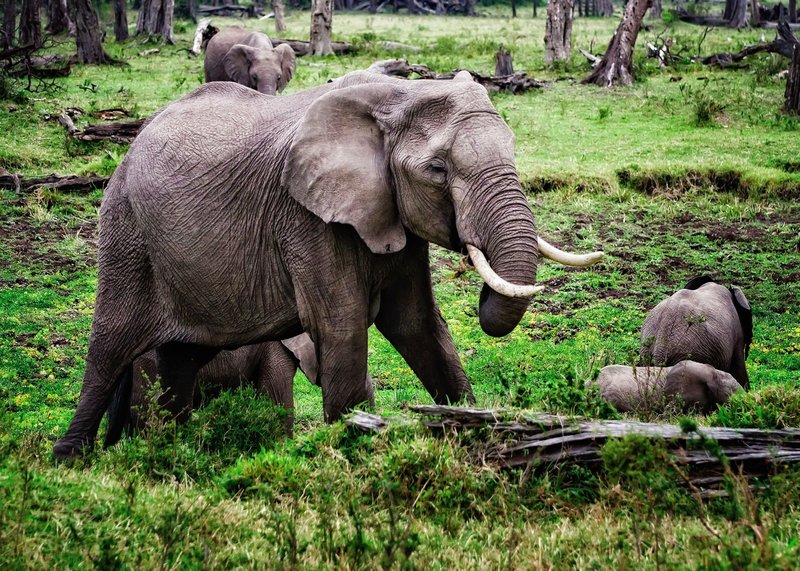
Loxodonta cyclotis | Critically Endangered
The forest elephant is a separate species from the savanna elephant, with straighter tusks that point downward and a smaller body that slips through dense trunks. The IUCN now lists it as Critically Endangered after poaching cut populations across Central Africa. Gabon is its stronghold and holds well over half of those left. Even so, remote Minkébé lost roughly 80% of its elephants between 2004 and 2014.
They also plant the forest. Elephants swallow fruit whole and spread the seeds across kilometres, and some tree species depend on them to reproduce.
Where to see them: Loango, where elephants walk the beach, and Ivindo National Park, where they gather at the mineral clearing called Langoué Bai.
5. African forest buffalo
Syncerus caffer nanus | African buffalo as a species is Near Threatened
Smaller and redder than the savanna buffalo you see on safari documentaries, the forest buffalo weighs about half as much. It’s shy, quick to vanish into the undergrowth, and more likely to be glimpsed at a clearing than approached.
Where to see them: the savanna patches of Lopé and the lagoon-side grasslands of Loango.
Predators
6. Leopard
Panthera pardus | Vulnerable
With no lions in the country, the leopard is Gabon’s top predator. It hunts everything from duikers to monkeys and spends the day asleep in dense forest, so most people only ever see one on a camera trap.
Where to see it: Lopé and Loango offer the best chance, usually at dusk or on a night drive. Treat any sighting as a bonus.
7. African golden cat
Caracal aurata | Vulnerable
A medium-sized wild cat with coat colours that run from reddish brown to slate grey, and a melanistic form that is almost black. It’s among the least-photographed cats in Africa. Camera-trap surveys in Gabon’s forests have given researchers some of their best records.
Where to see it: realistically, you won’t. Ivindo and Lopé are the places it’s recorded most, but most visitors will see it only in photos taken by research teams.
Reptiles
8. Gaboon viper
Bitis gabonica | Least Concern
This viper has the longest fangs of any snake, up to about 5 cm, and a leaf-patterned back that makes it vanish on the forest floor. It’s heavy, slow and calm, and it relies on that camouflage instead of fleeing. Bites to people are rare, and the usual cause is stepping on one.
Where to see it: forest floors across the country. Watch where you walk in Lopé and Ivindo, and stick to trails.
9. African dwarf crocodile
Osteolaemus tetraspis | Vulnerable
The smallest living crocodile, rarely over 1.9 m. It lives in forest swamps and slow streams, hides in burrows during the day, and hunts at night. Bushmeat hunting is its main threat.
Where to see it: small rivers and swamps in Ivindo and Moukalaba-Doudou, typically on a night boat trip.
Coast and sea
10. Leatherback turtle
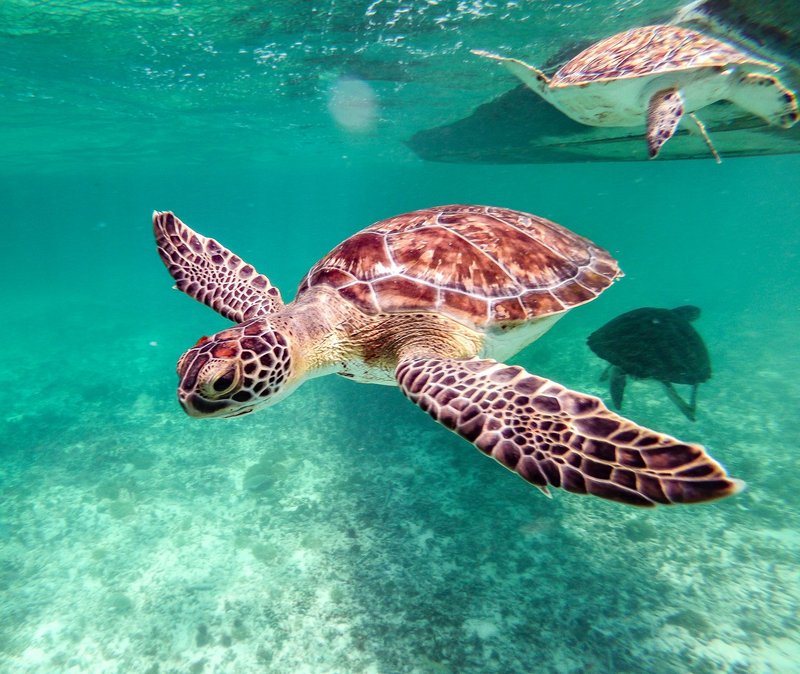
Dermochelys coriacea | Vulnerable
The largest sea turtle on Earth, and a deep diver. Gabon’s beaches host one of the biggest leatherback nesting populations in the world, with females coming ashore at night from roughly October to April, peaking around November to January.
Where to see them: Pongara National Park near Libreville, Gamba and Mayumba National Park along the south coast. Nesting is at night, and rules about lights and distance protect the females and hatchlings.
11. Hippopotamus
Hippopotamus amphibius | Vulnerable
Most hippos stay in rivers. In Gabon, some wander to the Atlantic, where they’re photographed standing in the shallows or bobbing in the surf. The “surfing hippo” is a real, repeated sight in the Loango region.
Where to see them: Loango National Park, around the Iguela Lagoon and the beaches nearby. Keep your distance: hippos kill more people in Africa than most large predators.
12. Humpback whale
Megaptera novaeangliae | Least Concern
Humpbacks from the Southern Hemisphere swim north each year to breed in warm water off the Gabonese coast. They arrive around July and stay until about October. You can often spot breaching adults and calves from shore.
Where to see them: the waters off Gamba, Loango and Mayumba, on licensed boat trips during the season.
Birds
13. African grey parrot
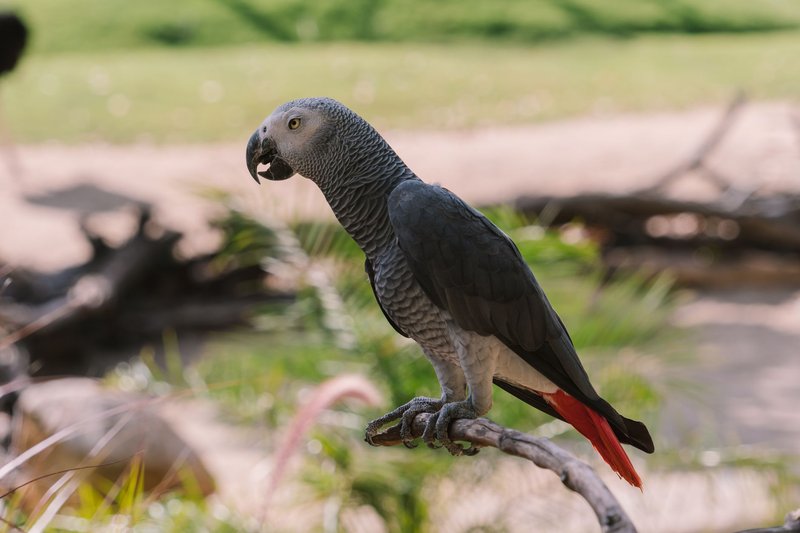
Psittacus erithacus | Endangered
The grey parrot is one of the cleverest birds there is, with a famously strong ability to imitate speech. Trapping for the pet trade pushed it onto the IUCN Red List’s Endangered category, and international trade in wild-caught birds was banned in 2016 when it moved to CITES Appendix I.
Where to see them: flocks fly overhead at dusk toward roosts in Loango, Pongara and Lopé. Listen for whistles and shrieks above the canopy at sunrise and sunset.
14. Great blue turaco
Corythaeola cristata | Least Concern
The biggest turaco in Africa, around 70 cm long, with a blue-grey body, a yellow tail band and a crest on the head. Its call is a loud, rolling croak that carries through the forest. Turacos get their colour from pigments found nowhere else in the bird world.
Where to see it: forest edges and tall trees in Lopé, Ivindo and the Plateaux Batéké. Look for it in fruiting trees in the early morning.
Quick-reference table
| Animal | Scientific name | Status | Best park |
|---|---|---|---|
| Western lowland gorilla | Gorilla gorilla gorilla | Critically Endangered | Loango, Moukalaba-Doudou |
| Central chimpanzee | Pan troglodytes troglodytes | Endangered | Loango, Lopé |
| Mandrill | Mandrillus sphinx | Vulnerable | Lopé |
| African forest elephant | Loxodonta cyclotis | Critically Endangered | Loango, Ivindo |
| African forest buffalo | Syncerus caffer nanus | Near Threatened (species) | Lopé, Loango |
| Leopard | Panthera pardus | Vulnerable | Lopé, Loango |
| African golden cat | Caracal aurata | Vulnerable | Ivindo, Lopé |
| Gaboon viper | Bitis gabonica | Least Concern | Lopé, Ivindo |
| African dwarf crocodile | Osteolaemus tetraspis | Vulnerable | Ivindo, Moukalaba-Doudou |
| Leatherback turtle | Dermochelys coriacea | Vulnerable | Pongara, Mayumba |
| Hippopotamus | Hippopotamus amphibius | Vulnerable | Loango |
| Humpback whale | Megaptera novaeangliae | Least Concern | Loango, Mayumba |
| African grey parrot | Psittacus erithacus | Endangered | Loango, Pongara |
| Great blue turaco | Corythaeola cristata | Least Concern | Lopé, Ivindo |
Status is taken from the IUCN Red List, which is updated regularly, so check there for the current category.
Protecting Gabon’s native animals
In 2002, the government created 13 national parks, covering roughly 11% of the country’s land. The decision shaped everything on this list. Many of the parks, such as Lopé, which UNESCO recognises as a World Heritage site, protect forest, savanna and river habitat at the same time.
Parks don’t solve poaching on their own. Forest elephants lost the most, and Minkébé shows what happens when enforcement is thin in a remote place. Gorillas and chimpanzees face disease and bushmeat hunting. Grey parrots face the pet trade.
If you visit, pick licensed guides, keep to park rules around turtles and hippos, and expect to work for your sightings. That’s the trade-off with a country where the wildlife still has room to hide.