TLDR
Lesotho is a country of high mountains, so its wildlife is built for cold, thin air and rock. The native animals worth knowing are 16 species: eland, grey rhebok, klipspringer, mountain reedbuck, Sloggett’s ice rat, chacma baboon, caracal, serval, Cape clawless otter, bearded vulture, Cape vulture, southern bald ibis, Drakensberg rockjumper, Drakensberg siskin, Maloti minnow and the Drakensberg river frog. There are no elephants, zebras, buffalo or cheetahs here, whatever the listicles say. The best places to look are Sehlabathebe National Park and the Sani Pass area.
Table of Contents
- Why Lesotho’s wildlife looks the way it does
- Highland mammals of the Maloti
- Cliff and sky birds
- Rivers, wetlands and grassland
- Quick facts table
- Animals that used to live here
- What is Lesotho’s national animal?
- Where to see Lesotho’s wildlife
Why Lesotho’s wildlife looks the way it does
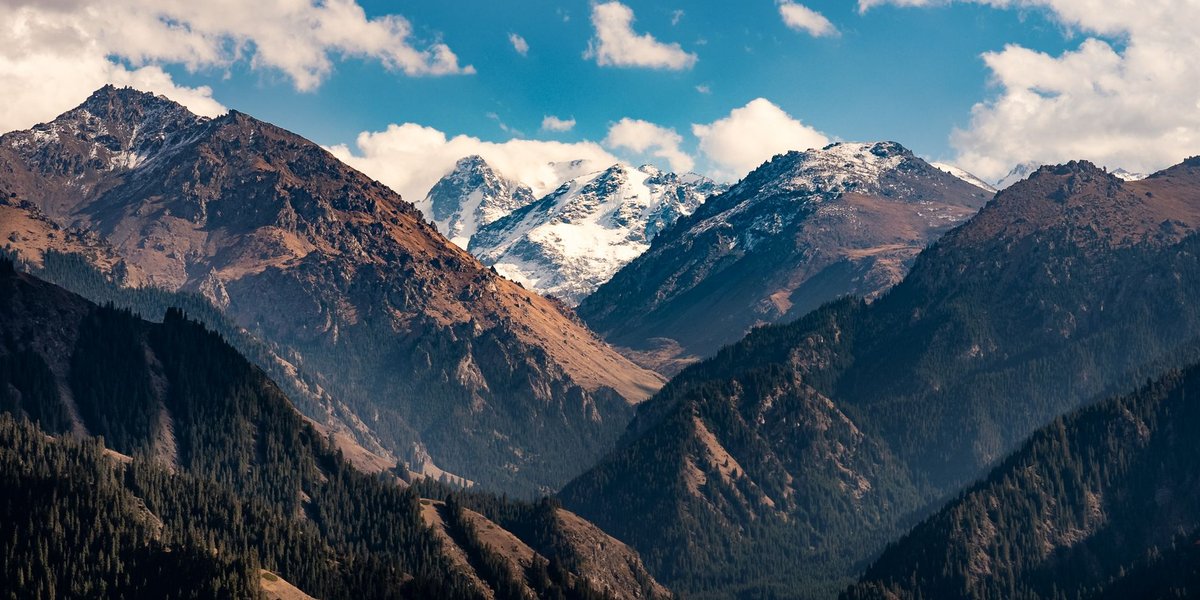
Every square meter of Lesotho sits above 1,400 meters. The highest point, Thabana Ntlenyana, reaches 3,482 meters, which makes it the tallest peak in southern Africa. Winters bring snow and hard frosts, and summers bring violent hailstorms. That is not lion-and-zebra country.
So the animals that thrive here are the ones that can handle cold, rock and open grass: small antelope that climb, rodents that bask in the sun, birds that nest on cliff ledges. Several of them live almost nowhere else on Earth, centered on the Maloti and Drakensberg ranges. The Maloti-Drakensberg area is a UNESCO World Heritage Site shared with South Africa, recognized for its biodiversity as well as its scenery.
One warning on numbers. Published counts of Lesotho’s mammals range from the low 50s to around 70, and bird counts run from about 300 to 360. The spread comes from whether a source includes bats, vagrant birds and species that have vanished. Treat any exact figure with suspicion.
This guide sticks to animals that genuinely occur in Lesotho, grouped by where you’d find them.
Highland mammals of the Maloti
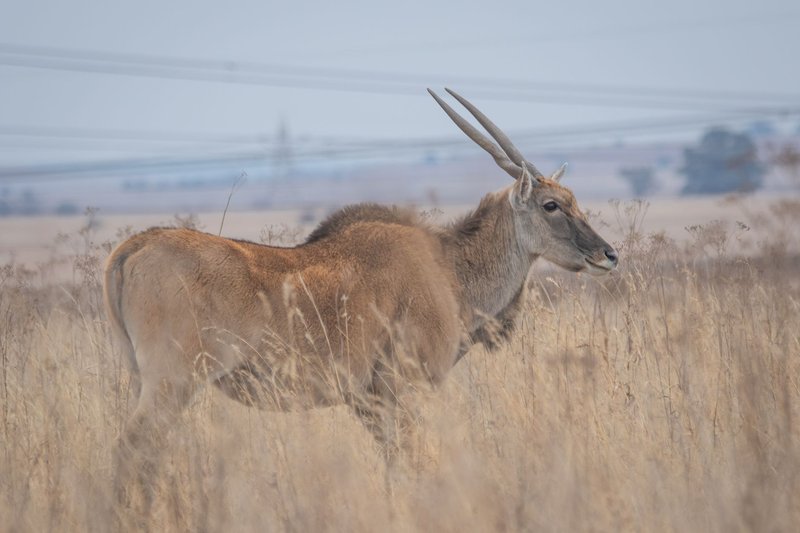
The high grassland and boulder slopes hold most of the country’s native mammals.
1. Eland
The common eland is the largest antelope on Earth. Bulls can top 900 kilograms and still clear a 2-meter fence from a standing start. In Lesotho, small herds range over the high plateaus, and Sehlabathebe is the most reliable place to see them. They’re pale tan with spiral horns and a dewlap that swings as they walk. Eland are listed as Least Concern globally.
2. Grey rhebok
A grey rhebok looks like a woolly, long-necked antelope that borrowed its ears from a donkey. Males carry straight, upright horns, and the whole animal is the color of wet slate. When alarmed, it snorts, flashes its white tail and flees with a rocking-horse bounce. This species is found only in southern Africa and is listed as Near Threatened, so every healthy population in the Maloti counts.
3. Klipspringer
The name is Afrikaans for “rock jumper.” A klipspringer stands on the very tips of its hooves, and the hooves are blunt and rubbery, which gives it grip on near-vertical rock. They live in pairs, often perched on a boulder as lookouts. Spot a small, stocky, olive-speckled antelope on a cliff edge and you’ve found one. Least Concern.
4. Mountain reedbuck
Despite the name, mountain reedbuck prefer grassy slopes dotted with rock, not reed beds. They’re gray-fawn, smaller than a rhebok, and the males have forward-curving horns. When startled they give a sharp whistle before bounding uphill. They shelter among boulders during the heat of the day and graze at dawn and dusk. Least Concern.
5. Sloggett’s ice rat
This is the animal that best explains Lesotho’s wildlife. Sloggett’s ice rat lives in colonies among rock piles at high altitude, and unlike most rodents, it’s active by day. In the cold morning it sits on a sun-warmed rock to bask, then forages on grasses. A dense, soft coat does the work of an insulating jacket. The raptors know the routine, too, so watch for what’s circling overhead. Least Concern.
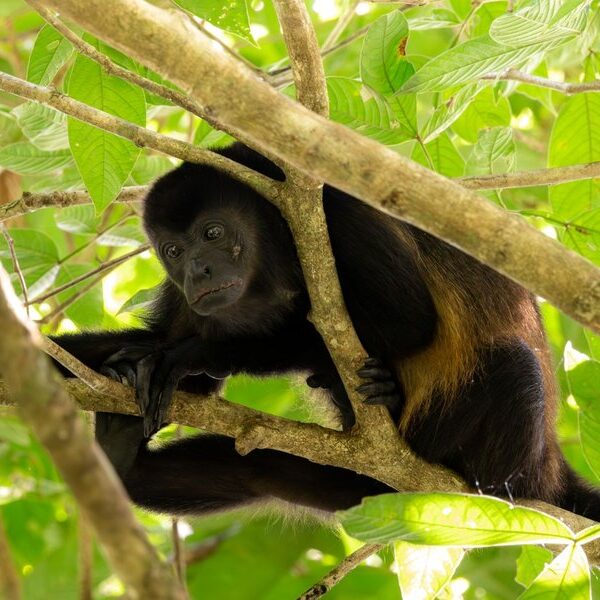
6. Chacma baboon
Chacma baboons are the largest baboons and the most widespread primate in Lesotho. Troops sleep on cliff ledges and move across the open slopes, sometimes through snow. They raid crops, which brings them into conflict with farmers. Don’t feed them if you meet a troop on a trail. Least Concern.
7. Caracal
The caracal is a medium-sized cat with a rufous coat and long black ear tufts. It’s built to jump, and can snatch birds out of the air from nearly 3 meters up. It hunts hyrax, hares and small antelope among the rocks, mostly at night. Farmers often see it as a threat to sheep and goats, and it still gets shot. Least Concern.
Cliff and sky birds
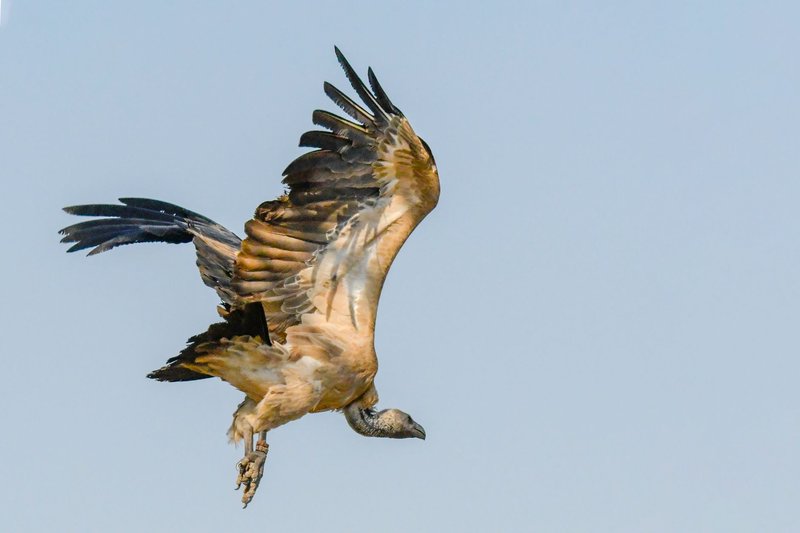
Cliffs matter more than anything else to the birds of Lesotho. Rock ledges give nest sites, and updrafts give free flight.
8. Bearded vulture
The bearded vulture, or lammergeier, eats bones. They make up most of its diet, and the bird will carry a large bone high up and drop it onto rocks until it shatters. Adults have a wingspan up to about 2.8 meters and a rust-orange chest, a stain from dust-bathing in iron-rich soil. The southern African population is small, roughly a hundred breeding pairs, and nearly all of them nest in the Maloti-Drakensberg. Globally the species is Near Threatened, but the southern African birds are classed as Critically Endangered. The Endangered Wildlife Trust runs conservation work for them in the region.
9. Cape vulture
The Cape vulture nests in colonies on cliff faces, and the Maloti hold some of its most important sites. It’s found only in southern Africa and is Endangered on the IUCN Red List. Poisoned carcasses, power line collisions and the use of vulture parts in traditional medicine have all hit the population hard. Look for a pale, big-bodied bird with a wingspan of around 2.6 meters, usually in a loose spiral on a thermal.
10. Southern bald ibis
A bronze-black ibis with a bare red head and a long, curved bill. Southern bald ibis nest on cliff ledges and feed in short, often recently burned, grassland. They’re listed as Vulnerable. A pair on a rocky shelf at sunrise is a good Maloti morning.
11. Drakensberg rockjumper
This is the headline songbird of the mountains. The Drakensberg rockjumper hops from boulder to boulder with its long tail cocked up, showing an orange-rufous breast and a bold head pattern. It stays on rocky slopes, usually above about 2,000 meters. Birders come to Lesotho specifically to tick it off. Least Concern, but it has a small range.
12. Drakensberg siskin
A small streaky finch that lives on high basalt slopes and grassland and feeds on seeds. It’s a near-endemic, which means it barely leaves Lesotho and the neighboring Drakensberg. You’ll often see it in small, restless flocks at the higher passes. It lacks the glamour of the rockjumper but is just as local.
Rivers, wetlands and grassland
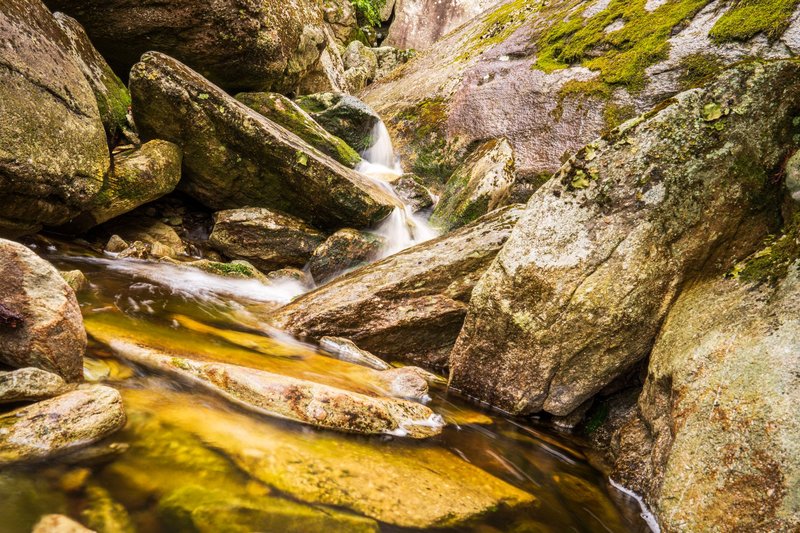
Lesotho’s high wetlands and spongy bogs feed the Senqu (Orange) River, one of southern Africa’s major river systems. Cold, clean water supports a small cast of specialists.
13. Serval
The serval has the longest legs relative to body size of any cat, huge ears and a spotted coat. It stalks tall grass and marshy edges, listens for rodents and pounces from a leap. It kills in roughly half of its attempts, which is a high success rate among cats. Least Concern.
14. Cape clawless otter
The Cape clawless otter doesn’t have claws on its front paws. It uses its sensitive, hand-like fingers to feel for freshwater crabs, frogs and fish under rocks. It shows up in Lesotho’s rivers and larger pools, usually alone, usually at dusk. Look for flattened, crab-shell-filled droppings on rocks near water.
15. Maloti minnow
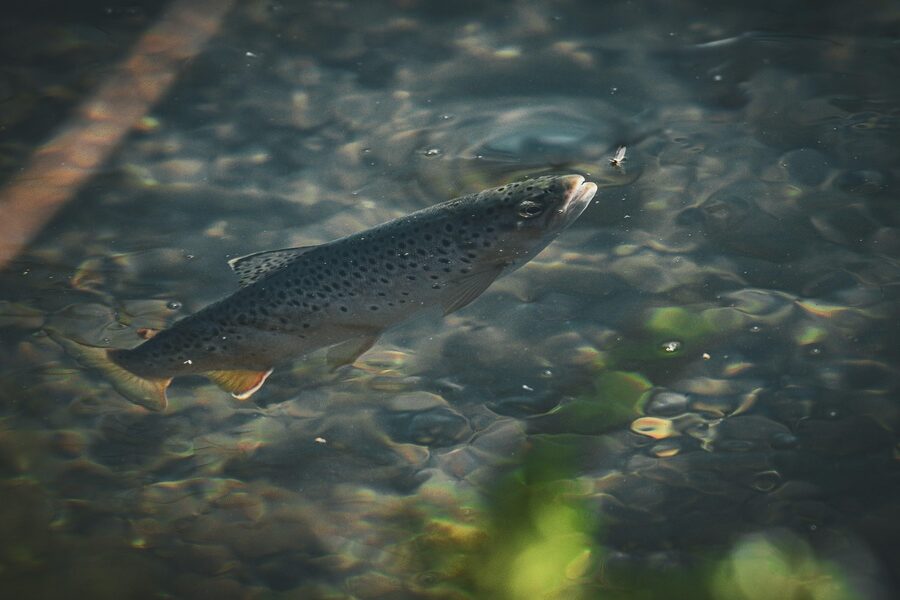
The Maloti minnow is a small silver fish found only in the headwaters of the Orange river system. It’s listed as Endangered. It was feared lost before it turned up again in Lesotho’s upper rivers. Introduced trout eat it, and dams and habitat change reduce what’s left. The fish is a quiet reminder that the mountains hold endemics that never make a safari brochure.
16. Drakensberg river frog
Cold, fast streams in the Maloti are home to the Drakensberg river frog, which is found in the highlands of Lesotho and the neighboring Drakensberg. Winter ices the edges of pools here, so these frogs are tuned to cold water. They depend on clean streams, and silt from overgrazed slopes is a threat. You’ll hear and see more of them on a hike along a clear, rocky stream than anywhere else.
Quick facts table
| Animal | Type | Habitat |
|---|---|---|
| Eland | Mammal | High plateaus and grassland |
| Grey rhebok | Mammal | Rocky slopes and grassy hills |
| Klipspringer | Mammal | Cliffs and boulder fields |
| Mountain reedbuck | Mammal | Grassy slopes near rock |
| Sloggett’s ice rat | Mammal | Rock piles at high altitude |
| Chacma baboon | Mammal | Cliffs and open slopes |
| Caracal | Mammal | Rocky hills and scrub |
| Serval | Mammal | Wetlands and tall grass |
| Cape clawless otter | Mammal | Rivers and pools |
| Bearded vulture | Bird | Cliffs and high crags |
| Cape vulture | Bird | Cliff colonies |
| Southern bald ibis | Bird | Cliff ledges and short grassland |
| Drakensberg rockjumper | Bird | Rocky slopes |
| Drakensberg siskin | Bird | High basalt slopes and grassland |
| Maloti minnow | Fish | Upper Orange river headwaters |
| Drakensberg river frog | Amphibian | Cold mountain streams |
Of these sixteen, the species with real conservation concern are the bearded vulture, Cape vulture, southern bald ibis, Maloti minnow and grey rhebok.
Animals that used to live here
Lesotho used to hold much more than it does today. Lions, cheetahs and other big game once ranged through the lowlands and foothills. Firearms arrived in the 1800s and hunting was intense, and by the end of the century most large animals were gone. Leopards may persist in remote mountain pockets, but confirmed sightings are rare. Cheetahs are gone.
This is the reason many “animals in Lesotho” lists are wrong. Writers copy the wider southern African species list, so you see zebra, buffalo and cheetah. They don’t live in Lesotho now, and the high mountains were never ideal for most of them anyway.
What is Lesotho’s national animal?
Several websites say the black rhinoceros. We couldn’t find a reliable official source for that, and no rhinos live in Lesotho. The animal most tied to Basotho identity is the Basotho pony, hardy and sure-footed on mountain trails. It isn’t native: horses came to the region in the early 1800s. So Lesotho has a symbolic animal but not an official native one that anyone can cite.
Where to see Lesotho’s wildlife
Sehlabathebe National Park. In the southeast, this park is part of the World Heritage area and is your best bet for eland, grey rhebok, mountain reedbuck and baboons. It’s remote, which is the point.
Sani Pass. The road from South Africa climbs to about 2,870 meters. At the top, you can look for rockjumpers, siskins and bearded vultures, and ice rats sit on the rocks in the morning sun. You need a 4×4 or a guided tour.
Bokong Nature Reserve. Further north, on the high Mafika Lisiu Pass, this is a good place to watch raptors and vultures riding thermals.
Go early. Most of these animals are most active near dawn, and the light is better too. Bring layers, even in summer, because weather at 3,000 meters changes fast.