Nigeria has more rare wildlife than most people expect, and a surprising amount of it lives nowhere else. One monkey exists almost only inside its borders. A gorilla subspecies has been reduced to a few hundred adults split across two countries. A red colobus was only formally described in the 1990s, and it may already be down to its last stretch of swamp forest.
This list covers the rare animals in Nigeria that are worth knowing by name: where they live, how threatened they are, and what’s pushing them out.
Contents
- Quick answer
- The 12 rare animals in Nigeria
- Summary table
- What’s driving these animals toward extinction
- Where to see them
Quick answer
The rarest and most distinctly Nigerian animals are the Cross River gorilla, Sclater’s monkey, the Niger Delta red colobus and the Nigeria-Cameroon chimpanzee. Most of them cluster in two regions: the rainforests of Cross River State in the southeast, and the Gashaka Gumti highlands on the eastern border. The main threats are hunting for bushmeat, forest clearing and the pangolin trade.
Conservation statuses below follow the IUCN Red List, which reassesses species every few years. Ratings change, so check the Red List page for any species before you cite it.
The 12 Rare Animals in Nigeria
1. Cross River gorilla
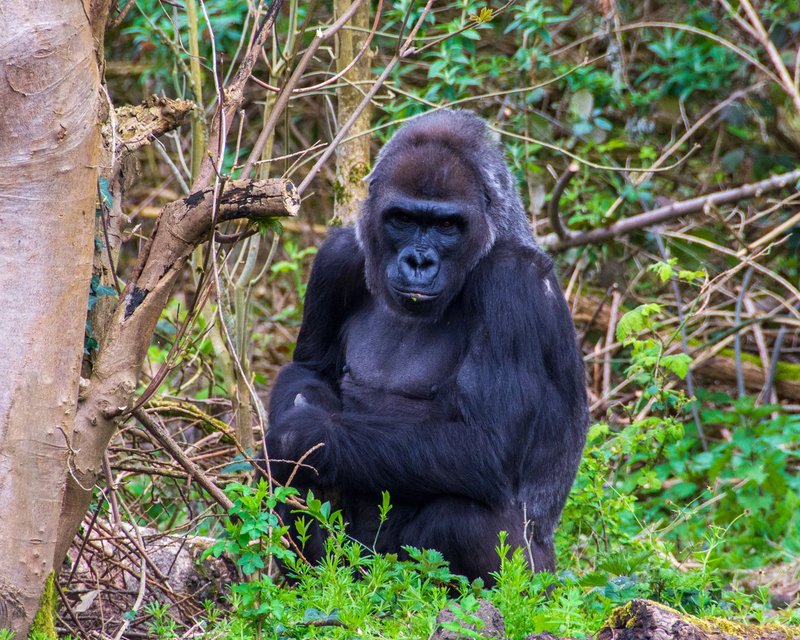
IUCN status: Critically Endangered Population: roughly 250 to 300 adults across Nigeria and Cameroon Where in Nigeria: Cross River National Park (Okwangwo Division), the Mbe Mountains, Afi Mountain Wildlife Sanctuary
This is the rarest great ape in Africa. The Cross River gorilla survives in about a dozen patches of hill forest along the Nigeria-Cameroon border, and those patches are separated by farms and roads. The animals are shy to the point of being almost unstudied: researchers mostly learn about them from nests and dung rather than sightings.
Hunting is the main killer, and with so few animals left, losing a handful a year matters. Community-run protection around the Mbe Mountains has been one of the few things that’s helped.
2. Sclater’s monkey
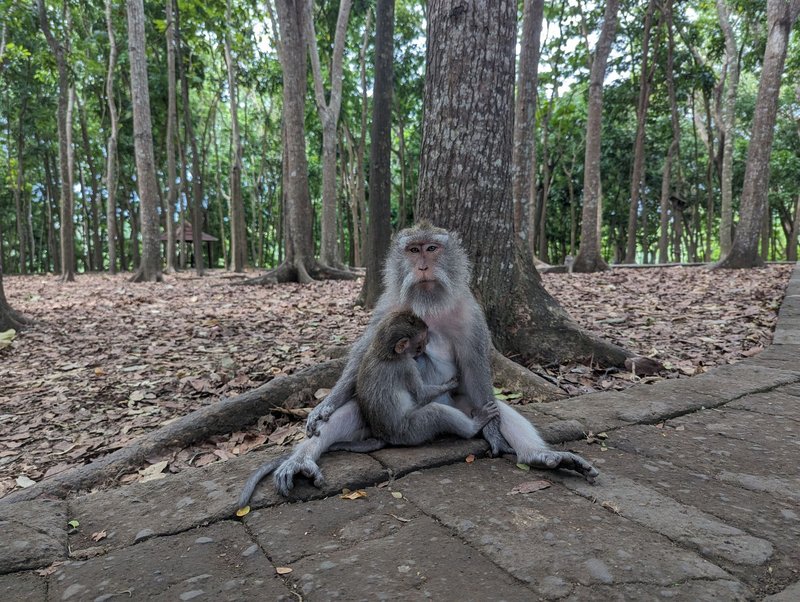
IUCN status: Endangered Population: no recent census Where in Nigeria: southern Nigeria, in forest fragments between the Niger and Cross rivers
Sclater’s monkey is Nigeria’s only endemic primate, which makes it the one animal on this list that Nigeria can’t hand off to a neighbor. Males have a bright blue patch of skin on the face and a white-tipped, heart-shaped nose spot that gives the species away.
Its lifeline is cultural. In parts of Igboland, communities treat monkeys as sacred and refuse to hunt them, and conservation work such as this Rufford-funded project on sacred monkeys in Igboland is built around that tradition rather than against it.
3. Niger Delta red colobus
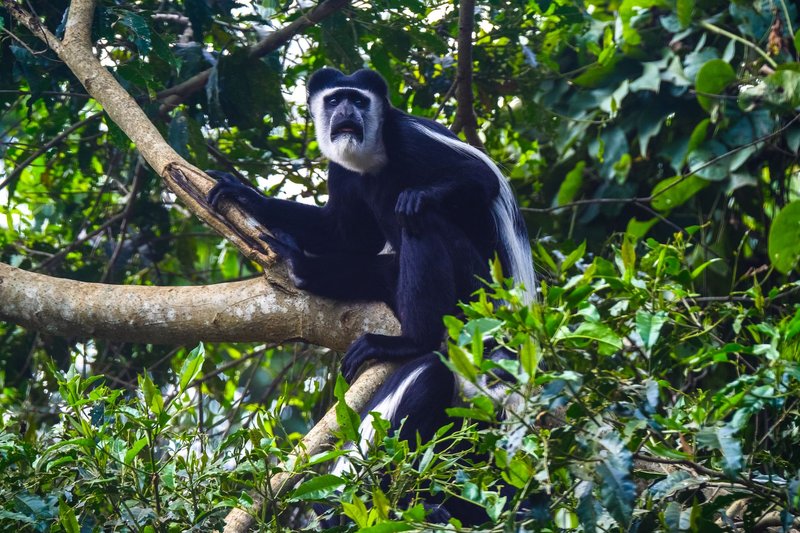
IUCN status: Critically Endangered Population: no reliable count, but small Where in Nigeria: swamp and riverine forest in Bayelsa State, in the Niger Delta
Scientists didn’t describe this monkey as a distinct species until the late 1990s, and by then its habitat was already shrinking. It lives in a thin band of freshwater swamp forest, exactly the kind of land that gets cleared for farms and drained for oil and gas development.
Red colobus monkeys also eat a specialized leafy diet and fare badly in captivity, so there’s no easy backup plan. If the forest goes, so does the animal.
4. Nigeria-Cameroon chimpanzee
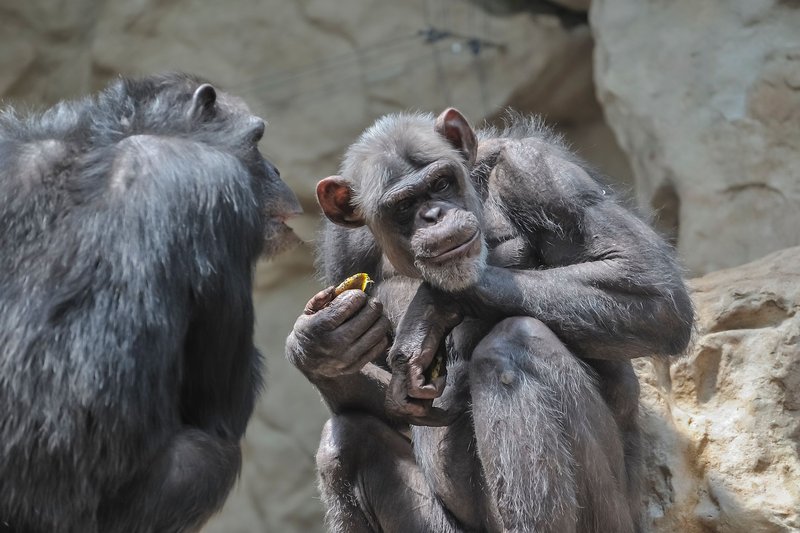
IUCN status: Endangered Population: several thousand across the two countries Where in Nigeria: Gashaka Gumti National Park, Cross River forests, scattered Niger Delta pockets
This is the rarest of the four chimpanzee subspecies, and Nigeria holds a large share of it. Gashaka Gumti National Park, Nigeria’s biggest, is the stronghold. Chimps there live in a mix of forest and open savanna, and some groups have learned to crack and eat things their forest cousins ignore.
Their numbers are low, but the bigger worry is isolation. Small, cut-off groups lose genetic diversity, which is a slow problem that doesn’t show up in headcounts.
5. Drill
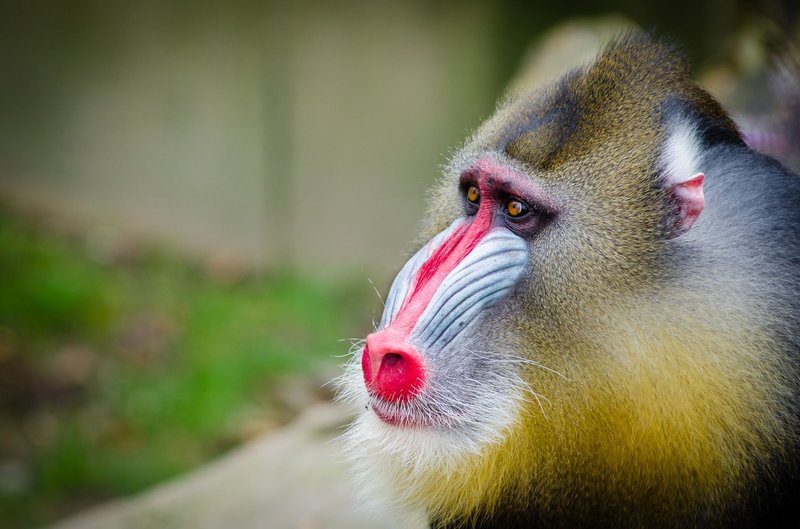
IUCN status: Endangered Population: a few thousand at most Where in Nigeria: Cross River National Park and Afi Mountain
The drill is a close relative of the mandrill, with a black face instead of a rainbow one. It’s one of Africa’s most endangered primates, and Nigeria’s Cross River forests are part of its last stronghold.
Hunting for bushmeat drove the decline, and the species is large and conspicuous enough to be an easy target. Calabar has a well-known drill sanctuary, Drill Ranch, which houses orphans confiscated from the meat trade.
6. Giant pangolin
IUCN status: Endangered Population: unknown; declining Where in Nigeria: southern forests and forest-savanna edges
The giant pangolin can reach more than a meter and a half in body length, and it’s nocturnal and rarely seen. That’s part of the problem: nobody has a solid count, so the declines show up in market seizures rather than field surveys.
Pangolins are the most trafficked mammals on earth. All eight species were moved to the strictest protection under CITES in 2016, which bans international commercial trade, but Nigerian ports have remained a major transit point for scales headed to Asia.
7. African golden cat
IUCN status: Vulnerable Population: unknown Where in Nigeria: remaining lowland rainforest in the south and southeast
Golden cats come in two color morphs, a reddish brown one and a grey one, and they hunt everything from rodents to small antelope. Almost no one in Nigeria has seen one in the wild.
Camera traps are about the only reliable way to confirm they’re still there. Because they depend on dense forest, every acre cleared shrinks their range directly.
8. African forest elephant
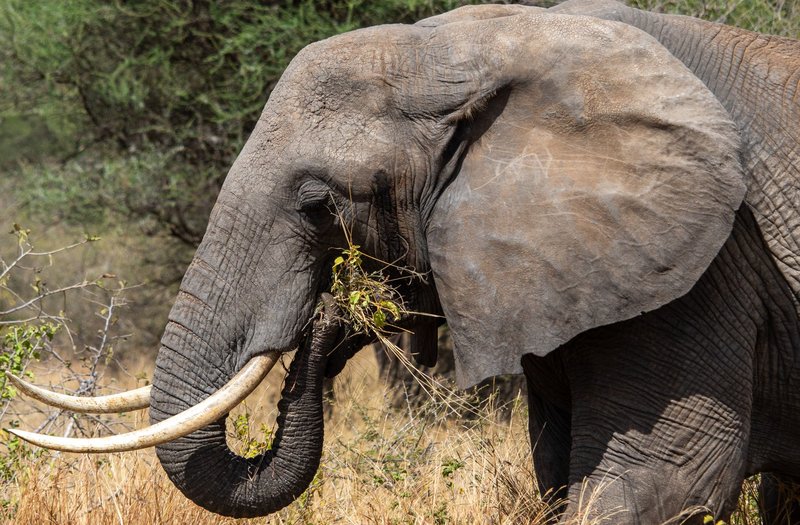
IUCN status: Critically Endangered Population: small, scattered groups Where in Nigeria: Cross River National Park, Okomu National Park, Omo Forest Reserve
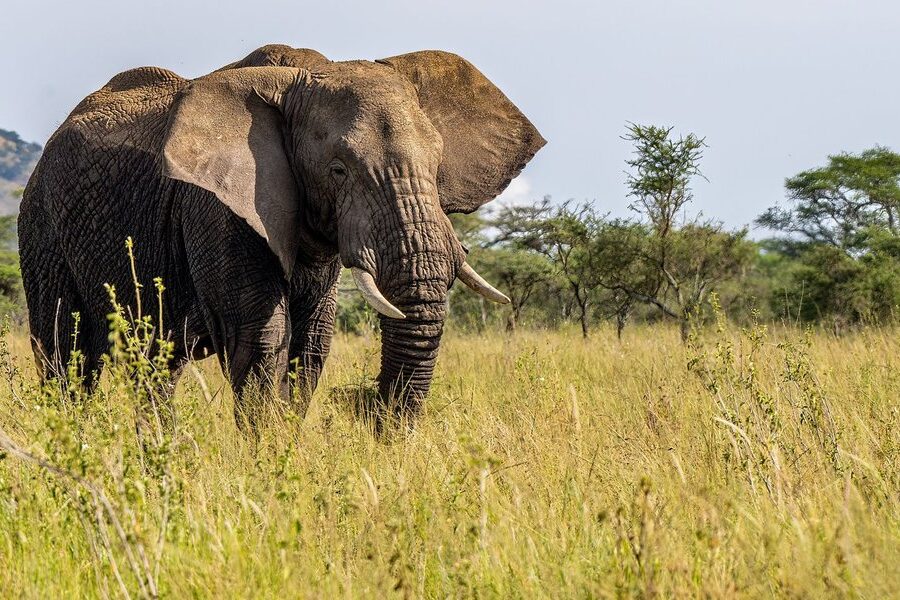
Forest elephants are a separate species from the savanna elephants you see on safari, smaller and with straighter tusks that point down. They’re called gardeners of the forest because they spread seeds from many tree species across long distances.
The ones in Nigeria survive in cut-off patches. Yankari Game Reserve in the northeast holds savanna elephants, which are an entirely different story and are listed as Endangered.
9. West African lion
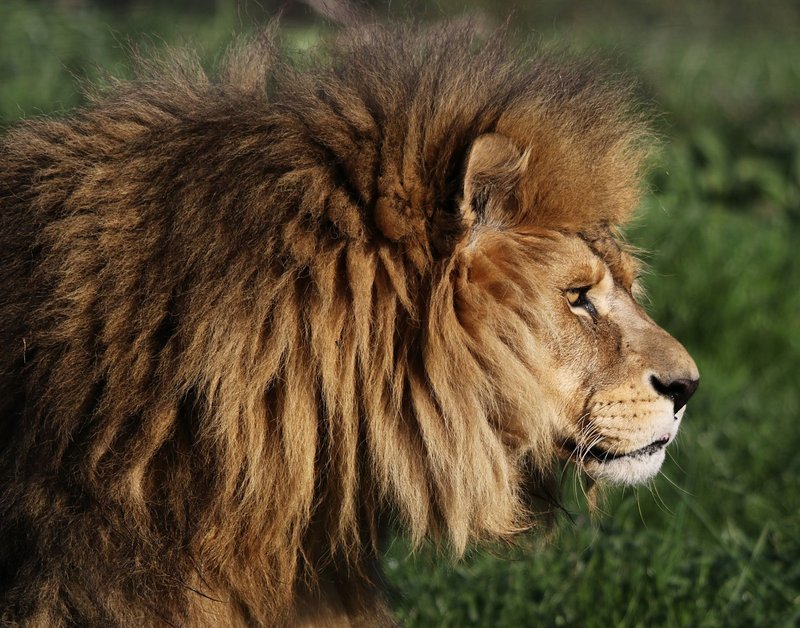
IUCN status: Critically Endangered (West African population) Population: a handful in Nigeria; under 250 mature adults region-wide Where in Nigeria: Kainji Lake National Park and other northern protected areas
West African lions are genetically distinct from the East and Southern African lions most people picture, and they’ve lost around 99 percent of their historical range. Nigeria’s remaining few live in the savanna reserves of the north, where prey is thin and livestock herders retaliate when lions take cattle.
10. West African manatee
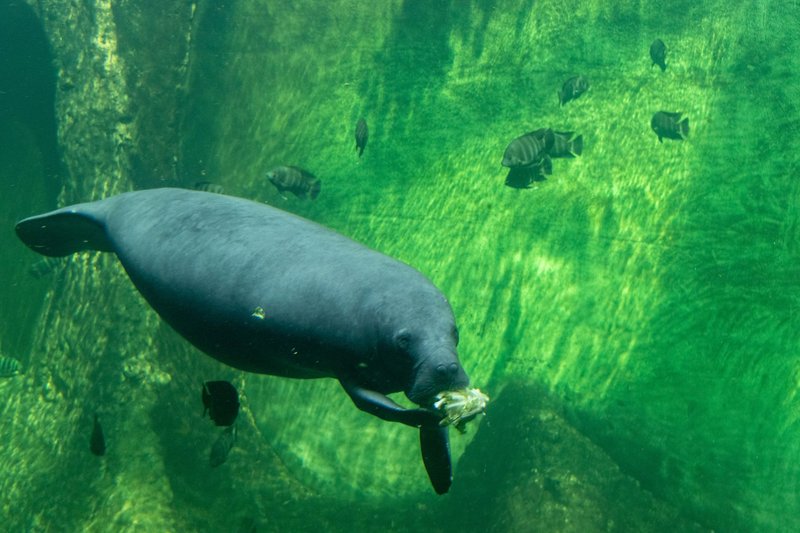
IUCN status: Vulnerable Population: unknown Where in Nigeria: the Niger River and Delta, the Cross River estuary, coastal lagoons
Most people don’t know Nigeria has manatees. They’re slow, shy and almost always underwater, so people mostly encounter them as bycatch in fishing nets or as meat in a market.
Dams and river dredging fragment their habitat, and local use of manatee oil and meat has kept hunting going despite legal protection.
11. Grey-necked rockfowl
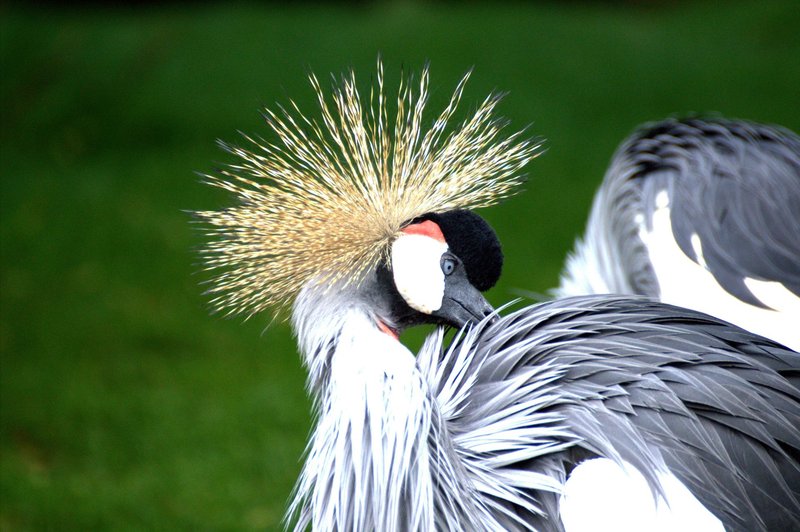
IUCN status: Vulnerable Population: unknown; tiny and fragmented in Nigeria Where in Nigeria: rocky forest in the Cross River region
Also called the white-necked picathartes, this bald-headed bird builds mud-cup nests on cave ceilings and overhanging rock faces. Birders travel across continents to see it, because it’s picky about nest sites and easy to disturb.
If cave roosts are lost to quarrying or farmland, the birds don’t simply move to a new spot.
12. Dama gazelle
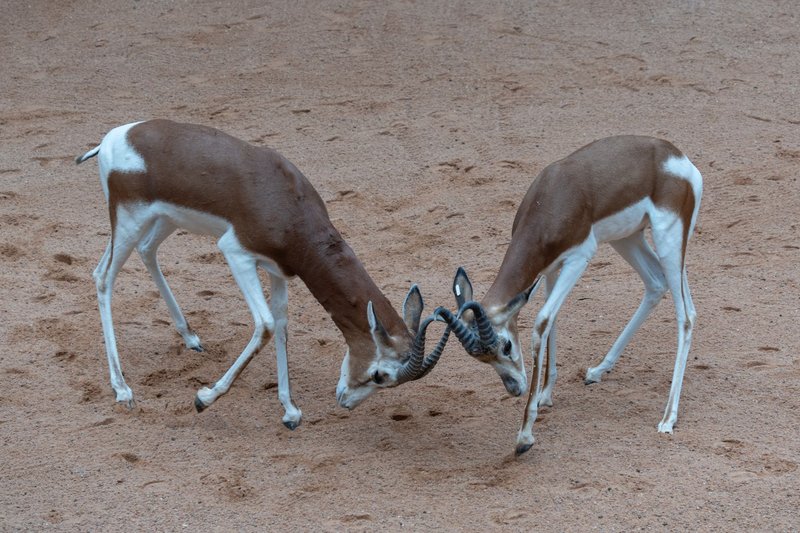
IUCN status: Critically Endangered Population: fewer than 500 mature adults worldwide Where in Nigeria: historically the far northeast, near the Chad Basin; current presence unconfirmed
The dama gazelle is the largest of the gazelles, with a white body and a reddish-brown neck. It once ranged across the Sahel. Today it’s reduced to small remnant populations in Chad, Niger and Mali, and sightings in northern Nigeria are rare to nonexistent. It’s on this list as a warning more than a sighting target.
Summary table
| Animal | IUCN status | Main threat | Where in Nigeria |
|---|---|---|---|
| Cross River gorilla | Critically Endangered | Hunting | Cross River NP, Mbe Mountains |
| Sclater’s monkey | Endangered | Habitat loss, hunting | Southern forest fragments |
| Niger Delta red colobus | Critically Endangered | Habitat loss | Bayelsa swamp forest |
| Nigeria-Cameroon chimpanzee | Endangered | Hunting, habitat loss | Gashaka Gumti, Cross River |
| Drill | Endangered | Bushmeat hunting | Cross River NP, Afi Mountain |
| Giant pangolin | Endangered | Trafficking | Southern forests |
| African golden cat | Vulnerable | Habitat loss | Southern rainforest |
| African forest elephant | Critically Endangered | Poaching, habitat loss | Cross River NP, Okomu, Omo |
| West African lion | Critically Endangered | Conflict with herders, prey loss | Kainji Lake NP |
| West African manatee | Vulnerable | Hunting, bycatch | Niger Delta, lagoons |
| Grey-necked rockfowl | Vulnerable | Habitat loss | Cross River region |
| Dama gazelle | Critically Endangered | Hunting, drought | Historical northeast |
What’s driving these animals toward extinction
Three forces account for most of the losses.
Bushmeat hunting. Primates, pangolins, duikers and manatees all turn up in markets. Wire snares kill indiscriminately, so an animal that wasn’t the target still dies.
Habitat loss. Nigeria has one of the highest rates of forest loss in Africa. Logging, farming, charcoal and oil and gas development have cut the southern forests into fragments, and fragments hold far fewer species than continuous forest. Many of the endangered rainforest animals across Africa face the same squeeze.
Wildlife trade. Nigeria’s ports have repeatedly appeared in large pangolin scale and ivory seizures. Much of what’s trafficked isn’t even Nigerian in origin; the country is a gateway.
Where to see them
Seeing most of these animals in the wild is unlikely, and honest operators will tell you so. The better bets:
- Cross River National Park: the best chance at drills, forest elephants and primates, though sightings still take patience and a guide.
- Gashaka Gumti National Park: chimpanzees, plus a landscape that includes mountains, savanna and gallery forest.
- Yankari Game Reserve: the most reliable large-mammal viewing in Nigeria, with savanna elephants, baboons and antelope.
- Drill Ranch, Calabar: a sanctuary where you can see rescued drills up close, which is the realistic way to see this species.
Go with licensed guides, keep to park rules, and pay the fees. Park entry money is a large part of what funds rangers.