Africa has roughly 1,100 to 1,200 species of land mammals, spread across 16 or more orders. That’s a little over a fifth of the roughly 5,500 mammal species alive on Earth. Most people can name ten of them. Lion, elephant, giraffe, zebra, hippo, and a few more from the Disney cast.
The rest of the list is stranger and better. There are mammals that are closer kin to elephants than to rabbits, a rodent that lives for three decades, and a bat migration so large that scientists count it in the millions. This guide sorts the mammals of Africa by group, so you can see how the pieces fit together instead of scrolling an alphabetical list.
Contents
- How the mammals of Africa are organized
- Afrotheria: elephants, hyraxes, aardvarks and relatives
- African primates
- African carnivores
- Hoofed mammals of Africa
- Rodents, bats and pangolins
- The Big Five, explained
- How African mammals change by region
- Quick-reference table
- Field guides and where to see them
How the mammals of Africa are organized
Taxonomists group mammals into orders, and Africa holds an unusual share of the tree. The continent is the home base of Afrotheria, an entire superorder of mammals that evolved there while Africa was isolated from other landmasses. Primates, carnivores, and hoofed mammals (technically two orders, even-toed and odd-toed ungulates) fill out the savanna and forest. Rodents and bats make up the bulk of the species count, even though nobody puts them on a poster.
One caveat on numbers: counts vary depending on who is lumping and who is splitting. Genetic work keeps turning one species into two or four. Giraffes, long treated as a single species, are now classed by many researchers as four. The figures here use the common reference range of 1,100 to 1,200. Madagascar’s lemurs and tenrecs are usually treated as their own story, so they get only a mention here.
Conservation labels below come from the IUCN Red List, the standard global assessment, using its categories: Least Concern (LC), Near Threatened (NT), Vulnerable (VU), Endangered (EN) and Critically Endangered (CR).
Afrotheria: elephants, hyraxes, aardvarks and relatives
Afrotheria is the group that explains why African mammals look so odd. Its members share a common ancestor from Africa and look nothing alike: a six-tonne elephant, a rabbit-sized hyrax, a long-nosed aardvark, a sea cow. DNA put them together. Appearance never would have.
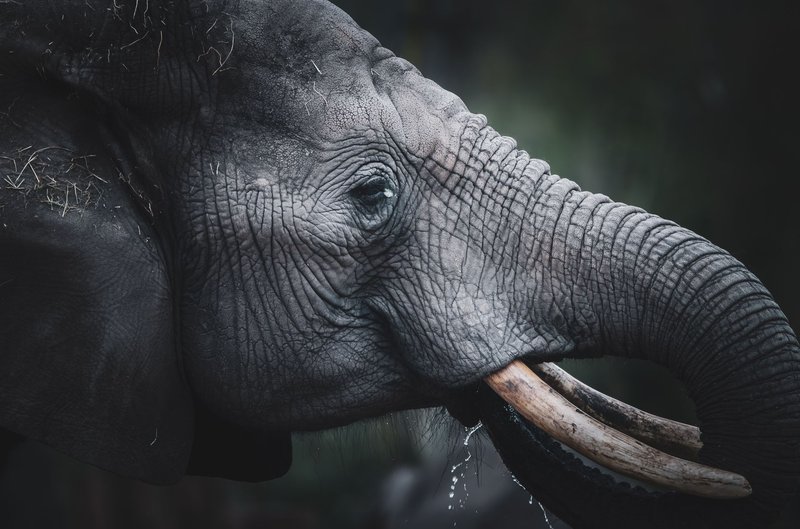
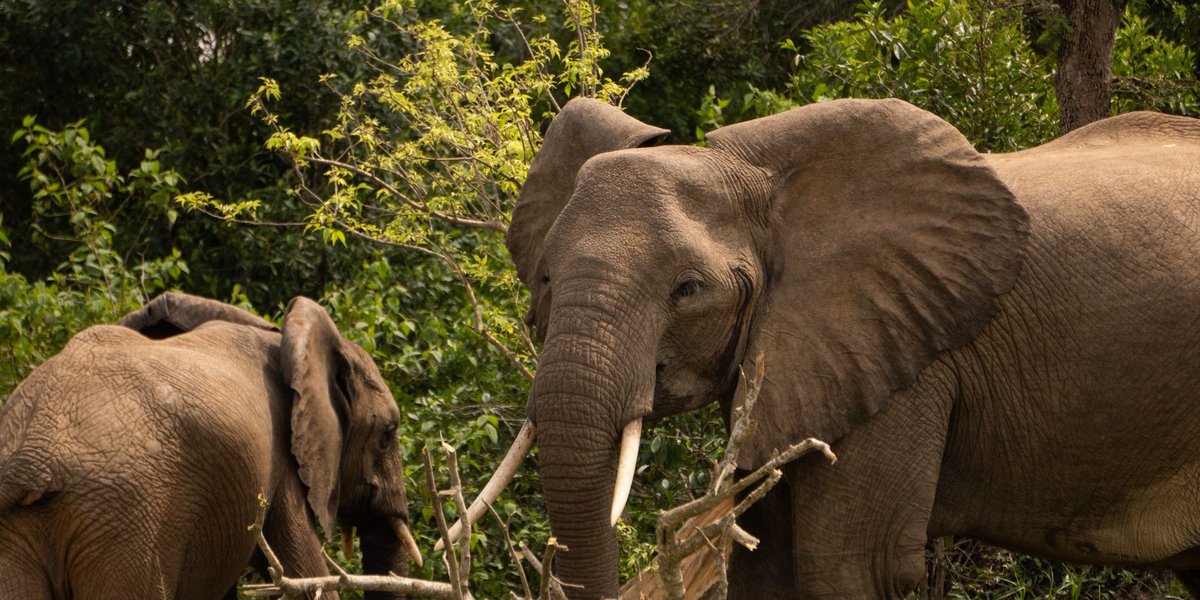
- African elephants. There are two species, not one. The savanna elephant (EN) is the largest living land animal, with bulls reaching around 6 tonnes. The smaller forest elephant (CR) lives in Central and West African rainforests and has straighter tusks. Botswana holds the biggest national population, roughly 130,000 animals. The World Wildlife Fund’s species profile covers the numbers and the threats.
- Rock hyrax. Cat-sized, round, and tailless, with feet that act like suction pads on steep rock. Its closest living relatives are elephants and manatees, which sounds like a joke until you look at the teeth and toenails. Common across rocky ground from Ethiopia to South Africa (LC).
- Aardvark. The only living member of its own order. It digs into termite mounds at night with a tongue that can reach about 30 centimeters. Found across most of sub-Saharan Africa (LC), but rarely seen.
- Sengis (elephant shrews). Not shrews at all. These long-nosed, quick-footed insect eaters are Afrotherians, and the largest, the giant sengis of East Africa, are roughly squirrel-sized. Some pair for life and keep trails cleared through the leaf litter.
- Golden moles. Blind, burrowing, and iridescent. The fur has a metallic sheen and sheds sand like a waterproof jacket. Several species in South Africa’s coastal dunes and highveld are threatened.
- West African manatee. The continent’s sea cow, living in coastal lagoons and rivers from Senegal to Angola (VU). It is hunted for meat in parts of its range and tangled in fishing nets.
African primates
Africa has dozens of monkey species, plus the great apes (gorillas, chimpanzees and bonobos), all of which live nowhere else outside Asia’s orangutans. Most of the diversity sits in the Central African forests.
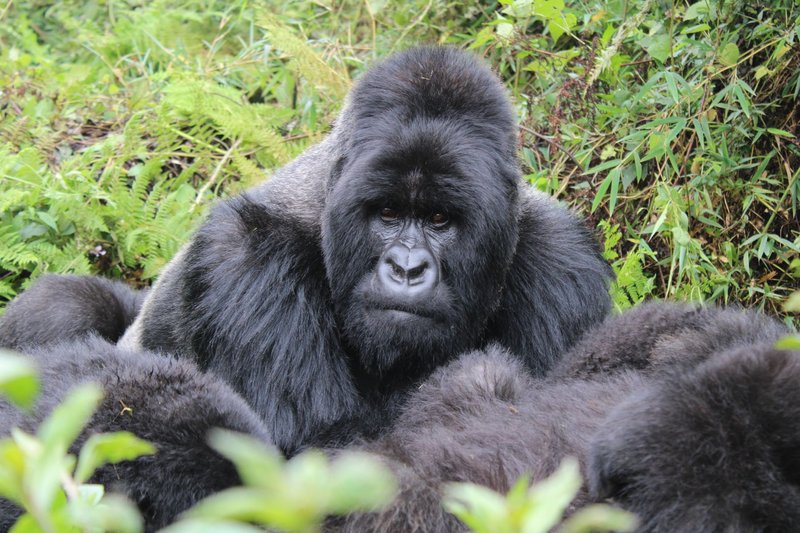
- Mountain gorilla. Lives in the Virunga volcanoes and Bwindi in Uganda, Rwanda and the Democratic Republic of the Congo. Around 1,000 individuals remain, which is why its recovery from near-extinction is one of the few success stories in primate conservation (EN).
- Chimpanzee. Found in a belt across West and Central Africa (EN). Chimps make and use tools, including termite-fishing sticks and leaf sponges, and different communities have different tool traditions.
- Bonobo. Exists only in the Democratic Republic of the Congo, south of the Congo River (EN). Slimmer than chimps, and female-led.
- Mandrill. The largest monkey in the world, found in the forests of Gabon, Cameroon and neighboring countries (VU). Dominant males carry red and blue facial coloring that intensifies with status.
- Patas monkey. Lives in open grassland and savanna across the Sahel and East Africa, and reaches speeds of around 55 km/h, the fastest of any primate (LC).
- Gelada. An Ethiopian highland grazer, and the last surviving member of a lineage of grass-eating monkeys. Groups of hundreds gather on cliff edges at night (LC).
- Barbary macaque. The only wild monkey living north of the Sahara, in the cedar and oak forests of Morocco and Algeria (EN).
African carnivores
The carnivores of Africa include the cats, hyenas, dogs, mongooses and a handful of weasel relatives. They set the pace of the ecosystem, and they get most of the attention.
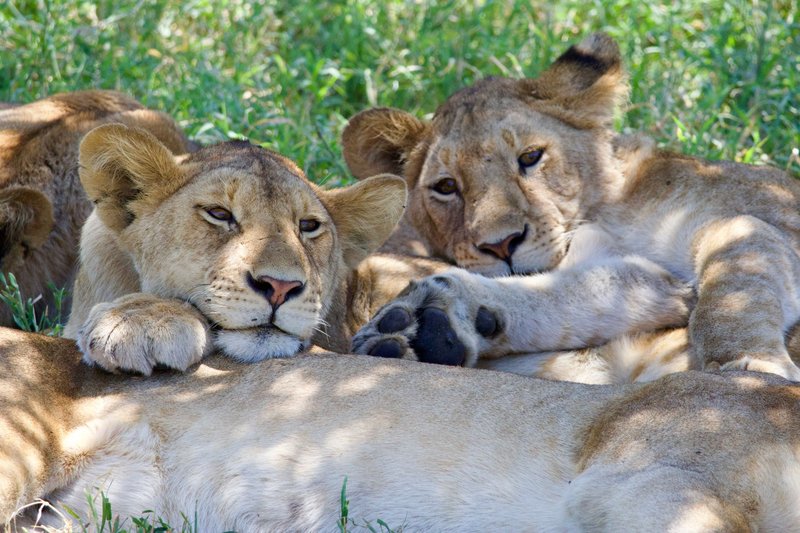
- Lion. The only truly social cat. Prides of related females hold territory while males rotate in. Wild numbers are estimated at roughly 20,000 to 25,000 across the continent (VU), and they have vanished from over 90 percent of their historic range.
- Leopard. The most adaptable of the big cats, living from rainforest to desert edge to the suburbs of Nairobi and Johannesburg (VU). It hauls kills up into trees to keep them from lions and hyenas.
- Cheetah. The fastest land animal, with bursts above 90 km/h, and it rarely survives outside protected areas (VU). Unlike lions, it hunts by day to avoid competition.
- Spotted hyena. Not a scavenger so much as a skilled hunter that also scavenges. Clans are led by females, who are larger than males (LC).
- African wild dog. Also called the painted dog, with a coat pattern unique to each animal. Packs of up to 20 hunt cooperatively and succeed on more than 60 percent of chases, a hit rate far above lions. Fewer than about 7,000 remain (EN).
- Ethiopian wolf. Africa’s rarest canid and the continent’s only wolf-like species, with around 500 left in Ethiopia’s high-altitude moorlands (EN). It eats mostly giant mole-rats.
- Honey badger. Small, stubborn, and widely documented raiding beehives and fighting off animals many times its size (LC).
- Aardwolf. A hyena that eats termites, up to 200,000 in a single night (LC).
Hoofed mammals of Africa
This group gives Africa its reputation. Rhinos, hippos, giraffes, zebras, and more than 70 antelope species make up the herds on any savanna documentary.
- Black rhino. A hook-lipped browser that eats leaves and twigs, with the population down from about 65,000 in 1970 to under 2,500 at its low point in 1995, and now rebuilding to around 6,500 (CR).
- White rhino. Not white. The name probably comes from the Afrikaans word for “wide,” describing its square lip, which is built for grazing. Southern white rhinos recovered from fewer than 100 animals a century ago to roughly 16,000 (NT).
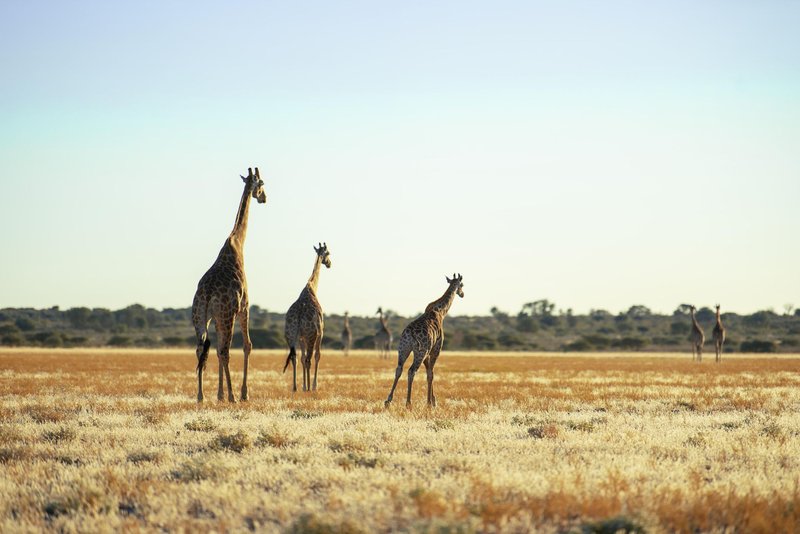
- Giraffe. The tallest animal on land, with a male reaching around 5.5 meters. Researchers now recognize four species: northern, southern, reticulated, and Masai. The Masai giraffe is listed as Endangered.
- Hippopotamus. Spends the day in water and comes ashore at night to graze, covering up to 10 km. It kills more people in Africa than most large predators (VU).
- Plains and Grevy’s zebras. Plains zebras are abundant (NT). Grevy’s zebra has narrow stripes and giant round ears and survives mainly in northern Kenya and Ethiopia (EN).
- Blue wildebeest. The Serengeti-Mara system carries about 1.3 million, which makes it the largest overland migration of any mammal (LC).
- Cape buffalo. Herds can number in the hundreds, and members will charge predators to defend a calf (NT).
- Okapi. A giraffe relative that looks like a zebra-striped forest antelope. It lives only in the northeastern Congo rainforest (EN).
- Common eland. The largest antelope, with bulls reaching about 900 kg, and still able to clear a two-meter fence from a standing start (LC).
Rodents, bats and pangolins
Most African mammals are small, and about half of the continent’s species are rodents and bats. They matter more to the ecosystem than their reputation suggests: seed dispersal, pollination, and food for nearly everything else.
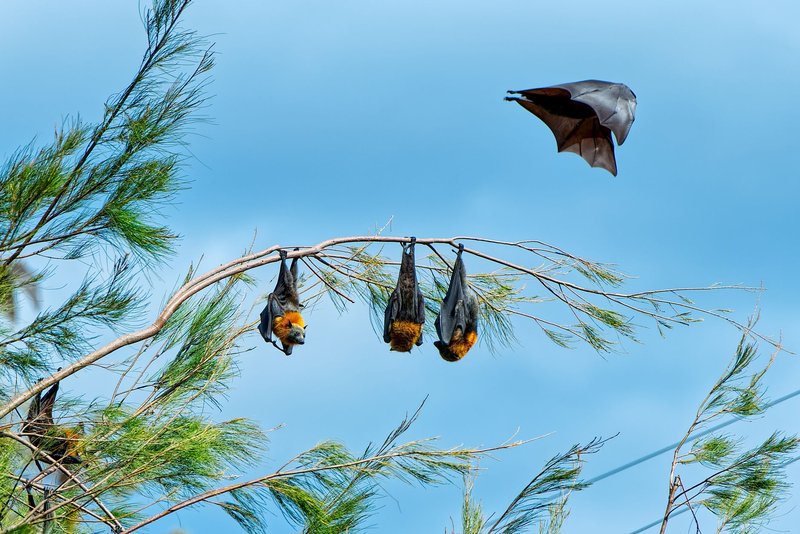
- Straw-colored fruit bat. Each year, an estimated 10 million of them gather in a small swamp forest in Kasanka National Park, Zambia, the largest mammal migration on Earth by headcount (NT). Peak numbers arrive from October to December.
- Hammer-headed bat. The largest bat in Africa, with a wingspan around 90 cm and a face like a horse. Males call from branches at night to attract females (LC).
- Naked mole-rat. Lives in underground colonies led by a single breeding queen, a social structure almost unknown in mammals. Can live over 30 years and rarely gets cancer (LC).
- Gambian pouched rat. Trained by the Belgian organization APOPO to sniff out landmines and tuberculosis. It is light enough not to trigger the mines (LC).
- Cape porcupine. The largest rodent in Africa, with quills over 30 cm. It pairs for life (LC).
- Hero shrew. A shrew in Central Africa with a spine so reinforced that it can support a standing adult human. Locals use the animal in ritual. Nobody knows why it evolved this way.
- Pangolins. Four African species of scaly, anteater-like mammals. The ground pangolin and giant pangolin are both listed as Vulnerable. Pangolins are among the most trafficked wild mammals in the world, largely for their scales, which are made of the same keratin as fingernails.
The Big Five, explained
The Big Five are the lion, leopard, African elephant, Cape buffalo and rhinoceros (black or white). The term is not about size or fame. It came from colonial-era big-game hunters, who named the five animals most dangerous to hunt on foot.
The label stuck because it works as a safari checklist, and it now covers photography rather than hunting. Seeing all five in a single trip is possible in only a few places, including Kruger National Park, Pilanesberg and Madikwe in South Africa, and Etosha in Namibia (rhinos permitting). Leopards are the hard one. They’re nocturnal, solitary, and very good at not being seen.
How African mammals change by region
The mammals of Africa shift sharply by region, which is why a species list for “Africa” is a bit misleading. Ghana splits cleanly by geography, with savanna in the north around Mole National Park and forest in the south. Animals of Ghana: 18 Species and Where to See Them breaks down which species live on each side.
- North Africa and the Sahara: Barbary macaque, fennec fox, and the critically endangered addax, a pale desert antelope with fewer than 100 left in the wild.
- West and Central African rainforest: Forest elephant, okapi, bonobo, mandrill and most of the great apes.
- East African savanna: The classic migration herds, plus lions, cheetahs, and giraffes. Serengeti and the Maasai Mara are the center.
- Ethiopian highlands: Gelada, Ethiopian wolf, and the walia ibex, found nowhere else.
- Southern Africa: Meerkats, springbok, Cape fur seals on the coast, and the best-managed rhino populations.
Quick-reference table
| Animal | Group | Habitat | IUCN status |
|---|---|---|---|
| African savanna elephant | Afrotheria | Savanna, woodland | Endangered |
| African forest elephant | Afrotheria | Central and West African rainforest | Critically Endangered |
| Aardvark | Afrotheria | Savanna, scrub | Least Concern |
| Mountain gorilla | Primates | Montane forest | Endangered |
| Chimpanzee | Primates | Forest, woodland | Endangered |
| Lion | Carnivores | Savanna, grassland | Vulnerable |
| Cheetah | Carnivores | Open plains | Vulnerable |
| African wild dog | Carnivores | Savanna, open woodland | Endangered |
| Ethiopian wolf | Carnivores | Highland moorland | Endangered |
| Black rhino | Hoofed mammals | Scrub, savanna | Critically Endangered |
| White rhino | Hoofed mammals | Grassland | Near Threatened |
| Hippopotamus | Hoofed mammals | Rivers, lakes | Vulnerable |
| Okapi | Hoofed mammals | Congo rainforest | Endangered |
| Blue wildebeest | Hoofed mammals | Open savanna | Least Concern |
| Straw-colored fruit bat | Bats | Forest, savanna | Near Threatened |
| Naked mole-rat | Rodents | Arid East African burrows | Least Concern |
| Ground pangolin | Pangolins | Savanna, woodland | Vulnerable |
Field guides and where to see them
For serious identification, the standard reference is the Kingdon Field Guide to African Mammals, now in its second edition from Princeton University Press. It’s the one to carry. The six-volume Mammals of Africa series is the academic version of the same project, with about 1,160 species covered, but it belongs in a library rather than a backpack. Regional photographic guides to southern and East Africa are lighter and easier to use in a vehicle. For a wider view of how land animals shift across the tropics, Tropical Land Animals by Region: A Field Guide is a useful companion.
Where you go determines which part of the list you’ll see:
- Serengeti and Maasai Mara (Tanzania and Kenya): wildebeest migration, big cats, giraffes, hippos.
- Kruger National Park (South Africa): the Big Five, wild dogs, and a long list of antelope.
- Chobe National Park (Botswana): large elephant herds, especially in the dry season.
- Bwindi and Volcanoes National Park (Uganda and Rwanda): mountain gorillas, on permit-controlled treks.
- Bale Mountains and Simien Mountains (Ethiopia): Ethiopian wolf and gelada.
- Kasanka National Park (Zambia): the fruit bat migration, from October to December.
Africa’s mammals are a layered system, from the elephants that shape forests to the bats that reseed them. Start with the big names, then pick one group from the list above and go deeper. The hyraxes, sengis and pangolins are where the continent gets interesting.