Type “mammals of Malaysia” into a search bar and you get two options: a Wikipedia table with 313 species sorted by taxonomic order, or a government PDF built for researchers, not readers. Both are accurate. Neither tells you why a proboscis monkey’s nose exists, or why a bear the size of a large dog can out-smell a bloodhound.
Malaysia’s mammals split cleanly into two casts. Peninsular Malaysia — the mainland strip connected to Thailand — shares its wildlife with continental Southeast Asia: tigers, tapirs, sun bears. Cross the South China Sea to Sabah and Sarawak, on the island of Borneo, and the lineup changes entirely. Isolation did what isolation always does to islands: it produced species found nowhere else on Earth, from a monkey with a nose it can’t fully control to an elephant that never grew past pygmy size.
This guide keeps that split, because the geography explains the biology. Every entry below pairs the animal’s status with a detail specific enough that you couldn’t swap it into a different species’ paragraph and have it still make sense.
Table of Contents
Mammals of Peninsular Malaysia
The peninsula’s forests are contiguous with Thailand’s and Myanmar’s, which is why you’ll recognize some of these names from elsewhere in mainland Southeast Asia. What you won’t find elsewhere in the same combination is the pressure they’re under: palm oil plantations now border most of the remaining forest blocks, and several of the animals below are running out of room faster than their populations can be counted.
Banded Linsang
Most people who’ve spent a lifetime in Malaysian forests have never seen one. The banded linsang is a slender, cat-like carnivore — actually a viverrid, related to civets, not cats — with a body built almost entirely for squeezing through gaps: long and low, wrapped in bold black bands over pale fur. It hunts rodents and insects at night and dens in tree hollows by day, which is most of why it stays a rumor rather than a sighting.
Dusky Leaf Monkey
Newborn dusky leaf monkeys are bright orange. The adults are charcoal-gray with white rings around the eyes that make them look perpetually startled, which is where the alternate name “spectacled langur” comes from. The color shift from infant to adult happens over the first few months, and troop members other than the mother will handle and carry orange babies almost obsessively — a behavior researchers still debate the function of.
Lesser Mouse-Deer
The kanchil is the smallest hoofed mammal on the planet: a fully grown adult weighs about as much as a bag of sugar and could sit in a shoebox. It has no horns or antlers. Instead, males carry two elongated canine teeth that jut past the lip, used for fighting rivals rather than eating. In Malaysian folklore, the kanchil is the trickster who outwits every larger animal in the forest — a fitting reputation for something that survives mainly by freezing motionless and stamping its hind legs when startled.
Malayan Tapir
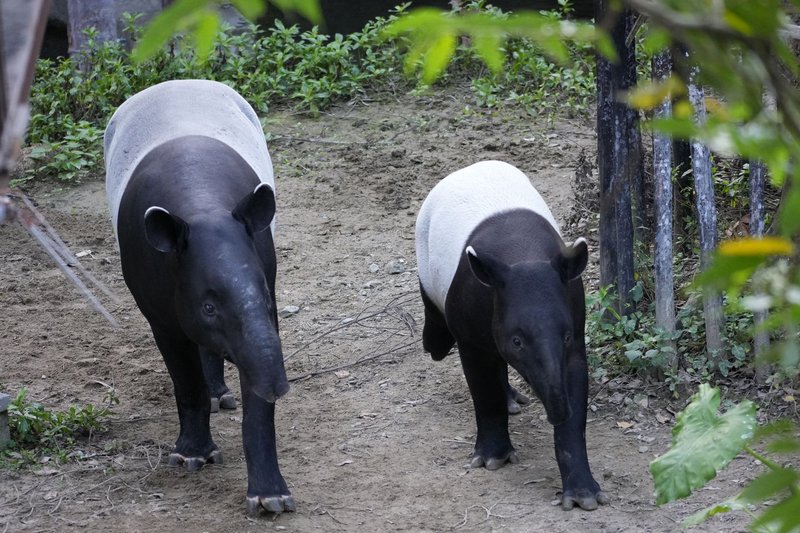
Adults are colored like an Oreo cookie: black head and forequarters, a wide white saddle across the middle, black hindquarters. It reads as strange in a zoo enclosure and as camouflage in the actual forest, where the pattern breaks up the animal’s outline in dappled light. Calves are born the opposite of bold — reddish-brown with white spots and stripes, a pattern that fades out by around seven months old. As Malayan tapir populations decline toward Endangered status largely from habitat loss, that calf pattern is becoming a rarer sight even in captive breeding programs.
Malayan Tiger
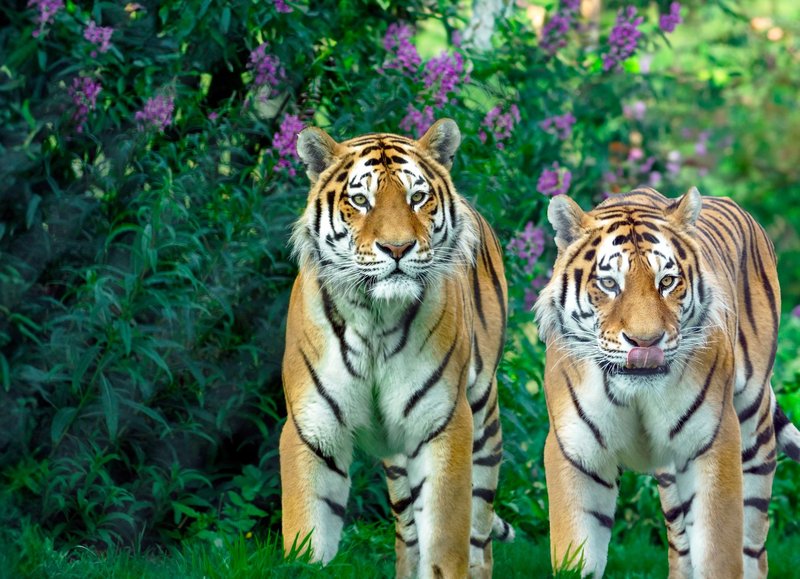
In the 1950s, Malaysia held an estimated 3,000 tigers. WWF Malaysia now puts the wild population below 150, and the subspecies is classified Critically Endangered — no single remaining subpopulation has more than 50 breeding adults. The decline isn’t primarily about habitat, though palm oil expansion hasn’t helped. It’s wire snares: cheap, silent, and set indiscriminately across forest reserves, catching tigers as bycatch in traps laid for other game. A Malayan tiger is genetically and physically distinct from its Indian cousin — smaller, with a narrower skull — and it appears on the national coat of arms as a symbol of a population that may not survive this century in the wild.
Silvered Langur
Adults wear a coat that looks tipped in frost, gray-black fur with silver-white tips that shimmer when the animal moves through canopy light. Troops are matriarchal and social, grooming each other for hours at a stretch, and they’re one of the few Malaysian primates you can reliably spot around mangrove forests and riverine areas rather than deep interior jungle — which makes them a rare “easy” sighting on an otherwise hard checklist.
Smooth-Coated Otter
The largest otter species in Southeast Asia, and the most social: family groups of a dozen or more hunt cooperatively, driving fish into shallows where everyone eats. Their coat sheds water almost instantly, which is the “smooth” in the name — no guard hairs trapping air the way a sea otter’s does, just a dense, oil-sealed pelt built for a life in slow tropical rivers rather than cold open ocean.
Sun Bear
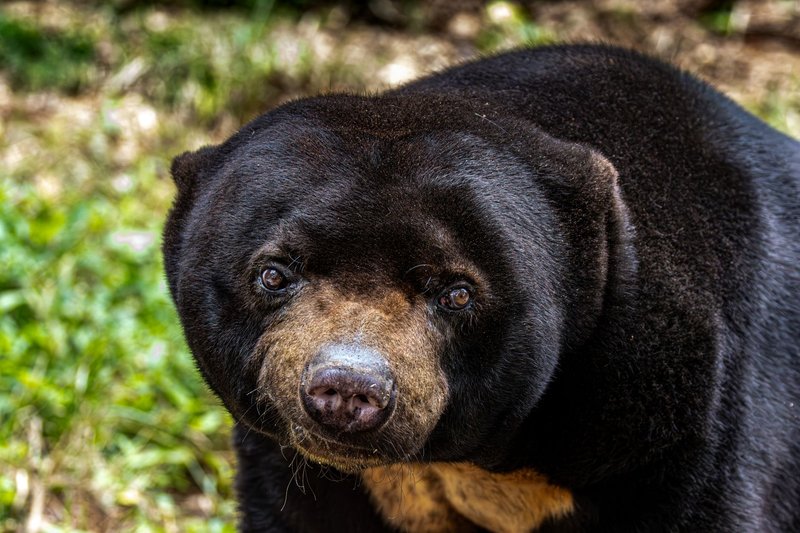
The smallest bear species alive, and the one with the most absurd tool for the job: a tongue that extends up to 46 centimeters, long enough to earn the species an actual Guinness World Record. It exists to reach honey and termites, not to headline a trivia night, but it’s the detail that sticks. Sun bears carry a pale, U-shaped chest patch — unique enough per individual that researchers use it like a fingerprint — and despite weighing as little as 25 kilograms, they’re disproportionately strong for their size, capable of tearing open termite mounds that would stop a much larger animal.
Sunda Pangolin
Malaysia’s only native pangolin, and by most estimates the most trafficked mammal on Earth — not just in Malaysia, globally. The reason is almost entirely about traditional-medicine demand for keratin scales that have no more scientific effect than fingernail clippings. TRAFFIC’s investigation of a single Sabah warehouse found records of 22,000 pangolins moved through it in just 14 months. The species has since received the highest level of legal protection Malaysia offers, though enforcement is still catching up to demand. A cornered pangolin’s entire defense is rolling into an armored ball — effective against tigers, useless against a sack.
Sunda Slow Loris
The only venomous primate group on the planet, and the mechanism is almost too strange to be real: a gland on the inside of the elbow secretes an oil that does nothing until the loris licks it and mixes it with saliva, at which point the bite becomes toxic enough to cause anaphylactic shock in humans. Mothers coat their babies in the mixture before leaving them to forage, turning grooming into a defense strategy. The wide, saucer-like eyes that make the slow loris a viral-video staple are built for a slow-motion nocturnal life — deliberate movement through the canopy, one gripped branch at a time.
Mammals of Borneo (Sabah & Sarawak)
Borneo split from the Asian mainland roughly 10,000 years ago as sea levels rose, and what got stranded there evolved on its own terms. The result is a set of mammals with no equivalent on the peninsula, including several animals found only in Malaysia — some found only on this one island, full stop.
Binturong
Also called the bearcat, though it’s neither — a civet relative with the face of a bear cub and a fully prehensile tail, one of only two carnivore species on Earth that can use its tail to grip a branch like a fifth limb. Its signature trait isn’t visual: binturongs smell distinctly like fresh buttered popcorn, caused by a compound called 2-acetyl-1-pyrroline that concentrates in their urine, which they drag through the canopy on their tails as they move. It’s the same chemical compound that forms in actual popcorn kernels under heat — a coincidence of chemistry, not diet.
Bornean Orangutan
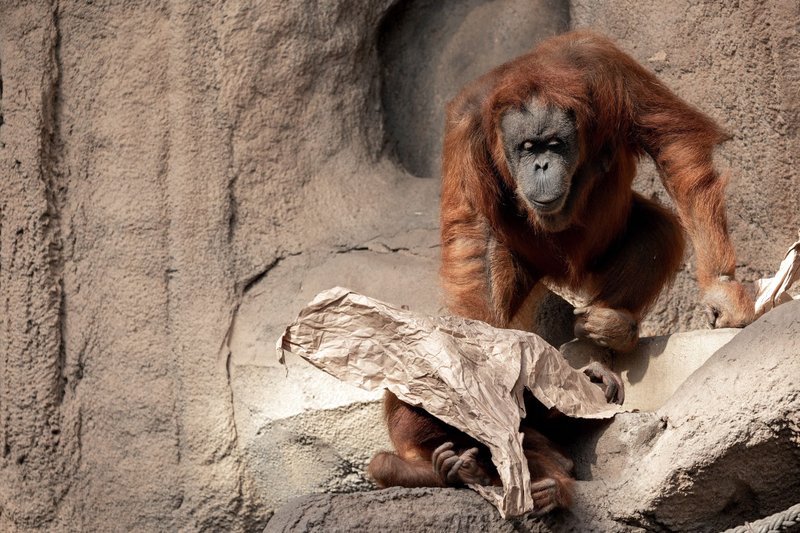
Research published in PLOS ONE found interior Sabah populations in intact and sustainably logged forest holding stable over a 15-year survey window — the good news buried in an otherwise grim dataset, since fragmented populations surrounded by oil palm plantations kept declining, a pattern reflected across endangered species in Malaysia. Orangutans build a fresh sleeping nest of bent branches every single night, rarely reusing one, and a Bornean individual can spend nearly its entire life without touching the ground — moving through canopy that, in intact forest, has no real gaps. Northeast Bornean orangutans, the population centered on Sabah, are the smallest-bodied of all orangutan populations, a detail conservationists read as another sign of a species running out of the resources that build size.
Bornean Pygmy Elephant
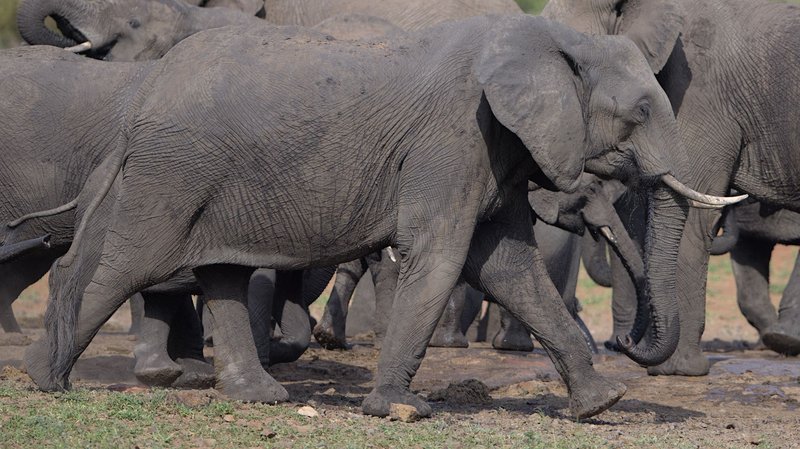
Genetically distinct from mainland Asian elephants for an estimated 300,000 years, isolated long enough to be classified as its own subspecies rather than just a smaller variant. They stand up to 60 centimeters shorter at the shoulder than mainland elephants, with rounder faces, oversized ears, and straighter tusks — proportions people who’ve only seen African or mainland Asian elephants often mistake for baby animals even when looking at a full-grown adult. Sabah’s population is estimated at no more than 1,000 to 1,500 individuals, squeezed increasingly into forest fragments between oil palm estates, and they remain one of the least-studied elephant populations anywhere in the world.
Marbled Cat
A wildcat about the size of a house cat, built like a scaled-down clouded leopard — same blotched coat pattern, same oversized tail for canopy balance, but rarely bigger than 5 kilograms. It’s one of the most rarely photographed cats in Borneo, arboreal enough that camera traps set at ground level frequently miss it entirely. Little is documented about its hunting behavior in the wild beyond the assumption, based on its build, that it takes birds and small mammals directly in the trees rather than on the forest floor.
Proboscis Monkey
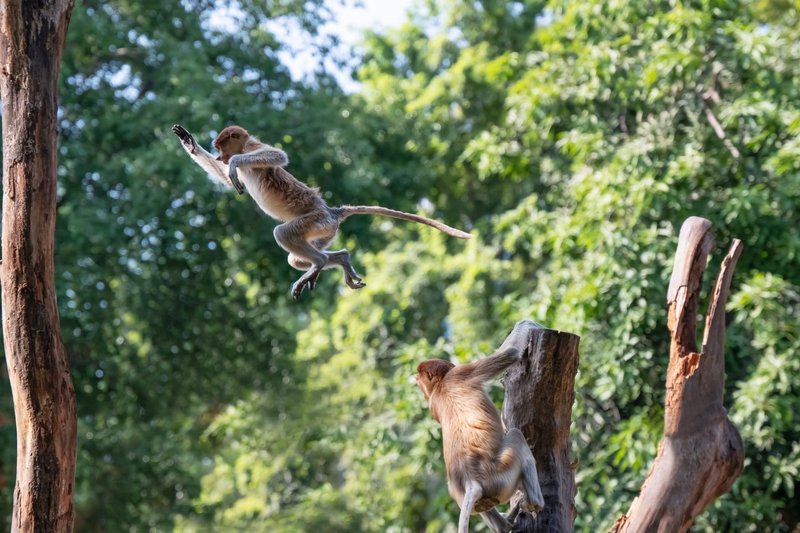
Found only on Borneo, and only the males carry the nose the species is named for — a fleshy, pendulous organ that can exceed 10 centimeters and keeps growing throughout the animal’s life. It’s not decoration. The nasal cavity acts as a resonating chamber, deepening honking calls into something that signals size and dominance to rival males, and researchers now think the same structure helps regulate body heat through its dense network of blood vessels. Proboscis monkeys also do something almost no other primate does well: swim. Webbed hands and feet let them cross rivers and dive from overhanging branches, occasionally submerging for stretches that would be alarming in any other monkey.
Sumatran Rhino (Extinct in the Wild)
Worth including precisely because it’s gone. Malaysia’s last Sumatran rhino, a captive female named Iman, died in November 2019 from complications tied to uterine tumors, six months after the country’s last male died in Sabah. The species had already been declared extinct in Malaysia’s wild forests back in 2015; Iman’s death closed out the captive population too, leaving roughly 80 individuals surviving anywhere, all in Indonesia. Vets preserved Iman’s egg cells for a cross-border breeding collaboration that’s still years from a confirmed result. Every other entry on this list is a species you could still plan a trip around. This one is a warning about what happens when you don’t.
Sunda Clouded Leopard
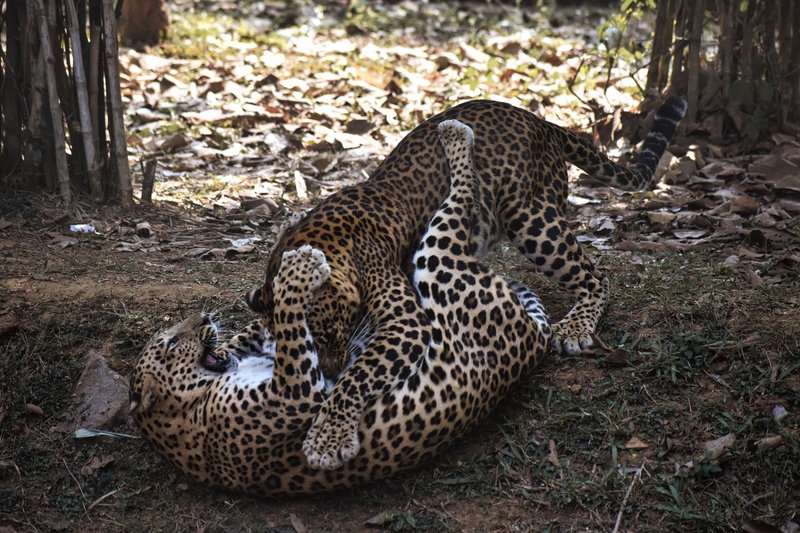
Borneo’s apex predator, and pound for pound one of the most oddly armed cats alive: its canine teeth can run up to 5 centimeters, proportionally the longest of any living cat, closer in ratio to extinct saber-toothed species than to a leopard or tiger. Short legs and unusually broad paws make it one of the most capable tree-climbers among cats, moving through the canopy the way a leopard moves along the ground. It’s nicknamed the “ghost of the forest” for a reason that has nothing to do with mysticism and everything to do with camera-trap data — researchers who study the species routinely go months between confirmed sightings, even in areas where the cats are known to live.
Sunda Colugo (Flying Lemur)
Not a lemur, and not capable of powered flight — a naming error committed centuries ago that stuck. What it actually does is glide, using a skin membrane stretched from wrist to ankle to tail, covering distances up to 100 meters while losing only around 10 meters of height. It’s the closest living relative primates have on the mammal family tree, occupying its own zoological order with only one other species worldwide, on the Philippines. During the day it flattens itself against tree bark and goes almost invisible; at night it becomes one of the more startling things to have glide silently past your head on a Borneo night walk.
Western Tarsier
Among the smallest primates on Earth, built almost entirely around two enormous eyes — each one larger than its brain by volume, an adaptation for hunting insects in total darkness. It can rotate its head nearly 180 degrees in either direction to compensate for eyes too large to move much in their sockets, and it’s the only fully carnivorous primate on this list, taking down insects, small lizards, and the occasional bird. Its hind legs are almost comically elongated relative to its body, built for the same kind of vertical clinging-and-leaping locomotion you’d see in a much larger bushbaby.
What This List Leaves Out
This is a field guide to Malaysia’s mammals worth stopping for, not a taxonomic census — there are 313 recorded species and most of them are bats, rats, and shrews that don’t photograph well or change how you’d plan a trip. What the split above should leave you with is the actual shape of Malaysian wildlife: a mainland fauna under acute, documented pressure from snares and plantations, and an island fauna that evolved in isolation long enough to become genuinely singular, now facing the same pressure on a smaller, less forgiving landmass. Neither half is static. Whatever you see on a Malaysian trip in the next few years, plan on it looking different a decade from now.