Table of Contents
- The Egg-Layers: Monotremes
- The Pouch Carriers: Marsupials
- Animals That Can Actually Kill You
- Birds That Broke the Rulebook
- Reptiles Built for Extremes
- Life on the Reef
- The Uninvited: Introduced Species Wrecking Things
- On the Brink: Endangered and Extinct
- Danger Myths, Busted
- Where and When to See Them
Australia split off from the rest of the world’s landmasses somewhere around 35 million years ago and then just… sat there. No land bridges, no new predators wandering in, no competition from outside. Whatever was already on the continent kept evolving in isolation, and the result is a fauna list that looks like nowhere else on the planet. According to the Australian government’s biodiversity office, roughly 87% of Australia’s mammal species and 93% of its reptile species exist nowhere else on Earth. Not “rare elsewhere.” Nowhere else.
That isolation produced two things at once: some of the strangest mammals alive, egg-laying and pouch-carrying species that vanished from every other continent millions of years ago, and a genuinely long list of animals capable of killing you, several of which rank at or near the top of their category worldwide. Both facts get overplayed by tourism copy and undersold by the “it’s basically fine, don’t worry about it” crowd. Neither extreme is accurate. Here’s what’s actually out there, organized by what makes each group weird rather than dumped alphabetically.
The Egg-Layers: Monotremes
Monotremes are mammals that lay eggs instead of giving live birth, and Australia is home to every monotreme species left alive. There used to be more; now there are two genera, and both are found here.
Platypus
Size: 40–60 cm nose to tail · Habitat: rivers and streams, eastern Australia · Danger level: Low — venomous spur, not lethal to adults · Status: Near Threatened
The platypus lays eggs, nurses its young through skin patches instead of nipples, hunts underwater with its eyes closed by sensing electrical signals from prey through its bill, and the males carry a venomous spur on each hind leg strong enough to drop a dog and put an adult human in serious pain for weeks. Any one of those traits would be the headline fact for most animals. The platypus has all four.
Short-Beaked Echidna
Size: 30–45 cm · Habitat: across most of Australia, from desert to alpine forest · Danger level: Low · Status: Least Concern
The other living monotreme, and the more widespread one — you’ll find echidnas everywhere from Tasmanian snowfields to the red center. They eat ants and termites with a sticky tongue that can flick in and out over a hundred times a minute, and when threatened they don’t run, they dig straight down and present a ball of spines. Slow, spiky, and largely left alone by predators as a result.
The Pouch Carriers: Marsupials
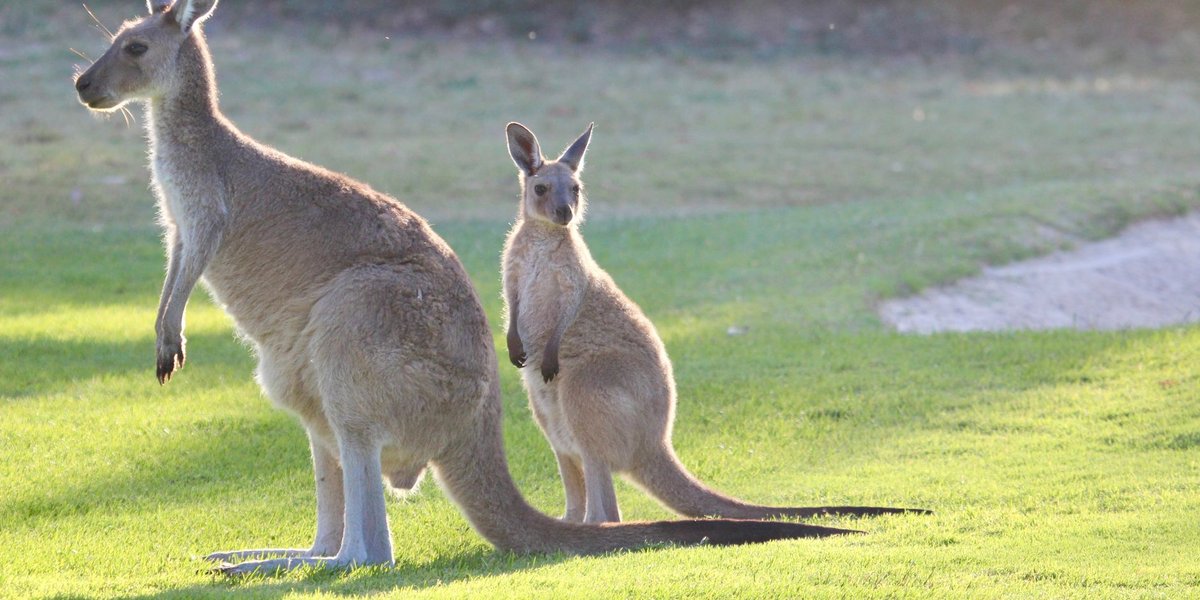
More than two-thirds of the world’s marsupial species live in Australia. They fill the ecological roles that placental mammals fill everywhere else — grazer, burrower, glider, scavenger — just with a pouch instead of a placenta doing the early development work.
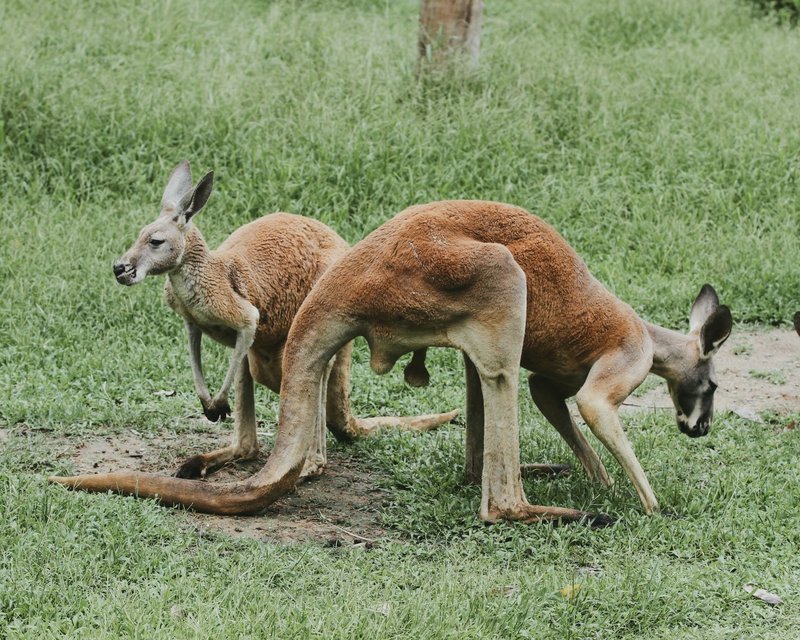
Red Kangaroo
Size: up to 1.8 m standing, males heavier than females · Habitat: arid and semi-arid interior · Danger level: Low unless cornered · Status: Least Concern
The largest living marsupial and the largest land mammal native to Australia. Red kangaroos travel by hopping, which sounds inefficient until you clock the top speed — around 56 km/h — and the fact that hopping gets more energy-efficient at higher speeds thanks to elastic tendons that store and release energy like a spring. A kangaroo cruising across the outback is barely spending more energy than one standing still.
Koala
Size: 60–85 cm, 4–15 kg · Habitat: eucalyptus forests, eastern coastal states · Danger level: None to humans · Status: Endangered in Queensland, NSW, and the ACT since February 2022
Koalas sleep 18–20 hours a day, which gets treated as a punchline, but it’s a direct consequence of eating almost nothing but eucalyptus leaves — low in nutrients, high in toxic compounds their liver has to work overtime to process. The bigger story is the population crash: koala numbers in Queensland and New South Wales have dropped by roughly half since 2001, driven by land clearing, drought, and the 2019–2020 bushfires, which is what pushed the federal government to formally list them as endangered across their eastern range in 2022.
Common Wombat
Size: up to 1.2 m, 20–35 kg · Habitat: forests and grasslands, southeastern Australia and Tasmania · Danger level: Low, but a headbutt from a defensive wombat can break bones · Status: Least Concern (Northern hairy-nosed wombat: Critically Endangered, one of the rarest mammals on Earth)
Wombats dig burrow systems that can run 30 meters long, and their droppings come out cube-shaped — a stacking trick that stops the scent-marking piles from rolling off logs and rock ledges. The common wombat is doing fine. Its northern hairy-nosed relative is not: a single protected population in Queensland is one of the few things standing between the species and extinction.
Tasmanian Devil
Size: 50–65 cm, up to 12 kg · Habitat: Tasmania (extinct on the mainland for centuries) · Danger level: Low to humans, extremely aggressive toward each other · Status: Endangered
The world’s largest living carnivorous marsupial, now that the thylacine is gone. Devils have been hit hard by devil facial tumour disease, a contagious cancer spread through biting — a behavior devils engage in constantly, during both feeding and mating — that is close to 100% fatal and has driven an estimated 82% decline in regional devil numbers over the past 25 years. Insurance populations on offshore islands and in fenced sanctuaries are the current safety net.
Quokka
Size: 40–54 cm · Habitat: mainly Rottnest and Bald Island off Western Australia · Danger level: None · Status: Vulnerable
Quokkas earned the “world’s happiest animal” label purely from the shape of their mouth, which makes them look like they’re smiling in every phone photo tourists take on Rottnest Island. The resemblance is an accident of facial structure, not an emotional state, but it’s built a genuine tourism economy around one small marsupial with nowhere left to hide from predators except a couple of predator-free islands.
Greater Bilby
Size: 29–55 cm · Habitat: arid interior, patchy remaining range · Danger level: None · Status: Vulnerable
Long rabbit-like ears, a pointed snout, and a nocturnal, burrowing lifestyle that once spanned most of the Australian mainland before foxes and cats pushed it back to isolated pockets. Conservation groups have leaned into the “Easter Bilby” campaign as a deliberate swap for the introduced rabbit that Easter iconography usually celebrates — a small but pointed piece of messaging about which animal actually belongs here.
Animals That Can Actually Kill You
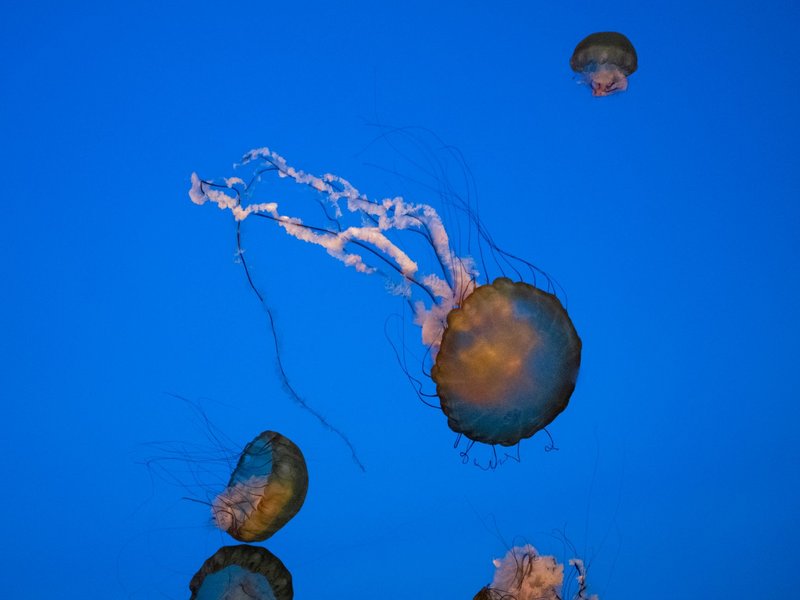
This is the section that gets exaggerated in both directions. Australia genuinely hosts some of the most venomous animals on the planet by toxicity. It does not host an outback that’s actively trying to murder every visitor. Both things are true at once.
Box Jellyfish
Size: bell up to 30 cm, tentacles up to 3 m · Habitat: northern Australian coastal waters, October to May · Danger level: Extreme · Status: Not evaluated
The most venomous marine animal known, full stop. Its sting can trigger cardiac arrest within minutes, and stinger nets and vinegar stations along northern beaches exist specifically because of this species. Records kept since 1883 attribute at least 69 deaths to box jellyfish in Australia — a real toll, but spread across nearly a century and a half, not a per-year body count.
Saltwater Crocodile
Size: males up to 6 m, over 1,000 kg · Habitat: rivers, estuaries, and coastal waters across northern Australia · Danger level: Extreme when encountered at close range · Status: Least Concern (protected since 1971, population recovered)
The largest living reptile on Earth. “Salties” ambush prey at the waterline and use a death roll to disable anything too large to swallow whole — which is why every warning sign on a northern river is worth reading. Hunting nearly wiped them out by the 1970s; legal protection since then has let the population rebuild to healthy numbers, which is a genuine conservation win that also means more crocodiles in more waterways today than a generation ago.
Eastern Brown Snake
Size: up to 2 m · Habitat: eastern Australia, including farmland and suburban edges · Danger level: Extreme · Status: Least Concern
Ranked among the most venomous land snakes in the world by toxicity, and the species responsible for the majority of snakebite deaths in Australia — not because it’s the deadliest bite per milligram, but because it lives close to people, is fast, and gets startled easily around farms and backyards.
Sydney Funnel-Web Spider
Size: body up to 5 cm · Habitat: Sydney basin and surrounding forests · Danger level: Extreme bite, but effectively neutralized · Status: Least Concern
Fangs strong enough to pierce a fingernail, venom that can kill within a couple of hours untreated, and a habit of wandering into suburban backyards and pools during breeding season. And yet no confirmed deaths have occurred since antivenom was introduced in 1981, versus 13 recorded deaths before it existed. It’s the single best case study in the country for why “extremely dangerous” and “extremely low current risk” can both be true of the same animal.
Irukandji Jellyfish
Size: bell roughly 1–2 cm, about the size of a fingernail · Habitat: northern Australian waters · Danger level: Extreme, disproportionate to size · Status: Not evaluated
Small enough to slip through some stinger nets, and its sting causes Irukandji syndrome: severe pain, vomiting, and a documented, specific sense of impending doom that victims describe consistently regardless of background. Rarely fatal, but the mismatch between size and effect is the whole reason it’s infamous.
Birds That Broke the Rulebook
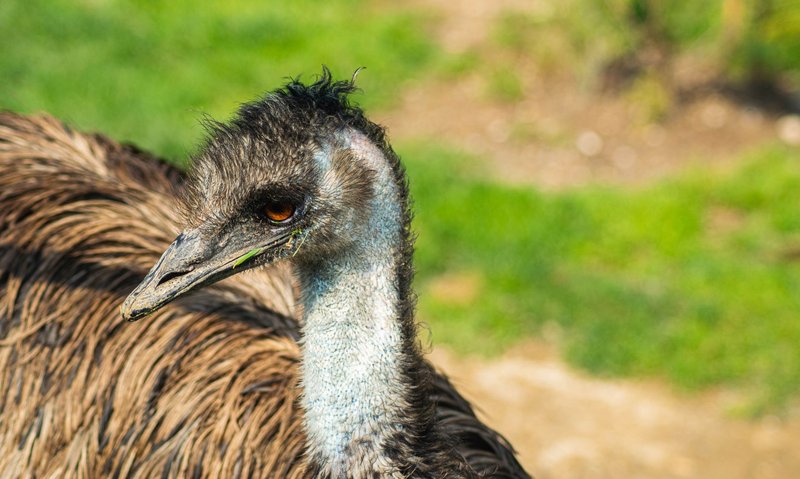
Emu
Size: up to 1.9 m tall · Habitat: most of mainland Australia · Danger level: Low · Status: Least Concern
The second-tallest bird alive after the ostrich, flightless, and capable of running around 50 km/h across open country. Emu dads do the incubating and chick-rearing solo — the female lays the eggs and leaves.
Southern Cassowary
Size: up to 2 m tall · Habitat: tropical rainforest, far north Queensland · Danger level: High if provoked · Status: Endangered in Australia
Frequently labeled the world’s most dangerous bird, mostly on the strength of a dagger-like inner claw that can reach 10 cm. Attacks on people are rare and almost always triggered by cornering or feeding the bird — cassowaries would generally rather disappear into rainforest cover than engage. Habitat loss in far north Queensland is the bigger threat to the species, not the other way around.
Laughing Kookaburra
Size: up to 47 cm · Habitat: eastern Australian woodlands and suburbs · Danger level: None · Status: Least Concern
The largest member of the kingfisher family, known for a call that sounds like genuine human laughter and often gets used as stock jungle-ambience audio in films set nowhere near Australia. Territorial and loud at dawn, harmless otherwise.
Black Swan
Size: up to 1.4 m wingspan roughly double that · Habitat: wetlands across southern Australia · Danger level: Low, territorial during nesting · Status: Least Concern
The only swan species that’s naturally black rather than white, and striking enough that it became Western Australia’s state emblem. European naturalists assumed all swans were white until they encountered this one, which is where the phrase “black swan event” for an assumed impossibility originally comes from.
Reptiles Built for Extremes
Thorny Devil
Size: up to 20 cm · Habitat: arid interior sand and spinifex country · Danger level: None · Status: Least Concern
Covered head to tail in defensive spines, and equipped with a skin structure that channels dew and rain directly to its mouth through capillary grooves — it can effectively drink through its feet. Diet is almost exclusively ants, thousands of them per day, picked off one at a time with a sticky tongue.
Frilled-Neck Lizard
Size: up to 90 cm including tail · Habitat: northern woodlands and savanna · Danger level: None to humans · Status: Least Concern
When threatened, it snaps open a wide ruff of skin around its neck, hisses, and opens its mouth to look far larger than it actually is — and if the bluff doesn’t work, it will run away on its hind legs. Purely theatrical as a defense, but effective enough that most predators back off before testing whether it’s a bluff.
Life on the Reef
Dugong
Size: up to 3 m, around 400 kg · Habitat: shallow coastal seagrass meadows, northern Australia · Danger level: None · Status: Vulnerable
A slow-moving seagrass grazer related to the manatee, and Australia holds one of the last large, relatively stable dugong populations left on the planet — most other populations worldwide are fragmented or declining. An adult can eat around 30 kg of seagrass a day, which makes healthy seagrass meadows a direct prerequisite for the species’ survival, not a nice-to-have.
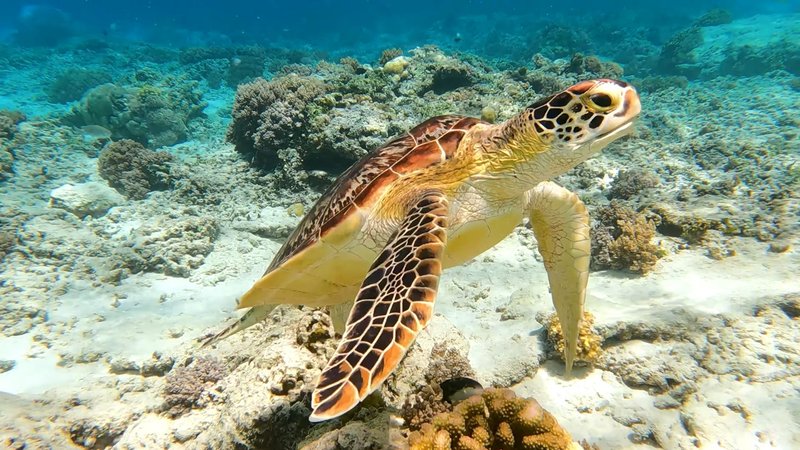
Green Sea Turtle
Size: up to 1.5 m shell length · Habitat: Great Barrier Reef and northern coastal waters · Danger level: None · Status: Endangered
Raine Island, off far north Queensland, hosts the largest green turtle nesting aggregation left in the world — tens of thousands of females coming ashore in a single season during peak years. Rising sand temperatures are a growing concern for the species specifically because turtle sex is temperature-dependent during incubation, and warmer sand skews hatchling populations heavily female.
The Uninvited: Introduced Species Wrecking Things
Most “animals of Australia” lists skip this section entirely, which is a strange omission given how much ecological damage these species have done — arguably more, cumulatively, than any native predator.
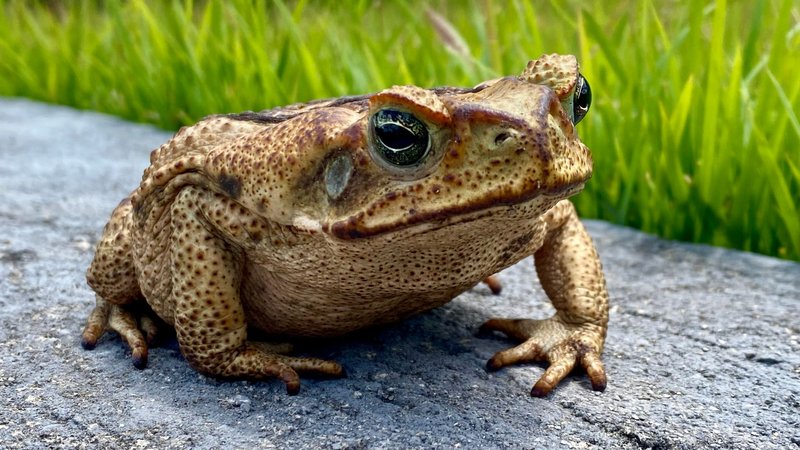
Cane Toad
Size: up to 24 cm, among the largest toads in the world · Habitat: now most of northern and eastern Australia · Danger level: Toxic to predators, not dangerous to touch briefly · Status: Invasive, population estimated in the hundreds of millions
Introduced in 1935 to control cane beetles in Queensland sugar plantations. It didn’t control the beetles — it couldn’t jump high enough to reach them — and instead spread across the northern half of the continent, poisoning native predators like quolls and freshwater crocodiles that had no evolutionary experience with its toxin. One of the most cited case studies globally for what happens when biological pest control goes wrong.
European Rabbit
Size: up to 40 cm · Habitat: across southern and central Australia · Danger level: None directly, severe indirect ecological damage · Status: Invasive
Twenty-four rabbits released in Victoria in 1859 for recreational hunting turned into the fastest-spreading colonizing mammal ever recorded anywhere, reaching plague numbers across the continent within decades and stripping vegetation that native species depended on. Two engineered viruses, myxomatosis and rabbit calicivirus, have knocked populations down since but never eliminated them.
Feral Cat
Size: varies · Habitat: virtually all of mainland Australia · Danger level: None to humans, catastrophic to native wildlife · Status: Invasive
Government wildlife agencies put feral and unmanaged pet cats collectively responsible for over a billion native animal deaths a year across Australia, and they’re named as a direct contributing factor in multiple mammal extinctions since European settlement. Unlike cane toads or rabbits, they’re a genuinely difficult problem to control at scale because they’re a beloved domestic species everywhere else in the world.
On the Brink: Endangered and Extinct
Numbat
Size: up to 45 cm including tail · Habitat: two remnant wild populations in Western Australia, plus reintroduced sites · Danger level: None · Status: Near Threatened, recovering from Endangered
Western Australia’s state faunal emblem, a diurnal marsupial that eats almost nothing but termites, and one of the rare Australian conservation success stories in progress. Numbers fell to roughly 300 individuals by the late 1970s; fenced predator-free reserves and reintroduction programs have since pushed the population back up to an estimated 2,000 to 3,000 animals, recently enough that the IUCN downgraded its status from Endangered.
Thylacine (Tasmanian Tiger)
Size: up to 1.8 m nose to tail · Habitat: formerly Tasmania (mainland populations died out earlier) · Danger level: N/A · Status: Extinct
Despite the nickname, the thylacine was a marsupial, not remotely related to dogs or cats — its dog-like build is one of the more dramatic examples of convergent evolution on record. The last known individual died at Beaumaris Zoo in Hobart on 7 September 1936, weeks after the species finally received legal protection. It was formally declared extinct in 1986. Unconfirmed sighting reports still surface in Tasmania every few years; none has ever been verified.
Danger Myths, Busted
Australia’s reputation as a continent where everything is trying to kill you is mostly a media artifact. A few corrections worth knowing before you write off the entire place:
Most snake and spider bites in Australia happen when someone tries to handle, kill, or photograph the animal at close range — not from unprovoked attacks. Leave it alone and it almost always leaves you alone. Sharks are a bigger fear than a real risk statistically; you’re substantially more likely to be hurt by a wave, a rip current, or sunstroke on an Australian beach than by a shark. And box jellyfish season is specific and well-signposted — stinger nets go up at patrolled northern beaches during the risk months, and swimming outside a netted area during that window is the actual dangerous decision, not the jellyfish’s mere existence.
Where and When to See Them
Kangaroos and wallabies are the easiest wins — early morning or dusk in almost any bushland reserve near a major eastern city. Tasmania is the reliable bet for Tasmanian devils, ideally at a wildlife sanctuary running an insurance breeding program, since wild encounters are increasingly rare. Rottnest Island, a short ferry from Perth, is close to guaranteed for quokkas. The Great Barrier Reef delivers dugongs and green turtles best on a snorkeling or dive trip out of Cairns or the Whitsundays, and far north Queensland’s Daintree rainforest is the most realistic place to spot a cassowary in the wild, from a respectful distance. Winter (June–August) is the safer window for northern coastal swimming, since it falls outside peak box jellyfish and crocodile-nesting activity in most regions — a detail worth building a trip around if marine encounters are on the list for the wrong reasons.