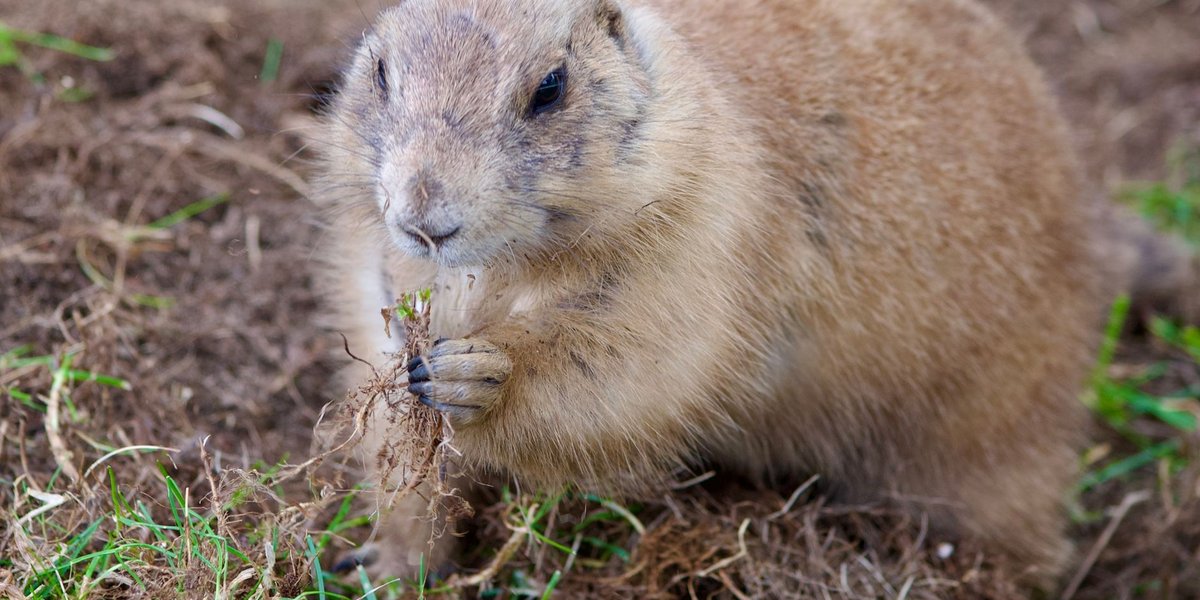
Gunnison’s prairie dogs live on the Colorado Plateau and the high grasslands of the Four Corners region, and their whole year is organized around one job: eating enough of the right plants before the ground freezes. Unlike black-tailed prairie dogs, which stay active through winter, Gunnison’s go into torpor — and what they eat in the months before that determines whether they make it out the other side.
Quick Answer
Gunnison’s prairie dogs are grazers, not hunters. Grasses and low-growing herbs (forbs) make up the bulk of their diet year-round, supplemented by shrub shoots in spring, seeds in summer, and stored roots and stems through the fall and winter. They’ll eat grasshoppers and beetles opportunistically, but insects are a minor add-on, not a staple. Captive prairie dogs eat a completely different diet — mostly timothy hay — because the wild menu isn’t practical to replicate indoors.
Table of Contents
- What They Eat, Season by Season
- Do Prairie Dogs Eat Insects?
- How Diet Fuels Their Winter Torpor
- What to Feed a Pet Prairie Dog
- Why Their Diet Matters Beyond the Colony
What They Eat, Season by Season
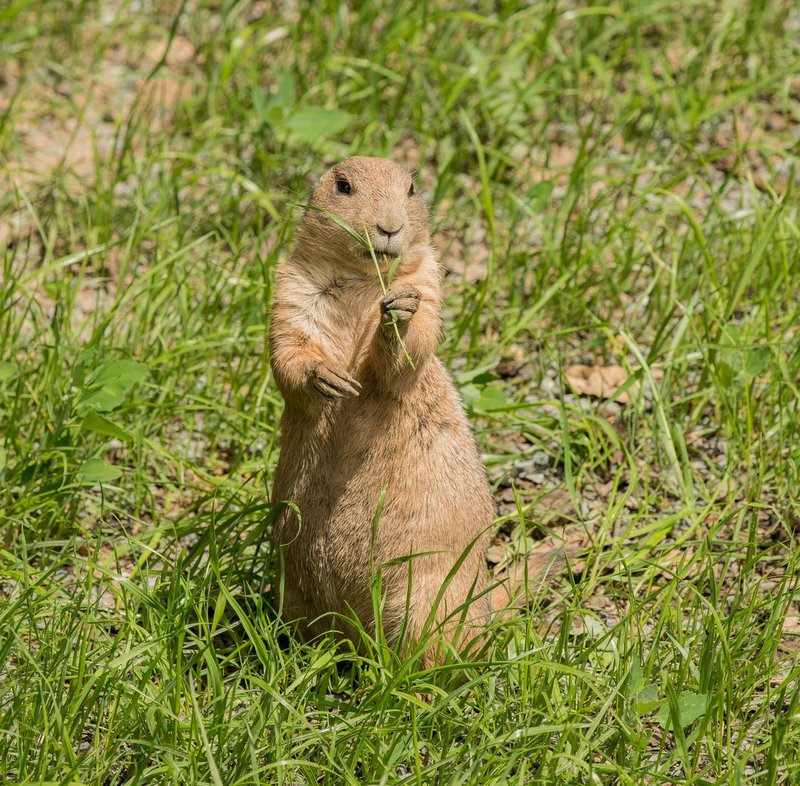
A Gunnison’s prairie dog doesn’t eat the same thing in July that it eats in January — the menu shifts with what’s actually growing.
Spring: As soon as the ground thaws, colonies switch to fresh shoots and new growth on shrubs like rabbitbrush, along with the first tender grasses pushing up through the soil. This is the highest-quality food of the year, and it’s not a coincidence that pups are born and weaned during this window — mothers need the protein and moisture spike to nurse.
Summer: Diet broadens to include seeds and the flowering heads of grasses and forbs, which pack more calories per bite than leafy growth. Summer is also when prairie dogs put on the weight they’ll live off of later, since forage quality starts declining by late August.
Fall and winter: Once green growth dies back, prairie dogs shift to roots, stems, and whatever they’ve cached. Food is genuinely scarce during these months, and a lot of a colony’s survival odds are set by how well individuals fattened up over the summer rather than by what they can find in December.
Grasses stay the year-round backbone — Gunnison’s prairie dogs are among the most grass-dependent of the five prairie dog species, with forbs, sedges, and the occasional shrub filling the gaps depending on what a given colony’s grassland actually offers.
Do Prairie Dogs Eat Insects?
Occasionally, yes — grasshoppers and beetles show up in stomach content studies, and prairie dogs won’t pass one up if it crosses their path while they’re foraging. But this isn’t a meaningful protein strategy the way it is for, say, ground squirrels in leaner habitats. Gunnison’s prairie dogs are built for a plant-based diet: their digestive system is set up to process cellulose-heavy grasses efficiently, and insects show up as incidental protein rather than a targeted food source. If you’re picturing them hunting bugs, that’s the wrong mental model — they’re grazing, and a beetle just happens to be sitting on the grass they’re already eating.
How Diet Fuels Their Winter Torpor
Gunnison’s prairie dogs are the only prairie dog species that reliably goes into true hibernation-like torpor, and it’s entirely a fat-reserves game. There’s no food caching happening in the way a pika stockpiles a haypile — instead, individuals spend late summer eating as much high-calorie forage as they can hold, building subcutaneous fat that gets them through months of reduced activity underground. Body condition going into fall directly predicts overwinter survival, according to research summarized by Animal Diversity Web, a species database maintained by the University of Michigan. A poor summer for forage — a drought year, an overgrazed colony site — translates directly into a rough winter, sometimes a fatal one, regardless of how deep or well-insulated the burrow is.
What to Feed a Pet Prairie Dog
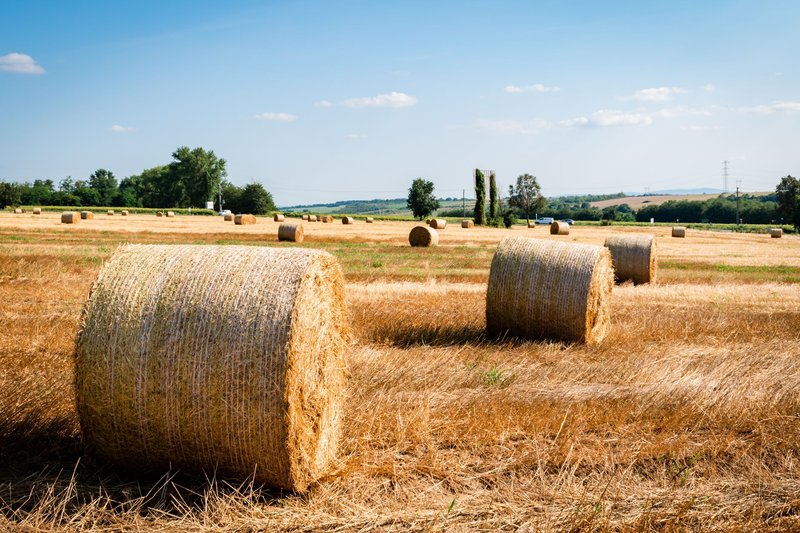
Wild diet and captive diet don’t overlap much, and that’s by design. Prairie dogs kept as pets need a diet built around digestive health rather than seasonal availability, since the foraging variety that keeps a wild colony balanced simply isn’t reproducible in a cage. According to VCA Animal Hospitals, captive prairie dogs should eat roughly 98% timothy hay or grass hay, with a small daily portion of timothy-based pellets and a strictly limited amount of fresh vegetables like dark leafy greens as treats. Alfalfa hay and corn get phased out after the first year — too rich, too easy to overfeed — and mold in stored hay is treated as a genuine health hazard, not a minor issue. It’s a narrower, more controlled version of what a wild prairie dog eats: heavy on grass, light on everything else.
Why Their Diet Matters Beyond the Colony
Prairie dogs earn the “ecosystem engineer” label partly because of how they eat. Their constant grazing keeps vegetation short around burrow entrances, which does two things: it maintains the sightlines they need to spot predators, and it creates a distinct habitat type that other grassland species depend on. Mountain plovers, burrowing owls, and pronghorn all show a documented preference for foraging on prairie dog colonies specifically because the grazing pressure changes what grows there. The U.S. Fish and Wildlife Service tracks Gunnison’s prairie dog populations partly for this reason — losing a colony doesn’t just remove one species from a grassland, it changes the vegetation structure for everything else living alongside it.
That’s the part a simple “they eat grass” answer misses. What a Gunnison’s prairie dog eats isn’t just about what keeps it alive — it’s a big part of what shapes the grassland it lives on.