Short answer: Most snakes that stop eating are too cold, about to shed, stressed by a new home or handling, or being offered the wrong prey. Adult ball pythons also fast for weeks or months in winter. Check the warm-side temperature first, weigh your snake, and see a reptile vet if it loses more than 10% of its weight, shows signs of illness or is a young snake that has skipped two meals outside a shed.
A skipped meal alarms new owners more than it should. Snakes have slow metabolisms, and a healthy adult can miss a few feedings without harm. What matters is why it stopped and whether it is losing weight. Work through the checklist below in order: it starts with the causes that are most common and easiest to fix.
This article contains Amazon affiliate links. Florafaunafun earns a commission on qualifying purchases. See our affiliate disclosure.
The enclosure is too cold
Check heat first: a cold enclosure is the most common setup problem behind a snake that refuses food. Snakes need outside heat to digest, and a snake that cannot warm up enough will skip a meal rather than risk it rotting in its gut. Reptile vets put husbandry problems (heat, light, humidity and setup) at the top of the list of causes, well ahead of disease. One vet practice puts it simply: if any part of the enclosure is below 70°F, it is too cold.
| Species | Warm side or basking surface | Cool side | At night |
|---|---|---|---|
| Ball python | 86 to 90°F (never over 95°F) | 72 to 80°F | 70 to 78°F |
| Corn snake, king and milk snakes | 85 to 90°F | 75 to 80°F | Room temperature, not below 70°F |
| Boa constrictor | About 90°F | 75 to 80°F | 75 to 80°F |
| Hognose snake | 86 to 90°F | 75 to 85°F | Not below 60°F |
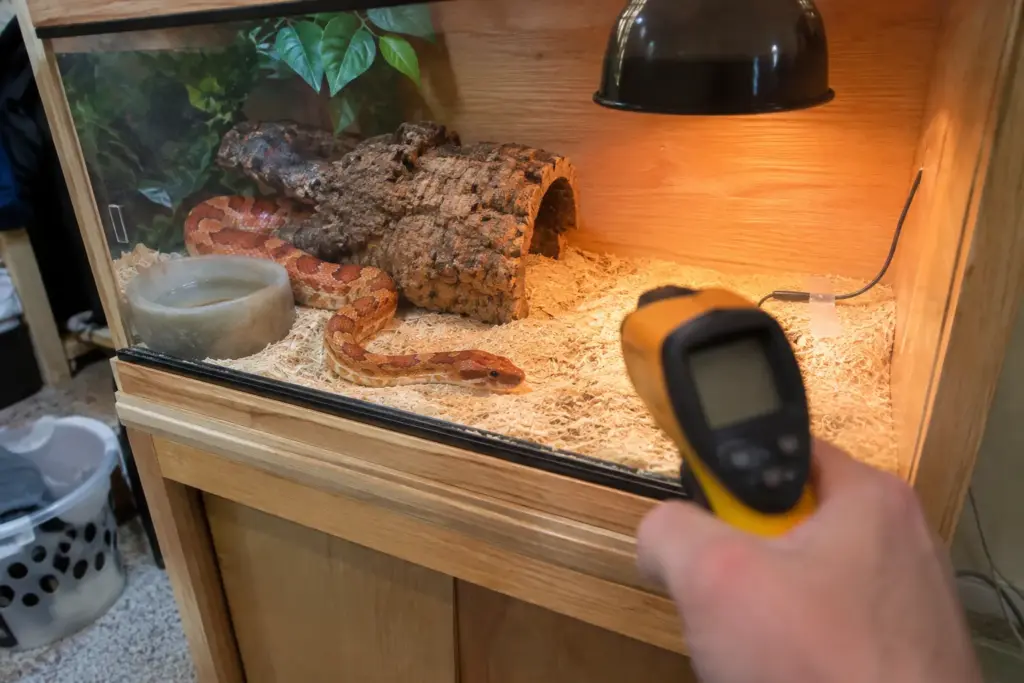
Measure the floor where the snake lies, not the air near the lid. Stick-on dials and strip thermometers read the glass and are often off by several degrees. Use two digital probe thermometers, one at each end, and check the basking spot with an infrared temperature gun. Heat drops when the season turns, when a heat mat fails or after a move to a bigger enclosure, so re-check temperatures whenever feeding stops.
Your snake is about to shed
Snakes generally do not eat while they are in shed. In the days before a shed, the skin turns dull and the eyes go cloudy or milky blue. Vision drops and many snakes hide and refuse food until the skin comes off, then eat normally again.
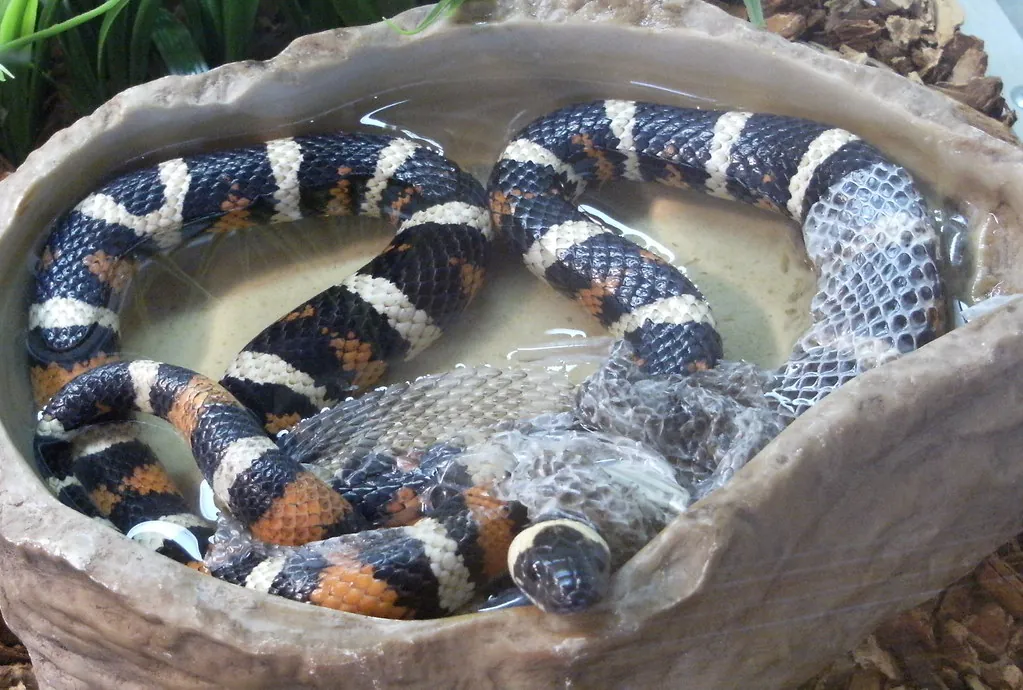
Skip feeding while the eyes are cloudy and offer food a day or two after the shed. A refusal during shed does not count toward the vet thresholds. Pieces of skin stuck to the body or eye caps after a warm soak are a different matter: that is a sign of low humidity or illness and is worth a vet visit.
Stress from a new home, handling or too few hides
Stress after a move is the most common cause of a snake refusing food, according to VCA vets. A new snake, a new enclosure or too much handling can all put it off its food for a week or more. Snakes eat when they feel hidden and secure, so the fix is usually less contact, not more.
Some snakes take food better in their own enclosure than in a separate feeding tub, because the move itself stresses them. Vet and keeper sources split on which is better. If your snake refuses after being moved to feed, try feeding it where it lives.
The prey is the problem
A snake that is warm, settled and not in shed often rejects the meal rather than food in general. Prey that is too big, too cold, the wrong type or offered at the wrong time is a common and easy fix.
| Problem | Fix |
|---|---|
| Prey too big | Offer prey no wider than the thickest part of the snake. Ball pythons take about 10 to 15% of their body weight. Reluctant feeders often accept a smaller item. |
| Prey too cold | Thaw it fully, then warm it to about 98 to 100°F in a sealed bag in warm water. Snakes find prey by heat. Never microwave it. |
| Recent switch from live to frozen | Wiggle the thawed prey with tongs to mimic movement. Expect a few refusals during the change. |
| Wrong prey type | Ask the breeder or store what it ate before. Try mice instead of rats or the reverse, or a different supplier. |
| Wrong time | Most pet snakes are active at dusk and night. Offer food in the evening with the room lights low. |
| Picky eater (hognoses, wild-caught snakes) | Rub the scent of a preferred food onto the prey. Hognoses often take a mouse scented with frog or lizard. |
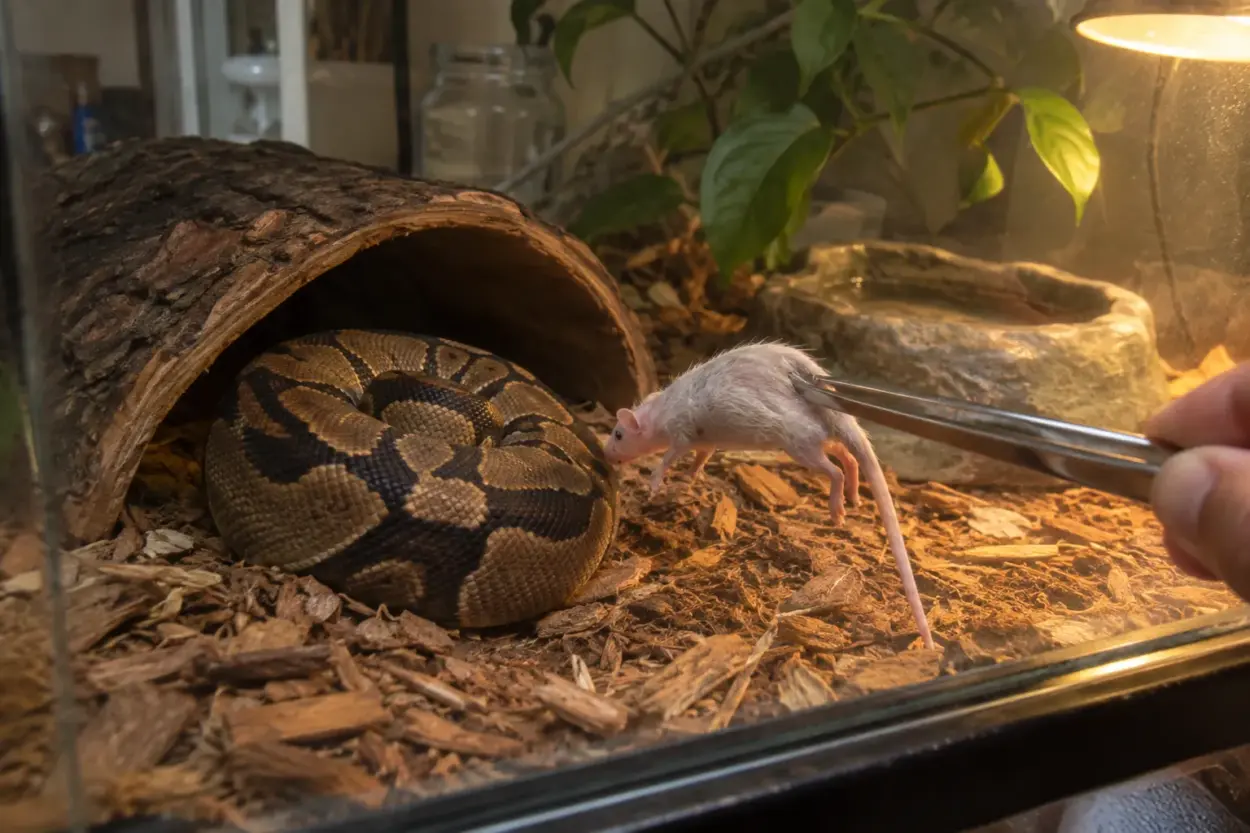
Offer food with long feeding tongs, not your fingers. If the snake ignores frozen-thawed prey after 15 to 30 minutes, remove it and try again in a few days. Throw out prey that has sat in a warm enclosure for hours, and never refreeze thawed prey.
Why ball pythons stop eating
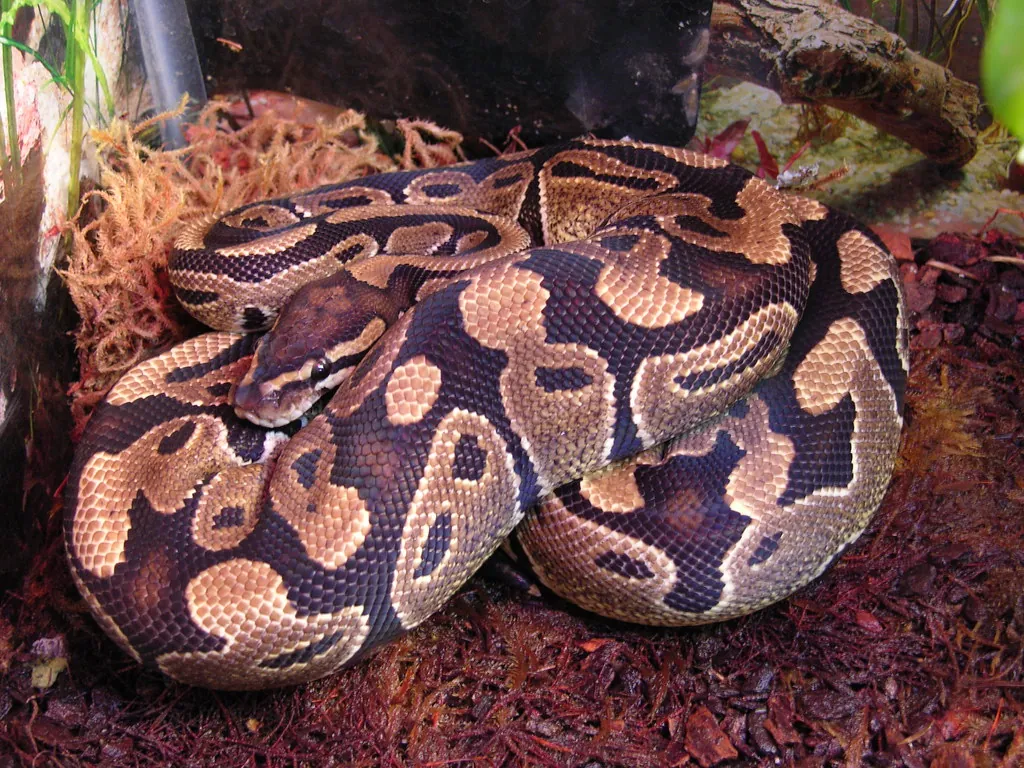
Ball pythons are known for fasting, and a healthy adult can go several months without food as long as its weight holds steady. Adults often go off feed in the cooler months, which is also their breeding season. Males that are near a female can refuse food for long stretches.
- Weigh it weekly in grams. A fasting ball python that loses less than 10% of its weight and stays alert is usually fine.
- Offer food every 10 to 14 days during a fast instead of weekly, and remove it if it is ignored.
- Feed at night. Ball pythons are nocturnal and shy.
- Try a different prey. Some ball pythons, especially imported ones, ignore white lab mice and rats but take brown gerbils or rats of another color.
- Check humidity and hides. Ball pythons do best with snug hides on both sides and humidity in the 70 to 80% range per one reptile vet.
Young ball pythons are different. Hatchlings and juveniles under about 6 months need to eat weekly, so a baby ball python that refuses repeatedly needs attention sooner than an adult.
Breeding season, gravid females and winter
Appetite loss is normal in three situations: breeding season, pregnancy and winter slowdown. Many breeding males eat less or stop eating, and gravid females (carrying eggs or young) often refuse food. Cooler rooms in winter also make some snakes fast, even inside a heated enclosure.
Brumation is the winter cooling some keepers use before breeding, mostly for colubrids such as king and corn snakes. A brumating snake hides for weeks, stays on the cool side and stops eating. Only healthy adults should brumate: never a baby or an underweight snake. If weight drops more than 10% during brumation, warm it back up and see a vet.
Signs your snake is sick
Loss of appetite is one of the first signs of illness in snakes, and most sick snakes will not eat. If the enclosure is right and your snake also shows any of the signs below, see a reptile vet as soon as possible rather than trying more food tricks.
| What you see | Possible cause |
|---|---|
| Open-mouth breathing, wheezing, bubbles or mucus at the nose or mouth | Respiratory infection |
| Red spots or bleeding gums, cheesy pus in the mouth, swollen mouth | Mouth rot (infectious stomatitis) |
| Tiny black or red specks around the eyes and chin, extra soaking, specks in the water bowl | Mites |
| Diarrhea, regurgitation, a swollen middle, weight loss | Internal parasites |
| Throwing up meals more than once | Cold enclosure, handling too soon after eating, or disease |
| Swelling near the vent, no droppings, after eating substrate | Impaction (gut blockage) |
| Cloudy or swollen eyes outside a shed, stuck shed, lumps, lethargy | Several conditions; needs an exam |
Bring a fresh dropping in a sealed bag if you have one: it lets the vet check for parasites. Any regurgitated meal is useful too. Find a reptile vet through the Association of Reptile and Amphibian Veterinarians (ARAV) directory, since many dog and cat clinics do not treat snakes.
How long can a snake go without eating?
A healthy adult snake can go weeks to months without food, but babies cannot. How long is too long depends on age, species and above all whether the snake is losing weight.
| Snake | When to act |
|---|---|
| Adult ball python, alert, weight steady | Can fast for months. Weigh weekly; see a vet at 10% weight loss. |
| Other adult snakes (corn, king, milk, boa, hognose) | See a vet after about 2 missed meals outside a shed, or 3 to 4 weeks with no food. |
| Juveniles | See a vet after 1 to 2 weeks of refusals, or 2 missed meals outside a shed. |
| Hatchlings | Should start eating within about 4 weeks of hatching, usually after the first shed. A vet visit if not. |
| Any snake losing weight or showing illness signs | See a vet now. |
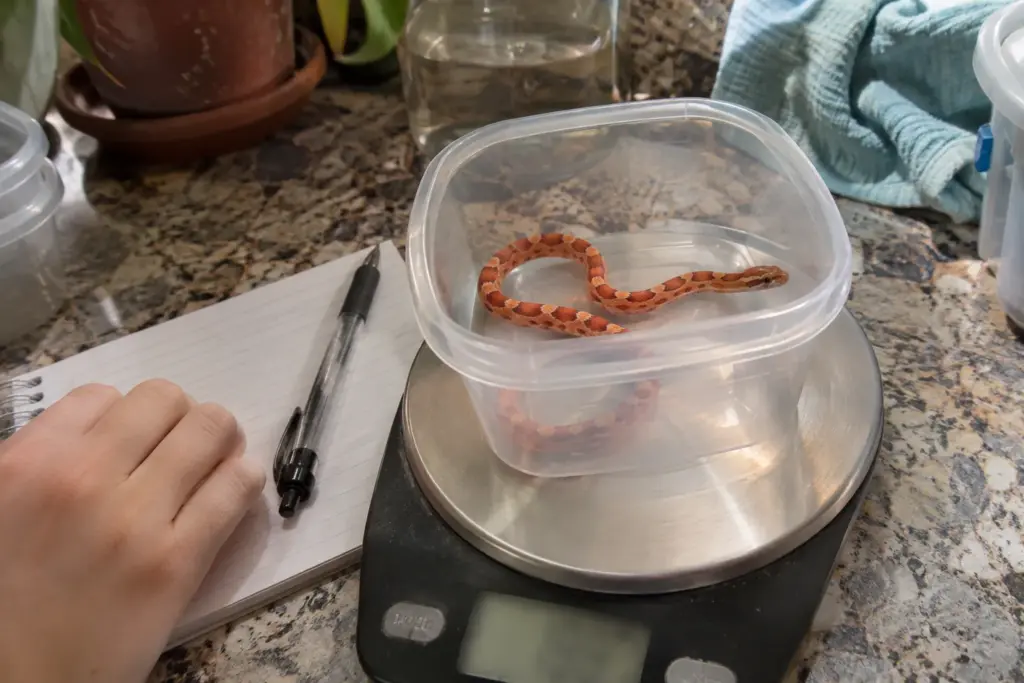
A digital kitchen scale that reads in grams is the most useful tool you can own for a snake that will not eat. Weigh it in a lidded tub, subtract the tub, and log the number with the date. A 10% drop is 30 grams on a 300-gram snake and 100 grams on a kilogram ball python.
What to do when your snake won’t eat
Use this routine after a refusal. It fixes most husbandry causes within a couple of weeks and tells you early when a vet is needed.
Frequently asked questions
Yes. Many adult snakes eat only every one to two weeks anyway, and a missed meal during a shed or after a move is common. Watch for weight loss and illness signs rather than counting days.
Most do. Once the eyes turn cloudy or blue, the snake usually refuses food until the old skin is off, then eats normally within a day or two.
It is most likely stressed by the move. Give it a correctly heated enclosure with two hides, leave it alone for three to five days and do not handle it until it has eaten.
Adult ball pythons commonly fast in the cooler months, which is also their breeding season. It is normal if the snake stays alert and loses less than 10 percent of its weight.
A healthy adult corn snake can go weeks without food, but missing more than a couple of meals outside a shed is a reason to see a reptile vet. Babies need to eat every five to seven days.
Remove frozen-thawed prey if it is ignored after about half an hour and try again another day. Do not refreeze it, and never leave a live rodent with an unattended snake.
Reptile vets advise against it because live rodents can badly injure a snake. Try warmer, smaller or scented frozen-thawed prey first and ask a vet before switching.
It can, usually because an underlying problem such as cold housing or disease goes unnoticed. Weekly weighing catches the decline early, while a vet can still help.
Sources
- VCA Animal Hospitals. Common problems in pet snakes
- VCA Animal Hospitals. Common diseases of pet snakes
- VCA Animal Hospitals. Feeding pet snakes
- Merck Veterinary Manual. Nutrition in snakes
- MSD Veterinary Manual. Husbandry requirements for selected reptiles
- PetMD. How can I tell if my snake is sick?
- PetMD. Ball python care sheet
- PetMD. Corn snake care sheet
- Reptiles Magazine (Margaret Wissman, DVM). Ball python refusing to eat
- Reptiles Magazine (Douglas Mader, DVM). Snake health 101
- Chewy (vet reviewed). Why your ball python won’t eat
- ReptiFiles. Ball python temperature and humidity
- Association of Reptile and Amphibian Veterinarians. Find a vet