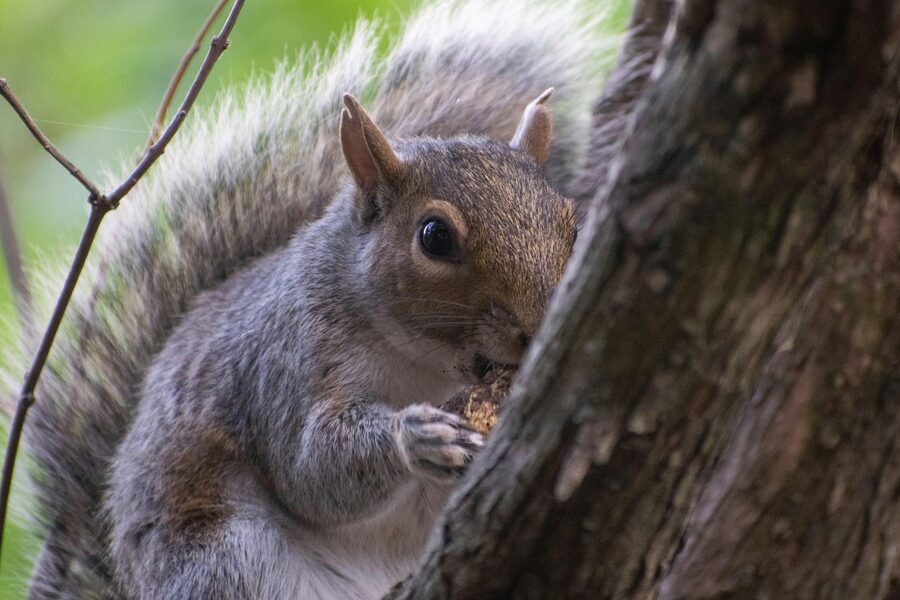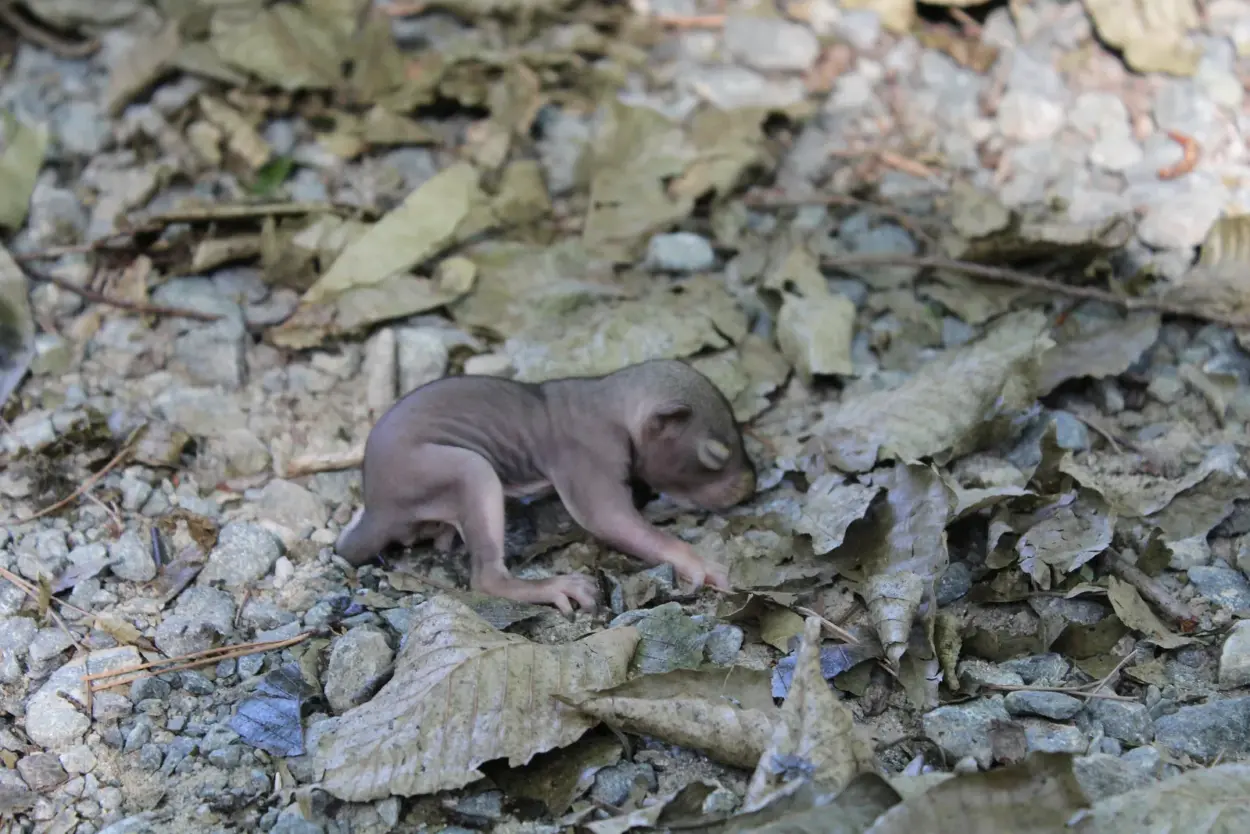
Short answer: If the baby squirrel is uninjured, warm it up and put it in a shallow box at the base of the tree it fell from, then watch from far away. The mother usually comes back for it within a few hours. Do not feed it or give it water. Call a wildlife rehabilitator if it is hurt, cold, covered in flies or ants, was caught by a pet, or is still there at dusk.
Most baby squirrels on the ground are not orphans. They fall out of leaf nests during storms, get dropped while the mother moves the litter, or land in the yard when a tree is trimmed. The mother is almost always nearby and will carry them back one at a time. The two most common mistakes are well meant: giving the baby milk or water, and taking it inside before the mother has had a chance. Use the checklist below to decide what to do in the next ten minutes.
This article contains Amazon affiliate links. Florafaunafun earns a commission on qualifying purchases. See our affiliate disclosure.
Does the baby squirrel need help?
It needs a rehabber if it is injured, sick, attacked by a pet, infested with insects or still alone at the end of the day. Everything else is a reunite case. Look at it closely before you pick it up:
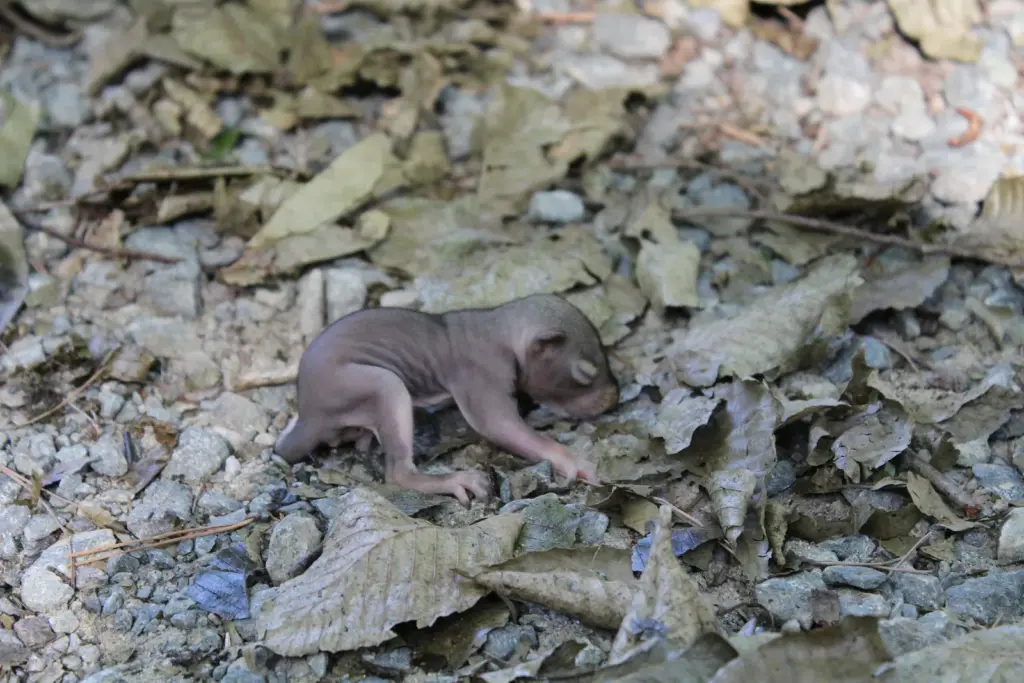
Do’s and don’ts when you find a baby squirrel
Wildlife centers, humane societies and state agencies give the same core advice:
How to reunite a baby squirrel with its mother
Reuniting works because squirrel mothers keep more than one nest and will move the litter to a backup nest when the first one fails. Touching the baby does not make her reject it; that is a myth. What stops her is a cold baby, people standing nearby or a box she cannot find. Do this during daylight:
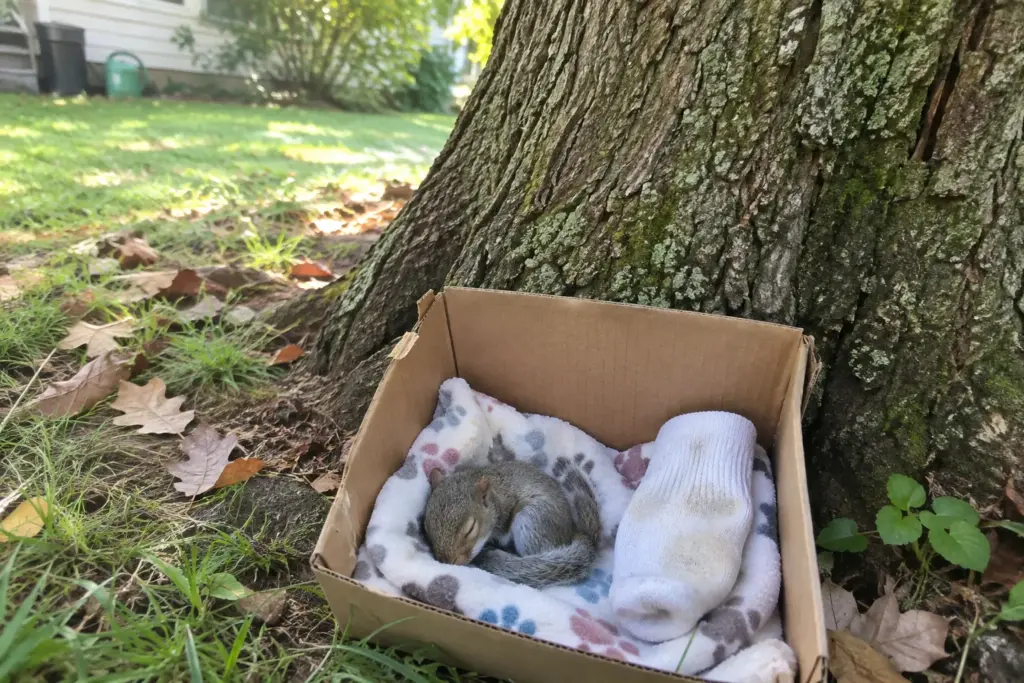
How long to wait depends on how developed the baby is. Younger babies chill faster, so their window is shorter. These are the times the Dane County Humane Society Wildlife Center uses:
| What the baby looks like | Check after | If the mother has not come |
|---|---|---|
| Pink, no fur, eyes closed | 2 hours | Take it in and call a rehabber |
| Short fur, eyes closed | 4 hours | Take it in and call a rehabber |
| Fur, eyes open | 6 hours | Take it in and call a rehabber |
| Any age, at dusk | Before dark | Bring it inside overnight with heat; retry at sunrise or call a rehabber |
Mothers do not search after dark, and a baby left out overnight will chill or be found by a predator. Bring it in at dusk, keep it warm in a quiet room with no food or water, and put it back out at first light. A healthy baby can try one more full day. If some babies from a litter disappear and others stay, the mother is moving them one at a time: give her another hour or two.
How to keep a baby squirrel warm
Put heat under half of a box so the baby can move toward or away from it. Babies with closed eyes need outside heat even in summer. The safest setup indoors is a heating pad on its lowest setting under one side of the box, with a folded cloth between the pad and the cardboard. Any of these work:
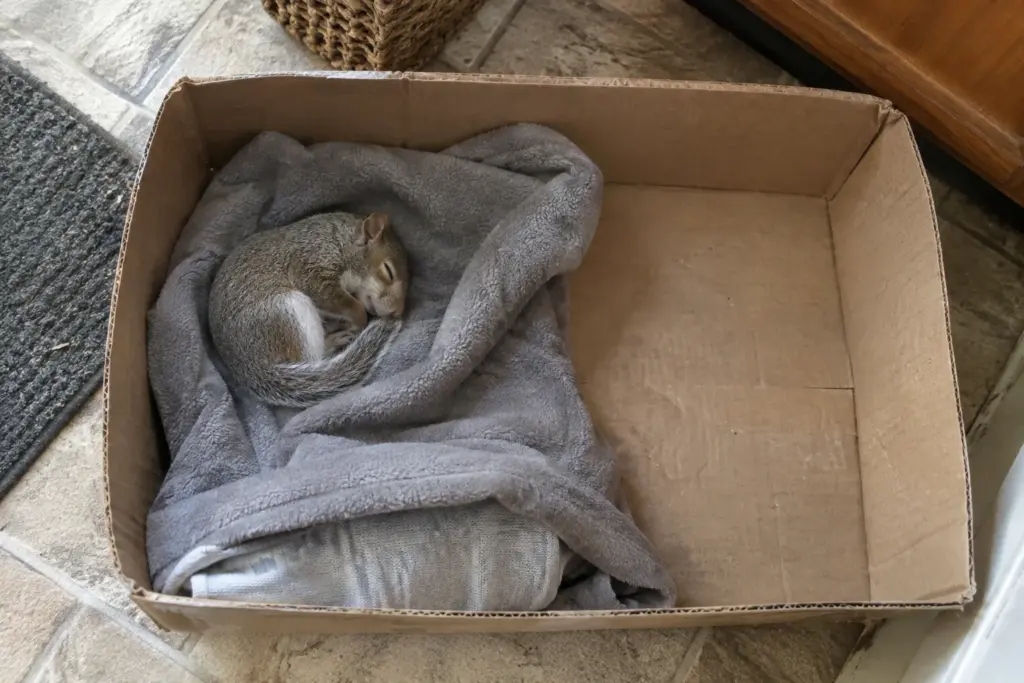
Keep the box in a dark, quiet room away from pets, kids and the TV, with the lid loosely on and air holes in it. Do not wrap the baby tightly or set it in direct sun. Overheating is a real risk: if it pants or feels hot, move it off the heated side.
How old is the baby squirrel?
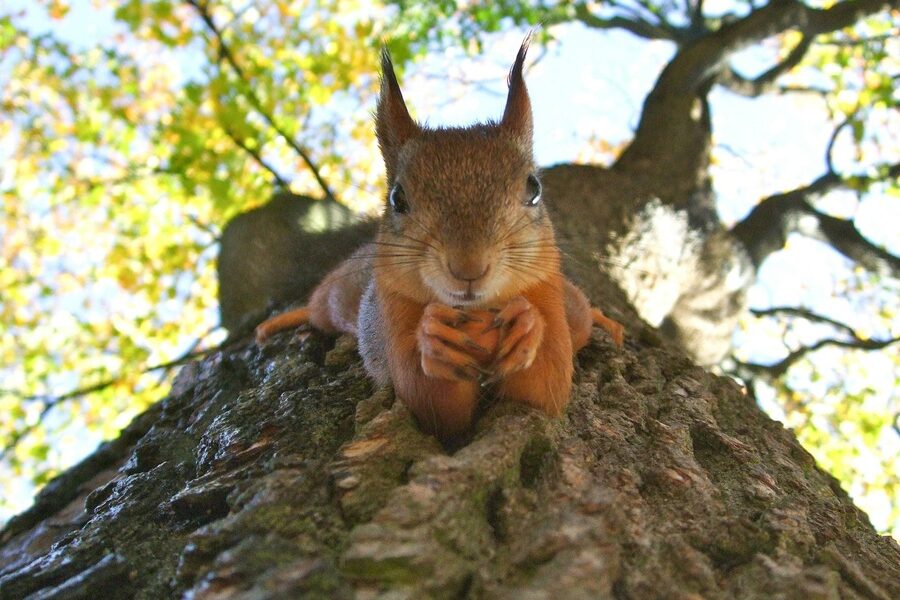
Age tells you how much time you have and whether it needs help at all. Tree squirrels are born pink and blind, open their eyes at about 4 weeks, start leaving the nest at 6 to 7 weeks and are on their own around 10 to 12 weeks. Gray and fox squirrels have two baby seasons a year, late winter to spring and mid to late summer, so finds peak around March to May and again in August and September.
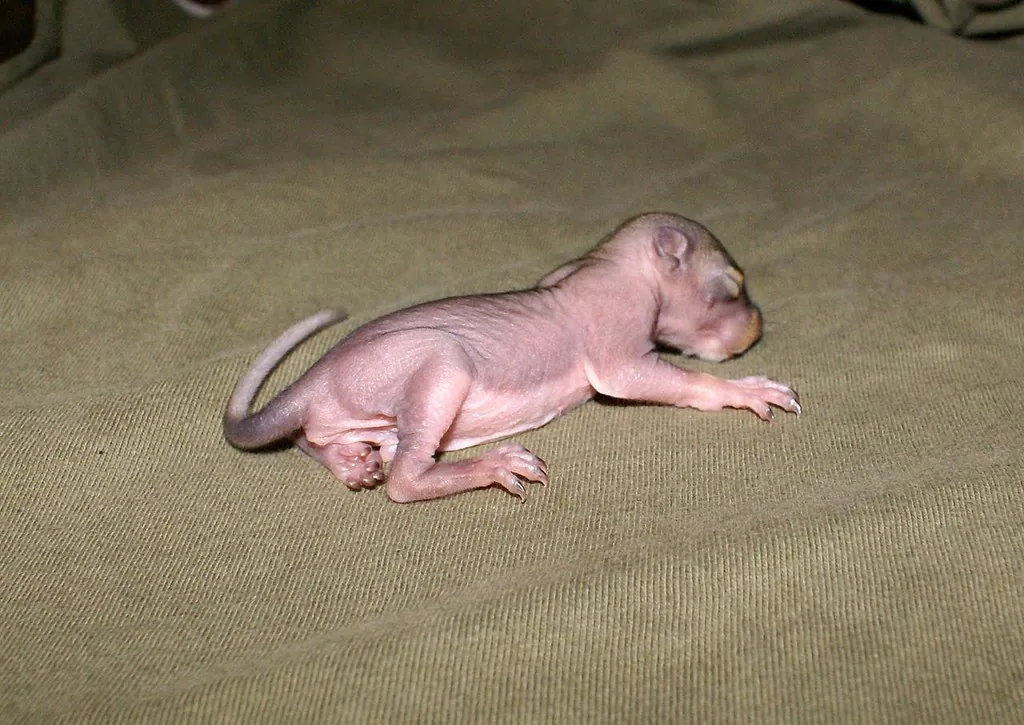
Fox squirrels are larger and redder than gray squirrels, so a big baby with closed eyes is usually a fox squirrel, not an older gray. Flying squirrel babies are smaller, with a loose fold of skin along each side. Ground squirrels and chipmunks live in burrows rather than tree nests, so the box-at-the-tree method does not apply to them: keep them warm and call a rehabber before trying anything.
What if a young squirrel follows you?
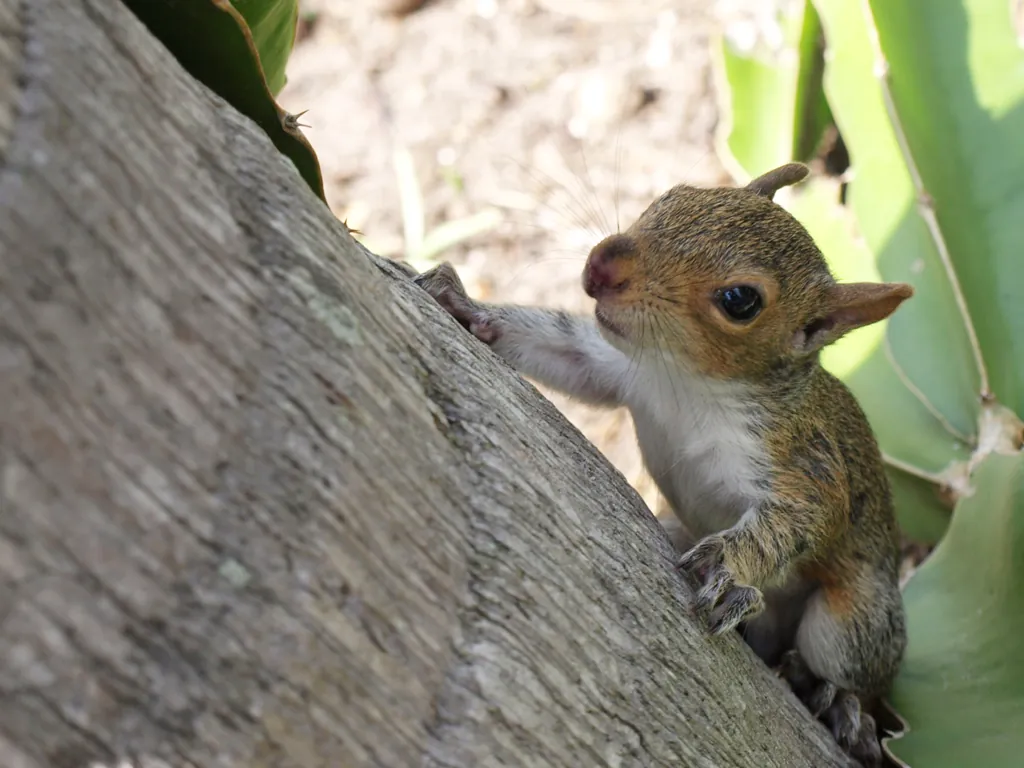
A young squirrel that runs up to people, climbs your leg or follows you down the sidewalk has usually lost its mother and is very hungry. Tufts Wildlife Clinic and Willowbrook Wildlife Center both treat this as a rehab case. Walk away slowly first: if it keeps following, contain it in a box with a towel over the top and call a rehabber. Do not feed it to keep it calm.
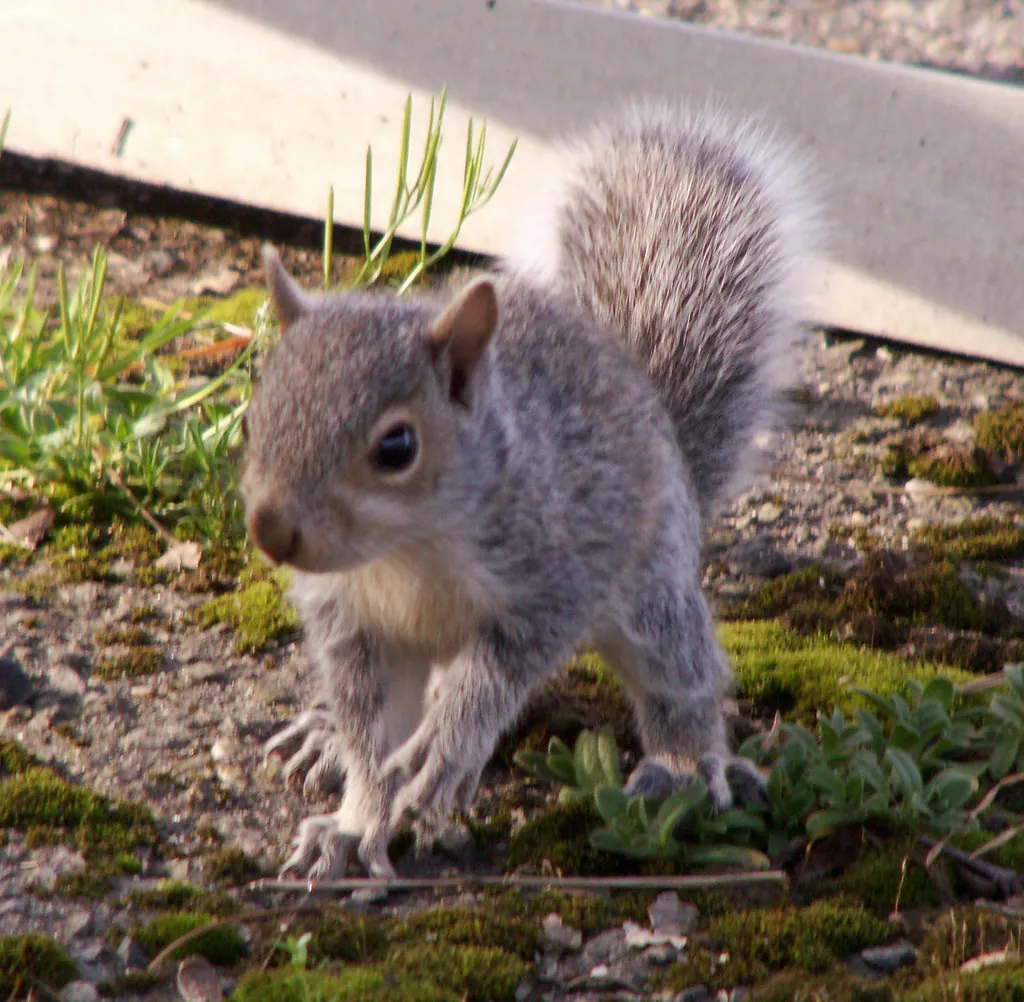
A juvenile that runs from you, climbs well and has a full bottle-brush tail is not lost. Virginia’s wildlife agency puts the line at about 6.5 ounces (180 grams); anything that size and healthy is on its own and needs nothing from you.
What to do if the nest or tree was cut down
Stop the work if you can, and reunite the babies at the same spot once the crew has left. Many baby squirrels are found after tree trimming in spring and late summer, and the mother usually has a second nest she can move them to. She will not approach while saws and people are around.
- Tree trimmed but standing: put the box at the base of that tree or fastened to its trunk.
- Whole tree removed: use the stump, or the trunk of the nearest tree.
- Nest in an attic or chimney: put the box at the base of the building near where the nest was.
- Several babies: put them all in the same box. The mother moves them one at a time and may take a few hours or longer for a full litter.
Look for a round, full belly on any baby still in the box later in the day. That means the mother has been back to nurse it, even if she has not moved it yet.
When and how to call a wildlife rehabilitator
Call a licensed wildlife rehabilitator for any injured, sick, insect-covered or pet-caught baby, for a juvenile that follows people, and for any baby the mother has not taken by the end of the day. Use Animal Help Now to find the nearest wildlife help by location, or the Humane World for Animals state directory. If neither lists anyone nearby, call your state wildlife agency, a local animal shelter, animal control or a vet who treats wildlife.
Call before you drive over. Many rehabbers are full in spring and decide by phone whether to take a baby or coach you through a reunite. Have the photo ready and tell them where you found it, roughly how big it is, whether its eyes are open and what you have done so far.
Can you keep a baby squirrel?
No. In most US states it is illegal to keep a wild squirrel without a rehabilitation permit; Wisconsin, for example, allows you to hold one for up to 24 hours only to get it to a licensed rehabber or vet. Rules vary by state, but a permit is the norm.
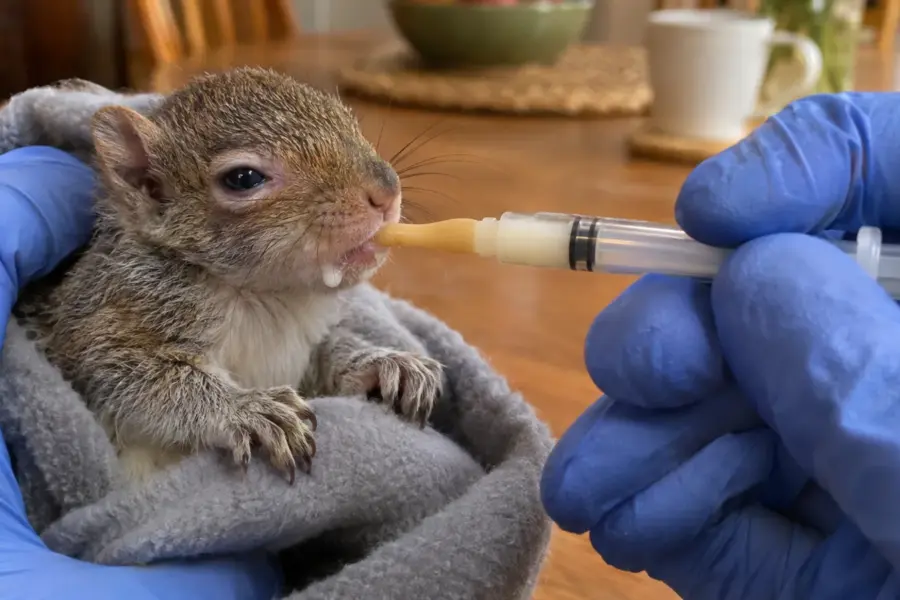
The law exists for the squirrel’s sake. Babies need feedings around the clock for weeks, a specific formula and gradual weaning. Hand-raised squirrels with the wrong diet or no outdoor sunlight develop metabolic bone disease, which leaves bones so thin they break in ordinary falls. Squirrels raised alone by people also lose their fear of humans and dogs. Rehabbers raise them with other squirrels and release them in outdoor cages. If you are curious what that care involves, our guide to what rehabbers feed a baby squirrel explains it.
Squirrels are rarely rabid, and the Wisconsin Department of Health Services calls their rabies risk extremely low. They do carry fleas and other parasites, and juveniles bite hard. Wear thick gloves, wash your hands and anything the squirrel touched, and call your local health department about any bite. This article is general information, not veterinary advice.
Frequently asked questions
Usually, yes. Mother squirrels search for missing babies and carry them back to the nest or to a backup nest, as long as the baby is warm, healthy and not surrounded by people or pets.
Not long without warmth. A pink baby can chill dangerously within an hour or two outside, which is why it should be warmed and given back to its mother or taken to a rehabber the same day.
No. That is a myth. Mothers reject babies that are cold, sick or injured, not ones that smell of people. Still, handle it as little as possible and wear gloves.
No. Babies can inhale liquid into their lungs, and cow milk and other wrong foods cause diarrhea and bloat. Only give fluids if a wildlife rehabilitator tells you how.
Do not try to reunite it. Put it in a warm box and get it to a wildlife rehabilitator right away, because fly larvae can do serious damage within hours.
Take it to a wildlife rehabilitator or a vet that treats wildlife the same day, even if you see no wound. Cat saliva carries bacteria that can kill a small mammal without antibiotics.
In most US states, no, not without a wildlife rehabilitation permit. You can usually hold one briefly to get it to a licensed rehabber.
Very rarely. Squirrels are considered a very low rabies risk and have never been known to pass it to a person, but any wild animal bite should be reported to your health department.
Gray and fox squirrels usually have two litters a year, one born in late winter or spring and another in mid to late summer. Red squirrels usually have one.
Sources
- Tufts Wildlife Clinic. What to do if you found a sick or injured baby squirrel
- Tufts Wildlife Clinic. What to do if you found a healthy baby mammal
- Humane World for Animals. Found an orphaned or injured baby wild animal
- Dane County Humane Society Wildlife Center. Tree squirrel reuniting instructions (PDF)
- WildCare. Squirrel reunite protocols (PDF)
- Wisconsin DNR. Orphaned squirrels
- Virginia Department of Wildlife Resources. Squirrels
- Willowbrook Wildlife Center. Baby squirrel
- San Diego Humane Society. Fox squirrels: renesting and reuniting
- Cornell Cooperative Extension. Gray squirrel (PDF)
- Wisconsin Department of Health Services. Rabies and small rodents
- Squirrel Wildlife Rehabilitation. Stabilization