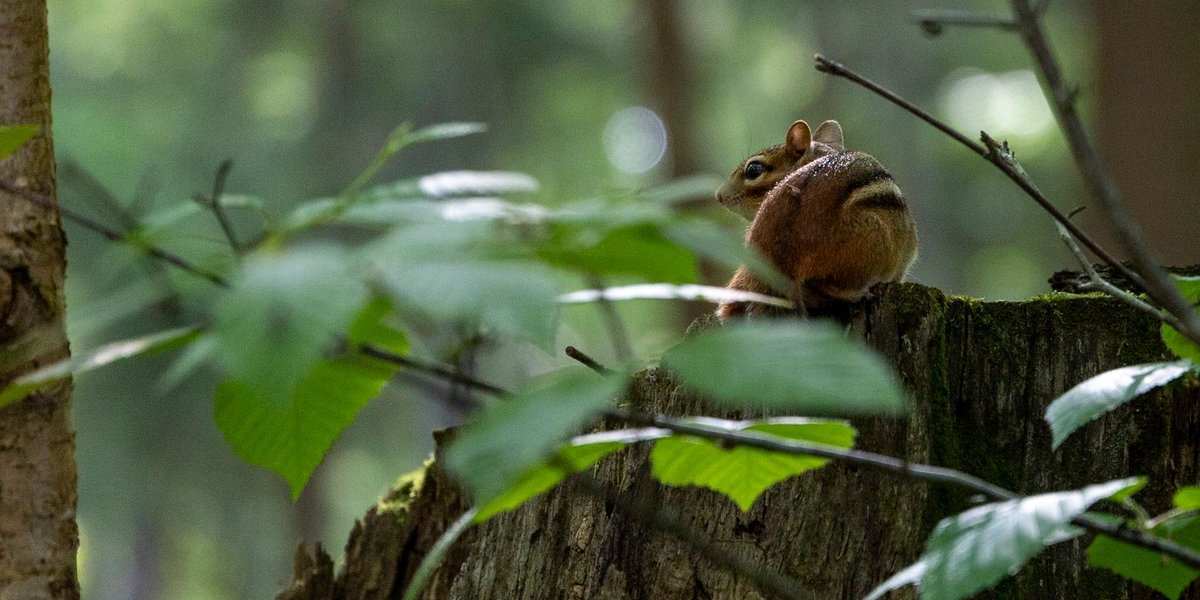
If you just watched a tiny, striped rodent dart across a trail with its cheeks stuffed, here’s the short answer: least chipmunks eat seeds, nuts, berries, fruit, fungi, insects, and — less often — small vertebrates like young birds or lizards. They’re opportunists, not specialists, and that flexibility is a big part of how the smallest chipmunk species survives in some of the harshest terrain any chipmunk calls home.
Quick Answer: What’s on the Menu
- Seeds and nuts — the backbone of the diet, especially conifer seeds, acorns, and grass seeds
- Berries and fruit — huckleberries, serviceberries, and other soft mast when in season
- Fungi — truffles and mushrooms, more important to their diet than most people assume
- Insects and invertebrates — beetles, grasshoppers, caterpillars, spiders
- Occasional small vertebrates — bird eggs, nestlings, or small lizards, taken opportunistically rather than hunted
- Green vegetation — buds, shoots, and flowers, mostly early in the season before seed crops mature
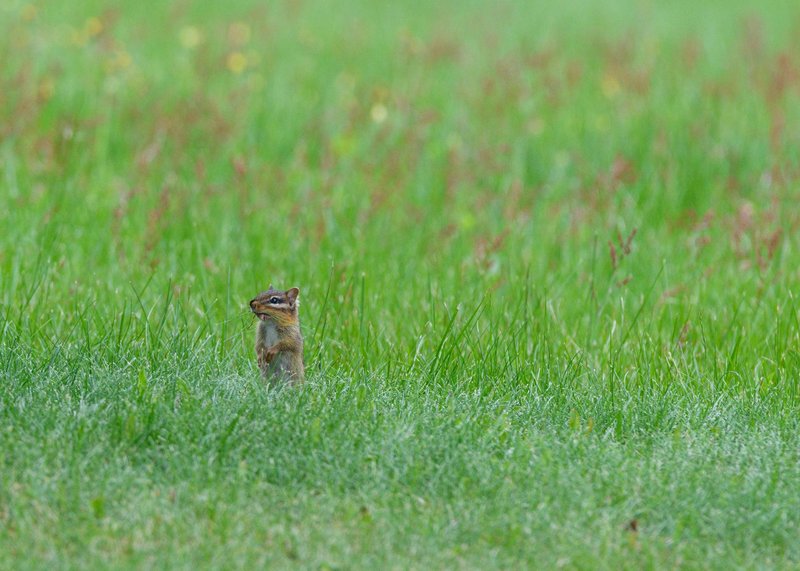
Do Least Chipmunks Eat Meat or Insects?
Yes, plainly. This gets glossed over on most reference pages, but least chipmunks aren’t strict granivores. Insects make up a meaningful share of spring and early-summer intake, when protein-rich bugs are abundant and seed crops haven’t come in yet. Bird eggs and nestlings show up in the diet too, though these are incidental finds rather than targeted prey — a least chipmunk isn’t stalking a nest the way a weasel would. Think scavenger-forager, not predator.
Seasonal Foraging: What Changes From April to October
Least chipmunks are active from roughly April through October, and what they eat shifts noticeably across that window.
Early spring means thin pickings. Chipmunks emerging from winter torpor lean on green shoots, buds, and whatever insects are moving. By early summer, the Animal Diversity Web account for Tamias minimus notes a diet increasingly dominated by seeds and fruit as those become available, with insects staying in the mix as a protein supplement rather than disappearing.
Late summer into fall is the scramble. This is when scatter-hoarding kicks into high gear — chipmunks aren’t just eating for the day, they’re stockpiling for a winter they’ll spend mostly dormant but not fully hibernating. A least chipmunk that hasn’t built a decent cache by October is in real trouble, because unlike bears, it doesn’t have enough fat reserve to coast through winter on body mass alone.
How Far They’ll Go for Food
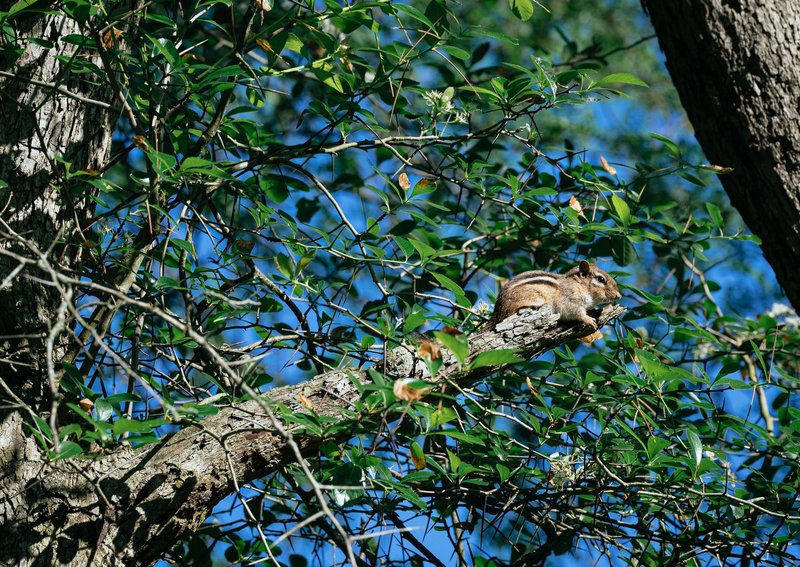
Most people picture chipmunks as strictly ground-level foragers, but least chipmunks climb more than any other chipmunk species in North America. They’ll forage on the ground for fallen seeds and fungi, then head straight up into shrubs and conifers — climbing as high as 9 meters (about 30 feet) to reach unripe cones, berries, or insects on foliage most rodents never bother with.
That willingness to climb is a real advantage. It opens up food sources that ground-bound competitors can’t touch, particularly early in the season when the best seed crops are still attached to the tree.
Cheek Pouches and Scatter-Hoarding
A least chipmunk’s cheek pouches can stretch to roughly the size of its own head when packed with seeds. It’s not a party trick — it’s the whole survival strategy. Rather than eating everything on the spot, chipmunks pack up food and carry it back to scattered caches: some in the burrow, many more tucked into shallow pits, hollow logs, or under leaf litter around their territory.
This matters more than it sounds like it should. Scatter-hoarding spreads the risk — a single raided cache doesn’t wipe out the winter supply — and the chipmunks that fail to relocate every buried seed end up, functionally, planting trees. Least chipmunks are a real contributor to forest regeneration in the areas they inhabit, which is more than you can say for most backyard nuisances.
Why Being Small Helps in Lean Years
At 7 to 9 inches nose to tail and often under 2 ounces, the least chipmunk is the smallest of the 25 chipmunk species in North America. That size cuts both ways, but in food-scarce habitats — high elevation, sagebrush flats, or burned-over forest — it’s an edge. A smaller body needs less fuel to maintain, so a least chipmunk can hold on through a poor seed year that would stress a larger, more calorie-hungry chipmunk species. It’s the same principle that lets smaller-bodied animals persist in marginal habitat where bigger relatives can’t get enough calories to make the math work.
Least Chipmunk vs. Other Chipmunk Species: Diet Compared
The core diet — seeds, nuts, fruit, fungi, insects — is similar across chipmunk species. The differences are in emphasis and range.
| Least Chipmunk | Eastern Chipmunk | Yellow-Pine Chipmunk | |
|---|---|---|---|
| Primary food | Conifer seeds, grass seeds, fungi | Acorns, hickory nuts, seeds | Conifer seeds, berries |
| Insect intake | Regular, especially spring | Moderate | Regular |
| Climbs for food | Frequently, up to 9m | Rarely, mostly ground-level | Occasionally |
| Habitat range | Widest of any chipmunk — sagebrush to subalpine forest | Deciduous forest, forest edge | Dry montane forest, sagebrush |
| Body size | Smallest chipmunk species | Largest chipmunk species | Small-to-medium |
The eastern chipmunk, the one most people in the U.S. actually see in their backyard, sticks closer to the ground and leans harder on acorns and hickory nuts where they’re available — a diet shaped by deciduous forest rather than conifer country. The yellow-pine chipmunk overlaps a lot with the least chipmunk’s range and diet, but tends to stay at lower elevations and forages less aggressively in trees.
What Juvenile Least Chipmunks Eat
Pups are weaned onto solid food around 5 to 6 weeks old, and their early diet mirrors whatever their mother is bringing back to the burrow at that point in the season — usually soft, easy-to-process items like insects, green shoots, and small seeds rather than tough nuts. Young chipmunks don’t start independent foraging and caching until closer to 7-8 weeks, and their first few solo forays tend to stay close to the natal burrow while they build up the spatial memory they’ll need to relocate their own caches later.
Feeding Least Chipmunks in Your Yard
If you’ve got least chipmunks around — likely if you’re in the western U.S. or Canada, since their range doesn’t extend east of the Great Lakes — sunflower seeds, cracked corn, and unsalted peanuts scattered at ground level will get attention fast. Skip anything salted, sugared, or processed; a chipmunk’s digestive system handles raw, whole foods far better.
A word of caution the National Park Service page on least chipmunks makes explicitly: don’t hand-feed or habituate wild chipmunks to human contact, especially in or near park boundaries. It trains them to approach people for food, which goes badly for the chipmunk more often than it helps it. If you want to support them, a modest ground feeder away from your house, refreshed a couple times a week, does the job without creating a dependency.
Bottom Line
Least chipmunks eat what’s around and eat it efficiently — seeds and nuts as the staple, fungi and berries filling gaps, insects for protein, and the occasional egg or small vertebrate when the opportunity presents itself. What sets them apart from other chipmunk species isn’t the menu, it’s the reach: a body small enough to get by on less, paired with a willingness to climb for food that most chipmunks leave on the tree. Detailed foraging and habitat data is also compiled by the USDA Forest Service Fire Effects Information System for anyone digging into regional variation.