Type “poisonous lizards” into a search bar and you’ll get a mess of listicles, vet manuals, and pet-safety blogs that don’t agree with each other. Part of the problem is the question itself. Almost nothing about it is answered by the word “poisonous.”
TLDR
True poison — a toxin that hurts you on contact or ingestion — is essentially absent from lizards. The danger is venom, delivered by a bite, and only a small handful of species do it: the Gila monster, the Mexican beaded lizard, and the Komodo dragon, with a broader research trail suggesting mild venom runs deeper through the lizard family tree than anyone assumed a generation ago. For nearly everyone, in nearly every backyard, the lizard sunning itself on the fence post is harmless.
Table of Contents
- Poisonous vs. Venomous: Get This Straight First
- The Lizards That Are Actually Venomous
- How They Compare
- What To Do If You’re Bitten
- Are Backyard Lizards Dangerous to Dogs and Cats?
- Where in the US You’ll Actually Find One
Poisonous vs. Venomous: Get This Straight First {#poisonous-vs-venomous}
Poison and venom describe two different delivery methods, not two levels of danger. A poisonous animal hurts you passively — you touch it, lick it, or eat it, and its toxin does the work. A venomous animal hurts you actively — it has to bite or sting you and inject something.
By that definition, poisonous lizards are close to a myth. No lizard species is known to be dangerous simply from touch or from a predator eating it, the way a poison dart frog or a pufferfish is. Every dangerous lizard on record does its damage through a bite. That makes every one of them venomous, not poisonous — the “poisonous lizard” search term is, strictly speaking, describing an animal that doesn’t exist.
This isn’t pedantry. It changes what you should actually worry about. You can’t get hurt by touching a Gila monster’s skin or having your dog lick one. You get hurt if it bites, and even then, the lizard has to work at it — more on that below.
The Lizards That Are Actually Venomous {#actually-venomous}
Out of roughly 7,000 lizard species on Earth, researchers currently recognize about five with a genuine venom delivery system — glands, ducts, and grooved teeth built for injecting toxin rather than just holding on. Three account for nearly everything you need to know.
Gila monster (Heloderma suspectum). The only venomous lizard native to the United States, found across the Sonoran and Mojave deserts of Arizona, New Mexico, and slivers of Utah, Nevada, and California. It doesn’t strike and release like a snake. It clamps down and chews, working venom out of grooves in its lower teeth through capillary action rather than a pressurized injection. Bites are famously agonizing — swelling, dropping blood pressure, and pain that outlasts the wound by days — but confirmed human deaths are almost nonexistent. Of 105 Gila monster bite cases reported to U.S. poison control centers between 2000 and 2011, none were fatal. A rare and disputed exception made headlines in 2024, when a Colorado man died after being bitten by his own pet Gila monster, reopening debate over whether an allergic reaction, rather than the venom itself, was the actual cause.
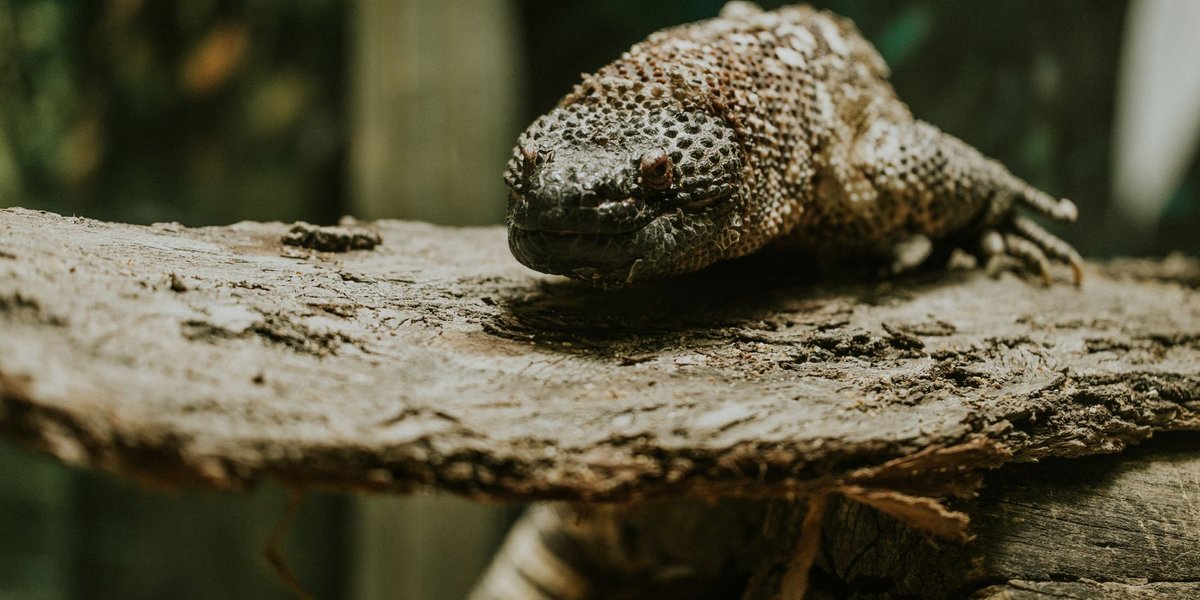
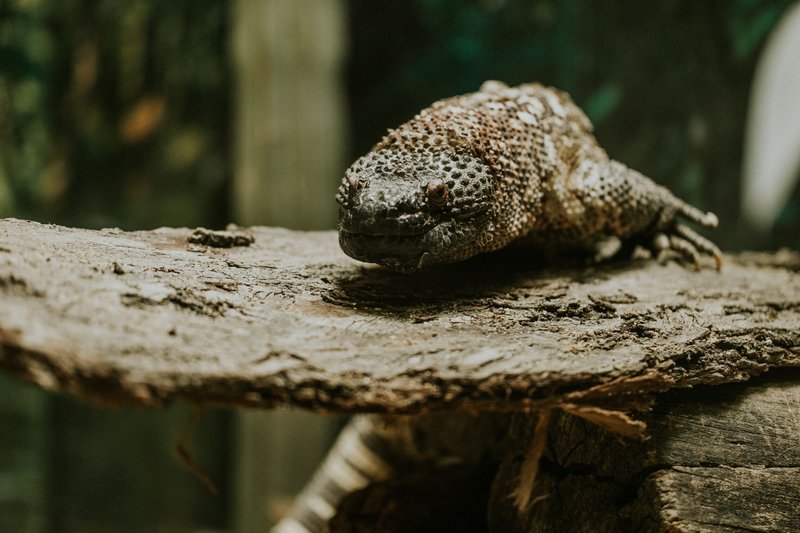
Mexican beaded lizard (Heloderma horridum). The Gila monster’s larger, darker cousin, ranging through Mexico’s Pacific coast down into Guatemala. Same chewing bite, same venom delivery system, similar enzyme cocktail — phospholipases and hyaluronidase that promote pain and tissue damage rather than the fast-acting neurotoxins found in cobra or coral snake venom. The U.S. Fish and Wildlife Service notes that human envenomation from this species is rare and, while serious, is not typically life-threatening to a healthy adult.
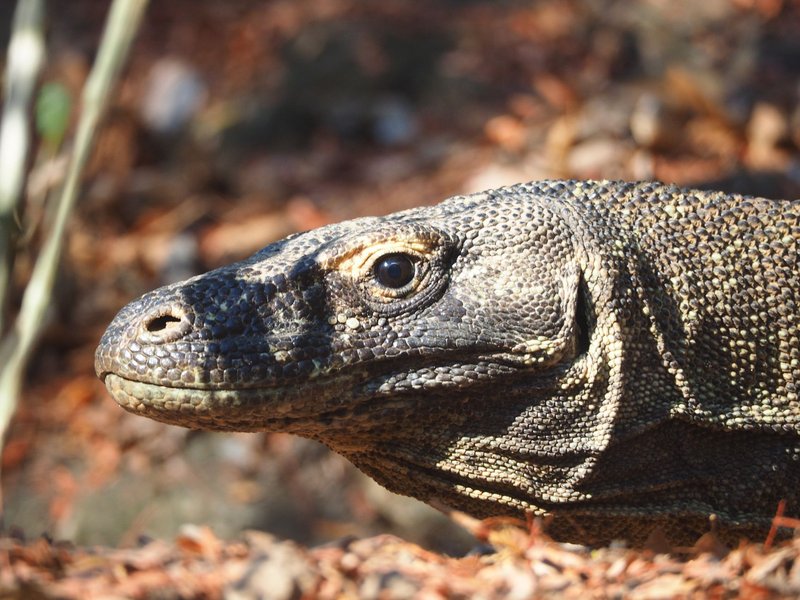
Komodo dragon (Varanus komodoensis). For decades, biology textbooks credited the Komodo dragon’s kill with septic bacteria festering in its saliva — the idea being that a bitten deer or water buffalo would simply get infected and die days later while the dragon tracked it. A 2009 MRI study published in the Proceedings of the National Academy of Sciences threw that out. Researchers found a compound venom gland in the dragon’s lower jaw with multiple compartments, delivering a mix of over 60 bioactive compounds, including anticoagulants that keep a bite wound bleeding and compounds that drop blood pressure and induce shock. The bite itself, lined with serrated, blade-like teeth, does plenty of damage on its own — the venom just makes sure the prey doesn’t get back up.
The wider venomous lineage. Since the mid-2000s, a research program out of the University of Melbourne has argued that venom isn’t a rare oddity in a few lizard outliers — it’s an ancestral trait shared across a huge group called Toxicofera, which includes snakes, monitor lizards, beaded lizards, and even iguanas and agamids. Most of these species produce venom too mild or too poorly delivered to matter to a human, which is why you’ll never feel it from the anole on your porch. But the research reframes “venomous lizard” from a short, closed list to a spectrum — with the Gila monster, beaded lizard, and Komodo dragon sitting at the dangerous end of it.
How They Compare {#how-they-compare}
| Species | Range | Bite Mechanism | Danger to Humans |
|---|---|---|---|
| Gila monster | SW United States, NW Mexico | Chews to work venom into grooved teeth | Very painful, rarely fatal to healthy adults |
| Mexican beaded lizard | Mexico’s Pacific coast to Guatemala | Same chewing delivery, larger dose | Serious but rarely life-threatening |
| Komodo dragon | Indonesian islands (Komodo, Flores, Rinca) | Serrated bite plus venom gland injection | Can be fatal; attacks on humans are documented |
What To Do If You’re Bitten {#what-to-do-if-bitten}
If it’s a Gila monster or beaded lizard, the first problem is mechanical: the jaws lock on. Don’t yank the animal off — that tears tissue and can break its teeth off in the wound. Running water over the lizard’s head or gently prying the jaw with a flat tool tends to work better than force. Once it releases, clean the wound, keep the limb below heart level, and get to a hospital, especially if you’re on blood thinners or have a heart condition. Skip the tourniquet and skip the ice; neither helps with this kind of venom, and both can make tissue damage worse.
None of this applies to your local fence lizard, skink, or gecko. If a common backyard species bites you, treat it like any small animal bite — clean it, watch for infection, move on with your day.
Are Backyard Lizards Dangerous to Dogs and Cats? {#pets}
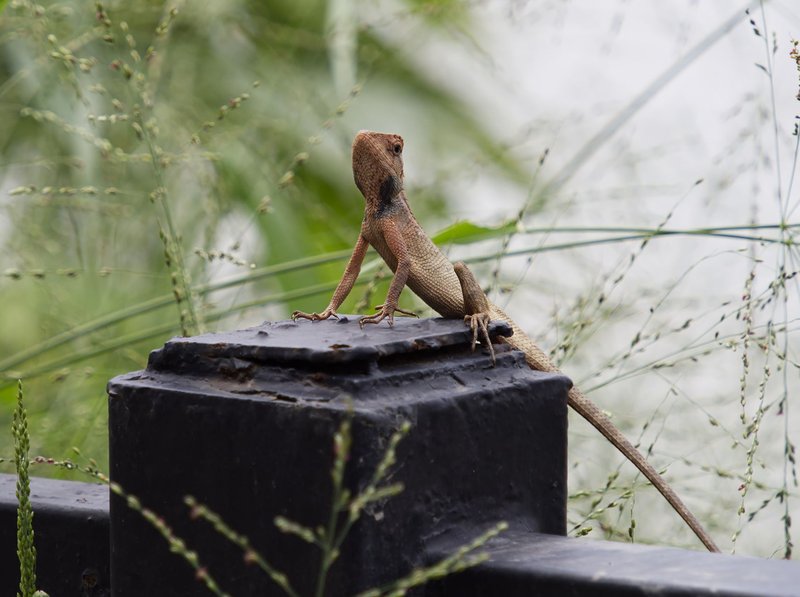
Mostly, no. The species sharing your yard with a dog or cat — anoles, skinks, geckos, fence lizards — don’t carry venom worth worrying about, and none of them qualify as poisonous by ingestion either. The real risk with a pet chasing down a lizard is more mundane: a scratch, a swallowed tail, or in rare cases a parasite passed along if the lizard gets eaten whole.
The animal that actually deserves the “toxic to pets” label isn’t a lizard at all — it’s the toad. Certain toad species secrete a toxin through their skin strong enough to sicken or, in the case of a couple of species, kill a dog that mouths one. The ASPCA treats toad exposure as a real poison-control call, distinct from lizard encounters, which rarely warrant one.
The exception, again, is geography. If you live within Gila monster or beaded lizard range and let a dog off-leash near rock piles or brush at dusk — when these lizards are most active — a bite is a real veterinary emergency, not a backyard curiosity. Outside that specific range, the risk drops close to zero.
Where in the US You’ll Actually Find One {#where-in-the-us}
There’s no long, state-by-state list to make here, and a site that gave you one would be making it up. The United States has exactly one native venomous lizard, and its range is genuinely narrow: the Sonoran and Mojave deserts, concentrated in Arizona, spilling into southwestern New Mexico, the southern tip of Nevada, and a corner of Utah near the Arizona border. Outside that desert belt, every lizard in the country — however irritated it looks when you get too close — has nothing to inject.