TLDR
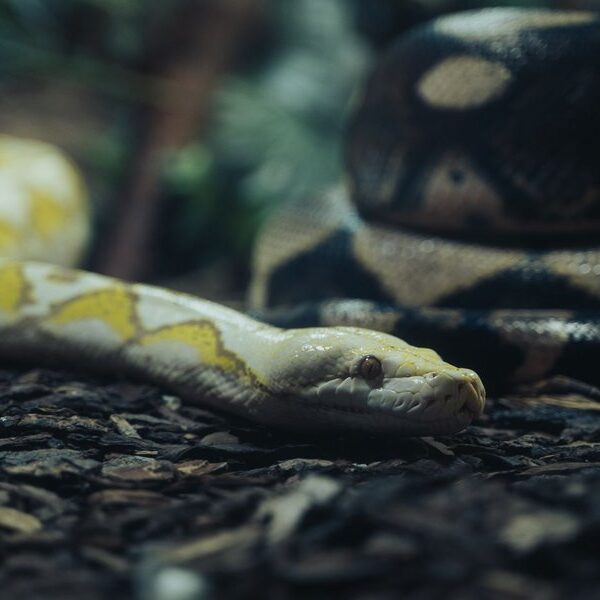
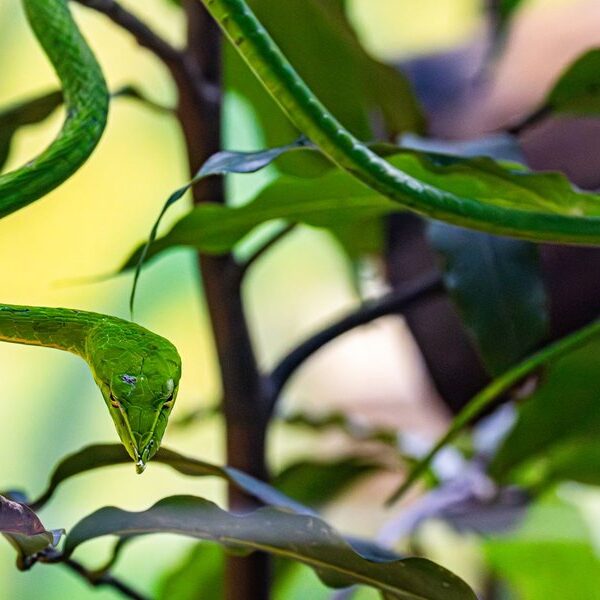
Northern Ireland has never had a native snake — not one, not ever. The only reptile that actually lives here year-round is the common lizard (also called the viviparous lizard), a small, cold-tolerant species that gives birth to live young instead of laying eggs. You’ll find it basking on sand dunes, heathland, and mountain slopes from April through September, most reliably on sunny mornings. Beyond that one resident, Ireland’s reptile story gets more interesting: an introduced legless lizard in County Clare’s Burren, and the occasional leatherback turtle drifting into Irish and Northern Irish waters chasing jellyfish.
Table of Contents
- Are There Snakes in Northern Ireland?
- The Common Lizard: Northern Ireland’s Only Native Reptile
- Where and When to See One
- The Slow Worm: An Introduced Legless Lizard in the Burren
- Marine Turtles Off the Coast
- How Northern Ireland Compares to Britain and the Rest of Ireland
- Quick ID Checklist
Are There Snakes in Northern Ireland?
No, and it isn’t close. The land bridge connecting Ireland to Britain flooded before snakes had a chance to recolonize after the last Ice Age — Britain got a narrow window, Ireland didn’t. Snakes are cold-blooded animals that spread slowly overland, and by the time conditions warmed enough for them to move north, the Irish Sea had already cut Ireland off. St. Patrick gets the folklore credit, but the real explanation is geography and timing, not a fifth-century miracle.
That absence isn’t a gap or an oversight. It’s the defining fact of Irish herpetology, and it shapes everything else on this list. DAERA’s overview of Northern Ireland’s species confirms what every conservation body here will tell you: reptile diversity in Northern Ireland is about as sparse as it gets in temperate Europe, and that’s not a bad thing to know before you go looking for something that was never here to begin with.
The Common Lizard: Northern Ireland’s Only Native Reptile
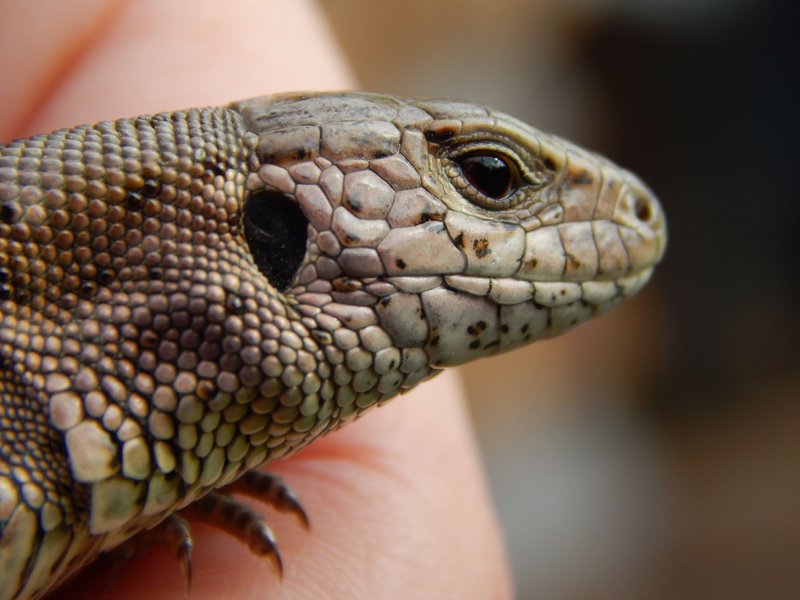
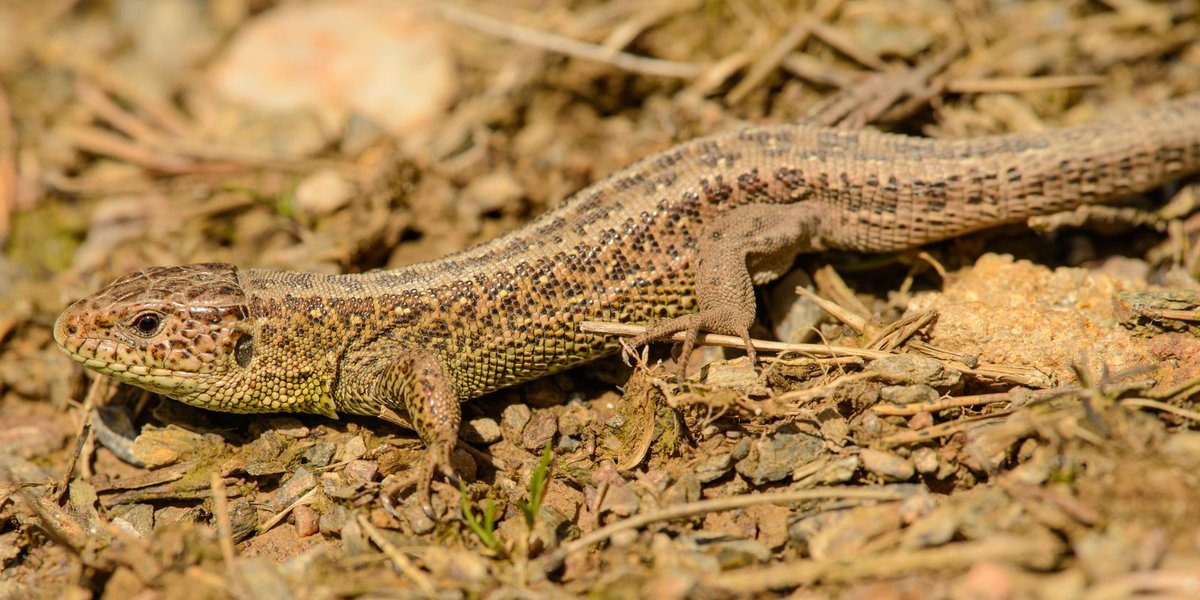
The common lizard (Zootoca vivipara) is the whole show. It’s Northern Ireland’s only native land reptile, and it’s also one of the most widely distributed lizards on the planet — found from Ireland to Japan, and further north than any other reptile species on Earth, including inside the Arctic Circle in Scandinavia.
Adults run 10–15cm nose to tail, with a stocky body, short legs, and a pattern that varies from brownish-grey to almost black, usually with a row of dark spots or a stripe running down the back. Males have brighter, often orange-tinged undersides during breeding season; females tend toward pale yellow or cream. They’re easy to mistake for “just a lizard” at a glance, but the biology underneath is genuinely unusual.
The species name vivipara gives away its defining trait: most lizards lay eggs, but this one gives birth to live young. It’s ovoviviparous — the eggs develop and hatch inside the mother’s body, and she gives birth to fully formed, independent baby lizards, typically 3 to 11 per litter in mid-to-late summer. This adaptation is why the species survives as far north as it does. Cold, wet climates like Northern Ireland’s don’t leave eggs laid in open ground much of a chance; carrying the eggs internally lets the mother regulate their temperature by choosing where and when to bask.
Diet is straightforward: spiders, beetles, moths, flies, and other small invertebrates, hunted by sight during the day. Come October, common lizards retreat underground — into old burrows, root systems, or loose soil below the frost line — and stay there until March or April, when rising temperatures and longer days pull them back out to bask and, soon after, breed.
Where and When to See One
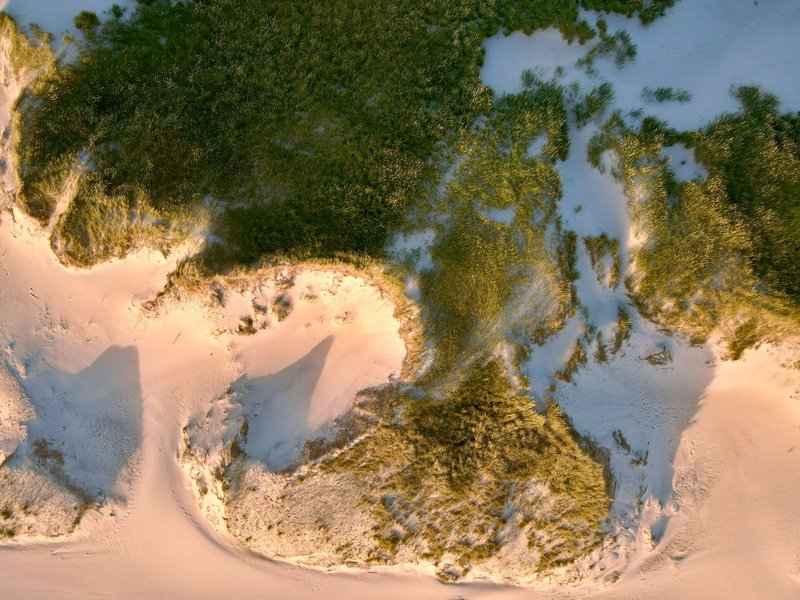
Common lizards are shy but not rare, and reliably locatable if you know the habitat: open, sun-exposed ground with cover nearby to dart into — dune systems, heathland, bog margins, and rocky upland slopes.
A few spots consistently produce sightings:
- Murlough National Nature Reserve, Co. Down. A 6,000-year-old dune system on Dundrum Bay, managed by the National Trust, with dune heath that’s some of the best habitat of its kind in Ireland. Lizards bask along the boardwalks and sandy paths on warm mornings.
- The Mourne Mountains, Co. Down. Rocky, south-facing slopes below the main peaks warm up fast and hold lizards through summer — worth checking on the lower approach paths rather than the exposed summits.
- The Antrim Plateau and Garron Plateau, Co. Antrim. Blanket bog and heather moorland with plenty of basking rock and peat hags.
- The Sperrins, Co. Tyrone/Derry. Quieter upland heath, less-visited than the Mournes, with similar basking conditions.
Timing matters more than location. Look between April and September, and aim for mid-morning on a sunny day after a cool night — lizards need to warm up before they’re active, so they bask conspicuously in the first real sun of the day, then get harder to spot once temperatures peak and they retreat to shade. Overcast days are largely a waste of time. Move slowly and scan sun-facing banks, path edges, and flat rocks rather than deep vegetation; a basking lizard will hold still if you don’t cast a shadow over it, but bolts the instant it feels vibration through the ground.
The Slow Worm: An Introduced Legless Lizard in the Burren
Widen the lens to the island of Ireland as a whole and one more reptile enters the picture: the slow worm (Anguis fragilis). It looks exactly like a small, glossy snake, which trips people up constantly, but it’s a legless lizard — it has eyelids that blink, can shed its tail to escape a predator, and is completely harmless.
Slow worms aren’t native to Ireland. They’re believed to have been introduced to the Burren in County Clare sometime in the 1970s, likely from released or escaped pets, and they’ve persisted there ever since. According to the Irish Wildlife Trust, the population remains concentrated around the Burren’s limestone pavement and is expanding only slowly into neighboring parts of Clare and Galway. They’ve never established in Northern Ireland — the Burren colony sits roughly 200km southwest, in the Republic — so if you spot a legless, snake-like animal north of the border, it’s not a slow worm.
Marine Turtles Off the Coast
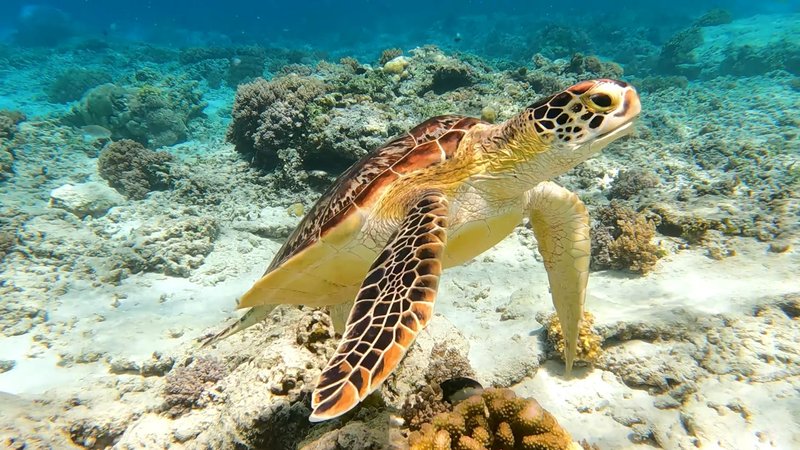
The one genuine wildcard in Northern Ireland’s reptile list isn’t a land animal at all. Leatherback turtles — the largest sea turtle species, capable of reaching well over a tonne — migrate into Irish and Northern Irish coastal waters in small numbers most summers, drawn by dense jellyfish blooms that make up the bulk of their diet. Sightings, tracked by Northern Ireland’s Priority Species database, cluster from July through September and have become somewhat more frequent over the past decade, though a leatherback sighting off the coast is still a genuinely notable event rather than something to plan a trip around.
Loggerhead turtles turn up even more rarely, usually as juveniles carried off-course by Atlantic currents. Neither species breeds anywhere near Ireland — both are long-distance visitors from nesting beaches thousands of kilometers south, passing through rather than living here.
How Northern Ireland Compares to Britain and the Rest of Ireland
Britain, by contrast, has three native snake species — the grass snake, adder, and smooth snake — plus the same common lizard, along with slow worms and sand lizards as native residents rather than introduced curiosities. The difference comes down entirely to that post-glacial timing: Britain stayed connected to mainland Europe by land long enough for reptiles to spread in, Ireland didn’t.
Within Ireland itself, Northern Ireland and the Republic share the same native picture — the common lizard, and nothing else, on land. The Republic’s Burren slow worms are the one point of divergence, an accident of the pet trade rather than natural range expansion. Amphibians tell a slightly different story (the natterjack toad, for instance, exists in Ireland only in a handful of Kerry sites and isn’t found in Northern Ireland at all), but on reptiles specifically, the island is close to uniform: one native species, full stop.
Quick ID Checklist
- Body under 15cm, four short legs, variable brown-to-black coloring with a spotted or striped back: common lizard — Northern Ireland’s only native reptile.
- Glossy, legless, and moving like a snake, but with blinking eyelids, found specifically in the Burren area of County Clare: slow worm — introduced, and not present in Northern Ireland.
- Anything actually resembling a snake, seen on land, anywhere in Ireland: it isn’t a snake. There has never been a wild native snake population on this island — you’re looking at a slow worm (Burren only) or, more likely, an eel, a large worm, or a legless lizard escaped from captivity.
- Enormous, dark-shelled, and seen in open water rather than on land: leatherback turtle — a rare summer visitor, not a resident.