Nigeria has far fewer true endemics than most people assume. Elephants, hippos, aardvarks and Dama gazelles all live there, but every one of them also lives in other countries. The animals that exist in Nigeria and nowhere else make a short list, and nearly all of them are squeezed into a few patches of forest in the south.
This post sticks to the strict definition and flags the borderline cases separately.
Table of Contents
- TLDR
- Endemic vs. near-endemic
- Primates found only in Nigeria
- The bird: Ibadan malimbe
- Reptiles and amphibians
- Shared with Cameroon: gorillas and chimps
- Why Nigeria has so few endemics
- Quick facts table
TLDR
Five species are generally listed as endemic to Nigeria: Sclater’s guenon, the Niger Delta red colobus, the Ibadan malimbe, the Ibadan thread snake and Perret’s toad. Four of them are rated Endangered or Critically Endangered. The Cross River gorilla and the Nigeria-Cameroon chimpanzee are not Nigerian endemics. They straddle the border with Cameroon.
Endemic vs. near-endemic
An endemic species lives in one defined region and nowhere else. Here, the region is a country. If a single population turns up across the border, the species stops being endemic.
A near-endemic species has most of its range in Nigeria with a small overlap next door. Both categories matter for conservation, but only the first answers the question in the title. Entries below are strict endemics unless marked otherwise.
Primates found only in Nigeria
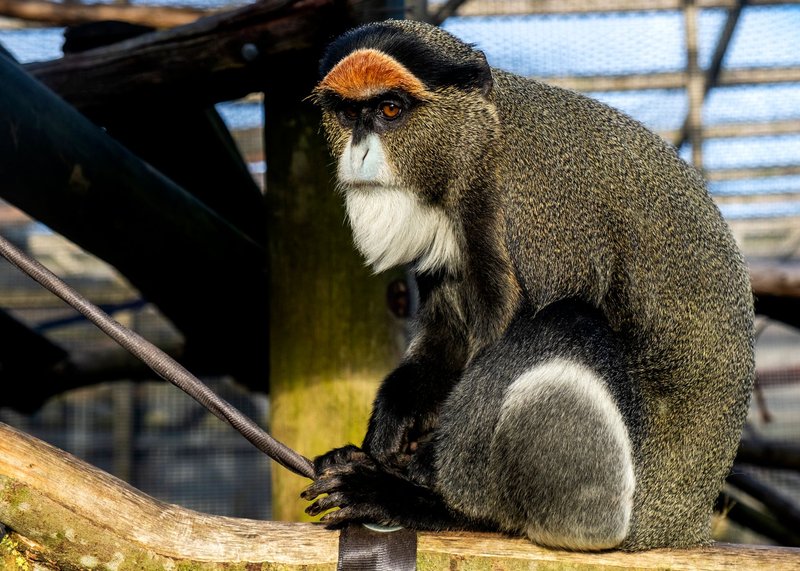
Sclater’s guenon (Cercopithecus sclateri)
A small, forest-dwelling monkey with a white heart-shaped patch on its nose. It lives in southern Nigeria, in an area of roughly 28,500 square kilometers that happens to be one of the most densely populated and oil-heavy parts of the country.
A 2007 survey confirmed the species at 27 sites nobody had recorded before, which was good news. The catch: most of those sites are isolated, degraded forest fragments, and the species has no formal protection across its range. It is listed as Endangered.
Niger Delta red colobus (Piliocolobus epieni)
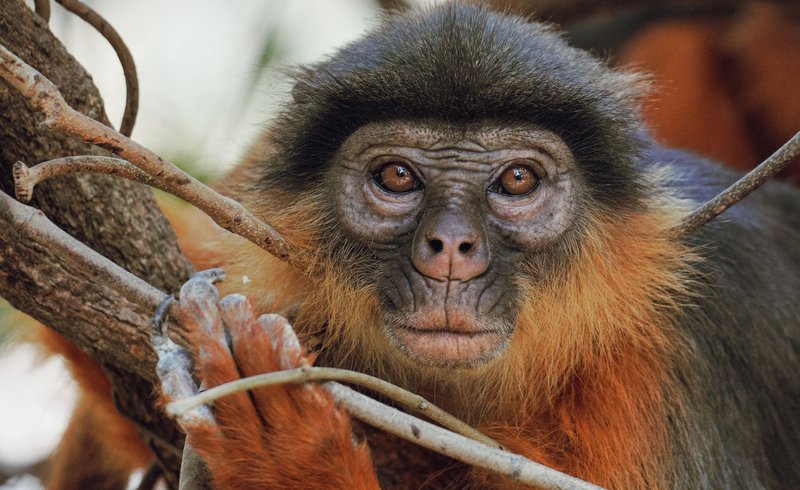
This is the one that should be on every “unique animals” list and almost never is. Science only recognized it as a separate species in the 1990s, and it lives in freshwater swamp forest in Bayelsa State, in the Niger Delta. Its historic range was only about 1,500 square kilometers, bounded by the Forcados River and Bomadi Creek.
It’s Critically Endangered. Logging, changes to the delta’s water flow from oil infrastructure and hunting have cut the population to perhaps a few hundred animals. Viable groups now sit in about 78 square kilometers of swamp forest. Community protection of the Apoi Creek forests has become the species’ best shot.
The bird: Ibadan malimbe
Ibadan malimbe (Malimbus ibadanensis)
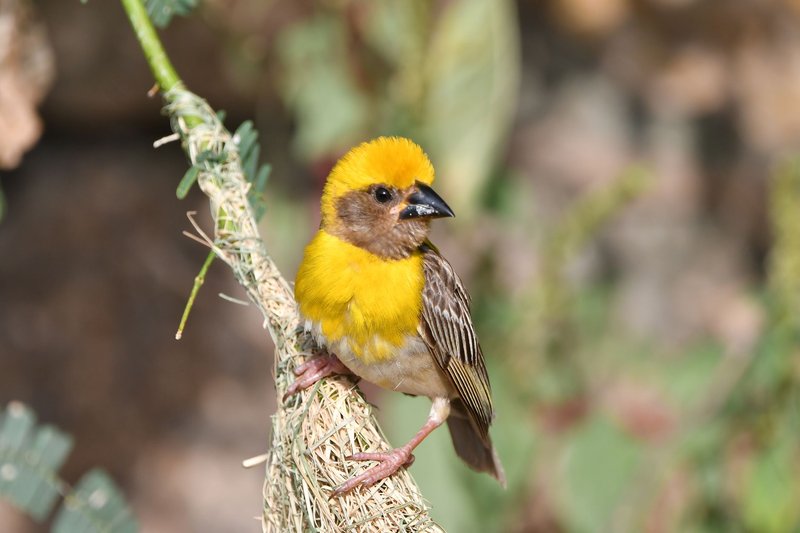
A black weaver with a red head and breast, named after the city where it was first collected. It was recorded historically around Ibadan, Ife, Iperu and Ilaro, and surveys in 2006 to 2008 found it at Ifon Forest Reserve, 139 km from the nearest previously known site. For the other birds recorded in the country, see Birds of Nigeria: The Complete List, which gives each species’ status and range.
BirdLife International rates it Endangered, with an extent of occurrence of about 7,600 square kilometers and an estimated 930 to 2,900 mature individuals. Its range has shrunk by roughly two-thirds since the 1970s because of forest clearance. One unconfirmed camera record from Cameroon exists, so the “only in Nigeria” label is slightly less airtight than it was a decade ago.
Reptiles and amphibians
Ibadan thread snake (Tricheilostoma greenwelli)
A thin, burrowing snake that looks like an earthworm with a face. It was described in 2005 from specimens collected near the University of Ibadan zoo, and the Reptile Database lists its distribution as Nigeria only. Very little has been published on its range or population, so treat the “endemic” label as the best current understanding rather than a settled fact.
Perret’s toad (Sclerophrys perreti)
Known from a single locality: Idanre Hill in Ondo State, southwestern Nigeria. Surveys of similar habitat nearby haven’t found it elsewhere, according to AmphibiaWeb. One known population makes it extremely vulnerable to a single disturbance, which is why it is listed as Critically Endangered.

Shared with Cameroon: gorillas and chimps
Two famous Nigerian animals don’t qualify as strict endemics, because their populations cross the border.
The Cross River gorilla is the rarest great ape subspecies in Africa. Only about 100 survive in Nigeria, with roughly 200 more in neighboring Cameroon, according to estimates from the Wildlife Conservation Society. The IUCN Primate Specialist Group’s ape portal puts the total at fewer than 250 mature individuals. It is Critically Endangered, and WWF lists hunting and habitat loss as the main threats.
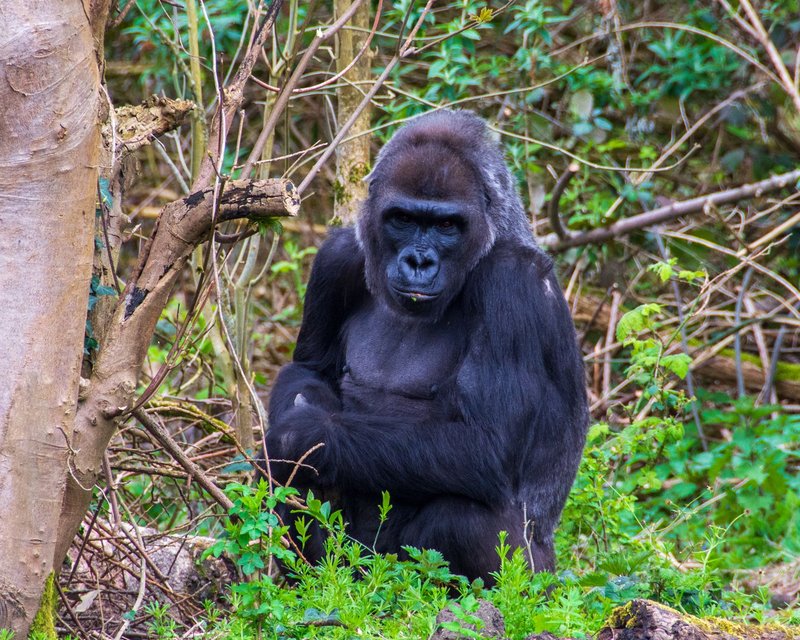
The Nigeria-Cameroon chimpanzee follows a similar pattern: a restricted range on both sides of the border, and a population that nobody can claim as purely Nigerian. They belong in a post about Nigeria’s rare wildlife. They don’t belong on a strict endemics list. Cameroon’s strict endemics are covered separately in 12 Animals Only Found in Cameroon.
Why Nigeria has so few endemics
Endemism usually needs isolation: islands, mountaintops, rivers that act as barriers for millions of years. Nigeria has some of that in the Niger Delta and the Cross River highlands, but most of the country is open to its neighbors. Savanna, woodland and forest belts run straight across the borders into Benin, Cameroon and Niger, so species spread freely. Benin, just west, has its own list of animals found nowhere else for comparison.
The endemics that do exist cluster in places where forest is cut off from the rest: the swamp forests of the delta and the small remnant forests of the southwest around Ibadan and Idanre. These are exactly the habitats most under pressure from farming, logging and oil extraction, and that is why the list reads like a conservation emergency instead of a trivia sheet.
Quick facts table
| Species | Scientific name | Group | Region | Status |
|---|---|---|---|---|
| Sclater’s guenon | Cercopithecus sclateri | Primate | Southern Nigeria | Endangered |
| Niger Delta red colobus | Piliocolobus epieni | Primate | Bayelsa State, Niger Delta | Critically Endangered |
| Ibadan malimbe | Malimbus ibadanensis | Bird | Southwestern Nigeria | Endangered |
| Ibadan thread snake | Tricheilostoma greenwelli | Reptile | Ibadan area, southwestern Nigeria | Not confirmed here |
| Perret’s toad | Sclerophrys perreti | Amphibian | Idanre Hill, Ondo State | Critically Endangered |
| Cross River gorilla (shared) | Gorilla gorilla diehli | Primate | Nigeria-Cameroon border | Critically Endangered |
Most of these species can be saved only by protecting small, specific pieces of forest. That is a more achievable target than the usual vague “save the rainforest” framing, and it is the reason the Niger Delta red colobus has a fighting chance.