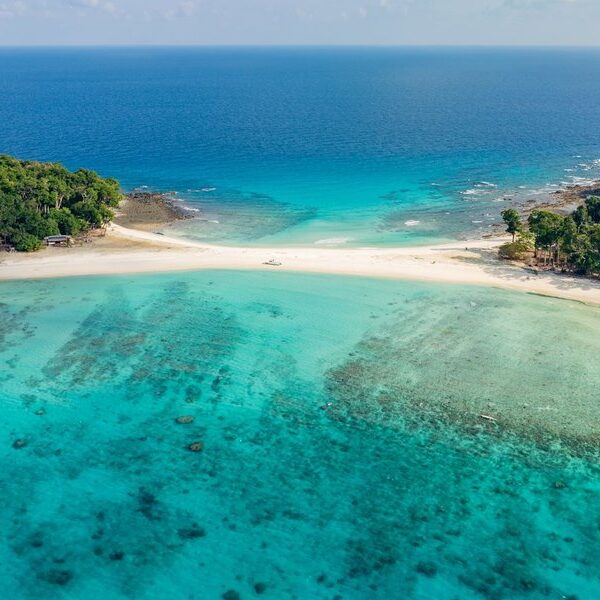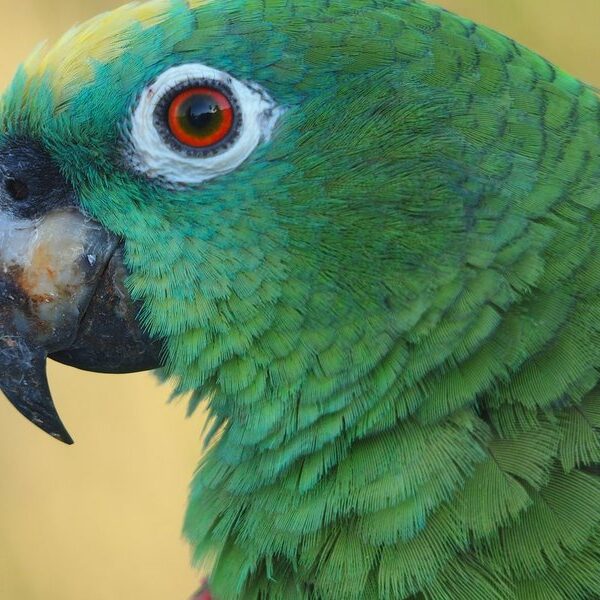
The birds of Trinidad and Tobago number around 489 species on the national checklist, packed into two islands that together are smaller than Delaware. Only two of those species are endemic. The rest are South American birds that crossed a narrow strip of water: Trinidad sits roughly 11 km off Venezuela, so you get toucans, manakins, motmots and oilbirds in a place most Caribbean islands can’t offer.
Tobago, about 35 km to the northeast, has fewer species, roughly half of Trinidad’s total. But it has birds Trinidad doesn’t, and it’s far quieter. This guide covers 15 species worth planning a trip around, grouped by the place you’re most likely to see them.
Table of contents
- Why the islands have so many birds
- Trinidad’s rainforest: Asa Wright and the Northern Range
- Trinidad’s wetlands: Caroni and Nariva
- Garden birds you’ll see everywhere
- Tobago: Main Ridge and Little Tobago
- Trinidad vs Tobago for birders
- When to go and how to plan
Why the islands have so many birds
Trinidad is geologically a piece of South America. The Northern Range is an extension of the Andes’ coastal chain, and the island shares its forests, swamps and savannas with Venezuela. Birds that live on the mainland simply live here too, which is why the checklist reads like an Amazon-edge list rather than a Caribbean one. Mammals show the same mainland link, and the field guide to Trinidad and Tobago mammals covers the species you’re most likely to meet.
The two endemic species are the Trinidad piping-guan and the Trinidad motmot. Everything else is either shared with the mainland, a migrant passing through, or a seabird. Fans of the checklist should know that eBird’s Trinidad and Tobago page is the best live source for recent sightings and counts, since the numbers shift as vagrants get logged.
Trinidad’s rainforest: Asa Wright and the Northern Range
The Asa Wright Nature Centre, in the Arima Valley, is the most productive single birding site on either island. A veranda overlooking the forest has feeders that pull in a steady stream of hummingbirds and tanagers, and trails lead off into the rest.
1. Bearded bellbird
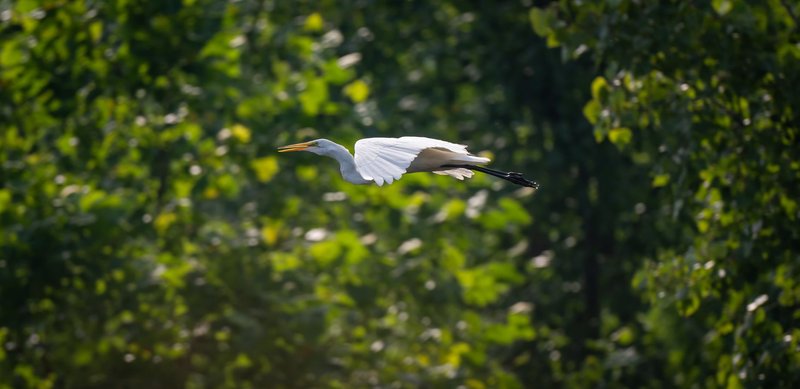
You hear it long before you see it. The male’s call is a loud, metallic “bonk” that sounds like a hammer on an anvil, and it carries across the valley. The bird itself is white with a brown head and a cluster of black wattles hanging from the throat like a beard.
Bellbirds call hardest in the dry season, so the first few months of the year are your best window. At Asa Wright, males perch on exposed branches and call from the same spots day after day. Ask a guide where today’s perch is.
2. White-bearded manakin
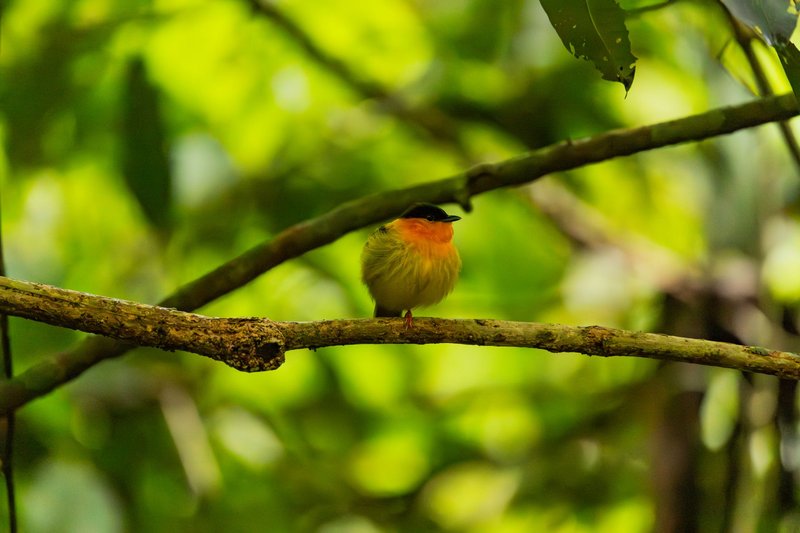
Manakins are small, plump forest birds, and the male white-bearded manakin is black with a white throat that puffs out like a beard. What makes it famous is the display. Males gather at a lek, a patch of cleared forest floor, and snap their wings so fast they sound like firecrackers going off.
Asa Wright has a lek along a trail near the main house. Go early, stand still, and let your eyes adjust to the movement.
3. Tufted coquette
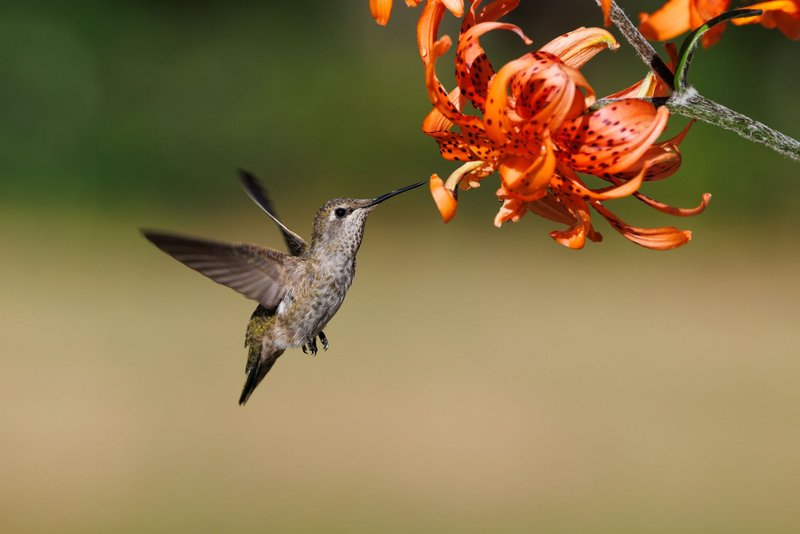
At about 7 cm, the tufted coquette is one of the smallest hummingbirds in the world. Males have a rufous crest and a glittering green back, but you’re more likely to mistake one for a bumblebee. It feeds at tiny flowers, especially porterweed (the purple spikes planted at feeding stations).
Asa Wright and the Yerette hummingbird garden in the Maracas Valley are the standard places to look. Patience beats luck here. Stake out a flowering bush and wait.
4. Oilbird
The oilbird is a nocturnal fruit-eater that nests in caves and finds its way in the dark with echolocation, a trick almost no other bird does. It has a hooked beak, long wings and a loud, rasping call that sounds more like a creaking door than a bird.
Dunston Cave on the Asa Wright grounds holds a colony. Visits are guided and restricted, because disturbance drives the birds off their nests. Don’t expect to wander in alone.
5. Trinidad motmot
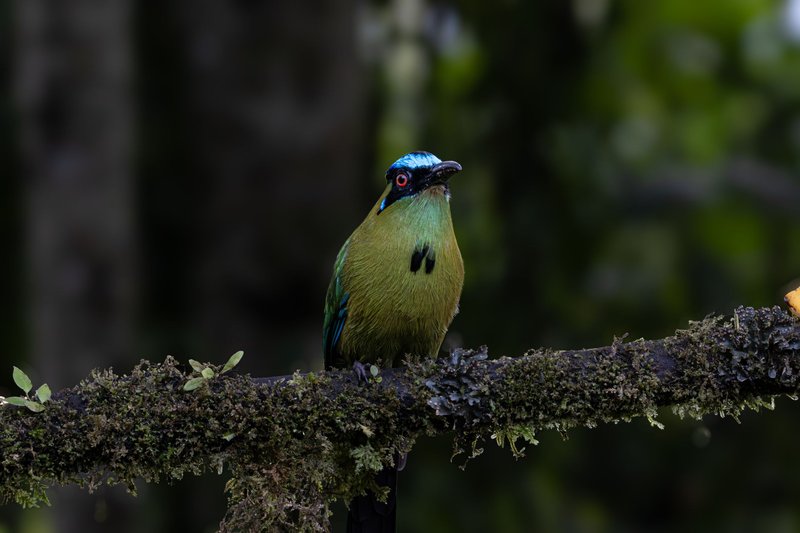
Until recently this was lumped with the blue-crowned motmot, which is why you’ll still see it listed that way. The Trinidad motmot is a rufous bird with a turquoise crown and a long tail ending in two bare “rackets,” which it swings like a pendulum when it’s alarmed.
It lives in shaded forest on both islands. In Trinidad it’s common around Asa Wright and other Northern Range forest. Listen for a low, owl-like hoot first.
6. Trinidad piping-guan
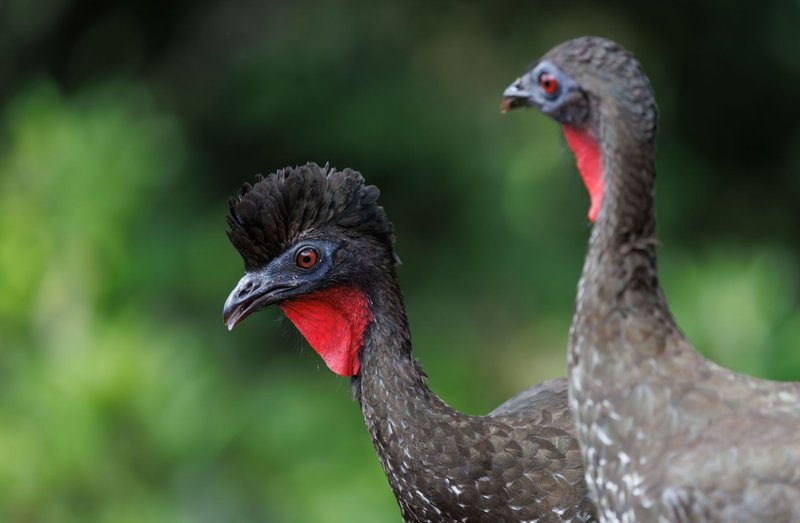
Locals call it the pawi. It’s a large, dark, turkey-like forest bird with a white patch on the head and a bright blue wattle at the throat, and it’s the rarest bird on this list. The IUCN Red List classifies it as Critically Endangered, with a very small population confined to the Northern Range.
You’d be lucky to see one without a guide who tracks fruiting trees. Treat a sighting as a bonus, not a plan.
7. Channel-billed toucan
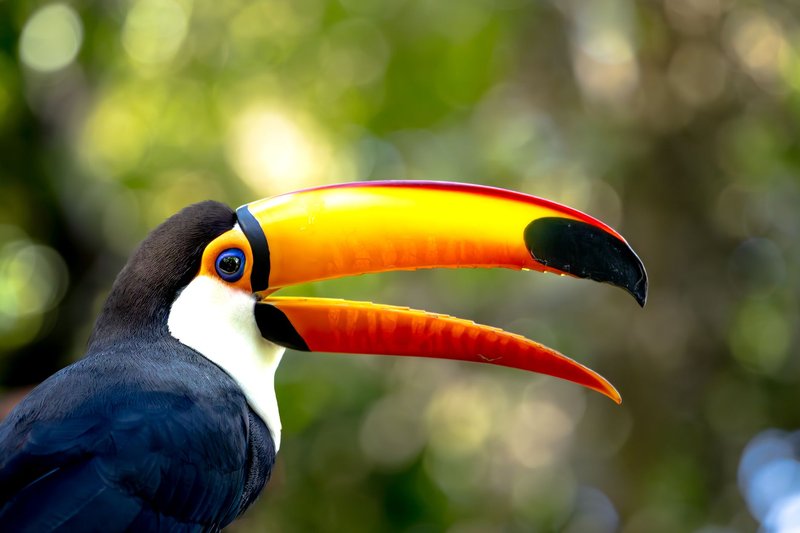
The easiest way to see a toucan in Trinidad is to sit and wait in good forest with fruiting trees. The channel-billed toucan has a black body, a yellow throat and a huge bill with a pale tip. Its call is a yelping “yip-yip,” which carries well in the Arima Valley.
Trinidad’s wetlands: Caroni and Nariva
8. Scarlet ibis
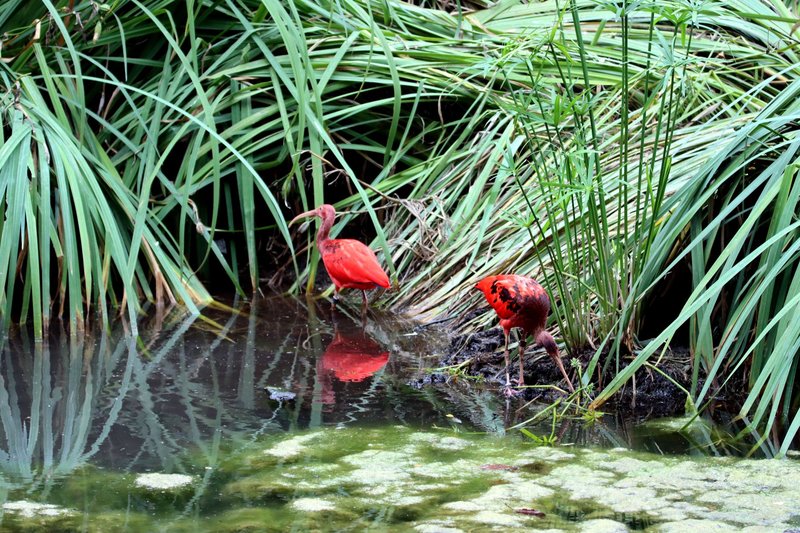
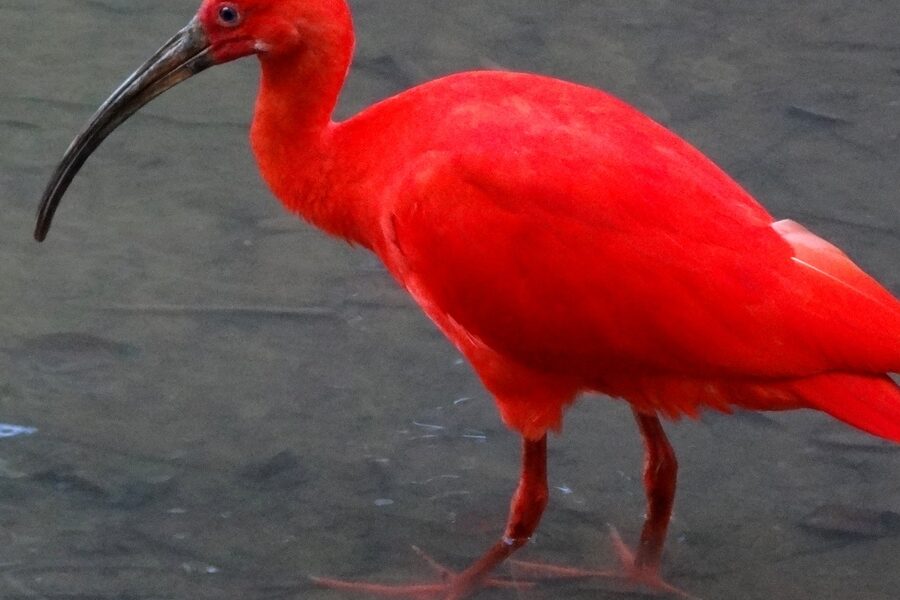
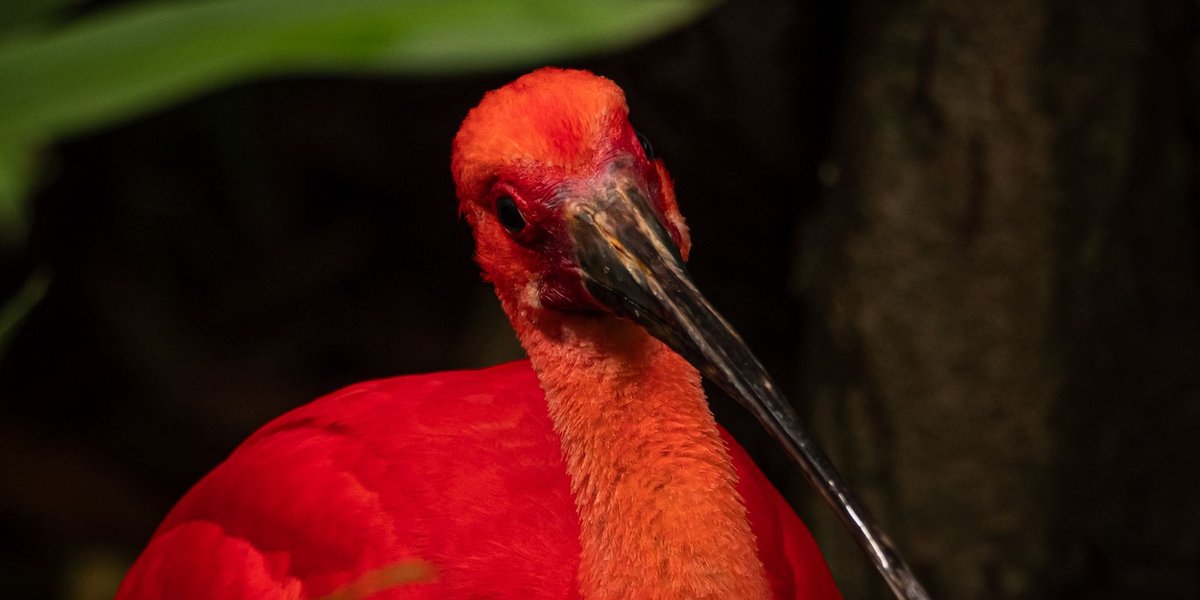
Trinidad’s national bird is the one most visitors come for. The scarlet ibis gets its red color from carotenoids in the crustaceans it eats, so a well-fed bird is brilliant and a poorly fed one fades. Young birds are gray-brown and take about two years to turn red.
The Caroni Swamp tour is the classic way to see them. Boats leave in the late afternoon and slip through mangrove channels while egrets and herons settle in. The payoff is dusk, when the ibis return to roost and the mangrove islands turn red with hundreds of birds. Bring long sleeves and repellent. The mosquitoes are as reliable as the birds.
9. Red-bellied macaw
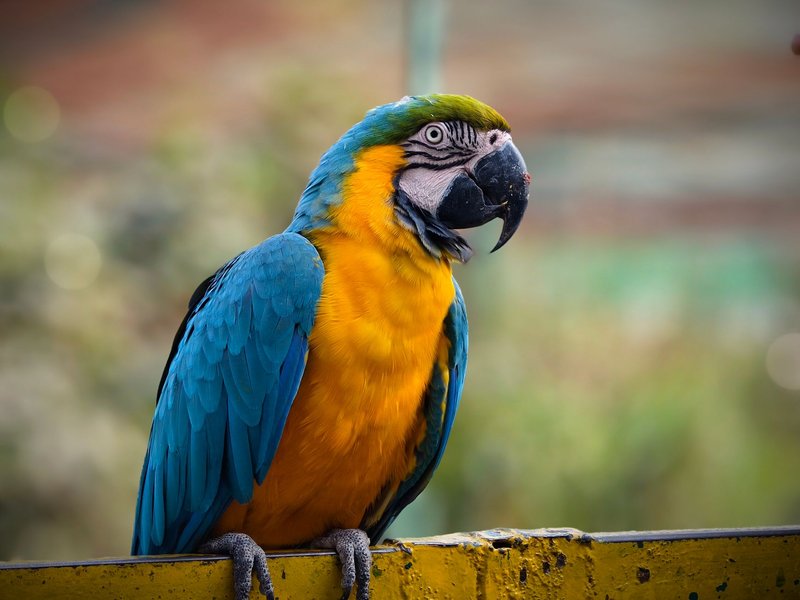
Nariva Swamp, on the east coast, is where you find this small green macaw with a reddish belly. It nests and roosts in dead moriche palms, and flocks make a lot of noise at dawn and dusk. Plan a guided early morning, because the swamp is remote and the best viewing is at first light.
Garden birds you’ll see everywhere
You don’t need a reserve for these. Hotel grounds, car parks and backyards produce them. Most have local names that are more fun than the field guide ones.
10. Copper-rumped hummingbird
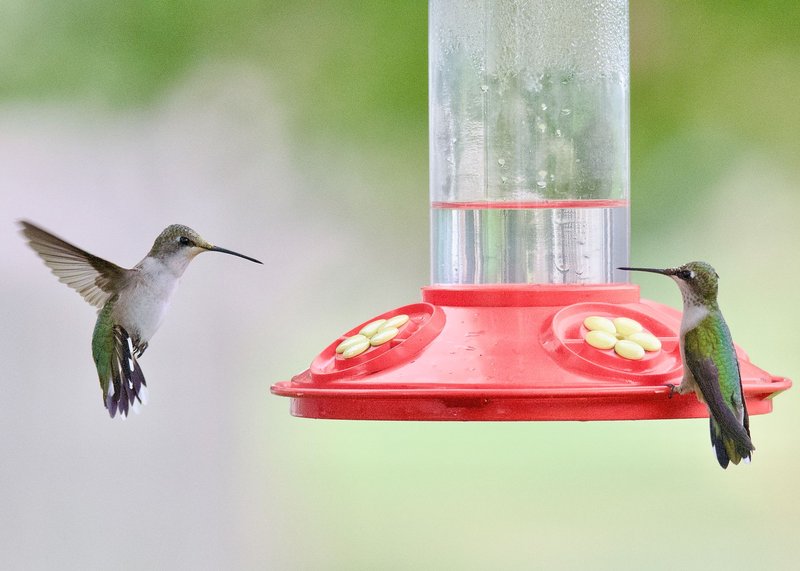
This is the hummingbird in every Trinidad garden. It has a green back, a coppery rump and a short, quick flight. Males chase each other off sugar-water feeders constantly. If you hear a thin buzz at breakfast, it’s one of these.
11. Bananaquit
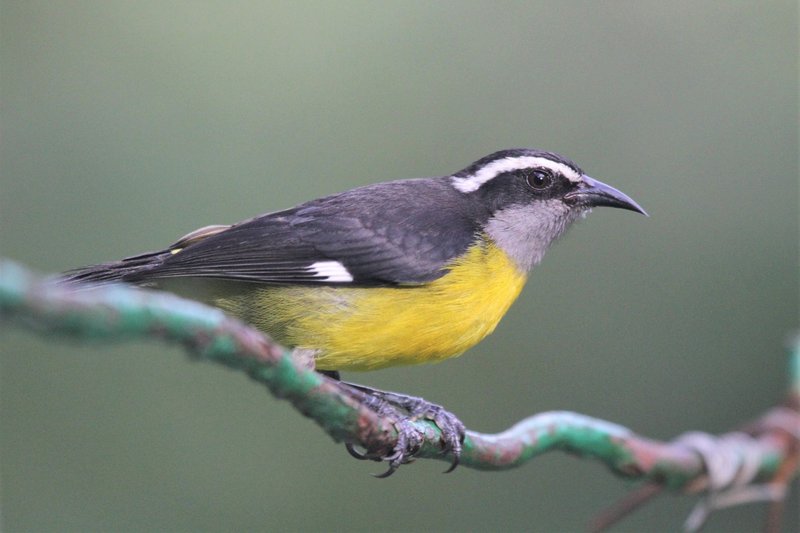
Locals call it the sucrier, “sugar bird,” because it crowds sugar bowls on outdoor tables. It’s a small, active bird with a black back, a yellow belly and a white stripe over the eye. It’s the most common bird on both islands, and the one that gets in your breakfast.
12. Great kiskadee
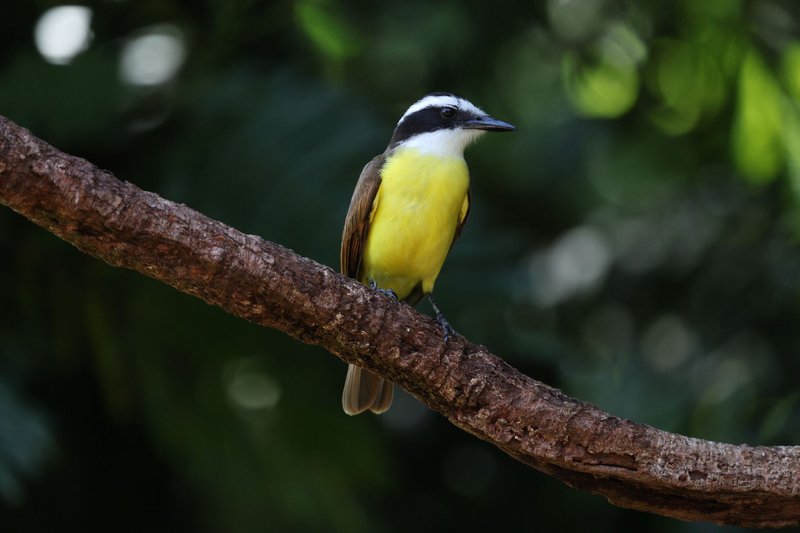
A loud yellow-bellied flycatcher with a black-and-white striped head. Its call sounds like it’s saying “kis-ka-dee,” and in Trinidad it’s nicknamed “qu’est-ce qu’il dit,” French Creole for “what does he say?” You’ll hear it from roadside wires and treetops all over both islands.
Tobago: Main Ridge and Little Tobago
Tobago is calmer, greener and less crowded. Birding here means two spots: the Main Ridge Forest Reserve, established in 1776 and often cited as one of the oldest protected forest reserves in the Western Hemisphere, and Little Tobago, a small island off the northeast coast.
13. Rufous-vented chachalaca

Tobago’s national bird is known locally as the cocrico. It’s a long-tailed, turkey-sized bird, brown above with a rufous patch under the tail. It forages on the ground and walks through hotel gardens as if it owns them. The loud, raucous dawn chorus is hard to miss. Together with the scarlet ibis, it appears on the national coat of arms.
14. White-tailed sabrewing
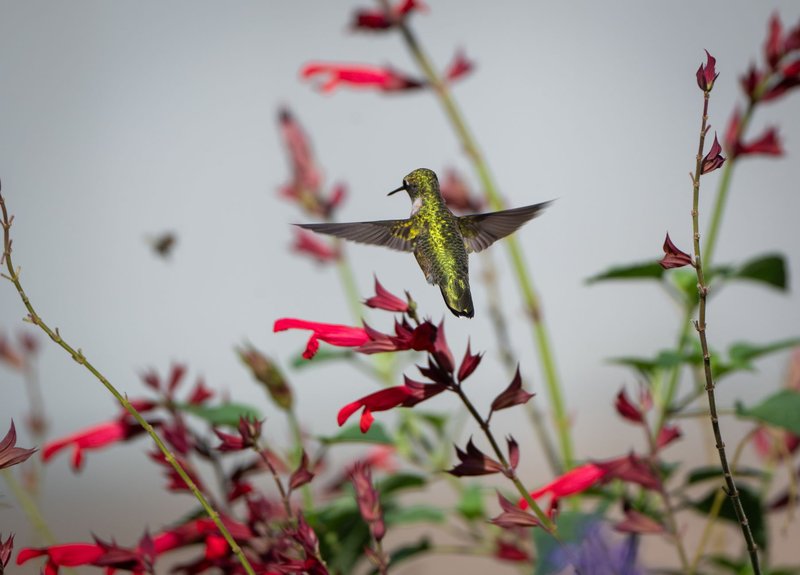
A large violet-and-green hummingbird with a curved bill and white outer tail feathers. It lives in the Main Ridge’s cool, wet forest, where it feeds on heliconia flowers. It’s one of the island’s top targets, and a guide will save you hours of waiting.
15. Red-billed tropicbird
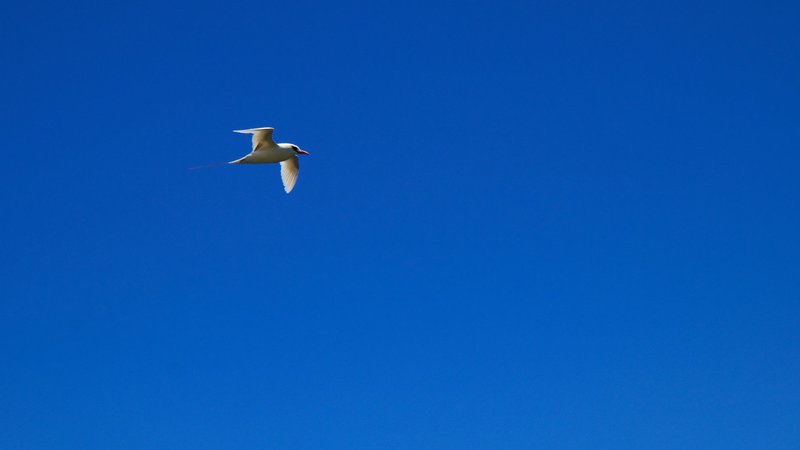
Little Tobago is reached by boat from Speyside. It’s a seabird island, with red-billed tropicbirds, brown boobies, brown noddies and Audubon’s shearwaters nesting on the cliffs. Tropicbirds have long, white streamer tails and a red bill, and they dive from enormous heights.
The island has an odd history. Greater birds-of-paradise were introduced in the early 1900s, and the colony collapsed after Hurricane Flora in 1963. Nobody has reliably seen one in decades.
Trinidad vs Tobago for birders
| Trinidad | Tobago | |
|---|---|---|
| Species total | Roughly twice Tobago’s | About half of Trinidad’s |
| Habitats | Rainforest, swamps, savanna, mangrove | Forest reserve, coast, offshore islands |
| Signature birds | Scarlet ibis, bearded bellbird, oilbird, toucan | Cocrico, white-tailed sabrewing, seabirds |
| Crowds | Busier, more infrastructure | Quieter, more relaxed |
| Best for | Maximizing a species list | Easy trips and seabirds |
If you only have a week, base yourself in Trinidad and add two or three nights in Tobago. A short flight connects them. For wildlife beyond birds, the top eight wildlife species of Trinidad and Tobago gives a broader overview.
When to go and how to plan
The dry season, roughly November through May, is the best time to go. Trails are easier, bellbirds and manakins display, and northern migrants fill in the checklist. The wetter months still produce birds, but you’ll deal with mud and afternoon downpours.
A few practical points:
- Hire a guide. Resident guides know where the bellbird, the oilbird and the sabrewing are today, and that matters far more than any checklist.
- Book Asa Wright and Dunston Cave ahead. Day visits and cave access are limited.
- Time the Caroni tour for late afternoon. The ibis come in at dusk, so an early tour misses the main event.
- Allow a morning for Little Tobago. Boats run from Speyside and depend on sea conditions.
- Bring binoculars and a sun hat. The lowland birding is hot.
Pair this list with the live species counts at eBird and the identification guides at Cornell’s Birds of the World, and you’ll arrive knowing what’s possible and what’s just good luck.