Search “green flowers” and you get the same 20 plants in slightly different order, with no numbers attached. Nobody tells you how big a bloom is, how tall the plant gets, or whether it will hold its own in a border. This list does. Each of these 12 big green flowers comes with a bloom or head size, a height and spread, hardiness zones, a bloom season and one line on where it works best.
“Big” means three different things here, so the list is split three ways: large blooms, tall or giant plants, and bold stems for cutting and statement planting. Pick the group that matches what you’re after.
TLDR
- Biggest single flower head: hydrangea ‘Limelight’, cones up to 12 in (30 cm) long.
- Tallest: angelica, up to 8 ft (2.4 m) in its flowering year.
- Easiest from seed: zinnia ‘Envy’. It blooms from early summer until frost.
- Best green flowers for bouquets: bells of Ireland, gladiolus ‘Green Star’ and green love-lies-bleeding.
- Best indoors: green anthurium. Cymbidium orchids are the better choice if you have a cool, bright spot.
- Reliable perennial for zones 3 to 8: ‘Limelight’ again, or Echinacea ‘Green Jewel’ in zones 4 to 9.
Contents
- What counts as a big green flower
- Large blooms
- Tall and giant plants
- Bold stems for cutting and statement planting
- Comparison table
- Green petals or green bracts?
- How to pair green flowers
- Green flowers that bloom all summer
What counts as a big green flower
Two rules were used to build this list. The flower (or flower-like structure) has to read as green from across the yard, not just green at the bud stage. And the plant has to be big in some measurable way: a head over 3 in (7 cm) across, a stem over 3 ft (90 cm), or both.
That rules out some popular picks. Plenty of “green flower” lists include hydrangeas that are really blue or pink, and small green plants like lady’s mantle, which is lovely but only about 18 in (45 cm) tall with flowers the size of a pea. Anything here that starts white or cream and fades toward green, or starts green and blushes pink, is flagged in its entry.
Hardiness zones are USDA zones, which you can look up for your postcode on the USDA Plant Hardiness Zone Map. Sizes are typical mature ranges. Your soil and summer heat will move them by a foot either way. For cultivar-level checks, Missouri Botanical Garden’s Plant Finder lists size and zone data for most named varieties.
Large blooms
These are the plants where the flower itself is the size of your hand or bigger.
1. Hydrangea ‘Limelight’ (Hydrangea paniculata)
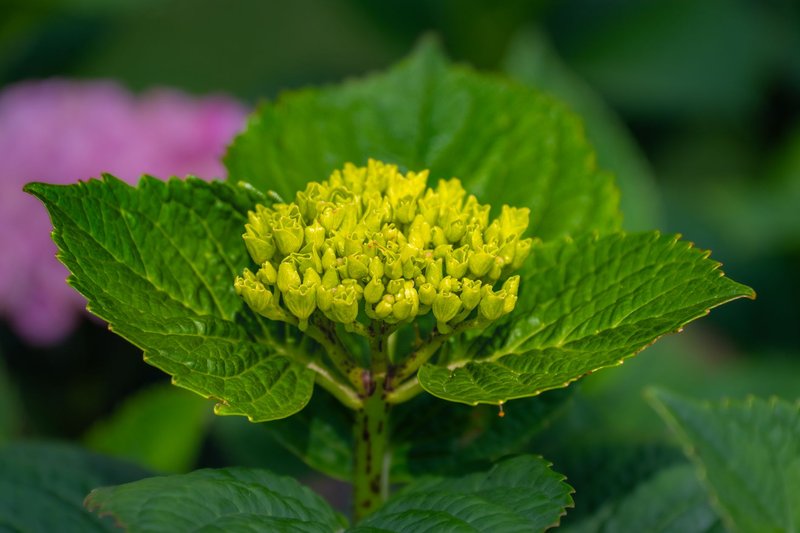
- Bloom size: cones up to 12 in (30 cm) long
- Height x spread: 6 to 8 ft x 6 to 8 ft (1.8 to 2.4 m)
- Zones: 3 to 8
- Sun: full sun to part shade
- Blooms: midsummer to fall
- Best use: specimen shrub, informal hedge, big-impact cut stems
‘Limelight’ is the green hydrangea most gardeners should start with. The cones open lime green in midsummer, turn creamy white by late summer, and blush pink and burgundy as nights cool. That makes it green for roughly the first half of its season, not the whole of it, so don’t expect a single color from July to October.
It blooms on new wood, which means a hard late-winter prune won’t cost you flowers. Unlike mophead hydrangeas, it doesn’t change color with soil pH. For a smaller green hydrangea, ‘Limelight’ has compact relatives, and the smooth hydrangea ‘Invincibelle Limetta’ stays around 3 to 4 ft (about 1 m) with softer, round lime heads.
2. Green anthurium (Anthurium andraeanum ‘Midori’ and similar)
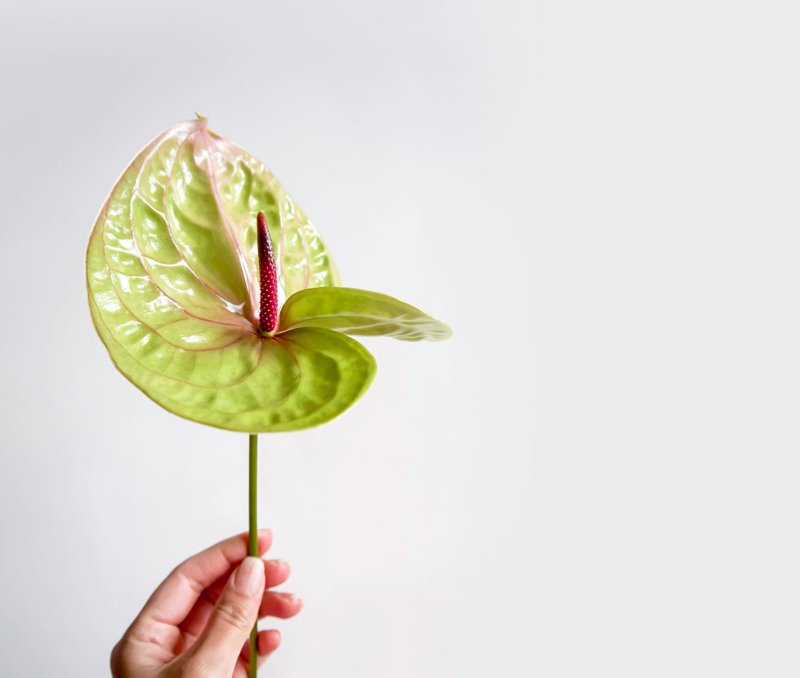
- Bloom size: spathe 4 to 6 in (10 to 15 cm) long
- Height x spread: 1 to 2 ft x 1 to 1.5 ft (30 to 60 cm)
- Zones: 11 to 12 outdoors; a houseplant everywhere else
- Sun: bright, indirect light
- Blooms: year-round in good light
- Best use: indoor accent, long-lasting cut flower
The glossy green heart-shaped “flower” is a spathe, a modified leaf. The real flowers are the tiny bumps on the spike in the middle. A single spathe holds its shape for weeks, which is why anthuriums are a florist staple.
It wants warmth (above 60°F / 15°C), humidity and light that never hits the leaves directly. Let the top inch of the potting mix dry between waterings. Overwatering is the usual cause of death.
3. Green cymbidium orchid (Cymbidium hybrids)
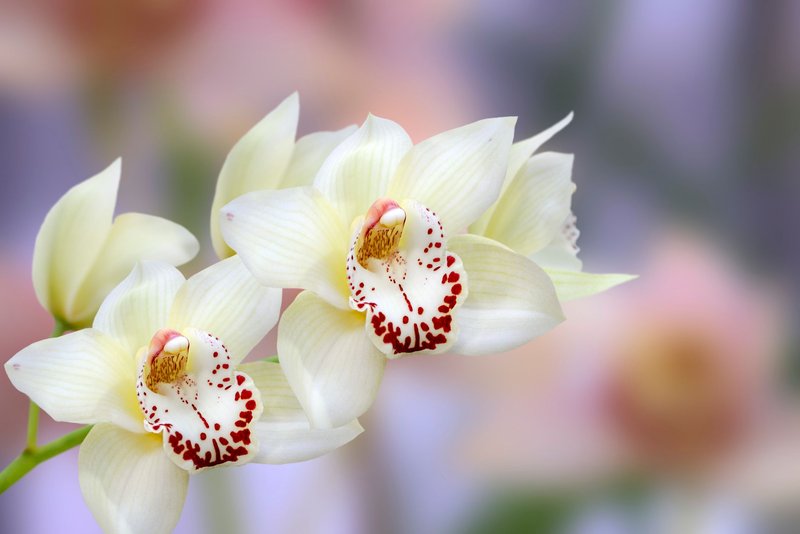
- Bloom size: individual flowers 3 to 4 in (7 to 10 cm) across, 15 to 30 per spike
- Height x spread: 2 to 3 ft x 2 to 3 ft (60 to 90 cm)
- Zones: 9 to 11 outdoors; otherwise a cool-room pot plant
- Sun: bright light with some direct morning sun
- Blooms: late winter to spring
- Best use: patio pot, cool conservatory, long-lasting cut spikes
Cymbidiums are the largest-flowered orchids you can grow without a heated greenhouse. Green hybrids range from apple green to chartreuse, usually with a darker lip. The arching spikes carry flowers for six to eight weeks.
The catch is that they won’t set buds without cool autumn nights, ideally 50 to 60°F (10 to 15°C). Gardeners who keep them in a warm living room year-round get leaves and no flowers. Put the pot outside or in an unheated porch from late summer until buds show.
4. Calla lily ‘Green Goddess’ (Zantedeschia aethiopica)
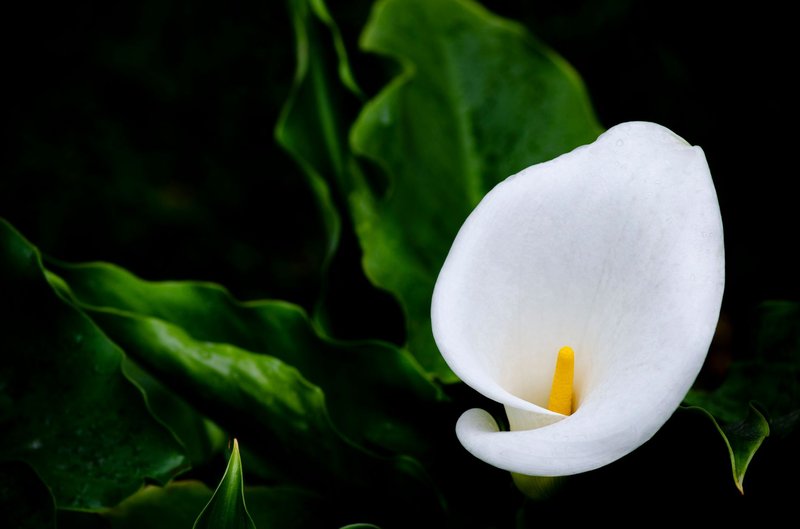
- Bloom size: spathe 6 to 8 in (15 to 20 cm) across the flare
- Height x spread: 2 to 3 ft x about 2 ft (60 to 90 cm)
- Zones: 8 to 10
- Sun: full sun to part shade
- Blooms: late spring to summer
- Best use: moist borders, pond edges, wedding-style bouquets
‘Green Goddess’ is not solid green. The spathe is white at the throat and flares into broad green shoulders streaked with darker veins. At a distance the plant reads green. Up close it’s a two-tone bloom.
Unlike the hybrid calla lilies in bright colors, this species tolerates wet soil and even shallow standing water. In zones colder than 8, plant the rhizomes in a pot and bring them in for winter. Every part of the plant is toxic if eaten.
Tall and giant plants
Here the plant is the show. The flowers can be modest, but the scale is not.
5. Angelica (Angelica archangelica)
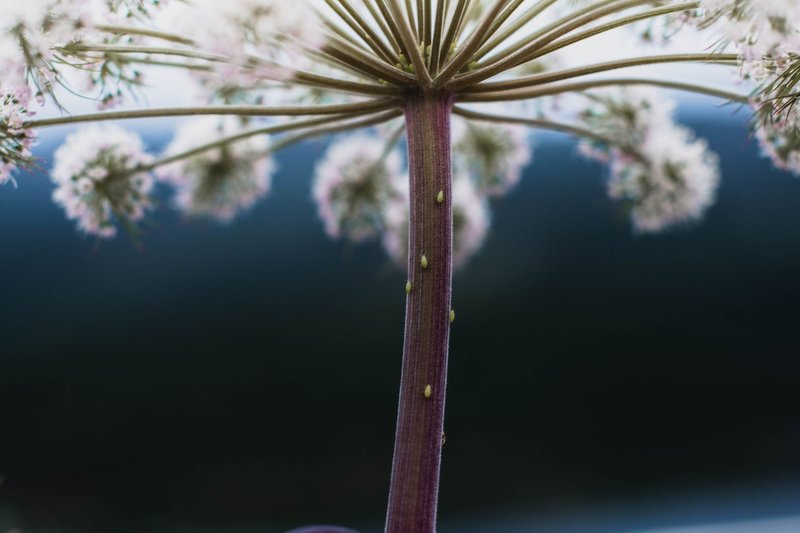
- Head size: globe-shaped umbels up to 10 in (25 cm) across
- Height x spread: 5 to 8 ft x 3 to 4 ft (1.5 to 2.4 m)
- Zones: 4 to 9
- Sun: part shade to full sun, with moist soil
- Blooms: early to midsummer, in its second year
- Best use: back of the border, damp corners, pollinator planting
Angelica is a biennial, so year one is a mound of big divided leaves and year two is the 8-foot flowering stalk topped with greenish-white globes. Bees and hoverflies swarm it. After seed set the plant usually dies, but it self-sows freely, so one planting turns into a rolling supply.
Cut the flower heads before they ripen if you don’t want seedlings everywhere. Wear gloves when handling it in strong sun, because like many members of the carrot family the sap can cause skin irritation.
6. Lime-green tobacco (Nicotiana langsdorffii)
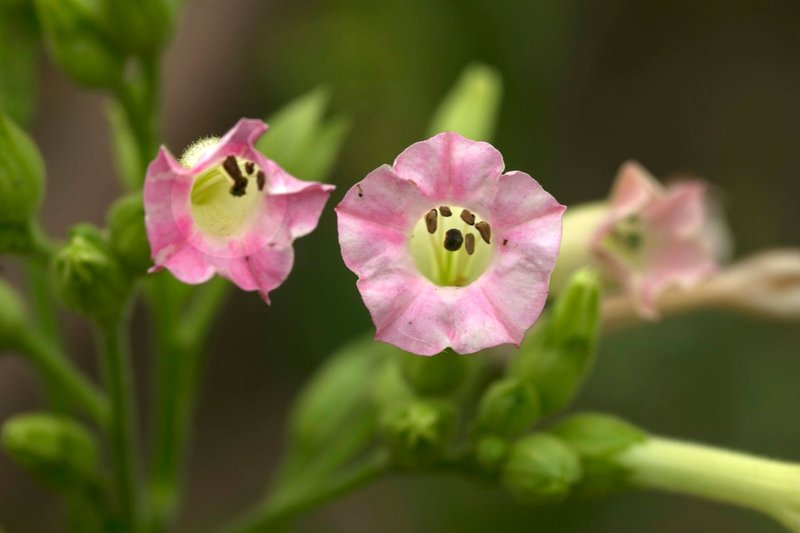
- Head size: loose sprays of 1 in (2.5 cm) bell-shaped flowers
- Height x spread: 3 to 5 ft x 1 to 2 ft (0.9 to 1.5 m)
- Zones: 10 to 11 as a perennial; grown as an annual elsewhere
- Sun: full sun to part shade
- Blooms: early summer to first frost
- Best use: airy see-through screen, filler between heavier plants
This is the plant on the list with the smallest individual flower and the biggest overall effect. The sprays of chartreuse bells float above sticky, broad leaves and let light pass through, so you can plant it in front of other things without blocking them.
It self-seeds, and seedlings from a garden that had it last year turn up in May. All nicotiana is toxic if eaten.
7. Mediterranean spurge (Euphorbia characias subsp. wulfenii)
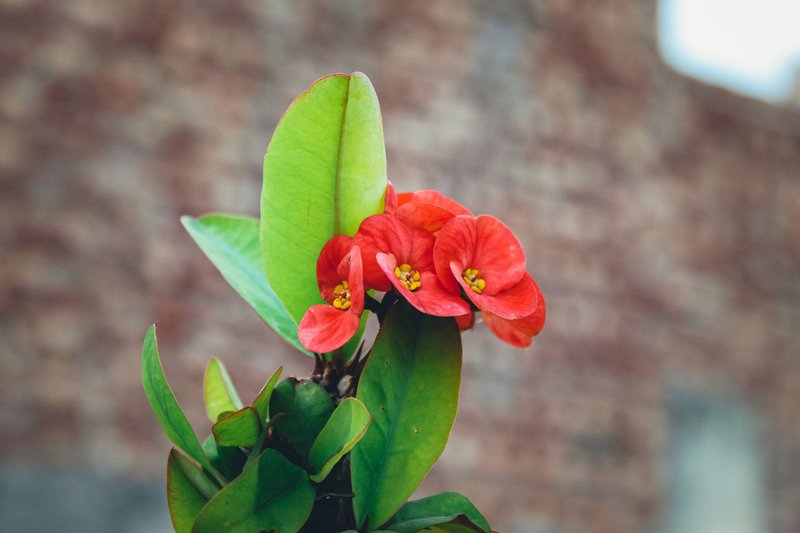
- Head size: rounded flower heads 8 to 12 in (20 to 30 cm) long
- Height x spread: 3 to 4 ft x 3 to 4 ft (0.9 to 1.2 m)
- Zones: 7 to 10
- Sun: full sun, sharp drainage
- Blooms: late winter to early summer
- Best use: structure in a dry or gravel garden, early-season green
Euphorbia is the earliest big green on this list. The domed heads of lime-yellow bracts show up in late winter, and they stay put for months. The blue-gray evergreen foliage underneath keeps the plant looking good in winter.
The milky sap irritates skin and eyes. Wear gloves and sleeves when cutting stems, and sear the cut end of each stem in a flame or boiling water before putting it in a vase. Wet winter soil is the main killer, so plant it on a slope or in gritty soil.
8. Gladiolus ‘Green Star’
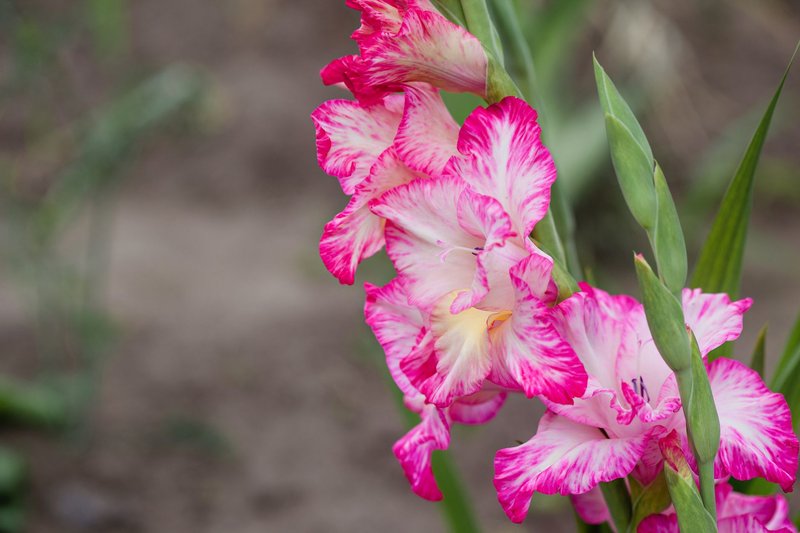
- Bloom size: florets about 3 to 4 in (7 to 10 cm) across on a tall spike
- Height x spread: 3 to 4 ft x about 1 ft (0.9 to 1.2 m)
- Zones: 7 to 10 as a perennial; lift the corms in colder zones
- Sun: full sun
- Blooms: midsummer to late summer, about 70 to 90 days after planting
- Best use: vertical accent, cutting garden
The lime-green florets open from the bottom of the spike upward, so a single stem blooms for a week or more. Because each corm flowers only once, plant a few every two weeks from spring until early summer to extend the display.
Tall spikes in windy gardens need stakes or a ring of twine. In zones 6 and colder, dig the corms after the first frost, dry them, and store them in a cool, dark place until spring.
Bold stems for cutting and statement planting
These are the picks for bouquets, cutting beds and garden spots where you want a color jolt.
9. Zinnia ‘Envy’ (Zinnia elegans)
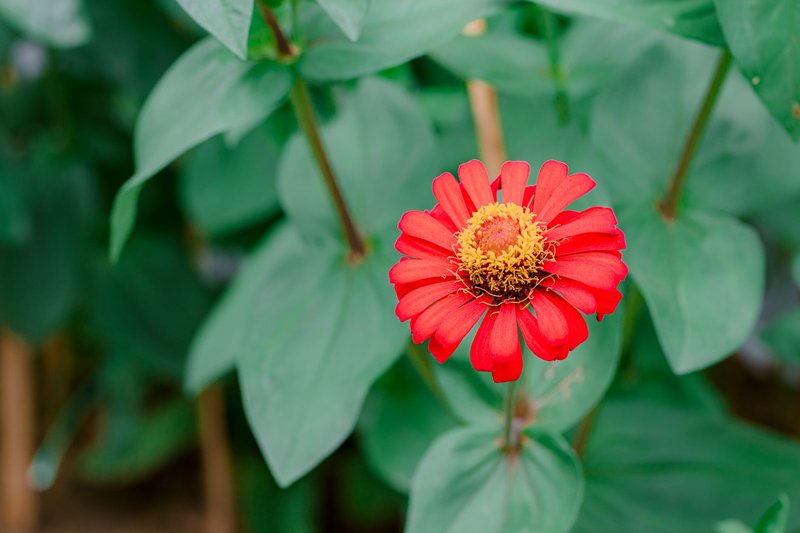
- Bloom size: 3 to 4 in (7 to 10 cm) across, about the width of a coffee mug
- Height x spread: 2 to 3 ft x 1 to 1.5 ft (60 to 90 cm)
- Zones: annual in all zones
- Sun: full sun
- Blooms: early summer to frost
- Best use: cutting garden, filler for mixed beds
‘Envy’ is the easiest big green flower to grow. Sow seed directly after your last frost, or start indoors four to six weeks earlier. The double, dahlia-like blooms open chartreuse, and the more you cut, the more it flowers.
Powdery mildew is the one problem. Water the soil, not the leaves, and give each plant at least 12 in (30 cm) of space for airflow.
10. Bells of Ireland (Moluccella laevis)
- Bloom size: green cups about 1 in (2.5 cm) across, stacked along spikes
- Height x spread: 2 to 3 ft x 9 to 12 in (60 to 90 cm)
- Zones: annual in all zones
- Sun: full sun; part shade in hot climates
- Blooms: summer
- Best use: vertical cut stem, dried arrangements
The green “bells” are calyces, the fused outer layer beneath the petals. The real flowers are the small white blooms tucked inside. The calyces stay green for weeks and dry to a papery tan if left in the vase.
The seed can be stubborn. It germinates best when pressed onto the surface of cool soil, not buried. Strip the leaves from cut stems so the bells show.
11. Green love-lies-bleeding (Amaranthus caudatus ‘Viridis’)
- Head size: hanging tassels 12 in (30 cm) or longer
- Height x spread: 3 to 4 ft x 2 ft (0.9 to 1.2 m)
- Zones: annual in all zones
- Sun: full sun
- Blooms: midsummer to frost
- Best use: cascading element in bouquets, dramatic bed edge
Most people know the crimson version of this plant. The green form has the same ropey tassels in a pale lime that looks cool next to hot colors. Heat suits it. It sulks in cold, wet springs, so sow after the soil warms.
It drops seed, and some will come up next year. Pull the extras early, since they grow quickly.
12. Coneflower ‘Green Jewel’ (Echinacea purpurea)
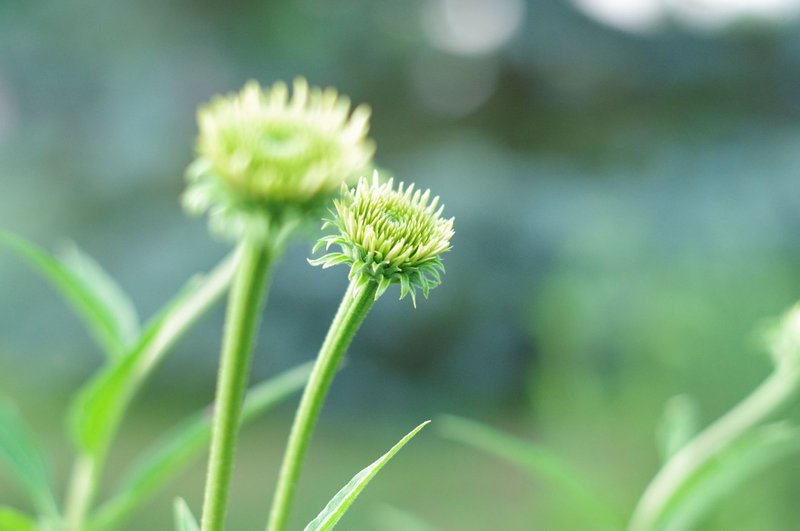
- Bloom size: 3 to 4 in (7 to 10 cm) across
- Height x spread: 2 to 2.5 ft x 1.5 to 2 ft (60 to 75 cm)
- Zones: 4 to 9
- Sun: full sun
- Blooms: midsummer to fall
- Best use: perennial border, prairie planting, pollinator beds
‘Green Jewel’ is the pure green coneflower, with green petals and a green cone that deepens toward bronze. A relative, ‘Green Envy’, blushes magenta in the center and so qualifies as bicolor. Pick whichever you want, but the two are not interchangeable.
It tolerates drought once established and the seed heads feed goldfinches into winter. Leave them standing.
Comparison table
| Plant | Height | Bloom or head size | Zones | Sun | Difficulty |
|---|---|---|---|---|---|
| Hydrangea ‘Limelight’ | 6 to 8 ft | Cone to 12 in | 3 to 8 | Sun to part shade | Easy |
| Green anthurium | 1 to 2 ft | Spathe 4 to 6 in | 11 to 12 (indoor) | Bright indirect | Moderate |
| Green cymbidium | 2 to 3 ft | 3 to 4 in each, many per spike | 9 to 11 | Bright, some sun | Moderate to hard |
| Calla ‘Green Goddess’ | 2 to 3 ft | Spathe 6 to 8 in | 8 to 10 | Sun to part shade | Moderate |
| Angelica | 5 to 8 ft | Umbel to 10 in | 4 to 9 | Part shade to sun | Moderate |
| Lime-green tobacco | 3 to 5 ft | 1 in bells in sprays | 10 to 11 (annual elsewhere) | Sun to part shade | Easy |
| Mediterranean spurge | 3 to 4 ft | Head 8 to 12 in | 7 to 10 | Full sun | Easy (needs drainage) |
| Gladiolus ‘Green Star’ | 3 to 4 ft | Florets 3 to 4 in | 7 to 10 | Full sun | Easy |
| Zinnia ‘Envy’ | 2 to 3 ft | 3 to 4 in | Annual | Full sun | Easy |
| Bells of Ireland | 2 to 3 ft | Cups about 1 in | Annual | Full sun | Moderate (germination) |
| Green love-lies-bleeding | 3 to 4 ft | Tassels 12 in+ | Annual | Full sun | Easy |
| Coneflower ‘Green Jewel’ | 2 to 2.5 ft | 3 to 4 in | 4 to 9 | Full sun | Easy |
Green petals or green bracts?
Many of the big green flowers above aren’t green because of their petals. Botanically, the color comes from other parts of the plant, and it changes how the plant behaves.
- Bracts: modified leaves that sit beneath or around the real flowers. Euphorbia’s green heads are bracts surrounding tiny flowers. Anthurium and calla lily “petals” are a single large bract, called a spathe.
- Sepals: the outer ring of a flower. The showy parts of hydrangea are sepals. Bells of Ireland’s green cups are fused sepals, called a calyx.
- True petals: zinnia ‘Envy’, coneflower ‘Green Jewel’, gladiolus and nicotiana are the real thing.
The practical difference is how long the color lasts. Petals exist to attract pollinators and fade once pollinated. Bracts, sepals and spathes are built for a longer job, so they stay colored for weeks and hold up in a vase. That is why euphorbia, anthurium and bells of Ireland last so well as cut flowers, and why most of the big green flowers for bouquets come from the bract and sepal groups.
How to pair green flowers
Green is a neutral that behaves like a spotlight. It makes whatever sits next to it look more saturated.
- Against dark foliage: lime green pops hardest against deep burgundy and near-black leaves. Plant ‘Limelight’ near a purple smoke bush or purple-leaved ninebark, or set zinnia ‘Envy’ in front of dark-leaved shrubs.
- Against pinks and oranges: orange zinnias, pink coneflowers and salmon dahlias next to green blooms make both colors look brighter. Green love-lies-bleeding beside orange marigolds is a reliable combination.
- Against white and cream: bells of Ireland with white roses or white hydrangeas feels calm and works for weddings and entryway arrangements.
- Among other greens: all-green plantings work if you vary shape. Pair spiky gladiolus with round hydrangea heads and a feathery plume like angelica.
Plant tall ones at the back and in groups of three or five. A single spurge or angelica looks like an accident. A trio looks planned.
Green flowers that bloom all summer
If you want green from June to October rather than a single burst, stagger plants by season:
- Late winter to early summer: Mediterranean spurge, then cymbidium indoors.
- Early summer to frost: zinnia ‘Envy’, lime-green tobacco, bells of Ireland (sow in two batches three weeks apart).
- Midsummer to fall: ‘Limelight’, ‘Green Star’ gladiolus (plant in succession), ‘Green Jewel’ coneflower, green love-lies-bleeding.
Plant the annuals in the gaps between perennials. They fill the space while the perennials get established, and they carry the green after the hydrangea has blushed pink. For a full database of species names and accepted synonyms, Kew’s Plants of the World Online is the reference botanists use.