Fish are vertebrates that live in water, breathe with gills and swim with fins. FishBase, the main scientific database for the group, lists roughly 36,000 species, which is more than all mammals, birds, reptiles and amphibians combined.
That makes fish examples easy to find and hard to organize. This list sorts 30 species by group and habitat, and gives each one a scientific name, a size, a home range and one detail worth remembering. It ends with the animals that have “fish” in their name and aren’t.
Table of Contents
- The Short Answer
- Fish Examples by Group
- Jawless and Cartilaginous Fish Examples
- Freshwater Fish Examples
- Open-Ocean Saltwater Fish Examples
- Coral Reef Fish Examples
- Deep-Sea Fish Examples
- Animals Called Fish That Are Not Fish
The Short Answer
Every fish belongs to one of three groups.
- Jawless fish: lampreys and hagfish. Eel-like bodies, no jaws.
- Cartilaginous fish: sharks, rays and skates. Skeletons made of cartilage.
- Bony fish: everything else, from goldfish and trout to tuna and clownfish. More than 95 percent of all fish species.
Fish Examples by Group
Scientists sort fish by skeleton and mouth, not by where they live. That’s why a great white shark and a goldfish sit in different groups even though both have gills and fins.
| Group | Skeleton | Jaws | Approx. species | Examples |
|---|---|---|---|---|
| Jawless fish | Cartilage, no true vertebrae in hagfish | No | About 120 | Sea lamprey, Pacific hagfish |
| Cartilaginous fish | Cartilage | Yes | About 1,250 | Great white shark, manta ray, skates |
| Bony fish | Bone | Yes | More than 34,000 | Goldfish, tuna, clownfish, cod |
Species counts shift every year as new fish are described, so treat these as rounded figures. Bony fish also split into two lines: ray-finned fish, which includes nearly every fish you’ve seen, and a small lobe-finned group of coelacanths and lungfish.
The entries below use a fixed format so you can compare them: scientific name, typical or maximum size, and habitat. Conservation status comes from the IUCN Red List where it’s mentioned.
Jawless and Cartilaginous Fish Examples
Eight fish, two jawless and six cartilaginous.
1. Sea lamprey
Petromyzon marinus · Size: up to about 1 m · Habitat: Atlantic coasts, spawns in rivers
A lamprey has a round, toothed sucker where its jaws should be. Adults latch onto larger fish and rasp through the skin to feed. The sea lamprey got into the Great Lakes through shipping canals and wrecked lake trout stocks for decades.
2. Pacific hagfish
Eptatretus stoutii · Size: up to about 60 cm · Habitat: muddy seafloor, eastern Pacific
Hagfish have a skull but no true backbone, which makes them an oddity among fish. When grabbed, one can turn a cup of seawater into a bucket of slime in seconds. It then ties itself in a knot and slides the knot down its body to wipe the slime off.
3. Great white shark
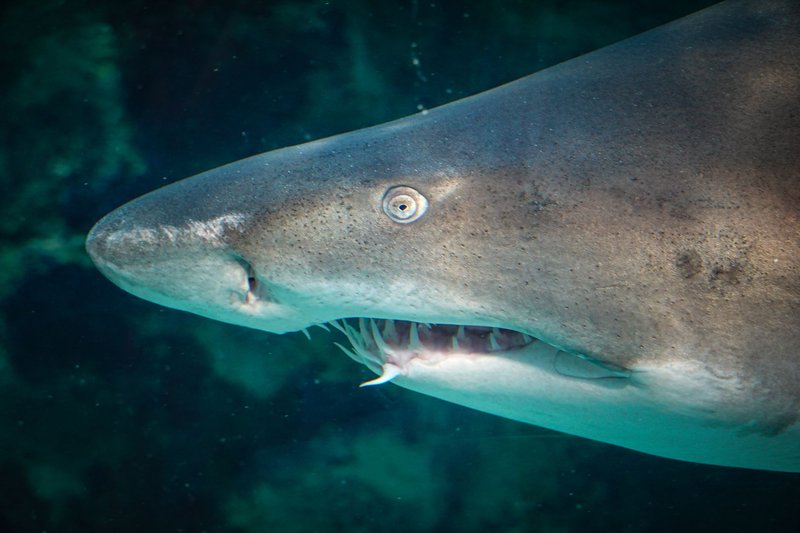
Carcharodon carcharias · Size: 4 to 5 m typical, up to about 6 m · Habitat: coastal temperate and subtropical seas
The great white replaces its teeth throughout its life, working through thousands of them. It’s listed as Vulnerable by the IUCN. Despite the reputation, it prefers seals and large fish to people.
4. Whale shark
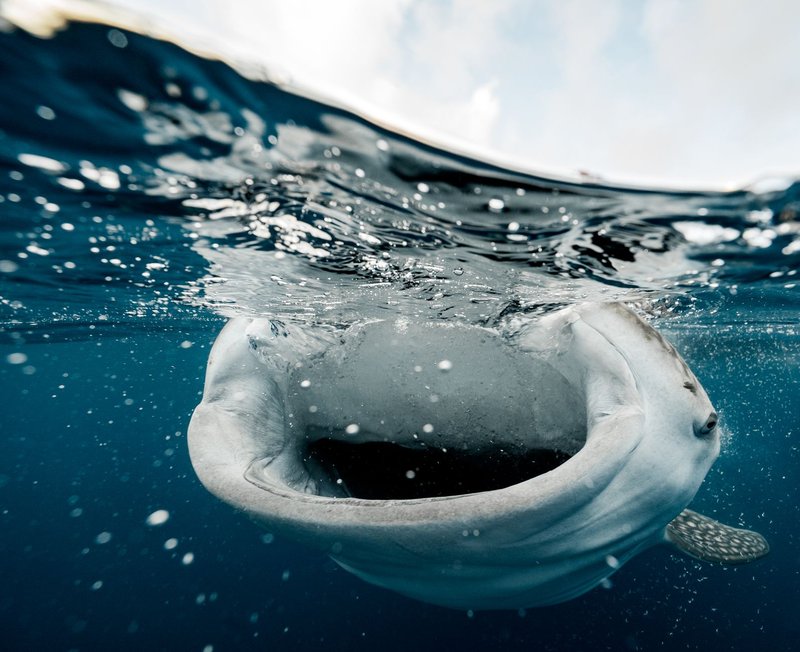
Rhincodon typus · Size: typically 10 to 12 m · Habitat: warm tropical seas, open water and coasts
The largest fish alive eats plankton and tiny fish by filtering seawater through its gills. The spot pattern behind its head is unique to each animal, so researchers use photos to track individuals. It’s listed as Endangered.
5. Great hammerhead
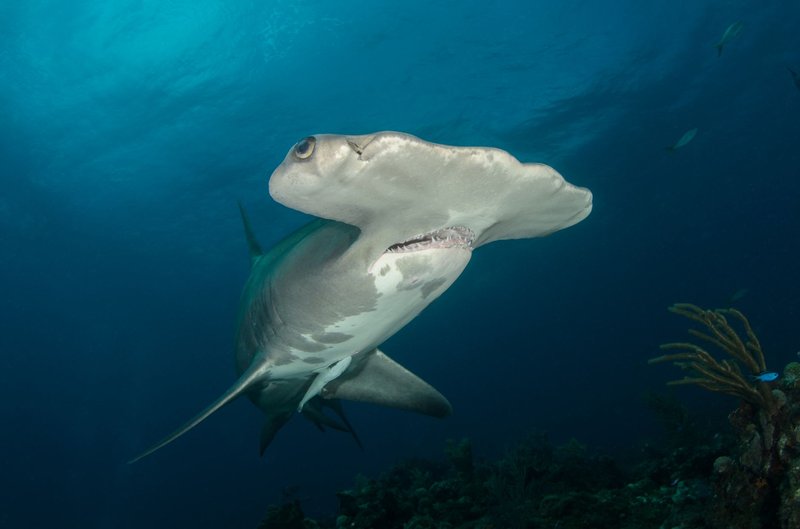
Sphyrna mokarran · Size: up to about 6 m · Habitat: warm coastal waters and reefs
The wide, flat head is packed with electrical sensors that detect the faint signals of buried prey. Stingrays are a favorite meal, and the head also pins them against the sand. The species is Critically Endangered.
6. Giant oceanic manta ray
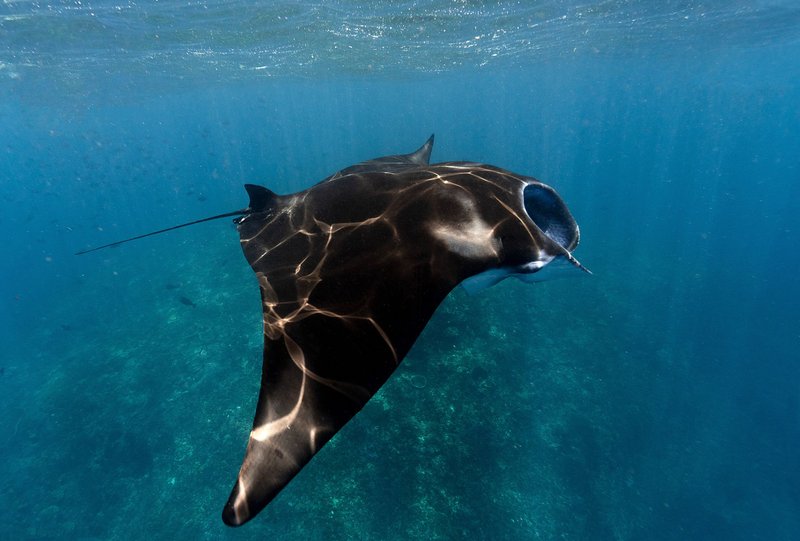
Mobula birostris · Size: wingspan up to about 7 m · Habitat: tropical and subtropical open ocean
Mantas are filter feeders that glide through plankton clouds with their mouths open. They have one of the largest brains of any fish. They also visit “cleaning stations” on reefs, where small fish pick parasites off their skin.
7. Largetooth sawfish
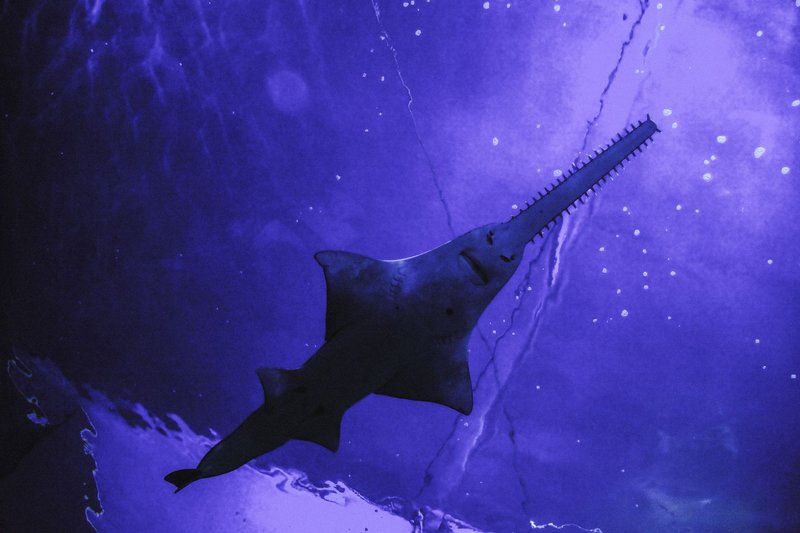
Pristis pristis · Size: up to about 6 m · Habitat: tropical coasts, estuaries and rivers
A sawfish is a ray, not a shark, with a long flat snout lined with teeth. It swings the saw sideways to stun fish. Habitat loss and fishing nets have made it Critically Endangered.
8. Little skate
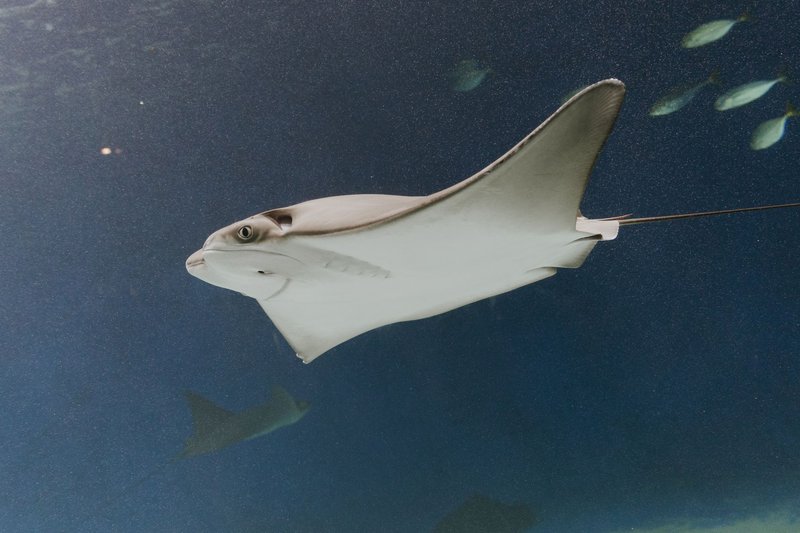
Leucoraja erinacea · Size: up to about 50 cm · Habitat: sandy seafloor, northwest Atlantic
Skates lay eggs in tough, rectangular cases that wash up on beaches, often called mermaid’s purses. Sharks and rays also use the same trick. The flat body and wing-like fins make a skate look like a ray, but it lays eggs where many rays give birth to live young.
Freshwater Fish Examples
Eight bony fish from rivers, lakes and ponds. Several of them also end up in aquariums.
9. Goldfish
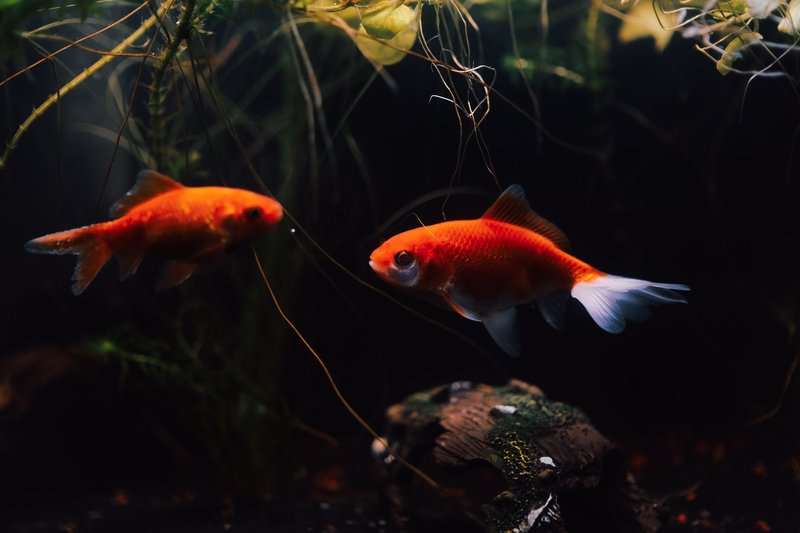
Carassius auratus · Size: 15 to 30 cm in tanks, larger in ponds · Habitat: originally East Asian ponds and slow rivers
Goldfish were bred from a drab carp-like fish in China more than a thousand years ago. They have no stomach and eat nearly nonstop. A British goldfish named Tish reached 43 years old, the longest recorded life for the species.
10. Rainbow trout
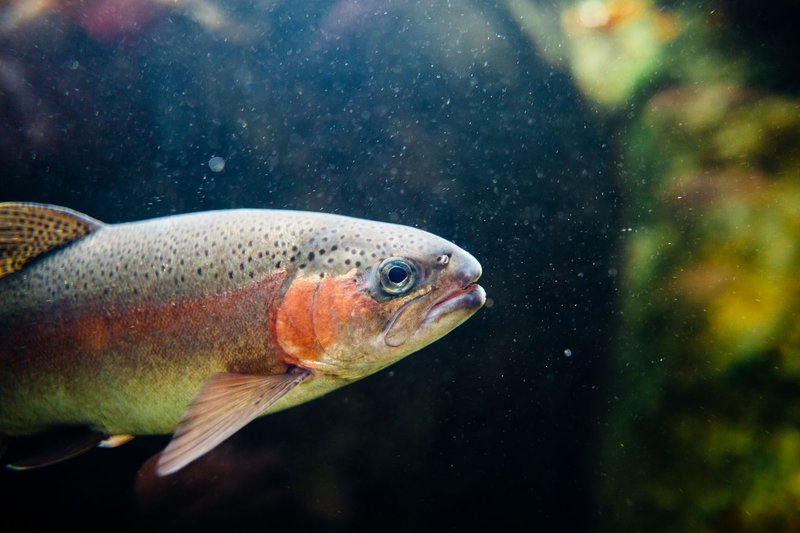
Oncorhynchus mykiss · Size: 30 to 80 cm · Habitat: cold, clear streams and lakes of western North America
Steelhead and rainbow trout are the same species. The steelhead form migrates to the ocean and returns to spawn, while the rainbow stays in fresh water. Stocking has spread it to cold waters on every continent except Antarctica.
11. Largemouth bass
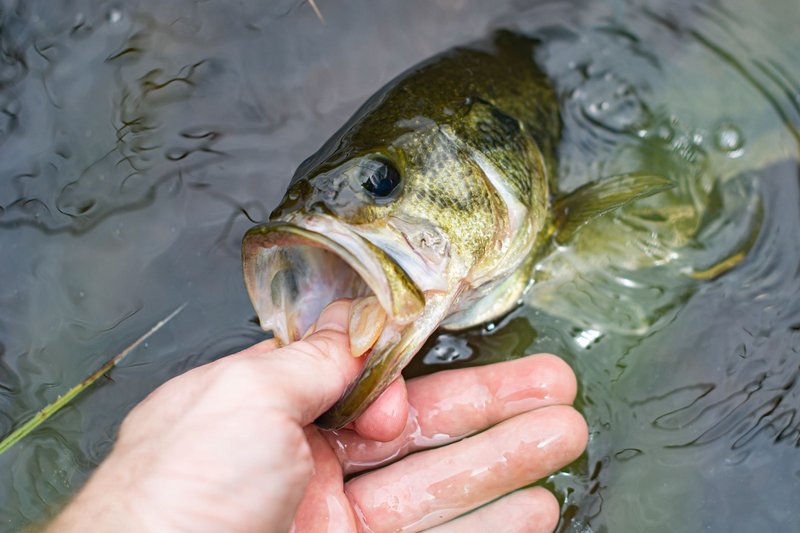
Micropterus salmoides · Size: up to about 90 cm · Habitat: warm lakes, ponds and slow rivers, eastern North America
The most popular sport fish in the United States. The world record, caught in Georgia in 1932, weighed 22 pounds 4 ounces and stood for decades.
12. Northern pike
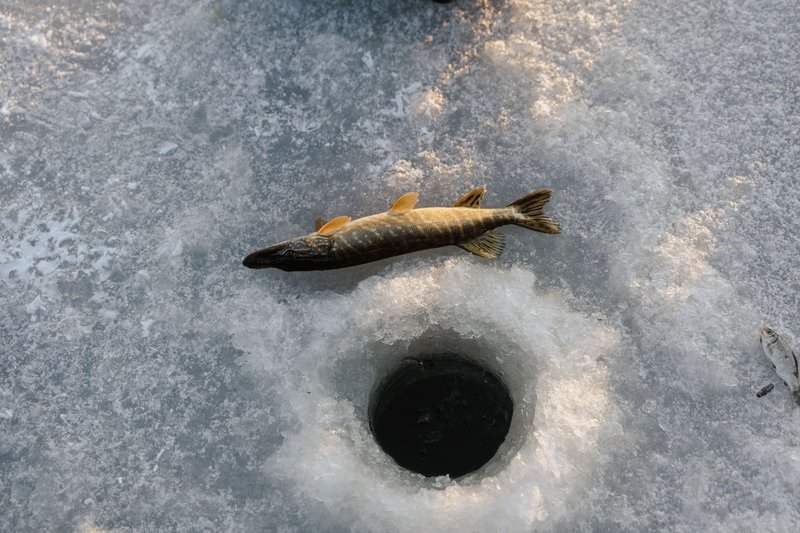
Esox lucius · Size: up to about 1.5 m · Habitat: cool lakes and rivers across the Northern Hemisphere
Pike hang motionless in weed beds, then strike with a burst of speed. The long, duck-bill snout and teeth set far back make it a specialist at catching other fish crosswise.
13. Red-bellied piranha
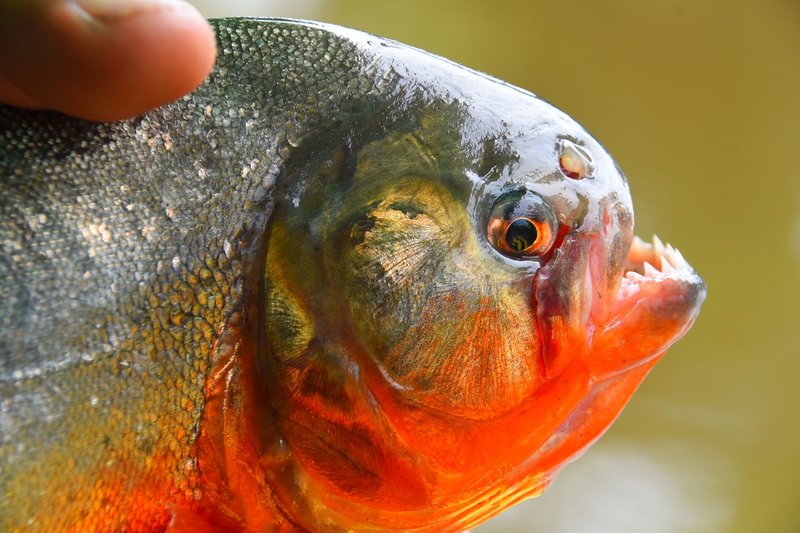
Pygocentrus nattereri · Size: up to about 30 cm · Habitat: Amazon and Paraguay river basins
Piranhas feed mostly on fish, insects and carrion. Attacks on people are rare and usually involve a person already dead or a dried-up pool where fish are starving. The horror-film image is mostly a myth.
14. Arapaima
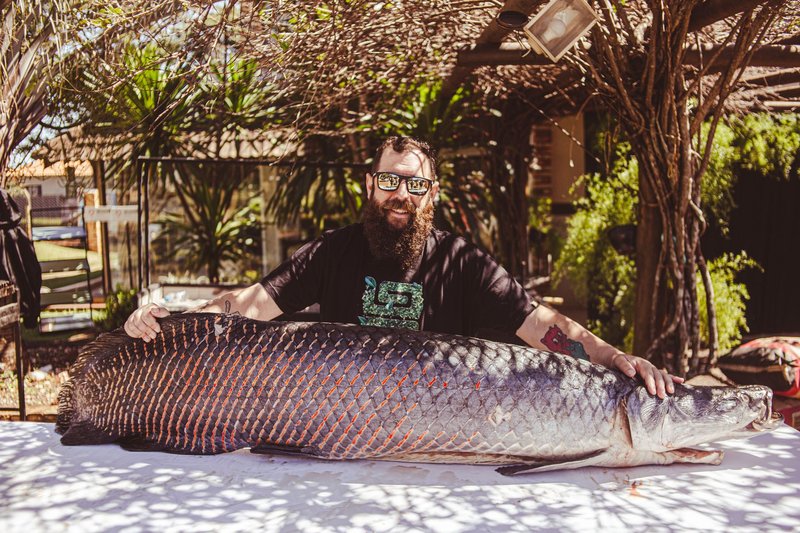
Arapaima gigas · Size: up to about 3 m · Habitat: Amazon basin, floodplain lakes and slow rivers
One of the biggest freshwater fish on Earth. Its swim bladder works like a lung, and it surfaces every ten minutes or so to gulp air. That lets it live in oxygen-poor floodplain water where other fish suffocate.
15. Electric eel
Electrophorus voltai · Size: up to about 2.4 m · Habitat: muddy Amazon and Orinoco rivers
An electric eel isn’t an eel. It’s a knifefish, closer to catfish than to true eels. The species E. voltai was measured discharging 860 volts, the strongest shock of any known animal.
16. Siamese fighting fish (betta)
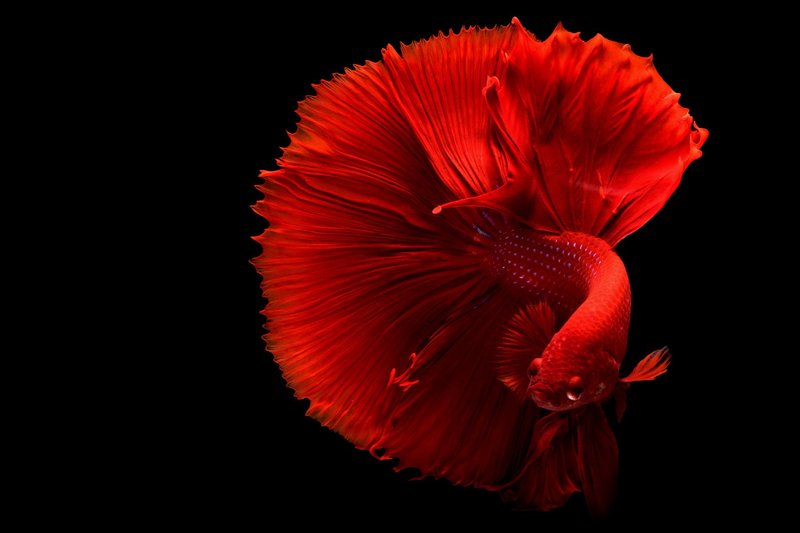
Betta splendens · Size: about 6 to 7 cm · Habitat: shallow rice paddies and ponds, Southeast Asia
Bettas have a labyrinth organ that lets them breathe air from the surface, so they survive in stagnant water. Males build bubble nests and guard the eggs alone. In the wild they’re listed as Vulnerable.
Open-Ocean Saltwater Fish Examples
Six saltwater fish from the open ocean and continental shelves. Reef and deep-sea fish get their own sections.
17. Atlantic bluefin tuna
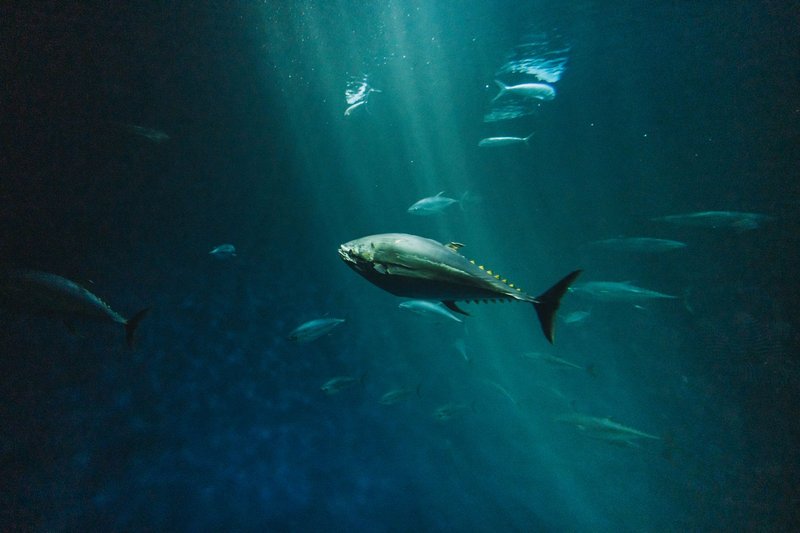
Thunnus thynnus · Size: up to about 3 m · Habitat: North Atlantic and Mediterranean
Bluefin keep their muscles warmer than the surrounding water, which lets them hunt in cold seas. They cross the Atlantic regularly. After heavy overfishing, strict quotas helped stocks recover enough for the IUCN to move the species to Least Concern in 2021.
18. Swordfish

Xiphias gladius · Size: up to about 4.5 m · Habitat: temperate and tropical oceans worldwide
The bill slashes through schools of prey rather than spearing them. Adults lose their teeth and scales entirely. They hunt in deep water at night and warm their eyes and brain with a heat-producing organ.
19. Ocean sunfish
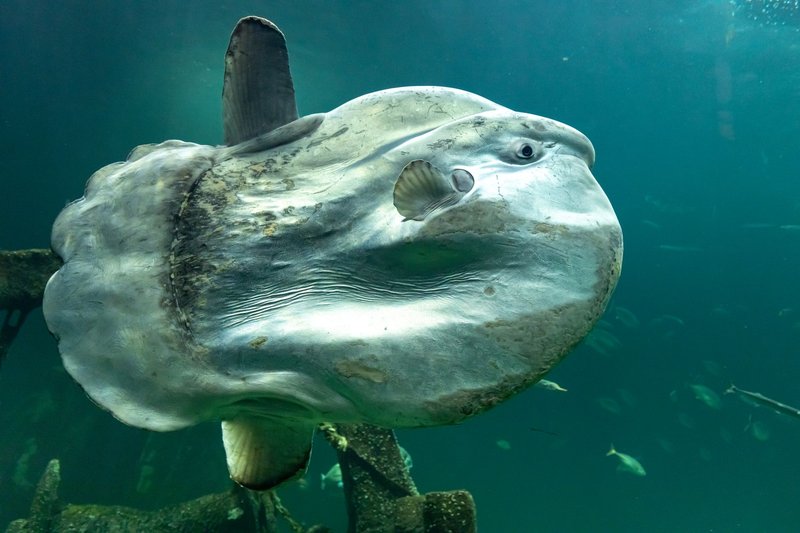
Mola mola · Size: up to about 3 m long, over 2,000 kg · Habitat: open temperate and tropical oceans
The heaviest bony fish in the world looks like a swimming head with the back half cut off. It feeds largely on jellyfish and can lay hundreds of millions of eggs in a season.
20. Atlantic cod
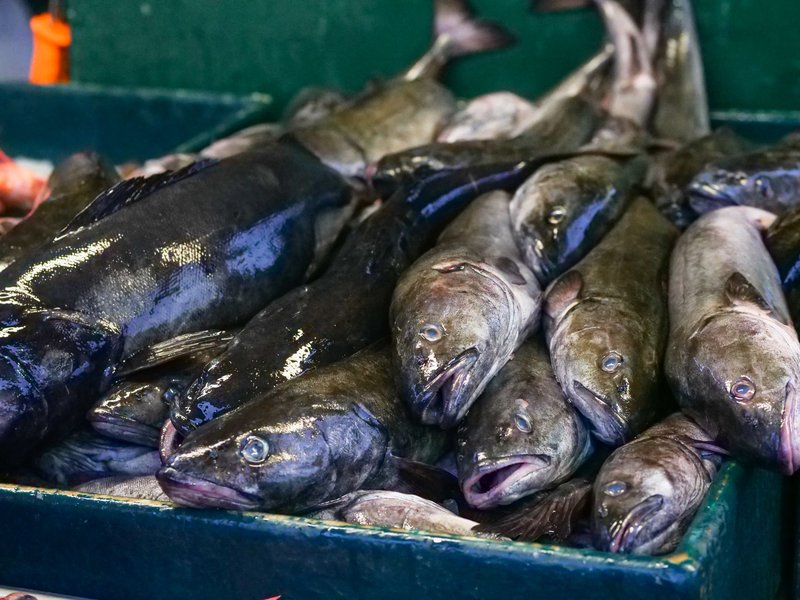
Gadus morhua · Size: up to about 2 m · Habitat: cold North Atlantic continental shelf
Cod built European and North American fishing towns. Newfoundland’s northern cod stock collapsed in the early 1990s, and Canada closed the fishery in 1992. A chin whisker (barbel) helps it find food on the seabed.
21. Pacific halibut
Hippoglossus stenolepis · Size: up to about 2.5 m, females larger · Habitat: North Pacific seafloor
Halibut start life with an eye on each side of the head like any other fish. As they grow, the left eye migrates over the top of the skull to join the right, and the fish settles on its left side.
22. Mahi-mahi
Coryphaena hippurus · Size: typically about 1 m, up to 2 m · Habitat: warm open ocean, near floating debris
Also called dolphinfish, though it has no relation to dolphins. It grows fast, matures within its first year and rarely lives past five. The males’ blunt, vertical forehead is easy to spot.
Coral Reef Fish Examples
Reefs cover a tiny fraction of the seafloor and hold a large share of marine fish species. Five examples.
23. Ocellaris clownfish
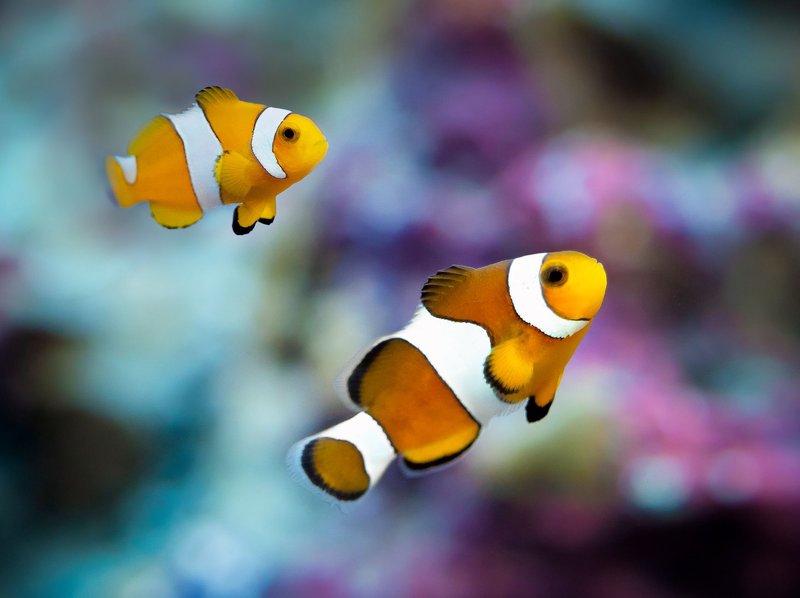
Amphiprion ocellaris · Size: up to about 11 cm · Habitat: Indo-Pacific reefs, living in sea anemones
Clownfish are born male. In each anemone group the largest fish becomes the female, and if she dies, the biggest male takes her place. Mucus on their skin protects them from the anemone’s stings.
24. Regal blue tang
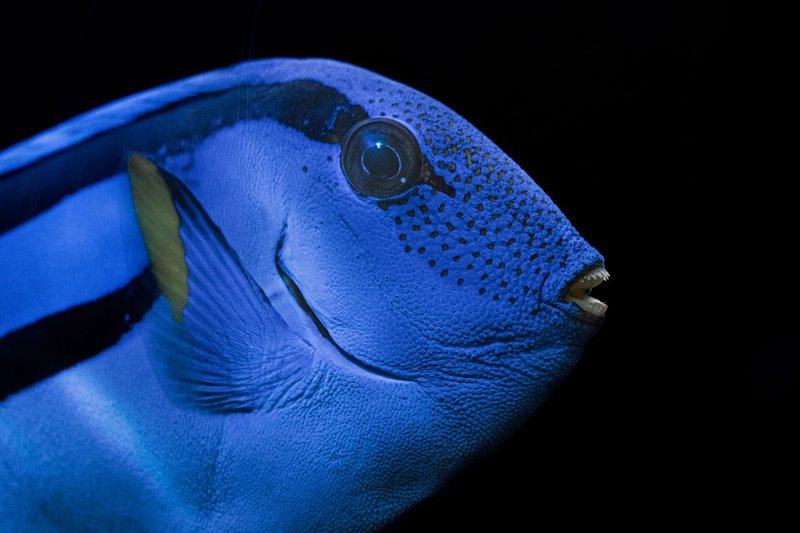
Paracanthurus hepatus · Size: up to about 30 cm · Habitat: Indo-Pacific reefs
A surgeonfish, named for the scalpel-sharp spine at the base of its tail. It folds the spine flat when relaxed and flicks it out to defend itself.
25. Red lionfish
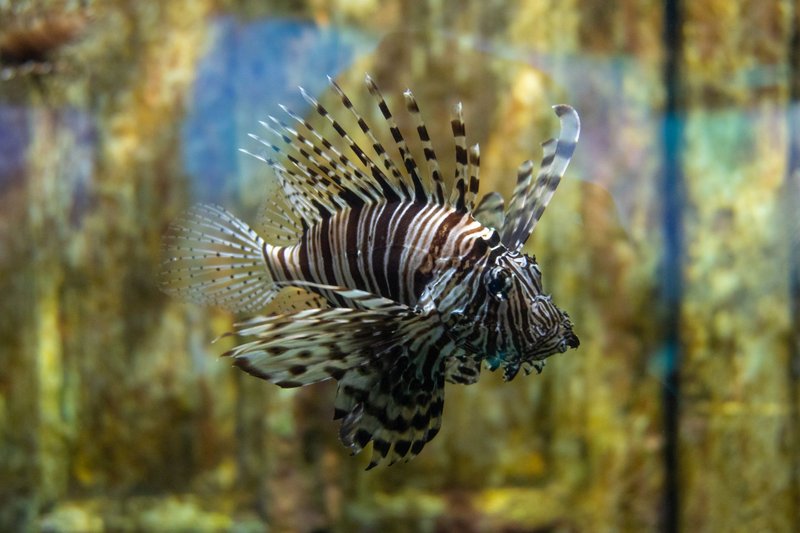
Pterois volitans · Size: up to about 38 cm · Habitat: native to Indo-Pacific reefs, invasive in the western Atlantic and Caribbean
Venomous spines protect it from most predators. In the Caribbean it has almost none, so it eats native reef fish unchecked, and divers now run culling hunts.
26. Lined seahorse
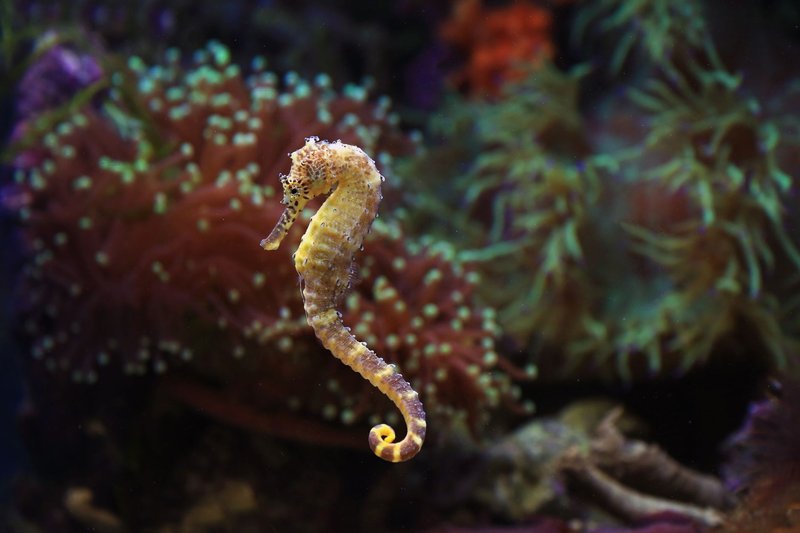
Hippocampus erectus · Size: up to about 17 cm · Habitat: seagrass beds and reefs, western Atlantic
Seahorses are bony fish, not a curiosity of their own. The male carries the eggs in a brood pouch and gives birth to the young. Thin and slow, it relies on camouflage and a prehensile tail. The IUCN lists it as Vulnerable.
27. Stoplight parrotfish
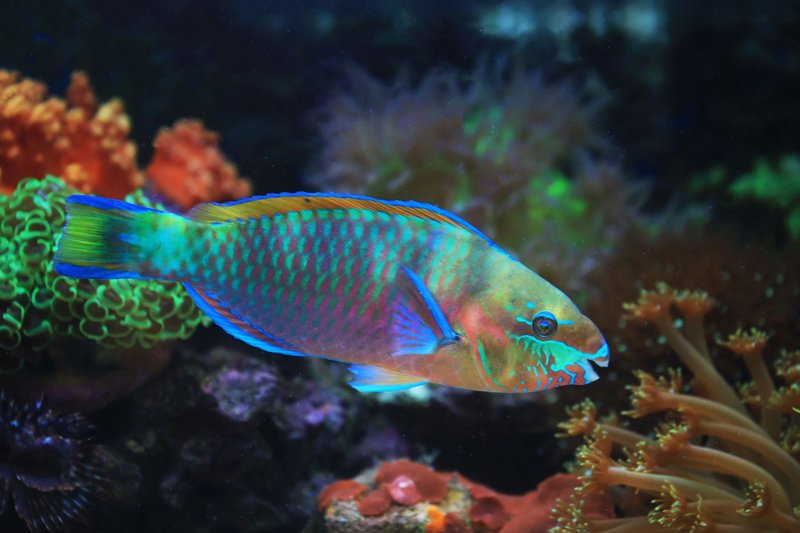
Sparisoma viride · Size: up to about 50 cm · Habitat: Caribbean coral reefs
Parrotfish teeth are fused into a beak that scrapes algae off coral. They grind the rock and excrete it as fine sand. A single large parrotfish can turn out hundreds of pounds of sand a year, which is part of how tropical beaches form.
Deep-Sea Fish Examples
Three fish from below the sunlit zone, where pressure is crushing and food is rare.
28. Humpback anglerfish
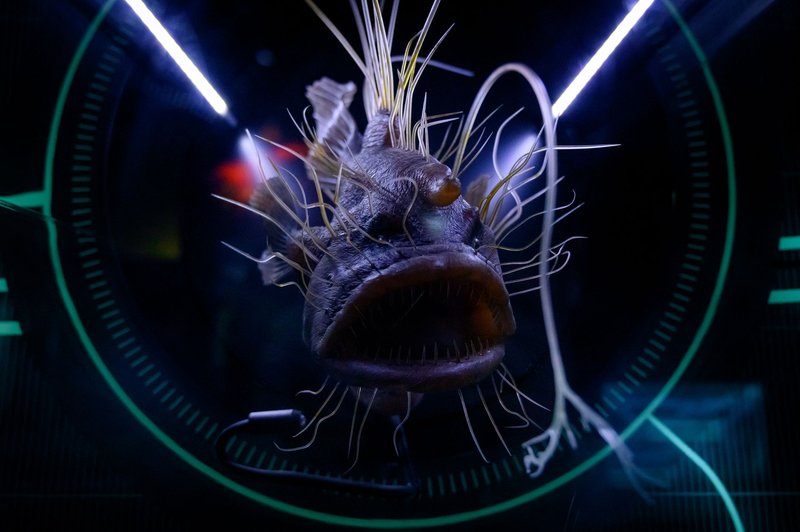
Melanocetus johnsonii · Size: females up to about 18 cm · Habitat: deep Atlantic and Pacific, roughly 200 to 2,000 m
The glowing lure on the female’s head is lit by bioluminescent bacteria. Prey swim toward it, and her stretchy stomach lets her swallow animals larger than herself. Males are far smaller than females.
29. Mariana snailfish
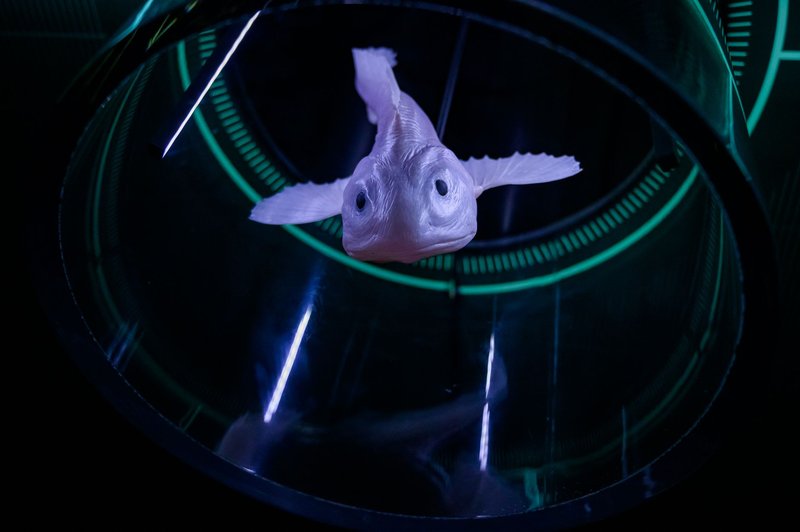
Pseudoliparis swirei · Size: up to about 30 cm · Habitat: Mariana Trench, around 6,000 to 8,000 m
It lives deeper than any other fish filmed in the wild. The body is soft and gelatinous, with no swim bladder and a skull that isn’t fully ossified. NOAA Ocean Exploration expeditions have turned up related snailfish in other trenches. Studies suggest fish can’t survive much below 8,200 m, because the chemistry that keeps proteins working under pressure runs out.
30. Fangtooth
Anoplogaster cornuta · Size: up to about 16 cm · Habitat: deep oceans worldwide, roughly 500 to 5,000 m
It has the largest teeth relative to body size of any fish. They’re so long that the roof of its mouth has two sockets to hold them when it closes its jaws. It’s tiny, so the fear factor is out of proportion to the fish.
Animals Called Fish That Are Not Fish
Plenty of animals carry “fish” in their name without being fish. The test is simple: a fish is a vertebrate with gills and, usually, fins (the full set of fish traits covers the exceptions). These aren’t.
| Animal | What it actually is | Why it isn’t a fish |
|---|---|---|
| Jellyfish | Cnidarian | No backbone, no brain, no gills |
| Starfish (sea star) | Echinoderm | No backbone, five-armed body, no fins |
| Cuttlefish | Mollusk (cephalopod) | Soft body, eight arms and two tentacles |
| Crayfish | Crustacean | Jointed shell and legs, no backbone |
| Shellfish (clams, shrimp, crabs) | Mollusks and crustaceans | A kitchen label, not a biological group |
| Silverfish | Insect | A wingless bug found in bathrooms and attics |
Whales, dolphins and porpoises also swim and live in water, but they’re mammals. They breathe air, give birth to live young and nurse their calves. Dolphins are a common error on fish lists.
If you want to go deeper into any group above, the Smithsonian’s ocean portal is a good place to start.