Type “fish of Scotland” into a search bar and you get the same eight names rearranged: Atlantic salmon, brown trout, sea trout, grayling, arctic charr, pike, maybe a wrasse if the writer’s feeling generous. That’s the game-fish shortlist, and it’s the one every angling site recycles because it’s the one anglers pay to catch.
It’s also a fraction of the picture. Scottish seas alone hold an estimated 250 fish species, according to NatureScot, from gobies you could lose in a rock pool to the world’s second-largest fish cruising past the Hebrides every summer. Add the lochs, rivers, and a few genuinely rare freshwater holdouts, and the “usual eight” starts looking like a rounding error.
This guide covers both: the familiar species that carry Scotland’s angling reputation, and the marine and rare freshwater fish that almost nobody writes about — plus which of them are actually in trouble, because several are.
Contents
- Freshwater fish of Scotland
- Scotland’s sea fish
- Is there a national fish of Scotland?
- Conservation status at a glance
Freshwater fish of Scotland
Scotland’s lochs and rivers were carved by glaciers that retreated around 12,000 years ago, and the fish that moved in afterward have had that long to specialize. Some species here exist nowhere else in Britain in any meaningful number.
Atlantic salmon
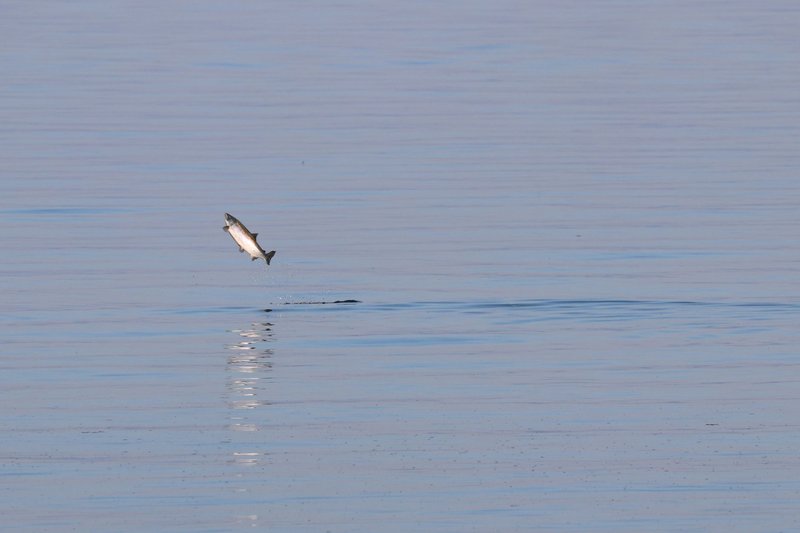
The fish Scotland is built around, commercially and culturally. Salmon hatch in river gravel, spend one to three years in fresh water, then head out to feeding grounds off Greenland and the Norwegian Sea before returning — often to the exact river they were born in — to spawn.
That return is getting rarer. In December 2023, Atlantic salmon were reclassified from “least concern” to endangered in Great Britain, reflecting a 30–50% decline in British populations since 2006. The most recent government assessment found 115 of 173 Scottish stocks in poor conservation status for the 2026 season, down from 61 stocks rated good in 2017 to a proposed 32. Scientists point to shifting ocean conditions tied to climate change as a major driver, on top of pressures closer to home.
Brown trout and sea trout
Genetically the same species, living two different lives. Brown trout stay put in a loch or burn their whole lives, territorial and often surprisingly localized — a trout from one end of a loch may never cross to the other. Sea trout make the same salmon-style run to open water and back, growing larger and silvering up in the process. You’ll find brown trout in nearly every body of fresh water in Scotland that isn’t actively hostile to fish life, which makes them the default catch for most anglers and the species least likely to disappear from a river system entirely.
Grayling, the “Lady of the Stream”
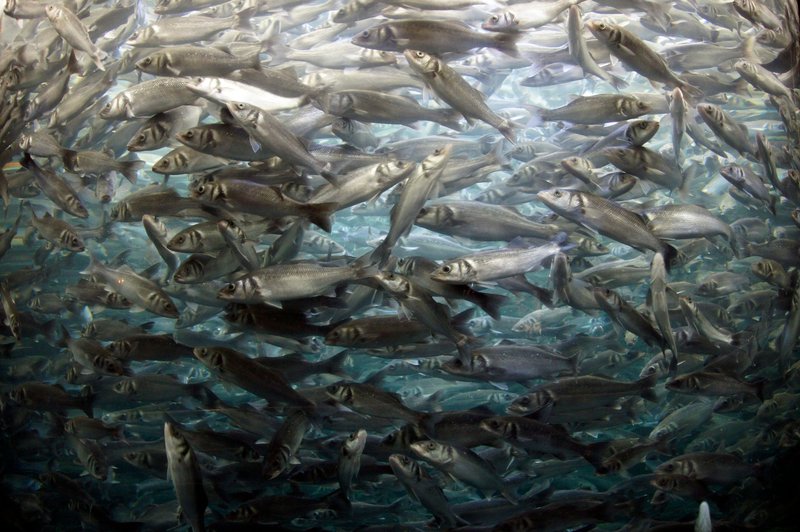
Grayling get their nickname from a sail-like, purple-flecked dorsal fin that looks more ornamental than functional. For most of Scottish fishing history they were treated as vermin — competitors for salmon and trout, culled on sight on some rivers. That reputation has flipped. Grayling feed actively through winter when salmon and trout are off-limits or dormant, which makes rivers like the Tay, Earn, Teviot, and Annan genuinely useful fisheries in the coldest months. Average fish run 7 to 12 inches; the British record stands at 4lb 3oz.
Arctic charr
Charr were likely the first fish to reach Scotland after the ice retreated, arriving as sea-run fish that colonized lochs and then, over thousands of years, lost the urge to migrate at all. What’s left are landlocked, genetically isolated populations — Scotland holds around 167 of the roughly 200 recorded UK populations, spread across 258 lochs. Each population is distinct enough that losing one isn’t like losing “some charr” — it’s losing a lineage that’s been sealed off since the last Ice Age, which is exactly why isolated populations are considered vulnerable to local extinction even where the species overall isn’t threatened.
Northern pike
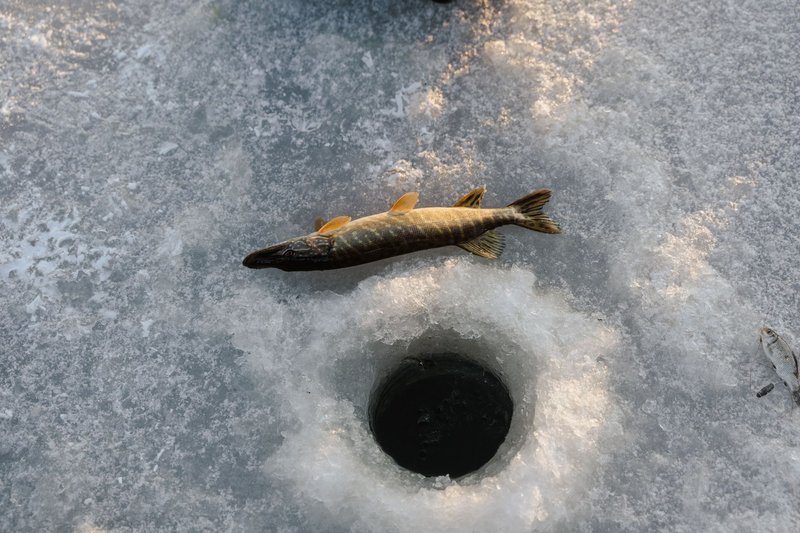
The ambush predator of Scottish freshwater. Pike hold motionless in weed beds, camouflaged by mottled green-and-gold flanks, then strike in a fraction of a second with a mouth full of backward-curving teeth built to keep prey from backing out. They’re solitary, territorial, and long-lived for a freshwater fish — individuals in undisturbed lochs can reach several decades old. Loch Lomond and several Highland lochs have long-standing reputations for producing outsized pike, a byproduct of stable habitat and minimal fishing pressure on the species compared to salmon and trout.
Powan
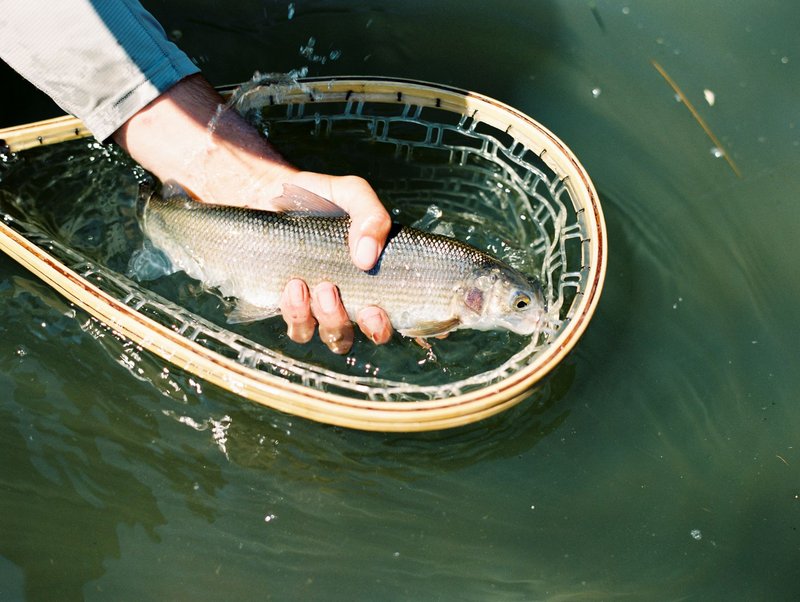
Scotland’s rarest native freshwater fish, and one almost nobody outside angling and conservation circles has heard of. Powan occur naturally in exactly two places on Earth: Loch Lomond and Loch Eck. They’re on the IUCN Red List and legally protected on Loch Lomond, where their main threat isn’t fishing — it’s ruffe, an invasive species introduced roughly 25 years ago that eats powan eggs faster than the population can replace them. Conservationists have translocated powan to Loch Sloy, Carron Valley Reservoir, and several Argyll lochs specifically to hedge against losing the species if either source loch collapses.
European eel
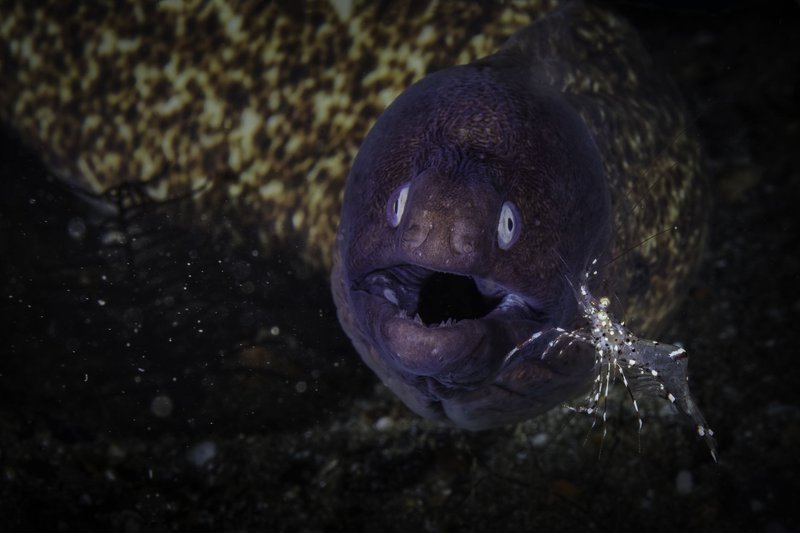
Eels run the salmon story in reverse. They’re born in the Sargasso Sea, drift across the Atlantic as larvae, arrive in Scottish rivers as glass eels, and then spend anywhere from a few years to multiple decades in fresh water before making one final journey back to the Sargasso to spawn and die. It’s an extraordinary life cycle, and it’s collapsing. The IUCN now classifies the European eel as critically endangered, and Scottish numbers are estimated to have fallen more than 90% since the 1990s, driven by hydroelectric dams blocking migration routes, historical overfishing, and parasites introduced through the aquaculture trade.
Scotland’s sea fish
This is the part of the species list every angling guide skips, because none of these fish end up on a hook and line the way salmon or trout do. It’s also where most of Scotland’s actual biodiversity lives.
Basking shark
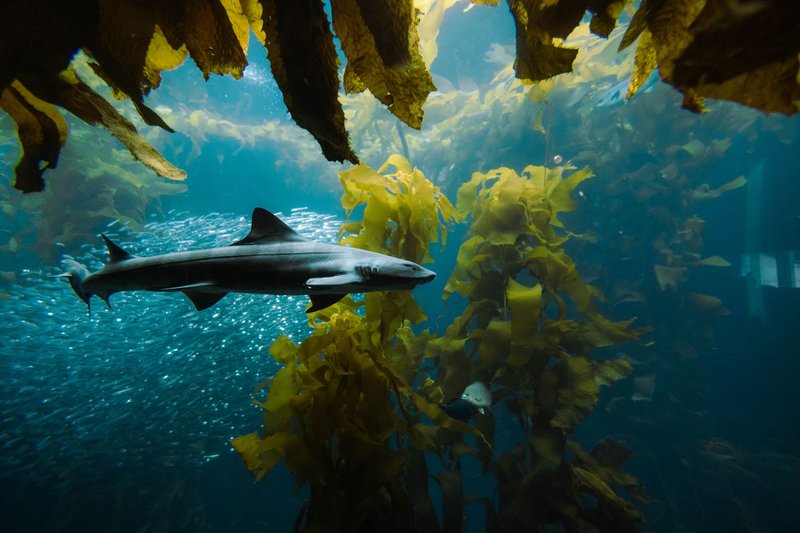
The second-largest fish on the planet, and a summer regular off the Hebrides. Basking sharks are filter feeders — despite a mouth that can gape over a metre wide, they’re after plankton, not swimmers — and they’ve had full legal protection in Scottish waters since 1998. The Sea of the Hebrides Nature Conservation Marine Protected Area, designated in December 2020, exists partly for them. Globally the species is listed as Endangered on the IUCN Red List, a status applied to European waters since 2015 and worldwide since 2019. Sightings have increased since 2005, which may point to partial recovery, though there’s still no agreed population count to confirm the trend either way.
Flapper skate
Until 2009, this fish was known as the “common skate” — a name that stopped making sense once genetic testing split it into two species, flapper skate and blue skate, and revealed that populations across much of its former European range had already been fished to local extinction. It’s now Critically Endangered on the IUCN Red List, and landing one commercially in Scotland has been illegal since 2009.
The exception is Scotland’s west coast, which has become one of the species’ last strongholds. The Loch Sunart to Sound of Jura Marine Protected Area, designated in 2015, and the Red Rocks and Longay MPA, added in 2021 after researchers found the largest known flapper skate nursery in Scotland, both protect resident populations. It’s working: the resident population at the Firth of Lorn site grew from 403 to 848 individuals between 2016 and 2019, a rare piece of good news for a critically endangered species.
Ballan wrasse
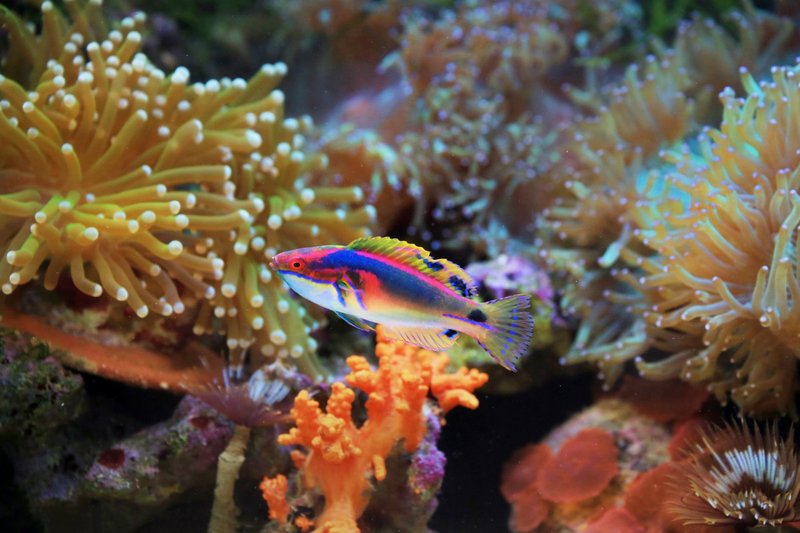
A heavy-bodied fish of rocky reefs and kelp forests down to about 30 metres, growing up to 65cm and living past 30 years. Ballan wrasse have thick, wrinkled lips hiding teeth strong enough to crush molluscs and barnacles straight off the rock, with a second set of crushing teeth in the throat to finish the job. Every ballan wrasse is born female; a portion switch to male somewhere between four and fourteen years old, a trait that makes them one of Scotland’s more genuinely strange sea fish.
Herring, cod, and haddock
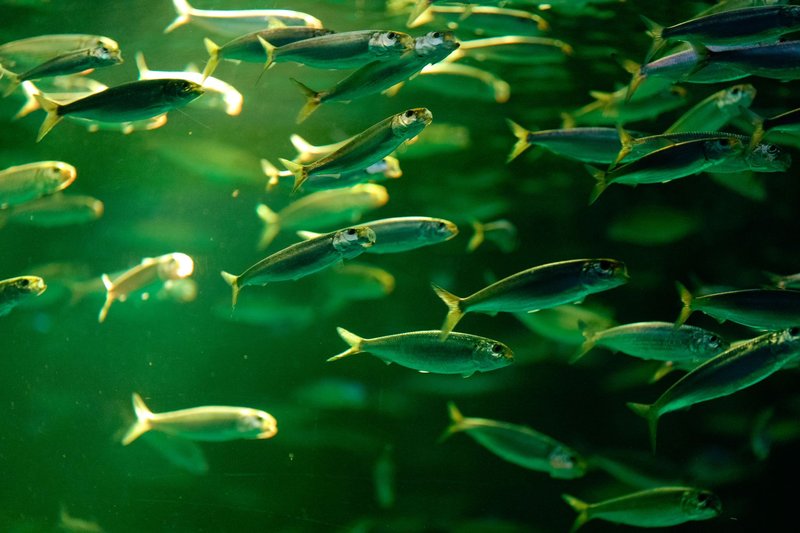
The commercial backbone of Scottish fishing for generations, and part of why “fish” and “Scotland” have been linked internationally long before any tourism board got involved. Herring built entire coastal economies around curing and export in the 19th and 20th centuries; cod and haddock remain the fish most likely to actually end up on a plate as a fish supper. None of the three get the folklore treatment salmon does, largely because they were never a sport fish — just the ones that fed people.
Sandeel
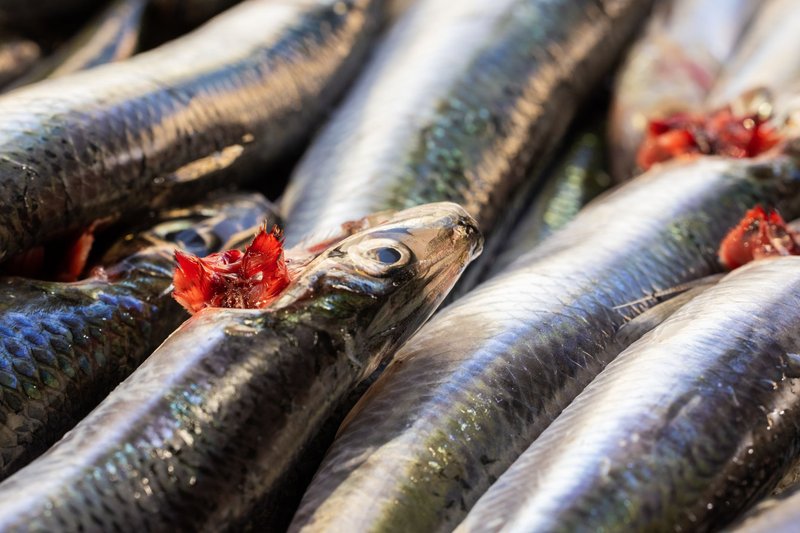
Barely finger-length, but arguably more important to Scotland’s marine food web than any fish on this list. Sandeels are the primary food source for seabirds, whales, and larger predatory fish across the North Sea, which is exactly why the Scottish Government banned industrial sandeel fishing in all Scottish waters from March 2024, a move that drew 97% support in public consultation. The EU challenged the closure under the UK-EU Trade and Cooperation Agreement; a dispute panel ruled in May 2025 that the ecological case against industrial sandeel fishing was sound and the closure could stand. It’s a small fish carrying an outsized amount of policy weight.
Is there a national fish of Scotland?
No, at least not officially. Scotland has a national animal (the unicorn, if you’re wondering) and a national flower, but no government body has ever designated a national fish. The question surfaces in search results mostly through Quora, which tells you no authoritative source has bothered to answer it directly. If there’s an unofficial answer, it’s Atlantic salmon — the species with the deepest cultural roots, the biggest commercial footprint, and the most column inches written about its decline.
Conservation status at a glance
| Species | Status | Why |
|---|---|---|
| Atlantic salmon | Endangered (Great Britain, 2023) | 30–50% population decline since 2006 |
| European eel | Critically Endangered (IUCN) | Over 90% decline in Scotland since the 1990s |
| Flapper skate | Critically Endangered (IUCN) | Historic overfishing; recovering in west coast MPAs |
| Basking shark | Endangered (IUCN) | Protected in Scotland since 1998 |
| Powan | Red-listed, legally protected | Confined to two lochs; threatened by invasive ruffe |
The pattern across this table is worth sitting with: none of these are obscure fish nobody’s heard of. Salmon and eels are two of the most culturally embedded species in Scotland, and both are in measurably worse shape than they were twenty years ago.
Scotland’s fish life was never just the eight species that show up on a fishing charter’s homepage. It’s an ice-age relict charr population that hasn’t interbred with its neighbors in 12,000 years, a critically endangered skate slowly rebuilding on the west coast, and a filter-feeding shark the size of a bus that’s fully protected by law. The game fish earned their reputation. They just aren’t the whole story.