Bolivia doesn’t get talked about the way the Amazon or the Galápagos do when the invasive species conversation comes up. It should. Between a fish that was never supposed to leave a Peruvian hatchery, a mosquito that spent years going undocumented, and a floating plant capable of choking a lake shore in a single growing season, the country is running several invasion stories at once, in three completely different ecosystems.
Bolivia has recorded around 150 introduced species. Roughly 20 plants, 7 vertebrates, and a small but consequential handful of invertebrates have crossed the line from “introduced” to “invasive,” meaning they’re established, spreading, and causing measurable harm rather than just existing quietly in a new place. That distinction matters, and it’s one most coverage of the topic skips.
Table of Contents
- Fast Facts
- How Species Get Into Bolivia in the First Place
- The Plants: Water Hyacinth, Arundo Donax, and Leucaena
- The Insects: A Mosquito and a Beetle
- The Water Invaders: Paiche and a Sewage Snail
- Where the Damage Is Concentrated
- What’s Actually Being Done
Fast Facts
- Bolivia has roughly 150 documented introduced species; about 20 plants, 7 vertebrates, and 1 confirmed invasive invertebrate are classified as actively invasive.
- The paiche (giant Amazon arapaima) escaped a Peruvian fish farm during a flood in the early 1990s and now occupies close to a quarter of the Bolivian Amazon.
- Lake Titicaca is fighting two separate invaders at once: water hyacinth choking its shallows and Physa acuta, an invasive freshwater snail, in its open water.
- Bolivia’s first confirmed record of the Asian tiger mosquito, a dengue vector, wasn’t published until 2024, despite the species likely being present for years before that.
How Species Get Into Bolivia in the First Place
Almost none of Bolivia’s invasive species arrived on purpose, and almost none arrived through a single obvious channel. The paiche got out during a flood. The tiger mosquito rode in on cargo and vehicle traffic across a border that’s porous by design, given how much cross-border trade Bolivia does with Brazil, Peru, and Argentina. Water hyacinth spreads the way it always does worldwide: as an ornamental pond plant that jumped the fence, then floated downstream.
What ties these cases together isn’t malice or even carelessness so much as scale. Bolivia sits at the intersection of three major biomes, the Amazon basin, the Andean altiplano, and the Chaco, and each one has its own points of entry: river traffic, aquaculture, agriculture, the pet and ornamental plant trade, and land-border crossings with five other countries. A species only needs one opening.
The Plants: Water Hyacinth, Arundo Donax, and Leucaena
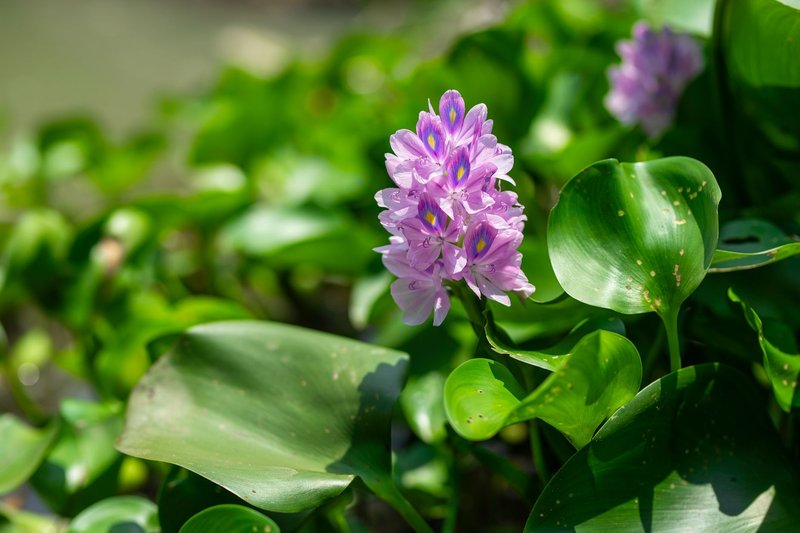
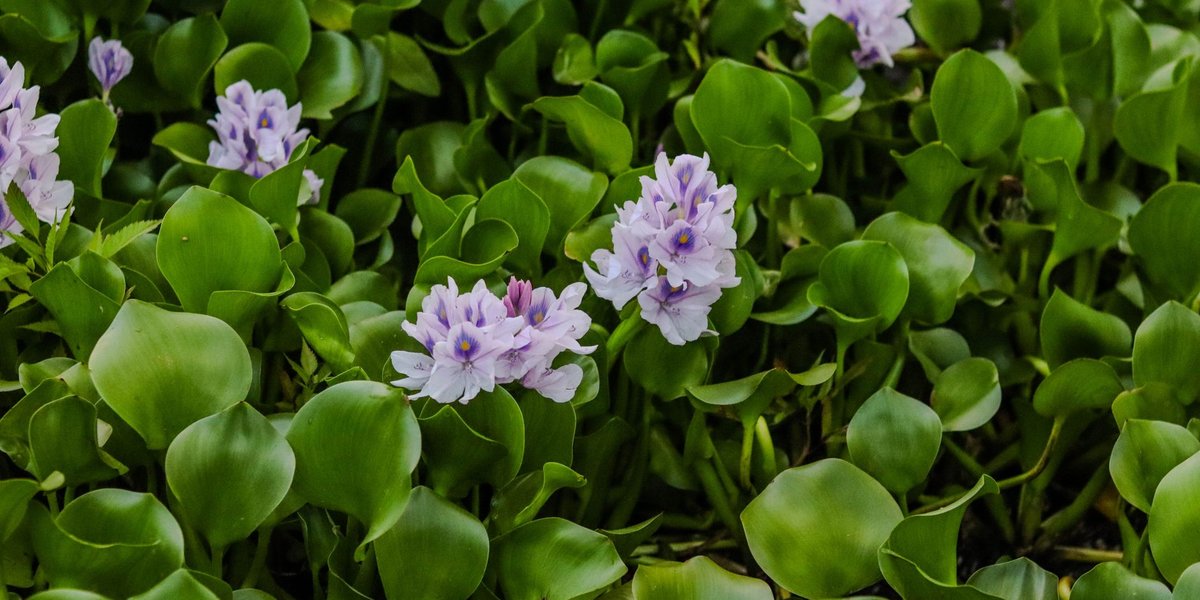
Water hyacinth (Eichhornia crassipes) is originally from the Amazon basin itself, which makes its spread through the rest of Bolivia and the world a little ironic. It’s native to South America broadly, but not to the specific still-water systems it now dominates, including parts of Lake Titicaca’s shallows. It’s widely ranked among the world’s 100 worst invasive species and one of the ten worst weeds outright. The plant forms floating mats dense enough to block sunlight and oxygen from the water beneath, which suffocates native aquatic life and turns clear shoreline into a green carpet within a season.
Arundo donax, giant reed, is a different kind of problem. It’s a woody grass that can grow several inches a day under the right conditions, and in Bolivia it’s established across the Aw climate zones, warm and seasonally wet lowland regions where it competes directly with native riverbank vegetation for water and light. Unlike water hyacinth, it doesn’t need standing water to spread. Root fragments carried downstream during flood season are enough to start a new colony.
Leucaena leucocephala rounds out the plant list, and it’s the one with the most complicated backstory. It was deliberately introduced across more than 130 countries, Bolivia included, for a genuinely good reason: it’s a fast-growing, nitrogen-fixing tree that works well for livestock forage and erosion control. The problem is that the same traits that make it useful, rapid growth and the ability to outcompete for nutrients, also make it nearly impossible to contain once it’s established outside a managed plot. The IUCN’s Invasive Species Specialist Group lists it among the world’s 100 worst invasive alien species.
The Insects: A Mosquito and a Beetle
The two insect invaders on Bolivia’s list matter for very different reasons: one is a public health issue, the other is an agricultural one.
The Asian tiger mosquito, Aedes albopictus, is the more urgent of the two. It’s a confirmed secondary vector for dengue, and in regions where its more common relative Aedes aegypti isn’t present, it becomes the primary vector for dengue, Zika, and chikungunya. What makes Bolivia’s case notable isn’t the mosquito’s presence, invasive mosquitoes rarely stay contained once they cross a border, but how long that presence went unconfirmed. The first peer-reviewed documentation of the species actually established in Bolivia wasn’t published until 2024, which means public health tracking had been working with an incomplete picture for an unknown stretch of years before that.
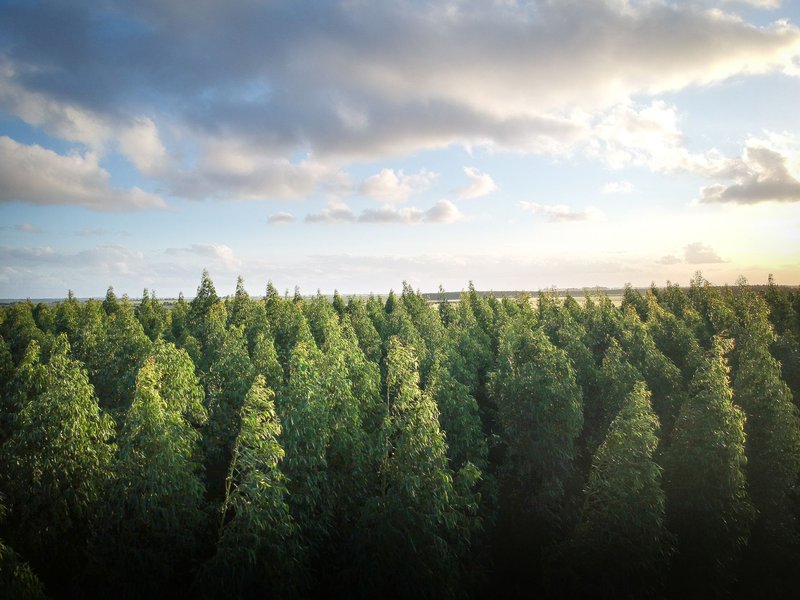
The other insect story is still developing. Bolivian news outlets have reported a snout beetle defoliating eucalyptus plantations, and the timing lines up with a broader pattern researchers have been flagging across South America. The Gonipterus scutellatus species complex, a group of Australian weevils that has already established itself as an invasive pest of eucalyptus in Argentina, Brazil, Chile, Colombia, and Uruguay, was flagged in a 2023 ecological modeling study as having high climatic suitability in Bolivia even though it hadn’t been formally recorded there yet. Eucalyptus is a commercial plantation species in Bolivia, grown for timber and pulp, so a beetle capable of stripping young leaves and new shoots isn’t a curiosity. It’s a line item on someone’s balance sheet.
The Water Invaders: Paiche and a Sewage Snail
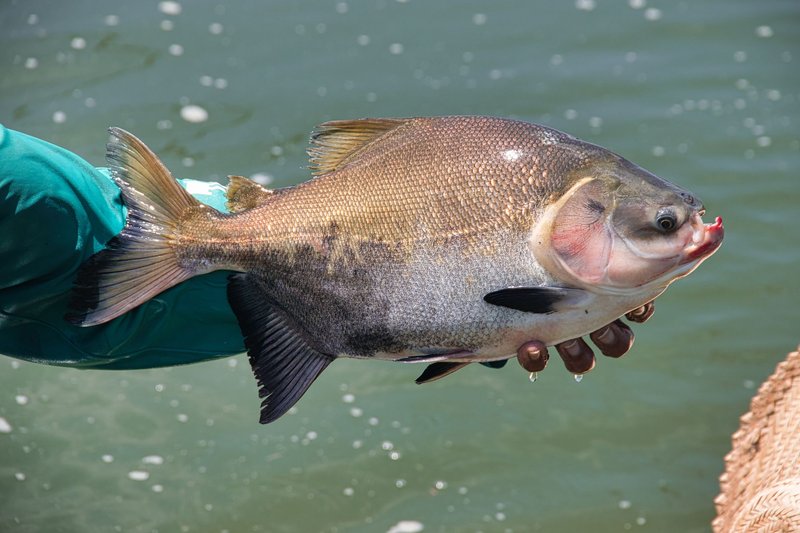
The paiche, also called arapaima, is Bolivia’s most visible invasive species story, mostly because it’s hard to ignore an air-breathing freshwater fish that can grow to nearly ten feet long. It’s native to Peru and Brazil, not Bolivia, and its arrival was almost accidental: floodwaters in the early 1990s washed juveniles out of a fish farm near the Peru-Bolivia border and into the Bolivian watershed. From that single event, the species has spread across more than 45,000 square miles, close to a quarter of the Bolivian Amazon.
What makes the paiche genuinely difficult to talk about is that it’s not a clean villain. Research published in PLOS ONE found its isotopic niche overlaps heavily with native fish, and lakes colonized by paiche show native predatory fish shifting toward lower trophic positions, essentially eating lower on the food chain because their usual prey has gotten scarcer. Fishermen interviewed by Mongabay describe native giant catfish like surubí and pintado, which now rank among rare animals in South America, becoming harder to find in paiche-colonized waters. At the same time, paiche now makes up as much as 80% of commercial fish catches in parts of the region. Communities that depend on that income have little incentive to see the fish removed, even as the ecological case against it builds.
Lake Titicaca has its own aquatic invader, and it’s easy to overlook because it’s small. Physa acuta, sometimes called the sewage snail, is native to North America and was first documented in Titicaca in 2007, found near a boat landing tied to an aquaculture facility on the Peruvian side of the lake, which points to aquaculture equipment or stock as the likely entry route. It’s since become abundant on submerged plants in the lake’s shallow zones. Researchers flagged concern about competition with Titicaca’s endemic snail species, and Physa acuta is also a known intermediate host for parasitic flatworms, adding a disease-transmission angle on top of the direct competition.
Where the Damage Is Concentrated
Bolivia’s invasion problem isn’t evenly distributed. It clusters around three regions, and each one has a different profile.
The Amazon basin carries the paiche invasion and most of the aquatic pressure tied to fish farming and river connectivity. The Titicaca basin, shared with Peru, deals with water hyacinth in the shallows and the Physa acuta snail in open water, plus broader habitat pressure on species like the Andes ispi and karachi that exist nowhere else. The Andean foothills and lowland plantation zones are where Arundo donax, Leucaena, and the eucalyptus beetle risk are concentrated, tied more to agriculture and land management than to any single waterway.
That regional split matters for anyone trying to actually do something about it, because a control strategy built for a river system doesn’t transfer cleanly to a high-altitude lake or a plantation zone.
What’s Actually Being Done
This is the part most coverage skips entirely, and it’s not a flattering picture. Bolivia introduced a governmental initiative on invasive species back in 2007, but nearly two decades on, the country still lacks a comprehensive national management strategy or a fully updated public database. The Global Register of Introduced and Invasive Species, compiled through the Invasive Species Specialist Group between 2011 and 2020, remains one of the only consolidated, verified checklists of what’s actually established in the country.
On the ground, response has been mostly local and reactive rather than coordinated. Fishing communities in the Amazon have effectively become the paiche’s management strategy by default, harvesting it commercially because there’s no other mechanism in place. Titicaca’s water hyacinth gets manually cleared in some areas the way it does around the world, by hand or with machinery, because biological or chemical controls carry their own risks in a lake that communities also fish and drink from. The tiger mosquito falls under general dengue vector-control programs rather than anything specific to its invasive status. None of it adds up to the kind of systemic response researchers who study the issue have been calling for.
That gap is really the story here. Bolivia has real biodiversity at stake in the Amazon and at Titicaca, both places with species found nowhere else on the planet, and the invasive species working against them are well enough understood, individually, to act on. What’s missing isn’t the science. It’s the coordination to use it.