Most searches for the plants of Dominica dead-end in one of two places: a thin “Top 20” app landing page with no actual content, or a bare taxonomic list on Wikipedia with fourteen species and zero context. Neither tells you what you’re looking at when you step off a plane onto an island that’s over 60% rainforest, or why a small red-flowering tree gets its own line in the national symbols.
This is the version that actually explains it — organized by where you’d encounter each plant, not by alphabet.
Table of Contents
- Rainforest & Endemic Species
- Bwa Kwaib: The National Flower
- Coastal & Dry-Zone Plants
- Tropical Fruits You’ll Actually Recognize
- Medicinal & Traditional-Use Plants
- Where to See Them
Rainforest & Endemic Species
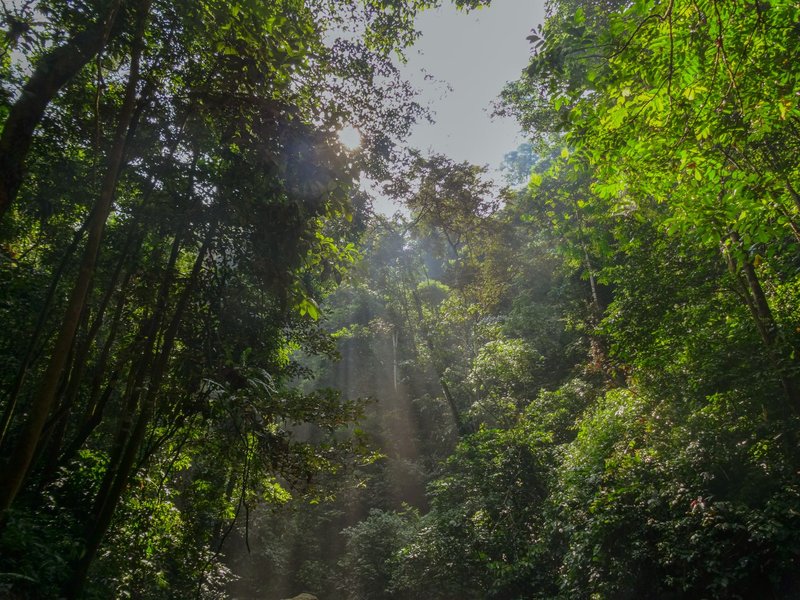
Dominica’s interior is dense, wet, and mountainous enough that a good chunk of it — including Morne Trois Pitons National Park — has never been cleared for agriculture. That’s the reason the island holds onto species you won’t find on its more developed neighbors.
The canopy is dominated by the gommier (Dacryodes excelsa), a towering hardwood the Kalinago have used for centuries to carve dugout canoes, a practice that’s still alive today. The 1997 Gli Gli Canoe Project hollowed one out of a single gommier trunk and launched a 35-foot vessel built with the same hand adzes and know-how used generations earlier. Lower in the canopy grows bois bandé (Richeria grandis), whose bark gets steeped in rum as a folk tonic across the Eastern Caribbean — you’ll see bottles of it behind almost any rum shop bar on the island.
Below the big trees, the understory is where Dominica gets genuinely strange in a good way: hundreds of fern species and dozens of orchids cling to trunks and branches alongside bromeliads and mosses. One of them, Epidendrum discoidale, grows here and nowhere else on Earth — a small, unshowy orchid that botanists still travel to Dominica specifically to find, according to the National Tropical Botanical Garden’s plant database.
Bwa Kwaib: The National Flower
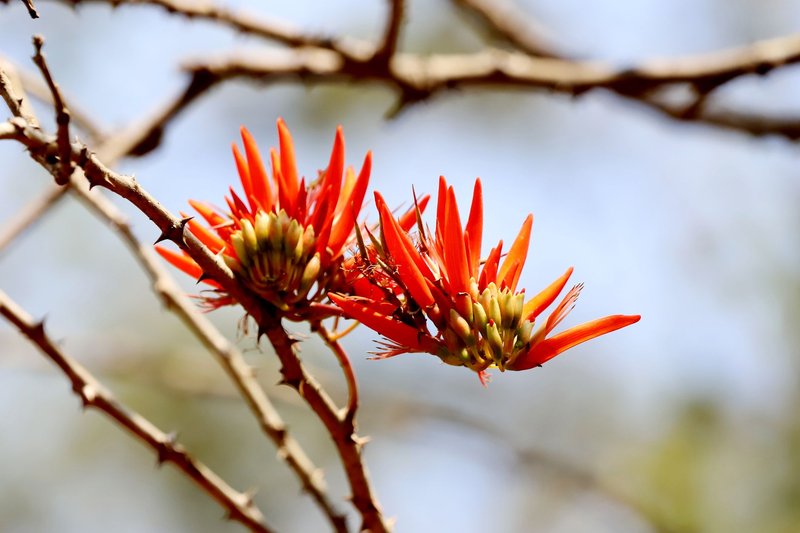
Dominica’s national flower isn’t a delicate garden bloom — it’s a small, tough deciduous tree that spends most of the year looking unremarkable, then turns fully scarlet for a few weeks between February and April. Botanically it’s Sabinea carinalis (also catalogued as Poitea carinalis), known locally as bwa kwaib, or Carib Wood.
It’s endemic to Dominica’s drier coastal woodlands, where it survives conditions that would kill a rainforest species — hence the local nickname tying it to Dominican resilience. According to Dominica’s government portal, it was formally legislated as the national flower alongside the flag and coat of arms in 1978. When it flowers, the whole tree goes red at once, visible from a mile off against the green hillsides — there’s no mistaking it for anything else on the island.
Coastal & Dry-Zone Plants
Head to the leeward, southwestern side of the island and the vegetation changes fast. Rainfall drops, and the tall wet forest gives way to scrub woodland, sea grape, and hardy, drought-tolerant species — the same dry-zone habitat where bwa kwaib thrives. It’s a sharper contrast than you’d expect from an island this size: cross from the windward coast to the leeward side and you go from dripping epiphytes to plants built to survive weeks without rain.
Tropical Fruits You’ll Actually Recognize
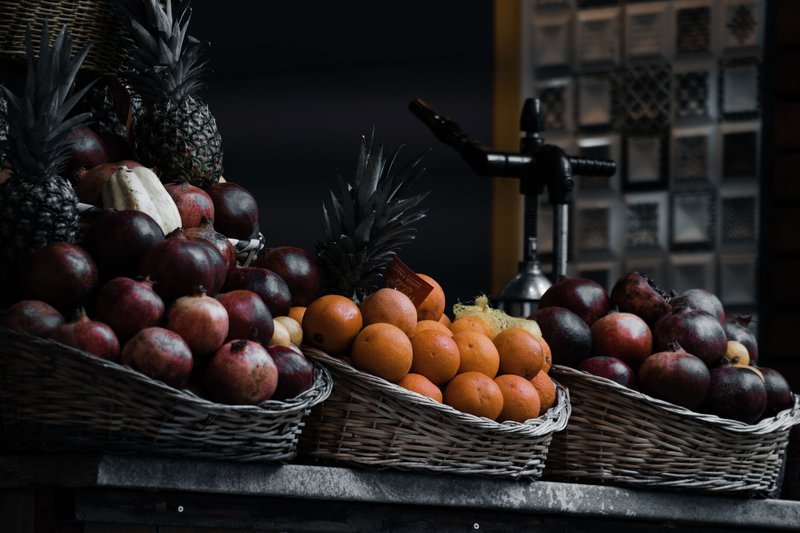
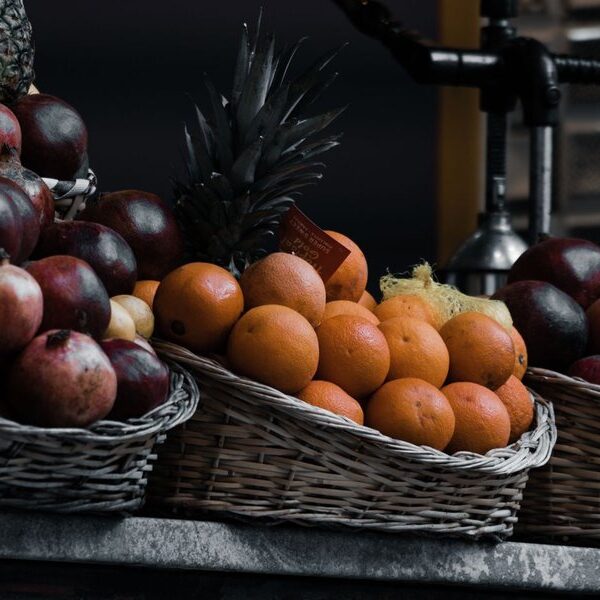
Dominica is sometimes called the breadbasket of the Caribbean, and the produce backs that up. Breadfruit — introduced across the region in the 18th century and now a kitchen staple — gets roasted, fried, or stewed rather than eaten raw. Dasheen, a starchy taro root rather than a true fruit, anchors the national dish and shows up in soups and provisions across the island.
Soursop (locally graviola) has a tangy, almost citrus-sour white flesh that gets blended into juice rather than eaten by hand — most people find it too fibrous otherwise. Barbadine, a larger, milder relative of passion fruit, and guava both go straight into the same juice rotation, alongside mango, pineapple, and papaya when they’re in season. None of this is exotic tasting-menu material — it’s what’s actually on the table at a roadside stand in Roseau.
Medicinal & Traditional-Use Plants
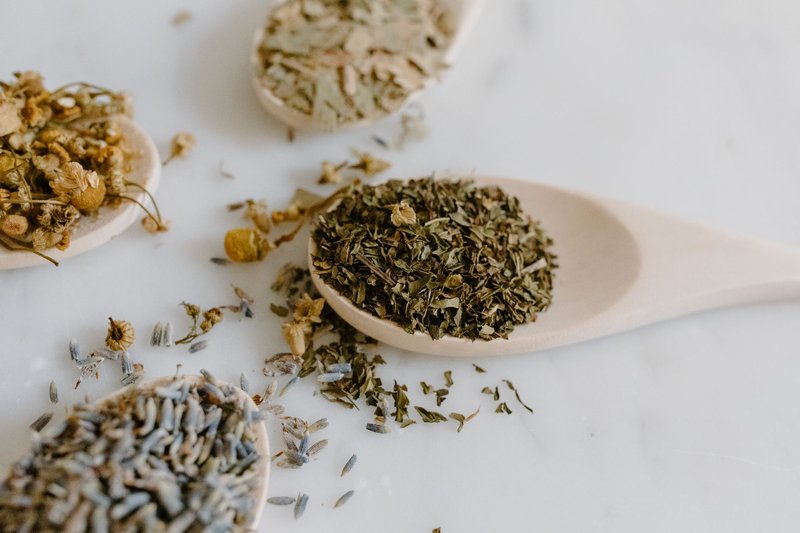
Bush tea isn’t a wellness trend here — it’s a continuous tradition going back to Kalinago plant knowledge, layered with practices brought by enslaved Africans, as documented in the New York Botanical Garden’s guide to Dominican medicinal plants. It’s still common enough that a wide majority of households on the island keep at least a few plants specifically for infusions rather than eating.
The clearest example of that knowledge paying off outside Dominica is periwinkle (Catharanthus roseus). The Caribs brewed its leaves into a tea for diabetes long before anyone isolated its chemistry — modern pharmacology later extracted the vinca alkaloids from that same plant to produce vincristine and vinblastine, drugs still used in chemotherapy today. Ginger and turmeric round out the everyday bush medicine cabinet, used respectively as a general antioxidant and a folk antibacterial. Dominica also reports one of the highest rates of centenarians per capita anywhere, something locals and researchers alike tend to credit at least partly to a diet built around these plants rather than processed food.
Where to See Them
If you want to see a cross-section of everything above without weeks of hiking, three places cover most of it.
The Dominica Botanic Gardens in Roseau is the easiest starting point — 40 acres in the middle of town, planted from 1890 onward with species supplied in part by botanists from London’s Royal Botanic Gardens, Kew, which was standard practice across Britain’s colonial botanic garden network. Jack’s Walk Trail climbs out of the gardens toward Morne Bruce for anyone who wants elevation without committing to a full-day hike.
For the real rainforest and cloud-forest transition, the trail to Boeri Lake climbs into cooler, wetter terrain where the trees get shorter and mossier the higher you go — classic elfin forest conditions. And if you have the time, the 115-mile Waitukubuli National Trail strings together nearly every zone in this guide in a single route: rainforest, elfin forest, and coastal scrub, one segment at a time. It’s the closest thing Dominica has to a plant-by-plant table of contents you can actually walk.