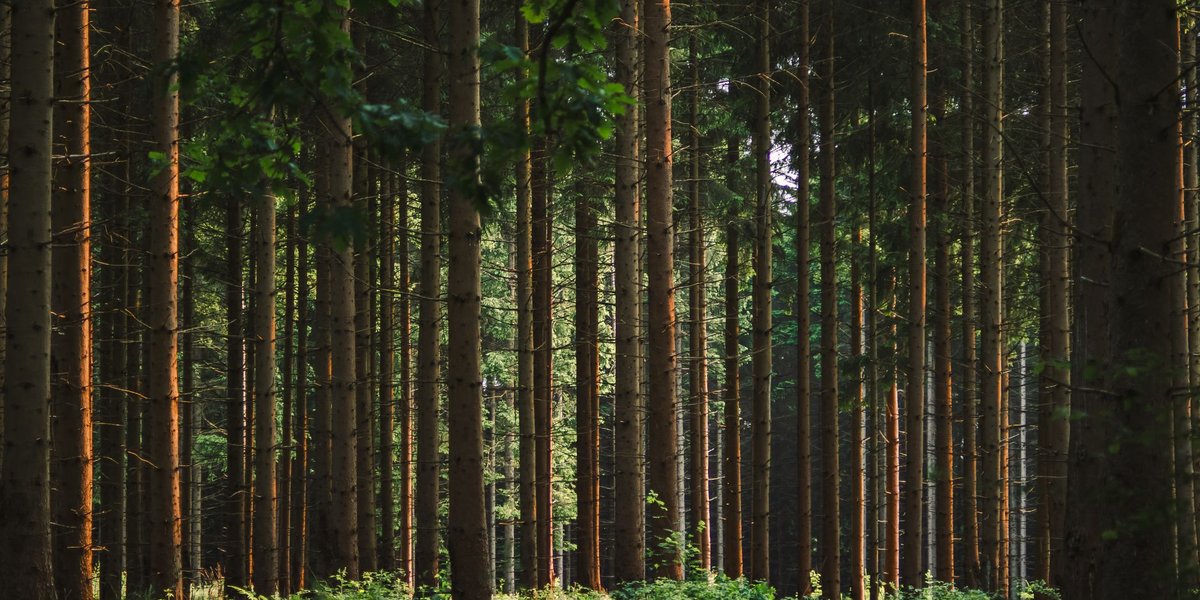
The US has roughly 1.4 trillion trees on its contiguous forestland, according to USDA Forest Service inventory data, and about 881 native species to sort them into. Most people can name five. This guide covers twenty of the trees of the United States that matter most, grouped by the region where you’ll actually meet them.
Every tree gets the same block: scientific name, range, how to identify it, size, uses, and one fact worth repeating. A comparison table, an identification primer, and a section on the tallest and oldest trees sit around the profiles.
Table of contents
- How many trees are in the United States?
- How to identify a tree: leaves, needles and bark
- Quick comparison table
- Northeast
- Southeast
- Midwest and Great Plains
- Rocky Mountains
- Pacific Coast
- Alaska and Hawaii
- Tallest, biggest and oldest trees in the US
- Native vs. introduced trees
- Threats to US trees
- Summary
How many trees are in the United States?
The 1.4 trillion figure is a count of stems on forestland in the lower 48, and it includes small trees as well as the giants. It tells you more about the scale of American forests than about any single species. Forests cover roughly a third of the country, and the Forest Service’s Forest Inventory and Analysis program measures a grid of plots to keep the tally.
The species count is the more useful number. The Morton Arboretum’s checklist of US trees lists 881 native tree species. Most of them are not forest giants. Hundreds are small, local, or limited to a single state, like the Florida torreya or the Catalina ironwood. The trees most Americans see belong to a much shorter list, dominated by oaks, maples, pines and a few dozen others.
Geography sorts that list. A tree that thrives in the Appalachian cold will not survive Gulf Coast humidity, and nothing from the fog belt of California grows in the Plains. So the profiles below are grouped by region instead of alphabetically.
How to identify a tree: leaves, needles and bark
Three cues solve most identifications. Check them in this order.
1. Leaf arrangement. Look at how leaves attach to the twig. If they sit directly across from each other in pairs, the tree is opposite-leaved. If they alternate up the twig, it’s alternate. Opposite arrangement is rarer, which makes it useful. The mnemonic is MAD Buckeye: maple, ash, dogwood and buckeye (plus horse chestnut) are the opposite-leaved trees you’ll meet most often. Almost everything else, including every oak, beech, birch and poplar, is alternate.
2. Leaf shape. Is the leaf simple (one blade on a stalk) or compound (several leaflets)? Is the edge smooth, toothed or lobed? Oaks split into two camps by lobe tips: rounded lobes mean the white oak group, pointed lobes with tiny bristles mean the red oak group. Maples have palmate leaves with lobes that radiate from one point.
3. Needle bundles. For conifers, count. Pines grow needles in bundles, called fascicles, of two, three or five. Eastern white pine has five. Loblolly has three. Lodgepole has two. Spruce needles are stiff, four-sided and roll between your fingers. Fir and hemlock needles are flat. Douglas-fir needles are flat too, but its cones give it away.
Bark is the tiebreaker, and it’s the only cue that works year-round on a bare hardwood. Smooth blue-gray bark that looks like elephant skin is a beech. White bark with dark scars is aspen or birch. Orange plates that smell like vanilla mean ponderosa pine. Check the ground too: acorns, cones and seed pods under the tree narrow things fast.
Quick comparison table
| Tree | Main region | Leaf type | Typical height |
|---|---|---|---|
| Sugar maple | Northeast | Broadleaf, opposite, lobed | 60-80 ft |
| Eastern white pine | Northeast | Needles, bundles of 5 | 80-100 ft |
| American beech | Northeast | Broadleaf, toothed | 50-80 ft |
| Eastern hemlock | Northeast | Flat needles | 60-70 ft |
| Loblolly pine | Southeast | Needles, bundles of 3 | 90-110 ft |
| Bald cypress | Southeast | Deciduous feathery needles | 100-120 ft |
| Southern live oak | Southeast | Evergreen broadleaf | 40-80 ft |
| Southern magnolia | Southeast | Evergreen broadleaf | 60-80 ft |
| Northern red oak | Midwest/East | Broadleaf, pointed lobes | 60-80 ft |
| Eastern cottonwood | Plains/Midwest | Broadleaf, triangular | 80-100 ft |
| Bur oak | Midwest/Plains | Broadleaf, rounded lobes | 70-80 ft |
| Quaking aspen | Rockies | Broadleaf, rounded | 40-60 ft |
| Ponderosa pine | Rockies/West | Needles, bundles of 2-3 | 60-130 ft |
| Lodgepole pine | Rockies | Needles, bundles of 2 | 40-80 ft |
| Coast redwood | Pacific Coast | Flat needles | 200-300 ft |
| Giant sequoia | Sierra Nevada | Scale-like leaves | 150-280 ft |
| Douglas-fir | Pacific/Rockies | Soft single needles | 100-250 ft |
| Bigleaf maple | Pacific Coast | Broadleaf, huge lobed | 50-100 ft |
| Sitka spruce | Alaska/Pacific | Sharp four-sided needles | 150-200 ft |
| ʻŌhiʻa lehua | Hawaii | Broadleaf, leathery | Shrub to 80 ft |
Northeast
The Northeast is the home of the maple-beech-birch forest and the white pine. It’s also where fall color becomes an industry, since sugar maple, red maple and red oak do most of the work.
Sugar maple
Acer saccharum
- Range: New England and the Great Lakes states, south through the Appalachians.
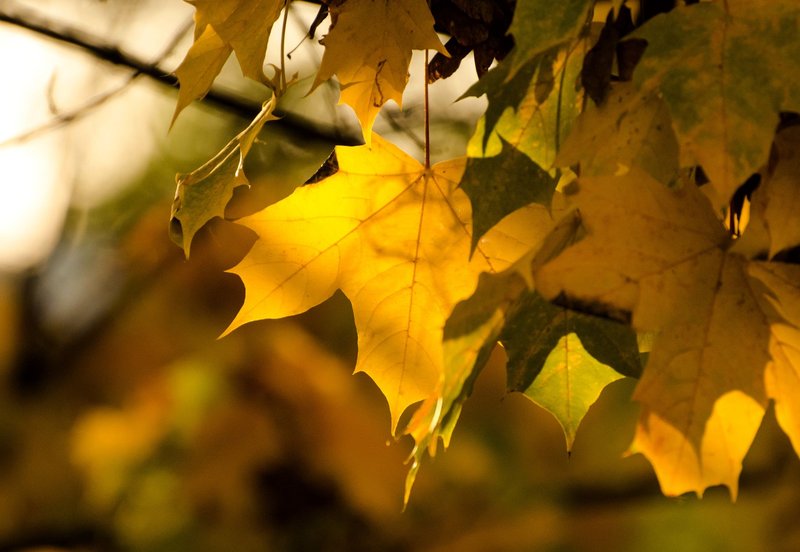
- Identify: Opposite leaves with five lobes, smooth edges and U-shaped gaps between lobes. Gray bark that turns shaggy with age.
- Size: 60-80 feet tall.
- Uses: Maple syrup, which takes about 40 gallons of sap to make one gallon. The dense hardwood goes into gym floors and bowling lanes.
- One fact: Four states (New York, Vermont, Wisconsin and West Virginia) claim it as their state tree.
Eastern white pine
Pinus strobus
- Range: Maine to northern Georgia and west through the Great Lakes.
- Identify: Soft, bluish-green needles in bundles of five, 2.5 to 5 inches long. Smooth gray-green bark on young trees, deep furrows on old ones.
- Size: 80-100 feet, with old specimens taller.
- Uses: Timber, furniture, and food and cover for birds and squirrels.
- One fact: In colonial times, the British Crown reserved the biggest white pines for Royal Navy masts, a rule colonists often ignored.
American beech
Fagus grandifolia
- Range: Eastern US from Maine to east Texas.
- Identify: Smooth, blue-gray bark. Oval leaves with straight parallel veins ending in teeth. Copper leaves often stay on young trees all winter.
- Size: 50-80 feet.
- Uses: Beechnuts feed bears, turkeys and deer. The wood is used for flooring and tool handles.
- One fact: Carved initials never heal over, which is why old beeches look like guest books. Beech bark disease now roughens and cankers the bark of trees across the Northeast.
Eastern hemlock
Tsuga canadensis
- Range: New England through the Appalachians to northern Georgia and Alabama, and across the Great Lakes.
- Identify: Flat needles about half an inch long, with two white stripes underneath. Tiny cones, about the size of a thumbnail.
- Size: 60-70 feet, with some old trees over 100.
- Uses: Winter shelter for deer and grouse. Shade that keeps mountain streams cold enough for brook trout.
- One fact: Pennsylvania’s state tree. The hemlock woolly adelgid, an insect from Asia, has killed hemlocks across the southern Appalachians.
Southeast
Southeastern forests are warm, wet and busy. Pine plantations cover enormous acreage, while the river bottoms hold swamp trees that look like part of another continent.
Loblolly pine
Pinus taeda
- Range: From Maryland and Delaware south to Florida and west to east Texas.
- Identify: Needles in bundles of three, 6 to 9 inches long. Dark, reddish-brown bark in scaly plates.
- Size: 90-110 feet.
- Uses: Pulpwood and lumber. It’s the most widely planted pine in the South.
- One fact: “Loblolly” is an old word for a muddy low spot, which is where the tree grows well.
Bald cypress
Taxodium distichum
- Range: Atlantic and Gulf coastal plains, and up the Mississippi Valley to southern Illinois.
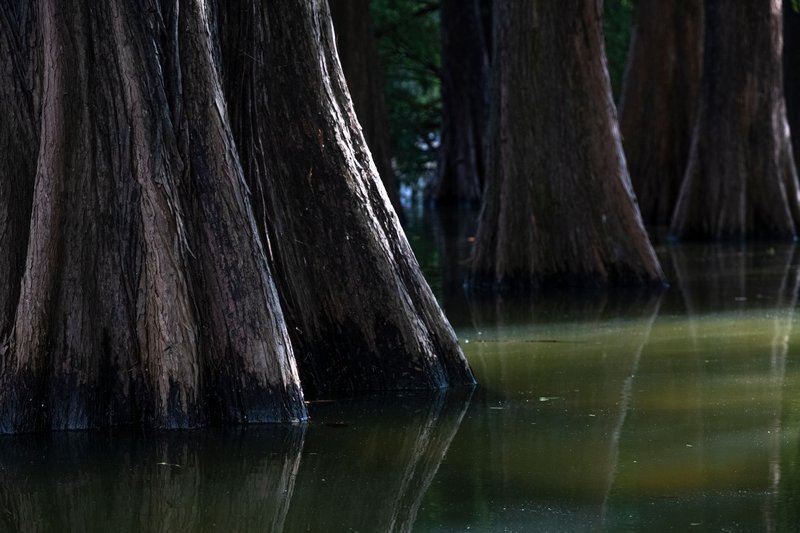
- Identify: Flat, feathery needles that turn rust-orange and drop in fall, which is odd for a conifer. A flared trunk base and woody “knees” that rise from the roots in standing water.
- Size: 100-120 feet.
- Uses: Rot-resistant lumber for siding, docks and boats. Cover for wood ducks and herons.
- One fact: Cypresses along North Carolina’s Black River have been dated at more than 2,600 years old, making them some of the oldest living trees in eastern North America.
Southern live oak
Quercus virginiana
- Range: Coastal plain from Virginia to Florida, and west to Texas.
- Identify: Evergreen oval leaves with smooth edges, dark above and pale below. Limbs that run horizontal, sometimes touching the ground.
- Size: 40-80 feet tall, with a crown that can spread 100 feet.
- Uses: Ship timber, shade, and acorns for deer, turkeys and squirrels.
- One fact: The hull of the USS Constitution, “Old Ironsides,” was built largely of live oak, and cannonballs bounced off it. Georgia’s state tree.
Southern magnolia
Magnolia grandiflora
- Range: Coastal plain from North Carolina through Florida to east Texas.
- Identify: Glossy evergreen leaves 5 to 8 inches long with rusty-brown felt on the underside. White flowers up to a foot across. Cones with red seeds.
- Size: 60-80 feet.
- Uses: Ornamental shade tree, furniture wood, and seeds for birds.
- One fact: Magnolias are among the oldest flowering plant lineages, and beetles, not bees, were their first pollinators. Mississippi’s state tree.
Midwest and Great Plains
Oak and hickory forests dominate the eastern half of the Midwest. West of that, trees thin out and cling to rivers and creeks. In the Plains, a tree usually signals water.
Northern red oak
Quercus rubra
- Range: Eastern and central US, from Maine and Nova Scotia west to Minnesota and south to Georgia and Alabama.
- Identify: Leaves with seven to eleven pointed, bristle-tipped lobes. Bark with flat-topped ridges and lighter streaks, called ski tracks.
- Size: 60-80 feet.
- Uses: Flooring, furniture and cabinets. It’s a common street tree for its fast growth and fall color.
- One fact: Red oak acorns take two growing seasons to mature, unlike white oak acorns, which ripen in one. New Jersey’s state tree.
Eastern cottonwood
Populus deltoides
- Range: River corridors across the eastern US and the Great Plains.
- Identify: Triangular leaves with coarse teeth on flat leaf stalks, so they rattle in light wind. Deeply furrowed gray bark on older trees.
- Size: 80-100 feet. Young trees can grow five feet a year.
- Uses: Pulpwood, shelterbelts and shade. Bald eagles and herons nest in the crowns.
- One fact: Plains travelers read a line of cottonwoods on the horizon as a sign of water. Kansas and Nebraska both claim it as their state tree.
Bur oak
Quercus macrocarpa
- Range: Central and eastern North America, from the prairie edge to the Great Lakes and the Ohio Valley.
- Identify: Leaves 6 to 12 inches long with a narrow “waist” between rounded lobes. Acorns with fringed caps, among the largest of any North American oak. Thick, corky, deeply ridged bark.
- Size: 70-80 feet.
- Uses: Acorns for deer, turkeys and squirrels. Strong lumber for barrels and furniture.
- One fact: The thick bark protects it from prairie fire, which is why old bur oaks stand alone on grasslands that burned for centuries.
Rocky Mountains
Conifers climb the slopes and aspen fills the gaps. Elevation decides everything: ponderosa pine at the dry low edge, lodgepole in the middle, spruce and fir near treeline.
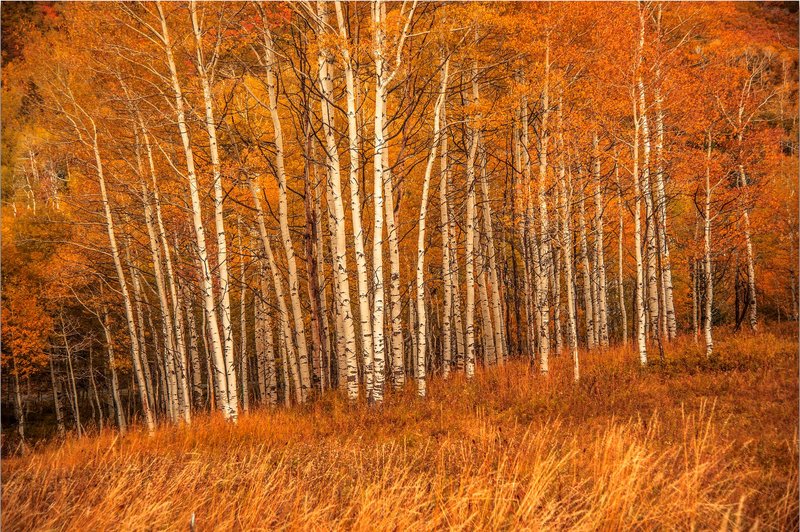
Quaking aspen
Populus tremuloides
- Range: The widest of any tree in North America, from Alaska to Newfoundland and from the Rockies down to Mexico.
- Identify: Round to heart-shaped leaves with fine teeth, on flat stalks that tremble in any breeze. Smooth, white-green bark with dark scars.
- Size: 40-60 feet.
- Uses: Elk, deer and moose browse the shoots. Beavers eat the bark and build with the wood. It’s also used for pulp and matches.
- One fact: A single aspen colony in Utah named Pando covers about 106 acres, holds roughly 47,000 stems that share one root system, and may be the heaviest living organism on Earth.
Ponderosa pine
Pinus ponderosa
- Range: Western US, from the Black Hills and the Rockies to the Pacific states and the Southwest.
- Identify: Needles 5 to 10 inches long in bundles of two or three. Orange-brown bark in puzzle-piece plates that smells like vanilla or butterscotch when you sniff the crevices.
- Size: 60-130 feet.
- Uses: Lumber, and nest holes for owls and woodpeckers.
- One fact: Mature ponderosas survive low-intensity ground fires because of their thick bark. A century of fire suppression has turned many open ponderosa parklands into dense stands.
Lodgepole pine
Pinus contorta
- Range: Rocky Mountains, the Sierra Nevada, the Pacific Northwest and western Canada.
- Identify: Needles in bundles of two, 1.5 to 3 inches long, often twisted. Thin, scaly bark and a straight, narrow trunk.
- Size: 40-80 feet.
- Uses: Construction lumber and fence posts. The name comes from Native peoples’ use of the straight poles for lodges and tipis.
- One fact: Many lodgepole cones are serotinous, which means they stay sealed with resin until fire melts it. After the 1988 Yellowstone fires, dense stands of lodgepole seedlings came up across the burn.
Pacific Coast
The Pacific Coast holds the biggest trees on Earth. Fog, mild winters and heavy rain feed them, and they grow in a narrow band between the ocean and the mountains.
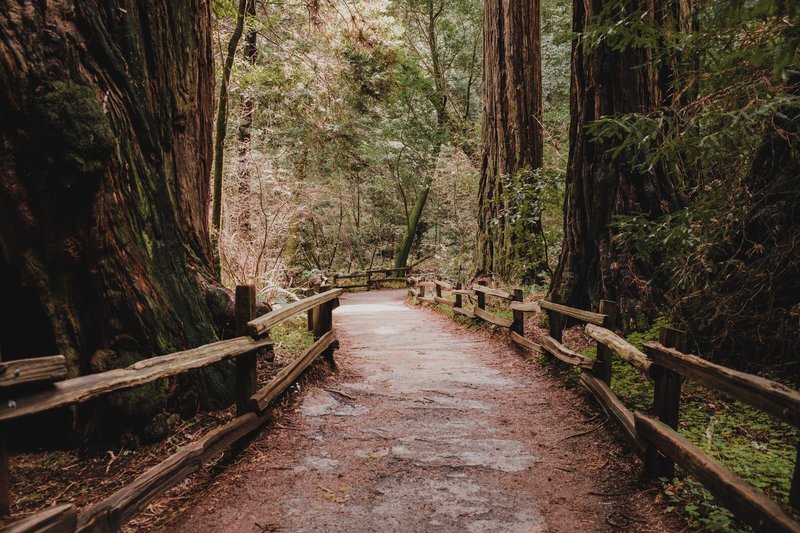
Coast redwood
Sequoia sempervirens
- Range: A strip roughly 450 miles long along the coast, from southwest Oregon to Big Sur, California.
- Identify: Flat needles in two rows along the twig. Thick, soft, red-brown bark with deep vertical fibers. Cones about an inch long.
- Size: 200-300 feet typical, with the tallest living tree at about 380 feet.
- Uses: Rot-resistant timber. Roughly 95 percent of old-growth redwood was logged, so most remaining giants are protected in places like Redwood National and State Parks.
- One fact: Redwoods absorb fog water directly through their needles, which is how the tops of 300-foot trees stay hydrated.
Giant sequoia
Sequoiadendron giganteum
- Range: About 75 groves on the western slope of the Sierra Nevada in California, at 5,000 to 8,000 feet.
- Identify: Awl-shaped, scale-like leaves hugging the twig. Spongy, cinnamon-red bark up to two feet thick. Egg-shaped cones about 2 to 3 inches long.
- Size: 150-280 feet tall, with trunks 20 to 30 feet across.
- Uses: Almost none now. The groves are protected, including in Sequoia and Kings Canyon National Parks.
- One fact: The General Sherman tree is about 275 feet tall and holds roughly 52,500 cubic feet of wood, which makes it the largest tree on Earth by volume.
Douglas-fir
Pseudotsuga menziesii
- Range: Pacific Coast from British Columbia to central California, and the Rockies from Canada to Mexico.
- Identify: Soft, flat needles about an inch long, attached singly all around the twig. Cones with three-pointed bracts that stick out between the scales like a mouse’s hind legs and tail.
- Size: 100-250 feet on the coast, shorter in the Rockies.
- Uses: The leading lumber species in the US. It frames houses across the country.
- One fact: It isn’t a true fir. The genus name means “false hemlock.” Oregon’s state tree.
Bigleaf maple
Acer macrophyllum
- Range: Pacific Coast from British Columbia to southern California.
- Identify: Opposite leaves with five deep lobes, 6 to 12 inches across and sometimes much larger, the biggest of any maple. Limbs often draped in moss and ferns.
- Size: 50-100 feet.
- Uses: Figured maple for guitar and violin backs. Small-scale syrup.
- One fact: The moss-covered branches are a miniature garden that supports ferns, lichens and even other plants’ roots.
Alaska and Hawaii
The two states with the least in common do share one thing: their forests hold trees found nowhere else in the US.
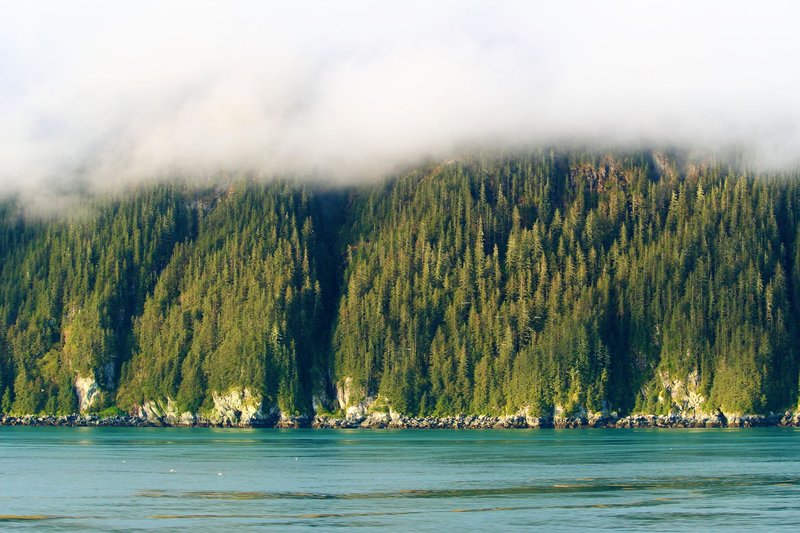
Sitka spruce
Picea sitchensis
- Range: The coastal fog belt from northern California to Kodiak Island, Alaska.
- Identify: Stiff, sharp, four-sided needles that prick your palm. Gray-purple bark in thin, scaly plates.
- Size: 150-200 feet, with trunks over 10 feet across in old trees.
- Uses: Lumber, guitar and piano soundboards, and, historically, aircraft frames in World War I.
- One fact: Alaska’s state tree dominates the Tongass National Forest, at about 17 million acres the largest national forest in the country.
ʻŌhiʻa lehua
Metrosideros polymorpha
- Range: Native across the Hawaiian Islands, from sea level to high mountain slopes.
- Identify: Rounded, leathery leaves that vary from smooth to hairy. Pompom flowers, usually red, sometimes orange or yellow.
- Size: Anything from a low shrub on bare lava to a tree 80 feet tall in rainforest.
- Uses: Dense wood for tools and building. Flowers are made into lei and feed native honeycreepers.
- One fact: It is often the first plant to colonize a fresh lava flow. Rapid ʻŌhiʻa Death, a fungal disease, has killed more than a million trees on Hawaiʻi Island.
Tallest, biggest and oldest trees in the US
Three records get mixed up often, so keep them separate.
- Tallest: A coast redwood in Redwood National Park named Hyperion stands about 380 feet, taller than the Statue of Liberty with its pedestal.
- Biggest: The General Sherman giant sequoia has the largest trunk volume of any living tree. Pando, the Utah aspen colony, is the biggest living organism by mass if you count the whole root system.
- Oldest: Great Basin bristlecone pines in California’s White Mountains. The oldest known individual, nicknamed Methuselah, is roughly 4,800 years old. These pines grow slowly in thin, dry soil, which is why their wood resists decay and insects.
Native vs. introduced trees
A native tree grew in a region before European settlement. An introduced tree arrived from somewhere else, often as an ornamental. Many introduced trees stay polite. A few escape.
Tree of heaven, Norway maple and Callery pear all started as street or yard trees and now spread into forests and fields where they crowd out local species. A quick test for Norway maple: snap a leaf stalk and look for milky sap. Sugar maple’s stalk bleeds clear.
Native planting matters beyond principle. Local trees support more caterpillar species, which feed local birds, than most imports.
Threats to US trees
Trees live a long time, so they die slowly, and sometimes all at once. The Morton Arboretum’s data-sharing project finds that roughly 11 to 16 percent of native US tree species are threatened, with pests and disease as the main cause. Consumer tree guides rarely mention it.
The pattern repeats:
- American chestnut. Chestnut blight, a fungus that arrived around 1900, wiped out an estimated three to four billion trees. The species survives as sprouts that die back before they mature.
- American elm. Dutch elm disease, spread by bark beetles, emptied the elm-lined streets of the mid-twentieth century.
- Ash. The emerald ash borer, first found in Michigan in 2002, has killed hundreds of millions of ash trees.
- Hemlock and beech. An adelgid and a scale-fungus combination are working through each.
- ʻŌhiʻa. The Hawaiian fungus described above.
Most of these came in on shipping crates or nursery stock. Fire, drought and development add to the pressure.
Summary
Trees of the United States break into regions, and each region holds a few dominant species. The Northeast has sugar maple and white pine. The Southeast has loblolly pine, bald cypress and live oak. The Midwest and Plains run on oaks and cottonwoods. The Rockies belong to ponderosa, lodgepole and aspen. The Pacific Coast grows redwoods, sequoias and Douglas-fir, and Alaska and Hawaii have the Sitka spruce and the ʻōhiʻa.
To identify any of them, check leaf arrangement, leaf shape or needle bundle, and bark, in that order. Of the 881 native species, most people will never learn more than a handful, and the best way to start is to pick one tree on your street and work out what it is.