Contents
- TLDR
- What do Sunda slow lorises eat in the wild?
- How much of the diet is gum, nectar and fruit?
- Why do the percentages differ between studies?
- How does a slow loris eat tree gum?
- Does the diet change with the seasons?
- Do slow lorises eat toxic food?
- What do Sunda slow lorises eat in captivity?
- How does it compare with other slow lorises?
- Why can’t a pet loris be fed properly?
TLDR
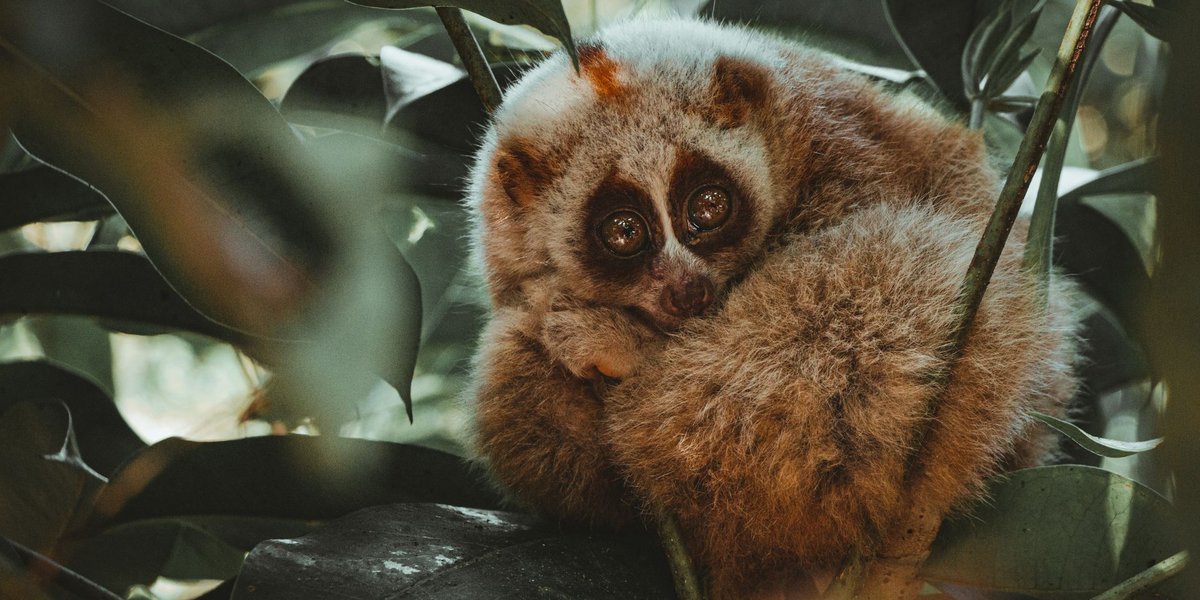
Sunda slow lorises (Nycticebus coucang) are omnivores that eat mostly tree gum, sap, nectar and fruit. Insects, spiders, snails and bird eggs make up a small share, around 2.5% in one field study. Gum and nectar each account for roughly a third of the diet in most summaries, with fruit close to a quarter.
What do Sunda slow lorises eat in the wild?
The Sunda slow loris diet is built on plant sugars. Tree gum and sap are the staple, nectar from flowers comes next, and fruit fills in behind them. Animal prey is the garnish: insects, spiders, snails and the occasional bird egg.
So is the slow loris an omnivore? Yes, technically. In practice it’s a gum-and-nectar feeder that picks up protein opportunistically, slowly, and usually at night. The Animal Diversity Web account of the species covers the same pattern: plant exudates and fruit first, small animals as a supplement.
How much of the diet is gum, nectar and fruit?
Numbers vary by study, but they point the same direction. Here are the ones worth comparing.
| Source | Gum / sap | Nectar | Fruit | Animal prey |
|---|---|---|---|---|
| Typical species-account summary | about 33% | about 33% | about 25% | small remainder |
| One 2002–2003 field study | 43.3% | 31.7% | 22.5% | 2.5% |
| Malaysian population, seasonal feeding study (2017) | about two-thirds exudates (gum and sap combined) | not split out here | not split out here | not split out here |
Read the middle row as the cleanest single snapshot: more than 40% gum, nearly a third nectar, about a fifth fruit, and a rounding error of insects. The 2017 seasonal feeding study from Oxford Brookes University found exudates making up roughly two-thirds of what a Malaysian population ate.
Why do the percentages differ between studies?
Top search results list the figures and stop there. The gaps have ordinary causes.
- Site. A loris in lowland forest has different trees available than one in a fragment or a plantation edge.
- Season. A study run over a dry spell and one run through a fruiting peak will not match.
- Method. Counting minutes spent feeding gives a different answer than counting feeding bouts. A loris that licks gum for twenty minutes and grabs a cricket in two seconds looks very different depending on the ruler.
- Sample size. Slow lorises are nocturnal, quiet and hard to follow. Many studies track a handful of animals.
None of this means one study is wrong. It means the honest answer is a range: exudates between roughly a third and two-thirds of the diet, nectar and fruit sharing most of the rest, animal prey in the low single digits.
How does a slow loris eat tree gum?
It makes the meal accessible first. Lorises gnaw or scrape at bark wounds and licking points on tree trunks, then use the toothcomb to do the work. The toothcomb is a row of narrow, forward-pointing lower teeth, the same tool that handles grooming. On a gum tree it works like a scraper, loosening hardened exudate that the tongue then collects.
Sap feeding turns up in field notes from unexpected places. A 2025 Nature in Singapore field note documents a loris feeding on sap in the city-state, a reminder that the habit is not limited to deep forest.
Nectar feeding is the other half of the story. A loris that licks flower after flower can carry pollen between them, which is why researchers treat these animals as possible pollinators and not just consumers.
Does the diet change with the seasons?
Yes, and the reason is simple. Fruit and flowers come in pulses. Gum is available year-round, so it works as the fallback when the trees stop producing something sweeter.
That’s why the exudate share can climb when fruit and nectar are scarce, and why a single-season study can mislead. If you see a headline figure with no season attached, treat it as a snapshot and not a rule.
Do slow lorises eat toxic food?
Often, and it costs them. Gum, sap and many plant parts carry defensive chemicals that most mammals avoid. Slow lorises have a very low metabolic rate, and one explanation researchers have discussed is that part of their energy budget goes toward coping with those compounds. The slow pace of life and the diet are linked.
The same animal is also one of the few venomous primates. It licks a secretion from a gland on the inside of its elbow and mixes it with saliva, so a bite can be dangerous. That has nothing to do with what it eats, but it’s the reason handling a wild loris is a bad idea.
What do Sunda slow lorises eat in captivity?
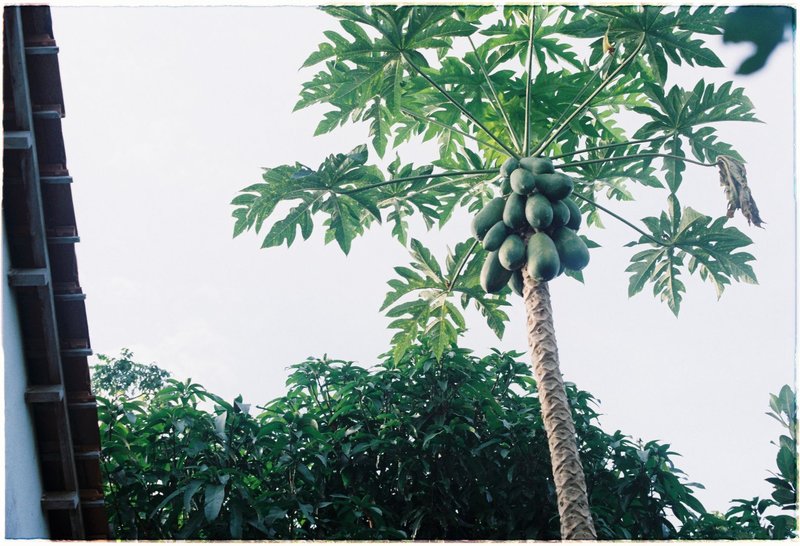
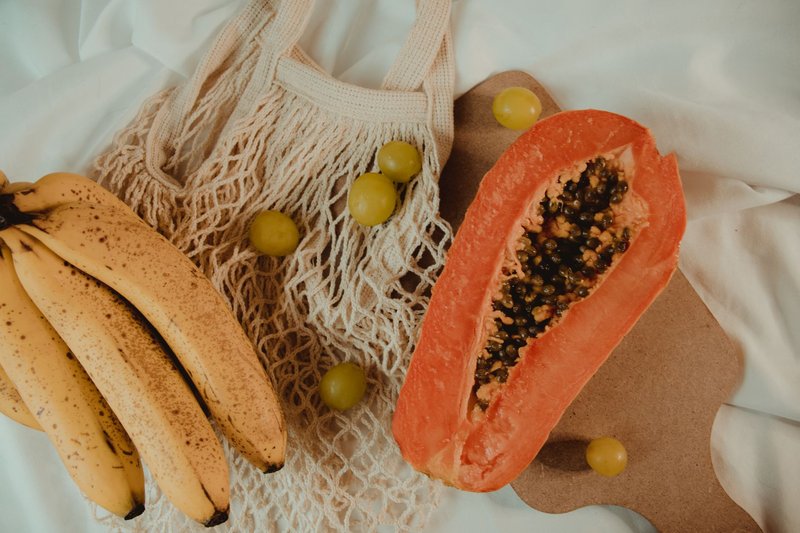
Zoos and rescue centers can’t ship in a gum tree, so captive diets rely on substitutes. A 2025 captive-feeding paper from IPB University in Indonesia, indexed by BIO Web of Conferences, tested foods such as banana, papaya, boiled eggs and crickets. Banana was the most palatable of the group.
That list shows the substitution logic: banana and papaya for sugars, boiled egg and crickets for protein. It’s a workable maintenance diet. It isn’t the wild one, which is why rescue centers treat captive diet as a medical issue and not a menu.
How does it compare with other slow lorises?
All slow lorises share the same basic recipe: exudates, nectar, fruit and a little prey. The proportions shift by species and habitat. The pygmy slow loris is the one most often described as a heavy gum feeder, especially in the dry season, and it leans on insects more than the Sunda slow loris does. Other species in the genus mix in more fruit where it’s abundant. Direct comparisons are rough because studies differ in method, which is the same problem as above.
Why can’t a pet loris be fed properly?
Viral videos make lorises look like pets. The diet is one reason they fail as one. A captive loris gets banana and crickets in place of tree gum, with no tree to gnaw and no seasonal rhythm. Poorly fed lorises in the pet trade often have dental and health problems. Traders also commonly clip or pull out the teeth to prevent bites, and that damages the toothcomb the animal needs for feeding.
The Sunda slow loris is listed as Endangered by the IUCN, and slow lorises are protected under CITES Appendix I, which bans international commercial trade. If you want to help, the useful move is to skip the video, not share it, and support rescue centers that rehabilitate confiscated animals.