Europe’s fish don’t get the same attention as its mammals or birds, which is strange, because the continent’s rivers, lakes, and coastal seas hold everything from two-meter catfish to fish that swim to the Sargasso Sea to breed and never come back. Most “fish of Europe” pages are either bare species indexes or angling blogs that treat identification as a side note to trip planning. This one isn’t either — it’s organized the way a biologist would organize it, by family and habitat, with the details that actually help you tell one species from another.
Table of Contents
- How This Guide Is Organized
- Freshwater Fish of Europe
- Marine Fish of Europe
- Native vs. Invasive Species
- Conservation Status: Which Species Are in Trouble
- Quick Reference Table
- The Short Version
How This Guide Is Organized
Europe’s fish split naturally into two worlds: freshwater species living in rivers, lakes, and streams, and marine species in the Atlantic, Mediterranean, Baltic, and North Sea. Within each, species cluster into families that share body shape, fin structure, and behavior — learn the family traits and you can place an unfamiliar fish within seconds, even before you nail the exact species.
Each entry below covers what you’d actually use to identify the fish in the field: distinguishing features, typical size, and where it lives. A closing section covers which species are native versus introduced, and which ones are running out of time.
Freshwater Fish of Europe
Salmonidae — Salmon, Trout, and Grayling
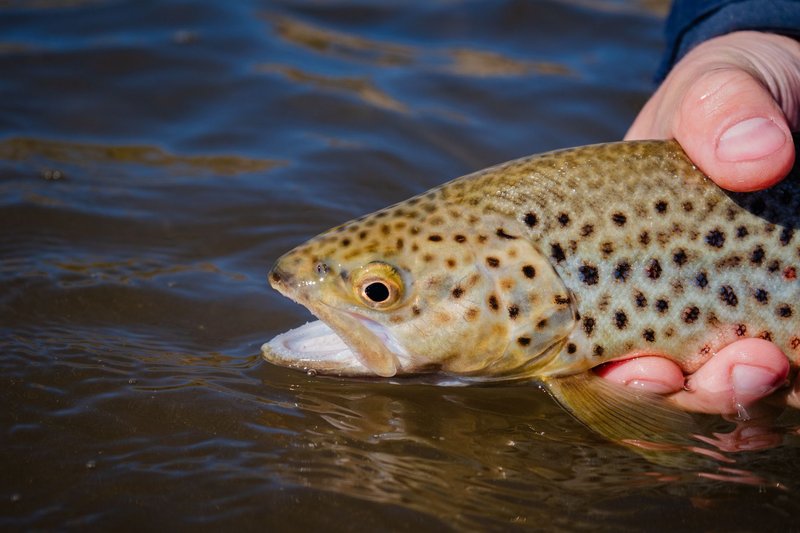
Brown trout (Salmo trutta) is the default trout of European rivers, olive-brown with red and black spots each ringed in a pale halo. River-resident fish usually run 20–50 cm, but the anadromous form — sea trout — migrates to salt water and comes back heavier and more silver. Cold, oxygen-rich water is non-negotiable; drop the dissolved oxygen and brown trout disappear before most other species notice.
Atlantic salmon (Salmo salar) is the family’s headline act: silver and torpedo-shaped at sea, darkening to a blotchy reddish-brown in freshwater during the spawning run. Fish can reach 150 cm and over 40 kg, though most caught in rivers are 60–75 cm. The upstream migration — sometimes hundreds of kilometers, against current, over waterfalls — is the reason dam removal projects on rivers like the Rhine and Loire get funded at all.
European grayling (Thymallus thymallus) is easy to spot once you’ve seen one: a tall, sail-like dorsal fin flecked with purple and red spots, on a slim body up to 50 cm. It shares brown trout’s taste for cold, clean, fast-flowing rivers, which makes the two useful indicator species for river health.
Cyprinidae — Carp, Roach, and Tench
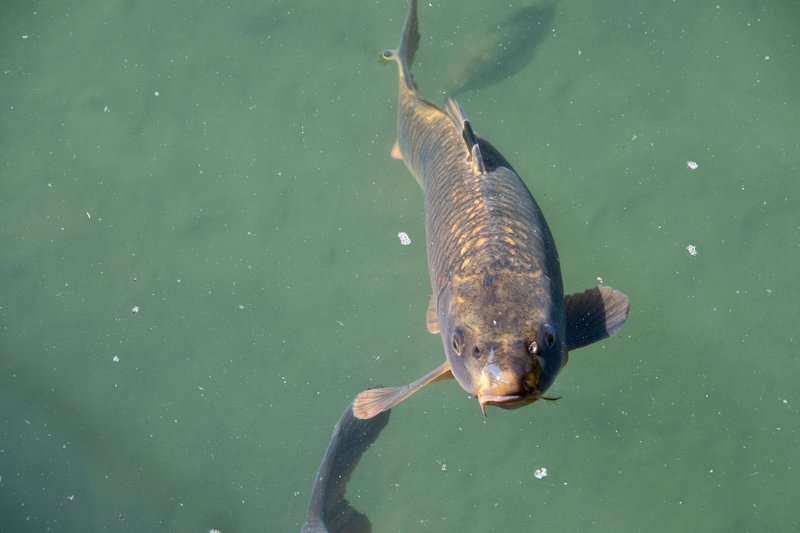
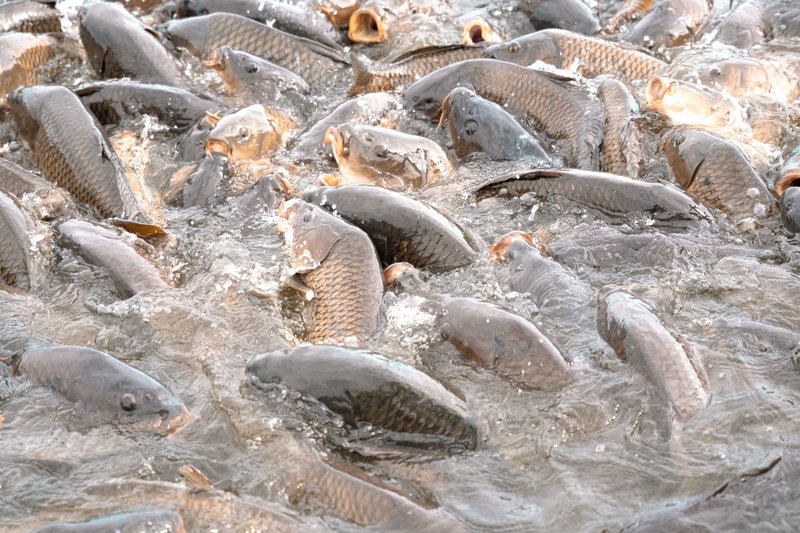
Common carp (Cyprinus carpio) originated in the Danube basin but has been farmed and stocked across the continent for so long that “native range” is almost a technicality in most of western Europe now. Deep-bodied, bronze-scaled, with two pairs of barbels at the corners of the mouth, it can reach 120 cm and well over 30 kg in still, food-rich waters.
Roach (Rutilus rutilus) is the fish most European anglers catch without trying — small, silvery, with orange-red fins and eyes, rarely over 30 cm. It’s probably the single most abundant coarse fish in lowland rivers and canals, tolerant of warmer, slower, less oxygenated water than trout or grayling could survive in.
Tench (Tinca tinca) has a thick, olive-green body covered in tiny scales and a slime coat thick enough that it was once nicknamed the “doctor fish” on the (false) belief it healed other fish that rubbed against it. It sticks to weedy, still water — ponds, canals, slow backwaters — and can reach 70 cm.
Esocidae — Pike
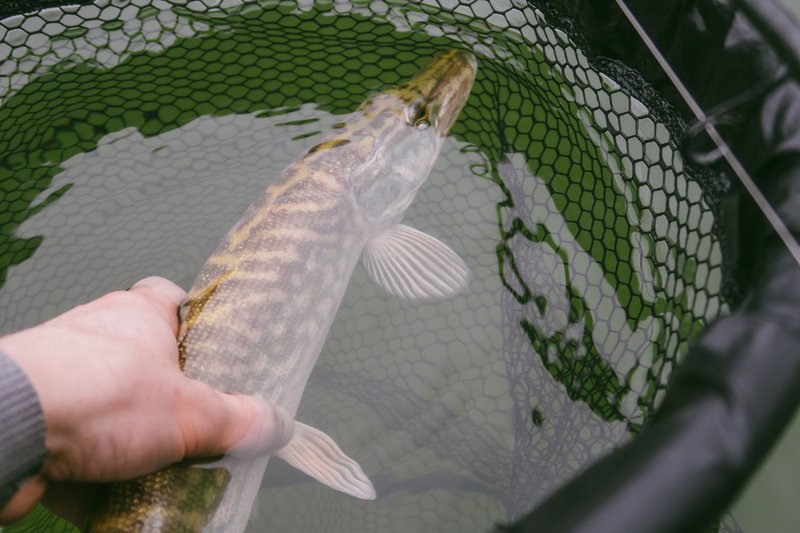
Northern pike (Esox lucius) is built like a weapon: an elongated, flattened, duck-bill snout packed with backward-curving teeth. Pike lie motionless in weed beds and ambush anything that swims past, including fish nearly their own size. Females outgrow males substantially and can reach 130 cm and 25 kg in food-rich lakes. Every part of the body — fin placement, coloration, jaw shape — exists to serve one function: the strike.
Percidae — Perch and Zander
European perch (Perca fluviatilis) is unmistakable: 5–9 dark vertical bars over a greenish body, with a spiny first dorsal fin that can draw blood if you handle one carelessly. Most run 15–30 cm, occasionally to 50 cm, and they hunt in loose schools around structure — sunken trees, reed edges, jetty pilings.
Zander, also called pike-perch (Sander lucioperca), looks like what you’d get if a pike and a perch had a compromise: elongated body, perch-family spiny fins, and a set of oversized canine teeth. Native to the Danube-Volga basin, it’s been introduced widely west into Britain, France, and the Low Countries, where it now hunts murky lowland reservoirs and slow rivers at up to 100 cm.
Siluridae — Wels Catfish
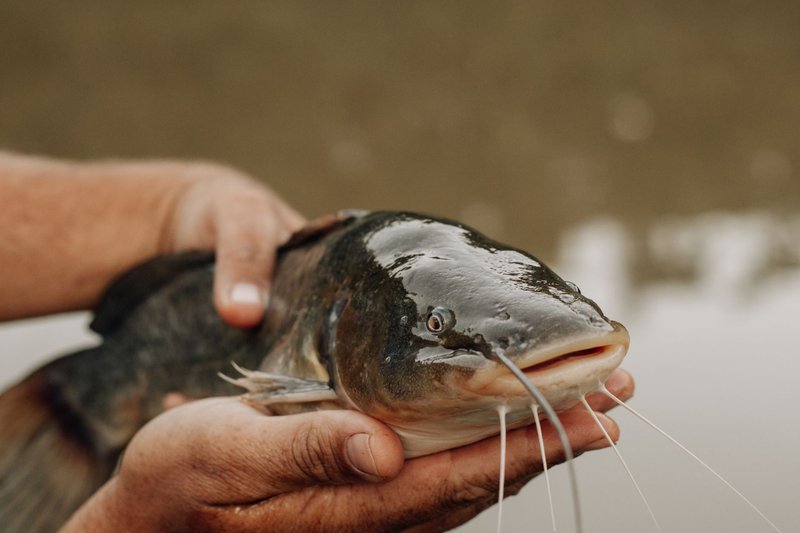
Wels catfish (Silurus glanis) is Europe’s largest native freshwater fish, verified at over 2.7 meters and 130 kg, with unverified reports well beyond that from the Po and Ebro. Six long barbels around a wide, flat mouth do the sensory work in the murky, warm, slow-moving rivers it favors — this is a fish that hunts as much by touch and vibration as by sight.
Anguillidae — European Eel
European eel (Anguilla anguilla) runs one of the strangest life cycles of any European animal. Adults live for years in freshwater rivers and lakes, then migrate thousands of kilometers back to the Sargasso Sea to spawn and die — a journey scientists still can’t fully explain the navigation for. Snake-like, up to 100 cm, and once so common it was a staple food fish across the continent. Not anymore; see the conservation section below.
Marine Fish of Europe
Gadidae — Cod and Relatives
Atlantic cod (Gadus morhua) is a heavy-bodied, mottled brown-and-gold fish with a distinctive chin barbel, historically the backbone of North Atlantic fisheries from Newfoundland to Norway. It favors continental shelf habitat at 100–200 meters depth. Decades of overfishing collapsed several major cod stocks in the 1990s, and some — the Baltic and North Sea populations especially — still haven’t recovered to pre-collapse numbers.
Haddock (Melanogrammus aeglefinus) shares cod’s silhouette but is easy to tell apart: a dark lateral line and a distinctive black “thumbprint” mark above the pectoral fin. It runs smaller than cod, typically 30–70 cm, in similar shelf-sea depths across the North Atlantic and North Sea.
Scombridae — Mackerel
Atlantic mackerel (Scomber scombrus) is built for speed — streamlined, with a blue-green, iridescent back marked in dark, wavy bars, and a deeply forked tail. It travels in huge shoals through the epipelagic zone, moving inshore in spring and offshore again as water cools in autumn. Typical length is around 30 cm, with a recorded maximum near 60 cm, according to the European Commission’s fisheries market observatory.
Moronidae — European Sea Bass
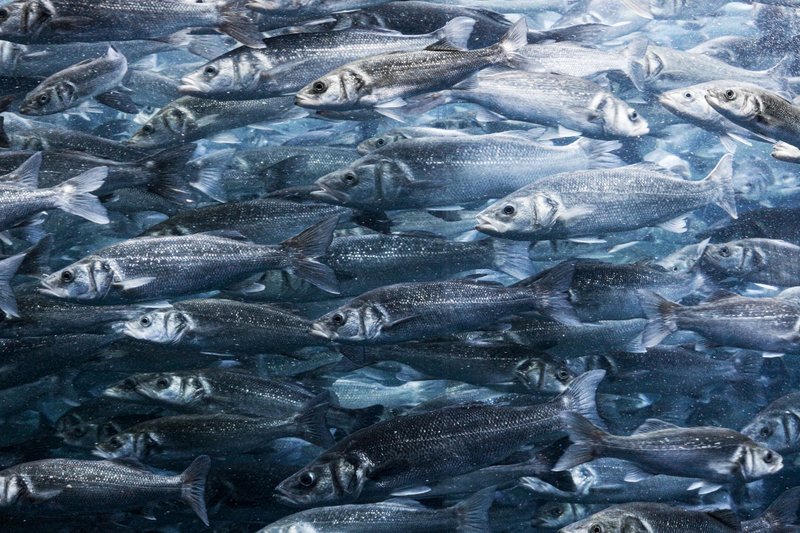
European sea bass (Dicentrarchus labrax) is silver-grey, torpedo-shaped, and common along coastlines from the North Sea down through the Mediterranean. Adults typically measure around 50 cm, with the largest verified catches over 100 cm. It’s a demersal species that shoals in shallow coastal water and estuaries in early summer, then retreats to deeper water for winter.
Pleuronectidae — Plaice and Flatfish
European plaice (Pleuronectes platessa) starts life as a normal, symmetrical fish, then undergoes one of the odder transformations in the animal kingdom: one eye migrates across the skull to join the other, and the fish settles permanently onto its blind side on the seafloor. The result is a flat, right-eyed fish with a brown, orange-spotted upper side, camouflaged against sandy or muddy bottoms across the North Sea, Baltic, and northeast Atlantic.
Clupeidae — Herring and Sardine
Atlantic herring (Clupea harengus) is a small, silver, schooling fish that has shaped European economic history more than almost any other — the herring trade built medieval Hanseatic wealth and later fueled North Sea fishing fleets for centuries. It rarely exceeds 40 cm and moves in shoals that can number in the millions, following plankton blooms across open shelf waters.
Native vs. Invasive Species
Not every fish swimming in a European river belongs there. Some of the most widespread species on this list — common carp in western Europe, zander outside the Danube basin — were introduced by people, deliberately or otherwise, and have simply been around long enough to feel native.
The clearer problem cases are recent, fast-spreading, and genuinely disruptive. Topmouth gudgeon (Pseudorasbora parva), a small East Asian cyprinid, arrived in Romania in the 1960s hidden in shipments of Chinese carp destined for aquaculture. It has since spread to nearly every country on the continent, out-competing native small fish for food and space and eating the eggs and larvae of species it shares water with, according to the UK’s Non-Native Species Information Portal. Pumpkinseed (Lepomis gibbosus), a North American sunfish originally imported as an ornamental pond species, has established wild, self-sustaining populations across much of western and central Europe.
The pattern with both is the same: small body size, fast reproduction, and a diet flexible enough to outcompete native fish that evolved without that particular pressure.
Conservation Status: Which Species Are in Trouble
Freshwater fish are in worse shape than most people assume. A 2025 IUCN assessment covering 558 European freshwater fish species found 42.1% — roughly 222 species — classified as threatened, meaning Vulnerable, Endangered, or Critically Endangered, with another 17.5% listed as Near Threatened, according to the IUCN’s 2025 findings. That’s a five-point increase in the threatened share since the last full assessment in 2011. Migratory species are getting hit hardest: dams and weirs block the up-and-downstream movement several species depend on to complete their life cycle, and roughly 39% of migratory freshwater fish are declining, compared to about 14% of species that stay put.
The European eel is the starkest case on this list. It’s catadromous — living in freshwater, breeding at sea — and every stage of that migration now runs a gauntlet of dams, pollution, and historic overfishing. It’s currently classified as Critically Endangered, and the population arriving in Europe as glass eels has dropped by more than 90% since the 1980s.
Sturgeon tell a similarly grim story. The beluga sturgeon, once common enough in the Danube to support a caviar industry, is now functionally extinct there outside of reintroduction programs. Marine species have generally fared better than freshwater ones, though several cod stocks remain well below historic biomass despite decades of catch restrictions.
Quick Reference Table
| Family | Example Species | Habitat | Typical Adult Size |
|---|---|---|---|
| Salmonidae | Brown trout, Atlantic salmon, grayling | Cold rivers, lakes | 20–75 cm |
| Cyprinidae | Common carp, roach, tench | Still or slow lowland water | 20–120 cm |
| Esocidae | Northern pike | Weedy lakes, slow rivers | 40–130 cm |
| Percidae | Perch, zander | Lakes, reservoirs, rivers | 15–100 cm |
| Siluridae | Wels catfish | Warm, slow rivers | up to 270 cm |
| Anguillidae | European eel | Rivers to open ocean | up to 100 cm |
| Gadidae | Atlantic cod, haddock | Continental shelf, 100–200 m | 30–150 cm |
| Scombridae | Atlantic mackerel | Open shelf seas, epipelagic | ~30 cm |
| Moronidae | European sea bass | Coastal water, estuaries | ~50 cm |
| Pleuronectidae | European plaice | Sandy/muddy seafloor | 20–50 cm |
| Clupeidae | Atlantic herring | Open shelf water | up to 40 cm |
The Short Version
Europe’s fish sort themselves cleanly once you know what to look for — spiny fins and vertical bars for Percidae, barbels and toothless jaws for Cyprinidae, a duck-bill snout for pike, a chin barbel for cod. The harder split isn’t identification, it’s status: which species have always belonged in these waters, which arrived by accident and stayed, and which — like the European eel and much of the continent’s migratory fish — are running out of runway. Learning to tell a zander from a pike is a good party trick. Understanding why nearly half of Europe’s freshwater species are now at risk is the part actually worth carrying with you.