Arctic animals share five characteristics: heavy insulation, compact bodies, seasonal camouflage, a plan for the dark months (leave or shut down), and frugal use of food and water. Winter temperatures in parts of the Arctic fall to around -50°C, and every species that stays through them has solved the same problems with different tools.
Below, each characteristic gets a named animal as proof, followed by a table you can screenshot for homework, a split between physical and behavioral adaptations, and what happens to all of this as sea ice disappears.
Table of Contents
- Quick Answer
- Characteristic 1: Insulation (Fur, Feathers, Blubber)
- Characteristic 2: Compact Bodies
- Characteristic 3: Seasonal Camouflage
- Characteristic 4: Migrate or Go Dormant
- Characteristic 5: Efficient Use of Food and Water
- Arctic Marine Animals: Built for Ice and Cold Water
- Physical vs Behavioral Adaptations
- Arctic Animal Traits at a Glance
- Arctic vs Antarctic Animals
- What Shrinking Sea Ice Does to These Traits
Quick Answer
- Insulation: dense fur, layered feathers or a thick fat layer keep body heat in.
- Compact shape: small ears, short legs and stocky bodies expose less skin to the cold.
- Camouflage: many species turn white in winter and brown or gray in summer.
- Migration or dormancy: animals either leave for the winter or slow their metabolism to a crawl.
- Frugal living: they eat high-fat foods, store energy, and get water from snow, ice and prey.
Characteristic 1: Insulation (Fur, Feathers, Blubber)
Insulation is the first thing anyone notices, and the Arctic has three versions of it.
Fur. The muskox wears a long outer coat of guard hairs that hangs nearly to the ground, over a fine underlayer called qiviut. Air trapped between the layers does the work. The Arctic fox does the same in a smaller package, with a winter coat dense enough that it can sleep in an open snow bed at -40°C.
Feathers. The snowy owl is feathered down to the tips of its toes, so its feet stay warm while it stands on snow. Ptarmigan do the same, which is why their tracks look like fluffy snowshoe prints.
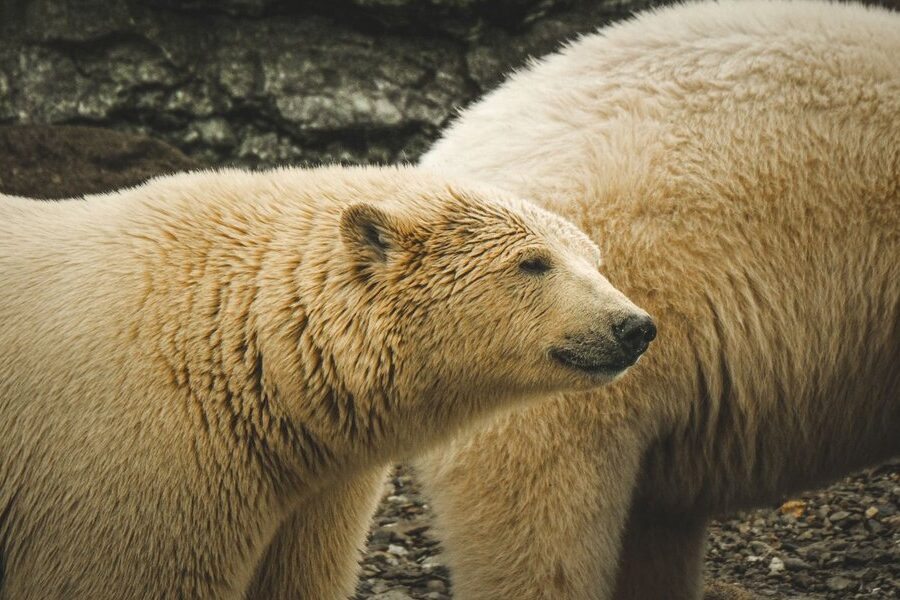
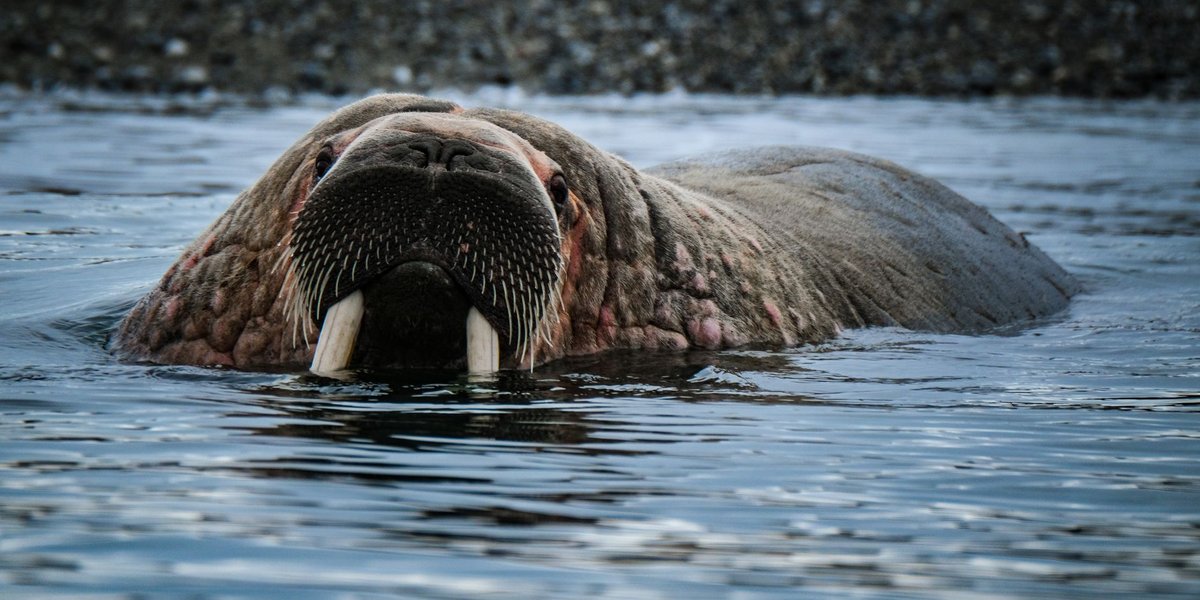
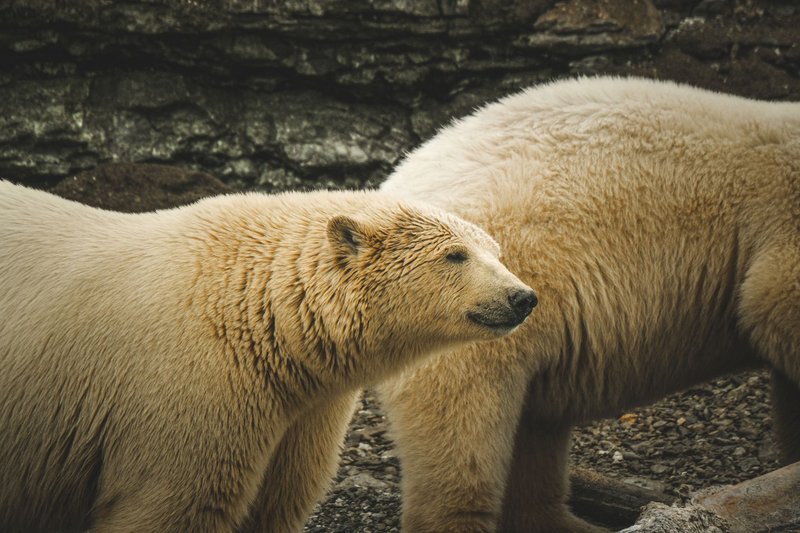
Blubber. Marine mammals can’t rely on fur once they’re wet, because water flattens it and kills the trapped air. Walruses carry a fat layer up to about 15 cm thick, and polar bears have a layer of fat as well. The polar bear is the one with the neat trick: its skin is black, which absorbs heat, and its guard hairs are clear, not white. The fur only looks white because it scatters light.
Characteristic 2: Compact Bodies
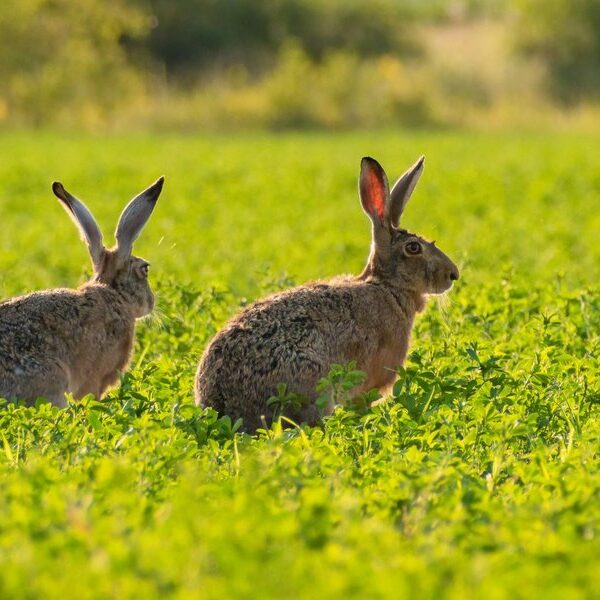
Look at Arctic land animals and the same silhouette keeps showing up: round, stocky, short-limbed, with small ears and short snouts. Arctic hares and Arctic foxes have noticeably shorter ears than their southern relatives.
The reason is geometry. Heat escapes through the skin, so what matters is how much skin you have relative to the body it surrounds. A large animal has less surface area for each kilogram of body it has to keep warm, so it loses heat more slowly. Ears, legs and tails are the leaky parts, which is why shrinking them saves heat. Biologists call these two patterns Bergmann’s rule (bigger bodies in colder climates) and Allen’s rule (shorter limbs and ears).
It isn’t a universal law. The Arctic fox weighs only about 3 to 5 kg and gets by on a coat that does the work body size can’t. Size and shape are one strategy among several.
Characteristic 3: Seasonal Camouflage
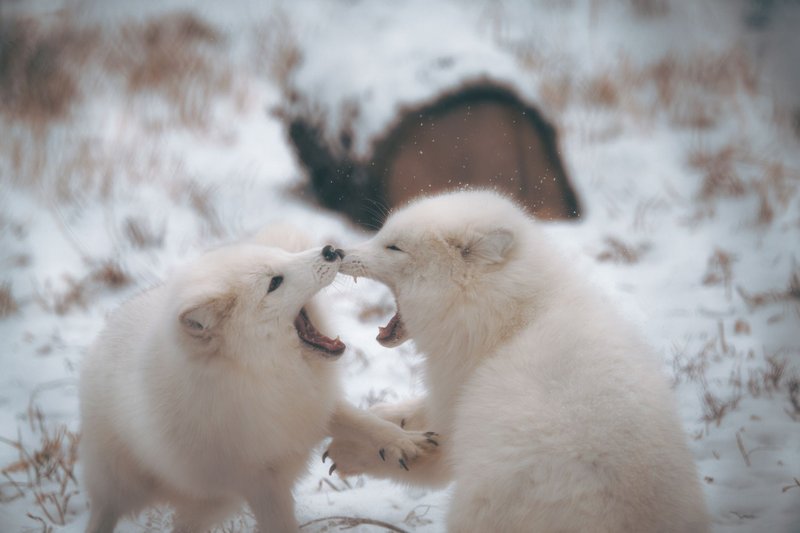
Arctic fox camouflage is the textbook example. The fox molts to a white coat as snow arrives and back to brown or gray when the ground thaws, so it blends in against whatever is behind it. White helps when hunting lemmings, and it also helps when you’re a small predator that other predators want to eat.
The same trick shows up in Arctic hares, ptarmigan, stoats (ermine) and lemmings in some regions. The timing matters. Molting is triggered mostly by day length, not temperature, which is a growing problem when snow arrives later than it used to: a white animal on bare brown ground is easy to spot.
Camouflage isn’t only about color. Polar bears hunt seals at breathing holes by waiting motionless on the ice, and snowy owls are pale and heavily barred, which hides them against lichen and snow patches.
Characteristic 4: Migrate or Go Dormant
For animals that can’t out-insulate winter, the alternatives are to leave or to shut down.
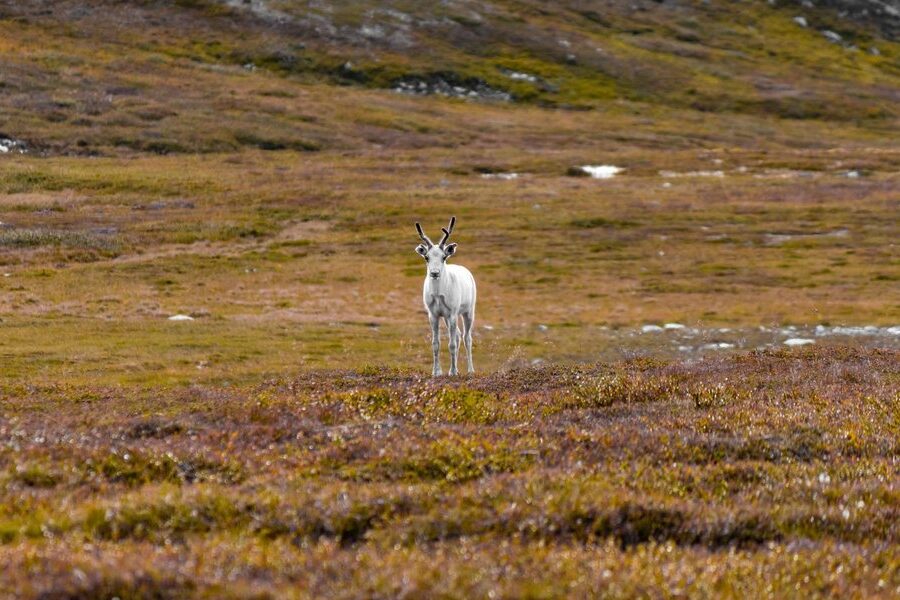
Migration. Caribou, known as reindeer in Eurasia, travel between calving grounds and winter ranges, and some herds cover well over 1,000 km each year. The Arctic tern takes it further, flying from Arctic breeding grounds to the Antarctic and back, a round trip of tens of thousands of kilometers. It sees more daylight in a year than any other animal.
Dormancy. The Arctic ground squirrel hibernates for up to seven or eight months, and researchers have recorded it cooling its body below freezing, to around -3°C, without turning to ice. Its tissues stay liquid by supercooling. Polar bears don’t truly hibernate, but pregnant females dig snow dens in autumn, give birth in them, and stay inside through most of the winter.
Staying put. Muskoxen, Arctic foxes, snowy owls (some) and ptarmigan stay all year. They’re the species where insulation and frugality carry the load.
Characteristic 5: Efficient Use of Food and Water
The tundra looks wet, but in winter nearly all of its water is frozen, so animals have to get liquid water from snow, ice, or the bodies of their prey. Marine mammals get water from fish and invertebrates, and their kidneys concentrate waste to avoid wasting it.
Food is the bigger issue. Arctic summers are short, so plant growth is limited and prey comes in boom-and-bust cycles. Several species respond with the following:
- Fat as fuel. Polar bears gorge on seal blubber, the highest-calorie part of the animal, and can fast for months when ice is gone.
- Food caches. Arctic foxes bury surplus eggs and lemmings in summer for use in winter.
- Following the boom. Snowy owls aren’t tied to one territory. In years when lemmings crash, they move south, sometimes far beyond their usual range, and in boom years a single owl can eat well over a thousand lemmings.
- Low-effort grazing. Muskoxen move slowly and conserve energy in winter, digging through snow only when needed.
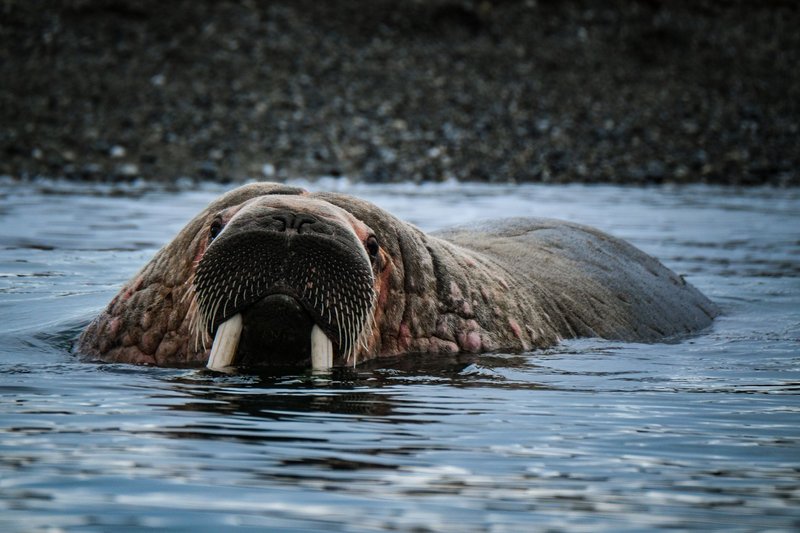
Walruses show a final kind of thrift. Their tusks, which can reach about a meter in length, help them haul their 1,000 kg or more bodies onto ice. A walrus in cold water is pale because its blood vessels constrict to keep heat in the core. On warm days it turns pink.
Arctic Marine Animals: Built for Ice and Cold Water
Most coverage stops at polar bears and foxes, which skips half the Arctic. The ocean is where much of the food is, and its residents have their own set of traits.
- Narwhal and beluga: neither has a dorsal fin. A fin would snag on ice and lose heat, so both have a low ridge instead. Belugas can also break thin ice with their backs to reach air.
- Ringed seal: the smallest and most widespread Arctic seal. It uses the claws on its front flippers to keep breathing holes open through ice more than a meter thick, and builds snow lairs over them where it gives birth.
- Thick-billed murre: a seabird that “flies” underwater, using its wings as paddles. Murres dive well past 100 m after fish, then nest in crowded ledge colonies on sea cliffs, laying a single egg directly on bare rock.
- Bowhead whale: carries one of the thickest blubber layers of any whale and uses its skull to break ice.
Physical vs Behavioral Adaptations
Teachers love this split, and it’s useful because it shows that fur is only part of the answer.
Physical adaptations are body features: blubber, double-layered fur, black skin, feathered feet, small ears, a dorsal ridge instead of a fin, and clear guard hairs.
Behavioral adaptations are things the animal does: migrating, denning in snow, huddling in muskox circles, caching food, following lemming booms, and fasting through the ice-free season.
Most species use both. The ptarmigan has feathered feet (physical) and burrows into snow to sleep (behavioral).
Arctic Animal Traits at a Glance
| Animal | Insulation | Body shape | Seasonal strategy | Standout trait |
|---|---|---|---|---|
| Arctic fox | Dense double coat, furry paws | Small, short ears and muzzle | Stays; white coat in winter, brown in summer | Caches food, survives about -50°C |
| Polar bear | Thick fat layer, dense fur on black skin | Large | Stays; females den in winter | Hunts seals on sea ice |
| Snowy owl | Feathers down to the toes | Stocky, rounded | Moves with lemming numbers | Hunts by day in summer |
| Walrus | Blubber up to about 15 cm | Very large, thick-skinned | Moves with the ice edge | Tusks help haul out onto ice |
| Muskox | Long guard hair over qiviut underwool | Stocky, short legs | Stays; forms defensive circles | Wool is finer than sheep’s |
| Thick-billed murre | Dense waterproof feathers | Compact seabird | Winters at open sea | Dives past 100 m |
| Arctic ground squirrel | Fat reserves | Small | Hibernates up to 7-8 months | Supercools below 0°C |
| Beluga | Blubber | No dorsal fin | Moves with ice and open water | Breaks thin ice for air |
Arctic vs Antarctic Animals
People mix these up constantly. The Arctic is an ocean surrounded by land; Antarctica is a continent surrounded by ocean. That one difference explains most of the animal gap.
The Arctic has land mammals: foxes, hares, caribou, muskoxen and bears. 14 Arctic Land Animals and How They Survive the Cold covers how each of them copes. Antarctica has none. It has penguins, which don’t live in the Arctic at all, and polar bears don’t live in the Antarctic. Arctic terns are the rare exception that visits both.
What Shrinking Sea Ice Does to These Traits
Most of the traits above were tuned for a world with reliable winter ice and snow, and that world is changing. According to the National Snow and Ice Data Center, Arctic sea ice has been in long-term decline for decades.
The effects line up with the characteristics. Polar bears that depend on ice for hunting seals spend more of the summer fasting. The IUCN lists the polar bear as Vulnerable, with sea ice loss the main threat. White animals face mismatch on snowless ground. Walruses haul out on land in large crowded groups when ice is missing, which is a risk in itself.
Researchers at Aarhus University’s Arctic Research Centre have also described how fat, fur and flexibility define Arctic mammals, and flexibility is the one that matters now. Species that can switch prey or ranges, like the Arctic fox and snowy owl, are better placed than specialists. For a student-level overview of these adaptations, National Geographic Education has a clear primer.
The characteristics of Arctic animals aren’t a checklist of cold-weather gear. They’re a set of trade-offs that work only as long as the Arctic stays frozen.