Short answer: Leave it where it is. Baby turtles are on their own from the moment they hatch and usually know where they are going. Step in only if it is in danger: move it a few feet in the direction it was heading, or call a wildlife rehabilitator if it is hurt. Do not take it home, feed it or drop it in a pond.
Most people who find a hatchling assume it is lost or that its mother is nearby. Neither is true. Turtle mothers leave the nest right after laying, and hatchlings are fully self-sufficient. The most common mistake is a kind one: carrying the turtle to a “better” pond miles away. Use the checklist below to decide in under a minute.
This article contains Amazon affiliate links. Florafaunafun earns a commission on qualifying purchases. See our affiliate disclosure.
Why leaving a baby turtle alone is usually best
Turtles give no parental care. The mother digs a nest, lays her eggs and walks away, so a hatchling on its own is exactly where nature put it. Aquatic species often nest far from water, sometimes up to a mile away, which is why tiny sliders, painted turtles and snappers turn up in yards, gardens and driveways. Their instinct is to head downhill toward water, and most get there without help.
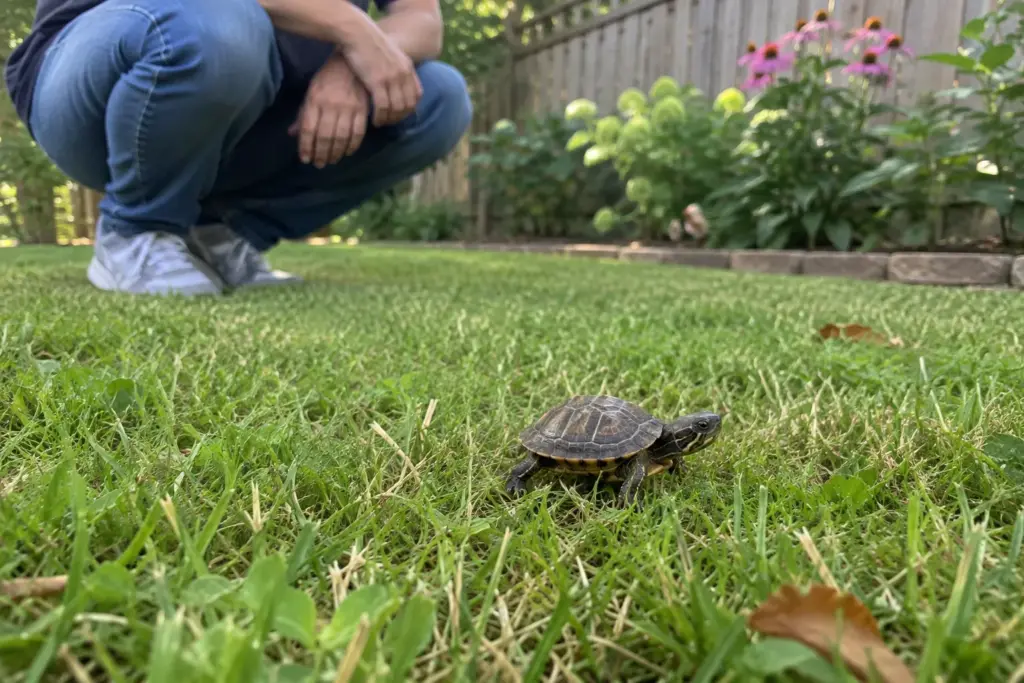
Finding a hatchling in April or May does not mean it hatched late. Painted turtles, and sometimes snapping turtles, spend their first winter inside the nest and dig out in spring. A spring hatchling is normal.
Do’s and don’ts when you find a baby turtle
Wildlife agencies, rehabbers and the US Fish and Wildlife Service give the same core advice:
How to help a baby turtle cross the road
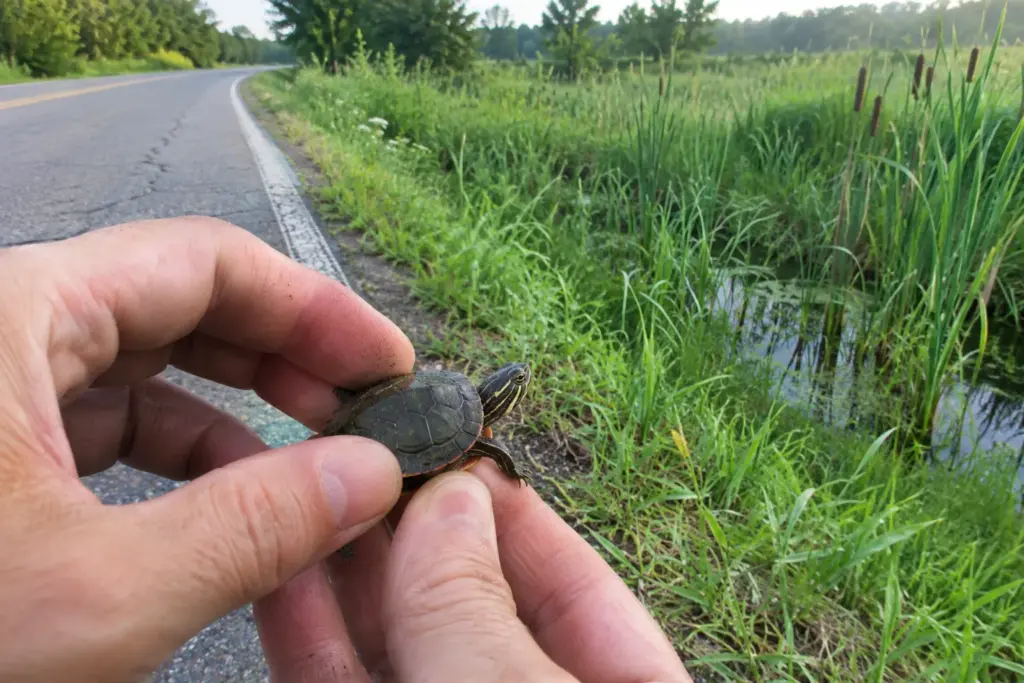
Roads are the biggest danger turtles face. Vehicle strikes are the top reason turtles arrive at the Tufts Wildlife Clinic. If you can help safely, here is the method agencies recommend:
Is it a water turtle or a land turtle?
The right spot to set a turtle down depends on what kind it is. Shell shape tells you almost everything:
| Hatchling | How to recognize it |
|---|---|
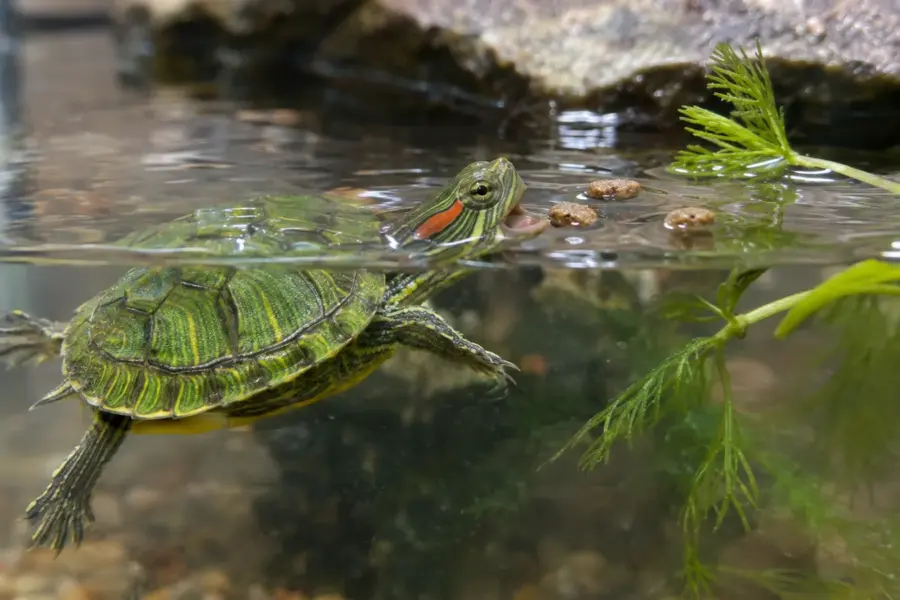
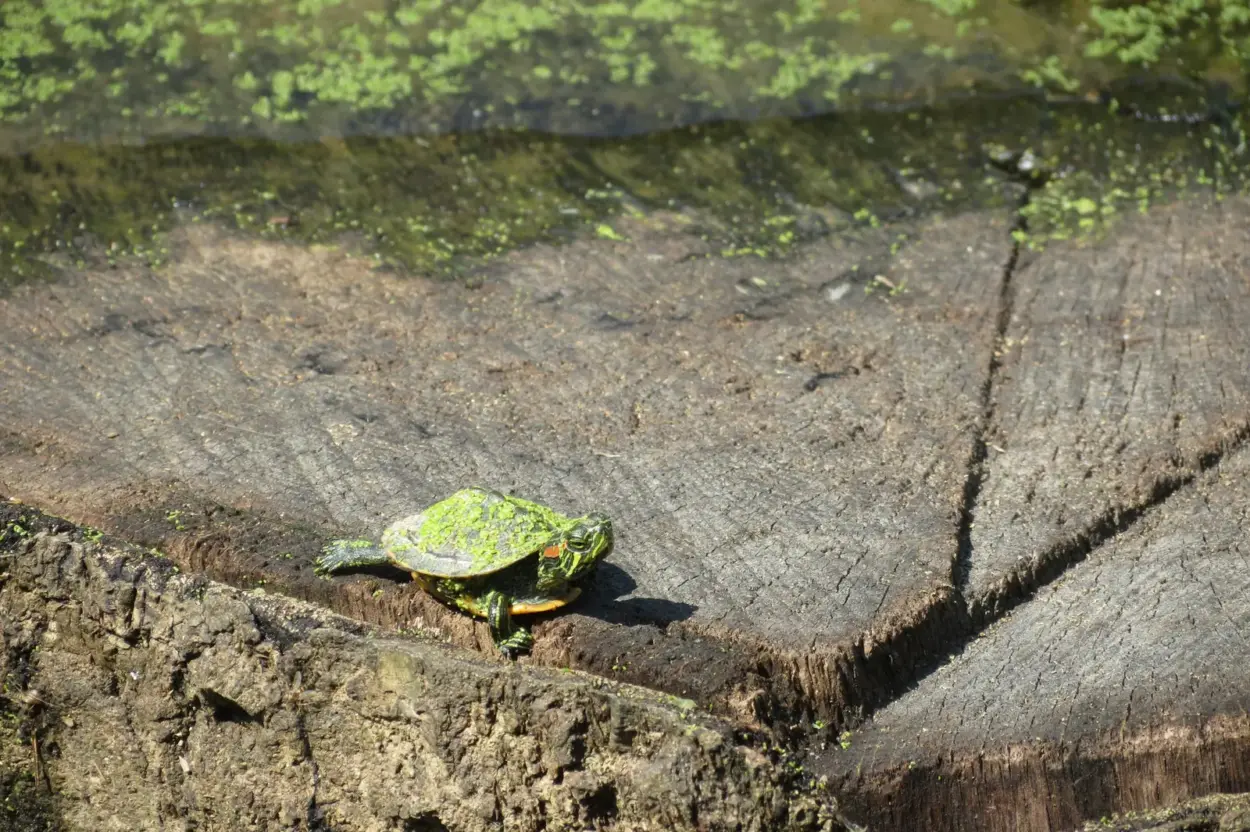
| Red-eared slider | Green shell, red or orange patch behind each eye |
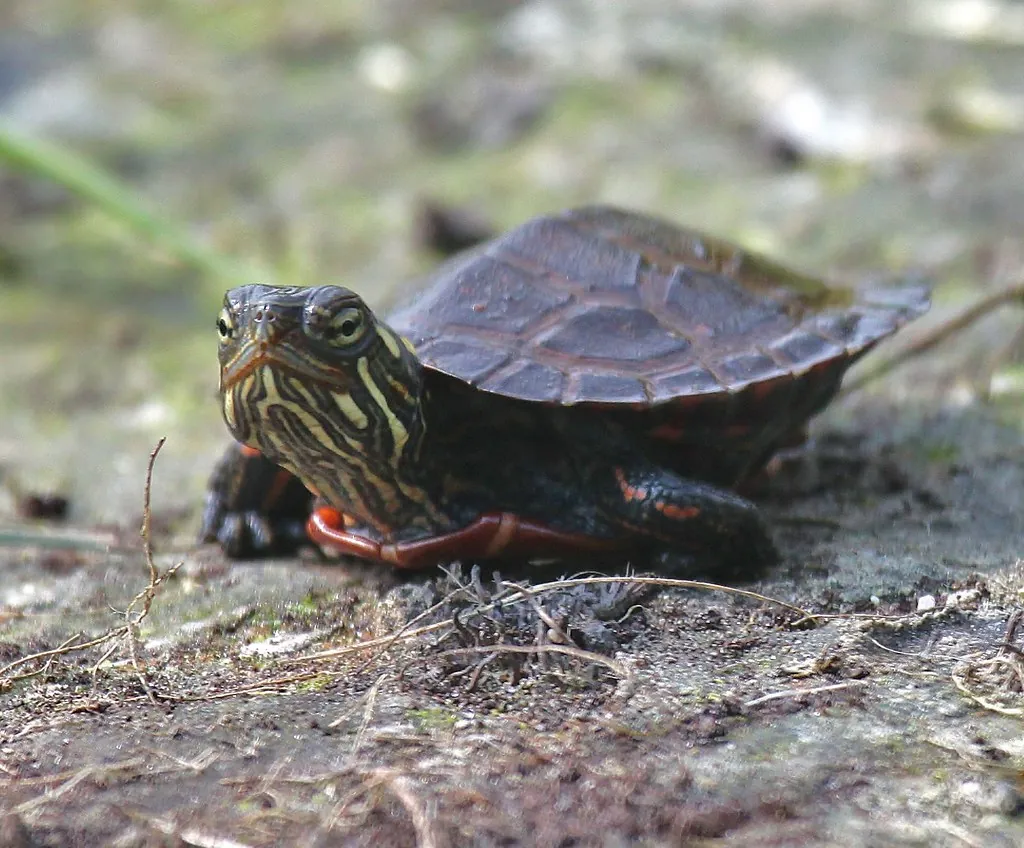
| Painted turtle | Dark smooth shell, yellow stripes on head and neck, red or orange marks on the shell edge |
| Common snapping turtle | Rough brown shell, long saw-toothed tail, big head |
| Eastern box turtle | Domed shell, often with a yellow spot on each scute |
| Softshell turtle | Flat, leathery shell with no hard plates, snorkel-like nose |
A box turtle sitting in a pond gains nothing. It is a land animal, and an injured or weak turtle of any kind can drown. Aquatic hatchlings found far from water need no carrying; they will walk there on their own.
Found a baby sea turtle on the beach?
Leave it alone. Sea turtle hatchlings need to crawl across the sand on their own, and handling them is illegal without a permit because every US sea turtle species is listed under the Endangered Species Act. Your job is to keep the way clear:
- Keep people, dogs and flash photography away; watch from a distance.
- Turn off or shield lights facing the beach. Hatchlings follow light and wander inland toward porches and parking lots.
- Fill in holes and flatten sandcastles in their path.
- Call the hotline if a hatchling is heading away from the water, stranded, on a road or in a parking lot. Do not put it in the ocean yourself.
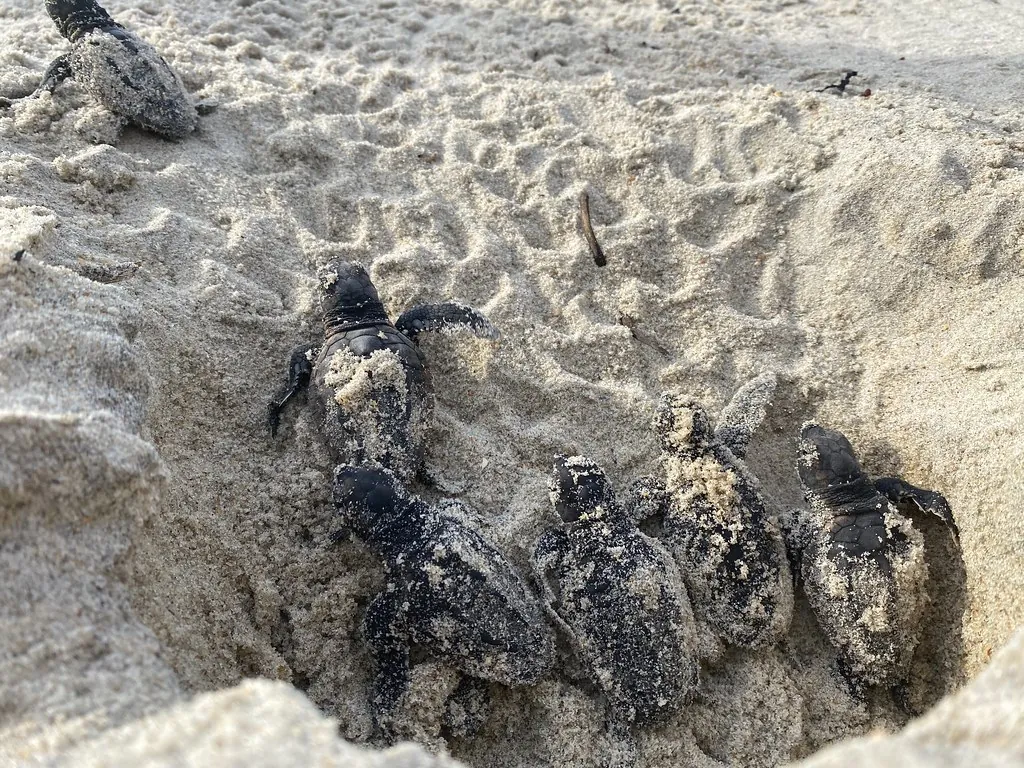
Only about 1 in 1,000 sea turtle hatchlings reaches adulthood, by the most quoted estimate, and recent research puts the range anywhere from 1 in 400 to 1 in 10,000 depending on the population. That is why the rules are strict.
What to do with an injured baby turtle
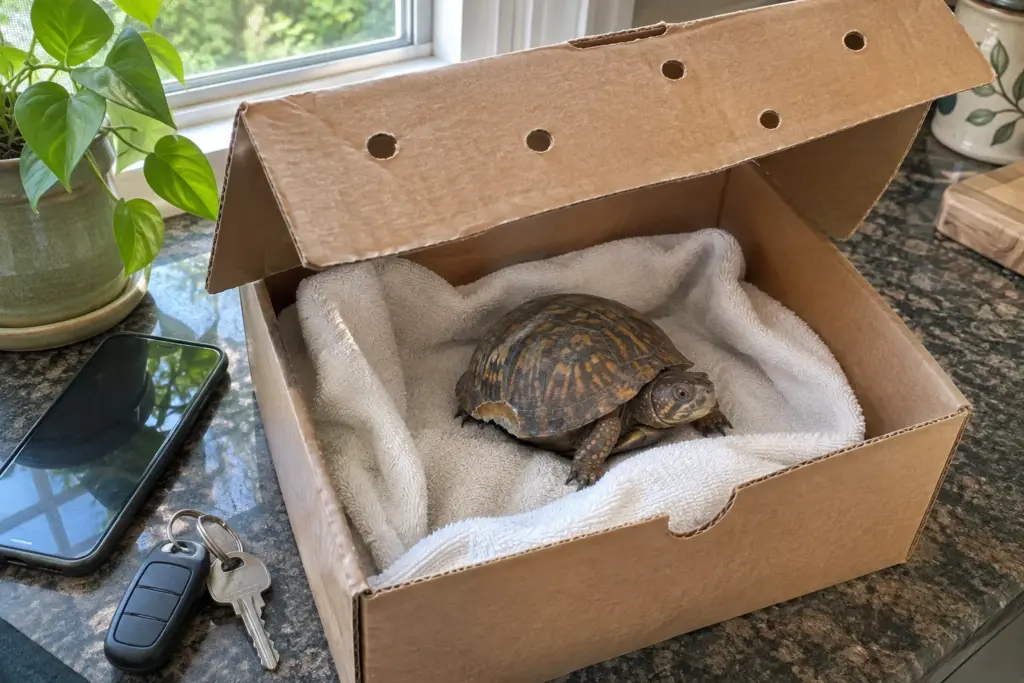
Call for help if you see a cracked or broken shell, blood, discharge from the eyes or ears, a turtle that cannot walk or one a dog or cat has carried around. Cracked shells look hopeless but often are not: licensed rehabilitators repair them routinely and release the turtle.
Found a baby squirrel instead? The steps are different: see what to do if you find a baby squirrel.
Can you keep a baby turtle you found?
No. In many states it is illegal to take a wild turtle without a permit, and the CDC advises against keeping wild reptiles at all. Indiana bans collecting wild box turtles; Virginia limits possession and forbids taking red-eared sliders. Rules vary, but the safe answer everywhere is to let it go where you found it.
The law exists for a reason. Turtles mature slowly and live for decades, so every animal removed from the wild takes years of future hatchlings with it. Turtles moved to new areas can also spread disease to local populations.
If you already took one home, return it as soon as possible to the exact spot where you found it, as long as it is healthy and has not shared a tank with other reptiles. For a turtle you want to raise legally, see our guide on what to feed a baby turtle.
What if you find a turtle nest in your yard?
Leave it in place and do not dig it up to check on the eggs. Moving or exposing eggs usually kills them. Raccoons and skunks often raid nests within a day of laying, so the one useful thing you can do is cover the nest with a wire cage.
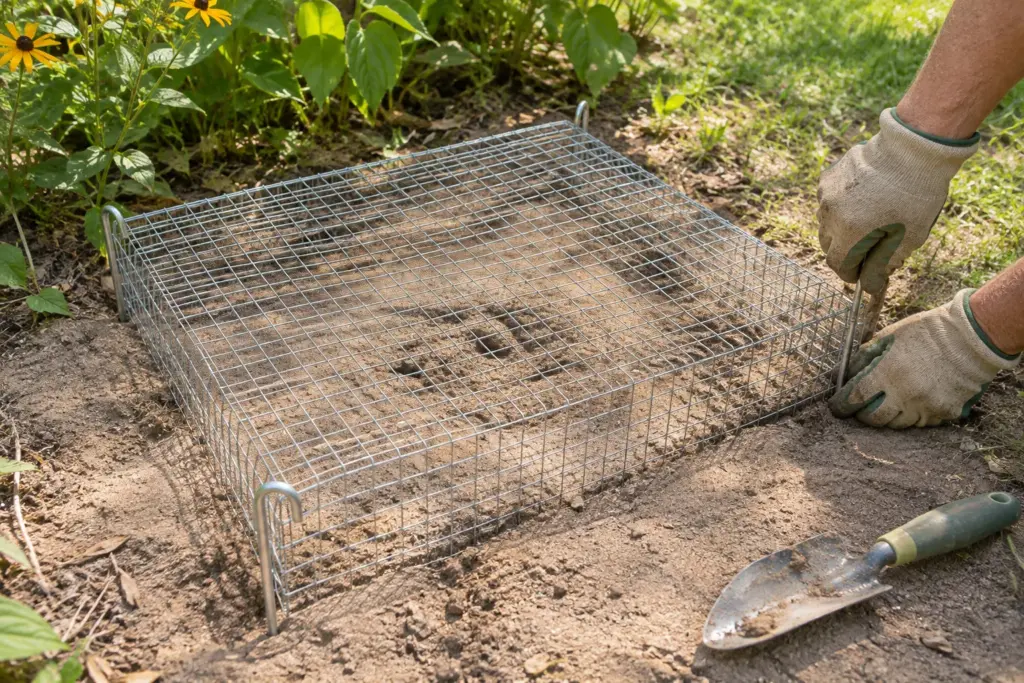
Bend a piece of galvanized hardware cloth into a low box, bury the edges a couple of inches and stake it down. Cut a few openings about 2 inches square along the bottom so hatchlings can walk out on their own. Expect hatching about two to three months after laying for most water turtles and three to four months for box turtles. On land you do not own, ask first, and check local rules before caging the nest of a protected species.
Frequently asked questions
No. Turtles give no parental care. The mother leaves right after laying her eggs, and hatchlings find food, water and shelter on their own.
Only if it is an aquatic species found right beside that water, and then at the edge, not in deep water. Never put a box turtle or an injured turtle in water.
At the exact spot where you found it, or a few feet away in the direction it was walking. Do not move it to a different pond or park.
Nothing. Wild hatchlings live off a yolk reserve at first and find their own food. Feeding a wild turtle only delays its release.
In many states, yes, without a permit, and some species are fully protected. Even where it is allowed, wildlife agencies and the CDC advise against it.
Briefly, to move it out of danger. Wash your hands with soap afterward because turtles carry Salmonella, and keep young children from handling them.
Aquatic hatchlings often walk long distances over land from the nest to water and can manage for days. A healthy one heading somewhere does not need rescuing.
A female probably nested nearby. Aquatic turtles travel up to a mile from water to lay eggs, so hatchlings regularly appear in yards and gardens.
Do not pick it up. Turn off nearby lights, keep people back and call the local sea turtle hotline. In Florida, that is the FWC Wildlife Alert line.
Sources
- US Fish and Wildlife Service. Should we help it?
- Virginia Department of Wildlife Resources. Turtles
- Tufts Wildlife Clinic. Turtles crossing the road
- Humane World for Animals. Helping turtles safely cross roads
- Houston Humane Society. Found a turtle
- Purdue Extension. What do I do with hatching turtles?
- Indiana DNR. Eastern box turtle
- NOAA Fisheries. What can you do to help sea turtles?
- Florida Museum. Watch out for baby sea turtles
- CDC. Reptiles and amphibians
- Turtle Guardians. Nests and moms